Understanding plant growth Worksheets for Ages 3-8
3 filtered results
-
From - To
Explore our "Understanding Plant Growth Worksheets" designed specifically for children aged 3-8! These engaging, printable worksheets introduce young learners to the fascinating world of plants and their development. Through fun activities, kids will discover the essential elements of plant growth, including sunlight, water, and soil. Our worksheets promote early science learning, fostering curiosity and observational skills. Perfect for home or classroom use, they encourage hands-on exploration and provide a solid foundation in understanding biology. With colorful illustrations and simple exercises, your child will cultivate a love for nature and learn essential concepts while having fun! Start their journey today!
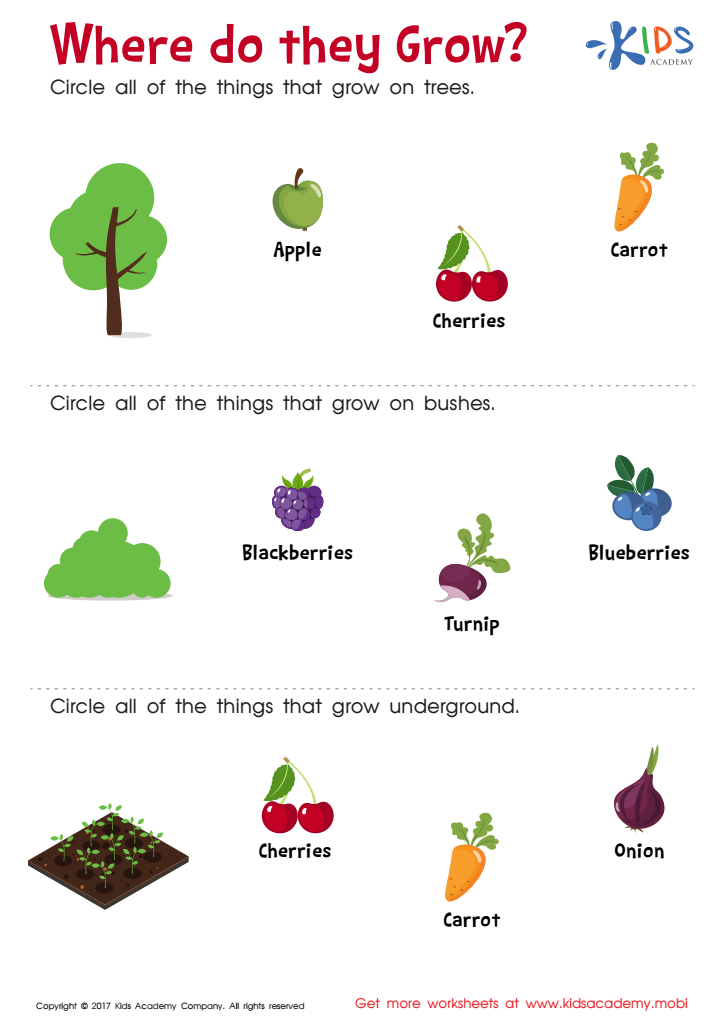
Where Do They Grow Worksheet
 Assign to My Students
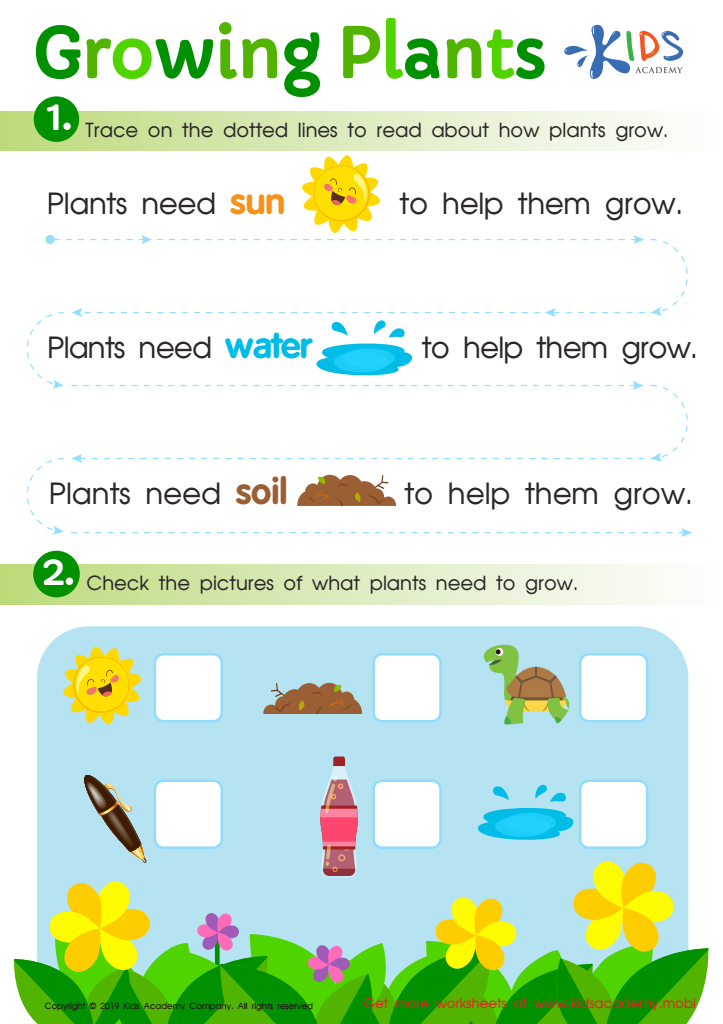
Growing Plants Worksheet
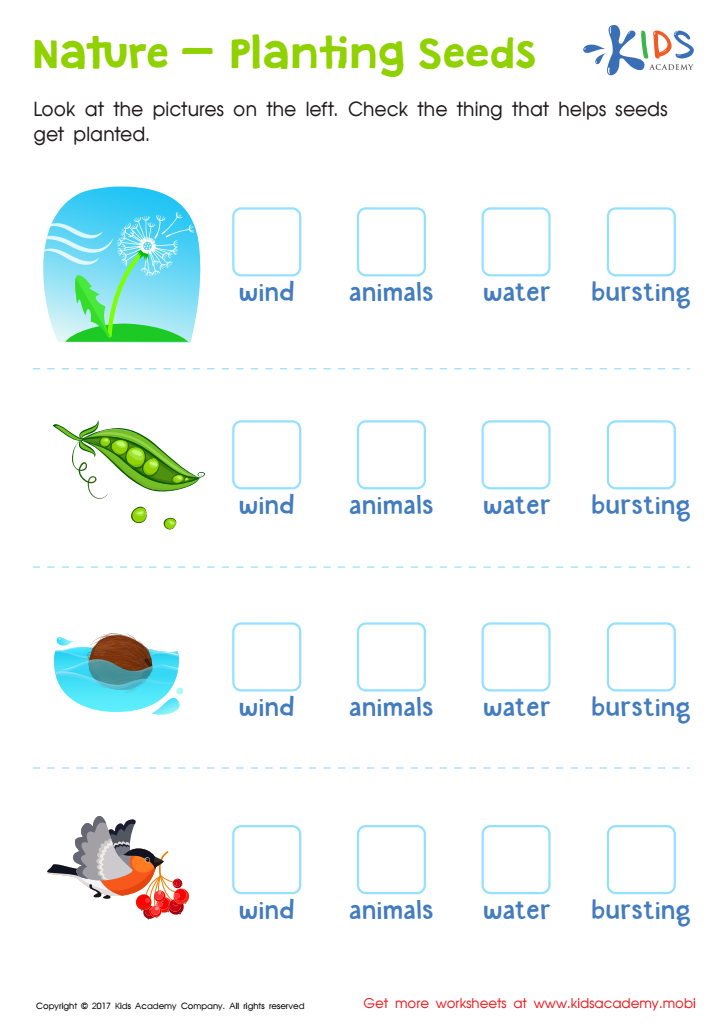
Nature Planting Seeds Worksheet







Understanding plant growth is essential for children ages 3-8 as it lays the groundwork for important scientific concepts and life skills. First, learning about plants sparks curiosity and encourages exploration—a natural part of early childhood education. Engaging in hands-on activities like planting seeds or observing growth patterns helps children develop a sense of responsibility and nurtures their understanding of life cycles.
Moreover, knowledge of plant growth fosters environmental awareness. Children learn the significance of plants in our ecosystem—providing oxygen, food, and habitats—instilling a sense of stewardship for the environment. This early appreciation for nature can lead to lifelong conservation habits.
Incorporating lessons about plants into early education also aligns with key developmental milestones. Activities can enhance fine motor skills through planting and watering, stimulate verbal skills through discussions about growth stages, and promote social skills through group gardening projects.
Finally, understanding plant growth provides children with practical life lessons, such as patience and observance, as they witness the slow process of growing. For these reasons, parents and teachers should prioritize plant education as a valuable component in nurturing a child’s cognitive and emotional development, while simultaneously fostering their connection to the natural world.








