Understanding plurals Worksheets for Ages 3-8
7 filtered results
-
From - To
Discover our "Understanding Plurals Worksheets" tailored for children aged 3-8! These engaging resources help young learners grasp the concept of plurals through fun activities and colorful illustrations. Designed to make learning enjoyable, our worksheets include interactive exercises that encourage children to identify and transform singular nouns into their plural forms. Perfect for classrooms or at-home learning, our worksheets support foundational language skills while fostering creativity and critical thinking. Empower your child’s reading and writing abilities with these essential tools that promote confidence in language use. Explore our collection today and turn learning about plurals into an exciting adventure!
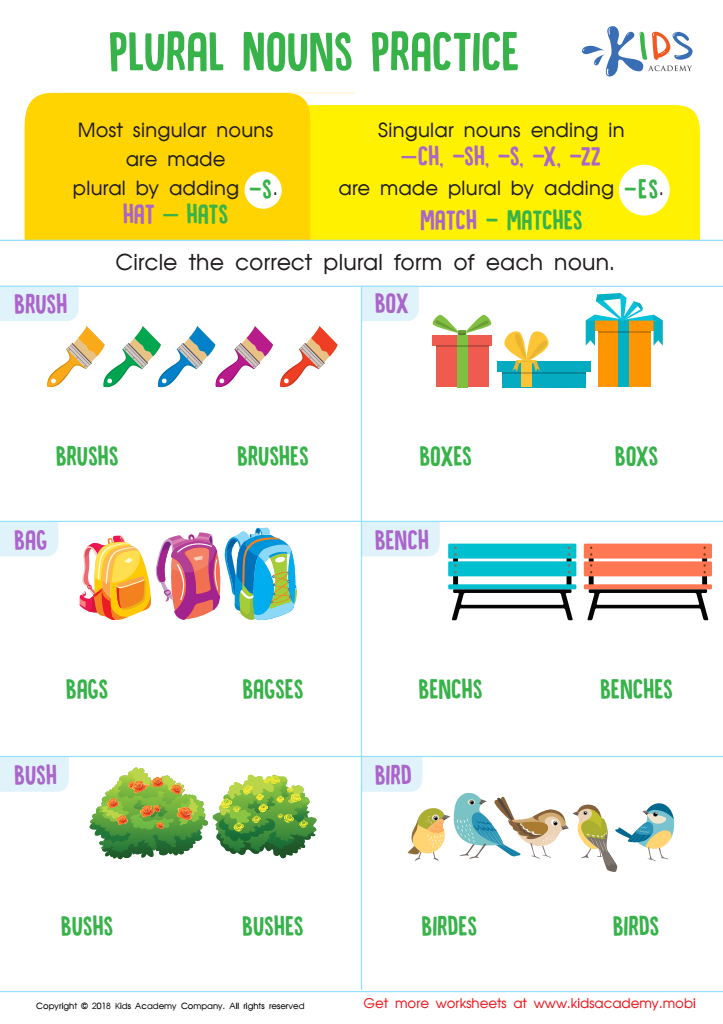
Plural Nouns Practice Worksheet
 Assign to My Students
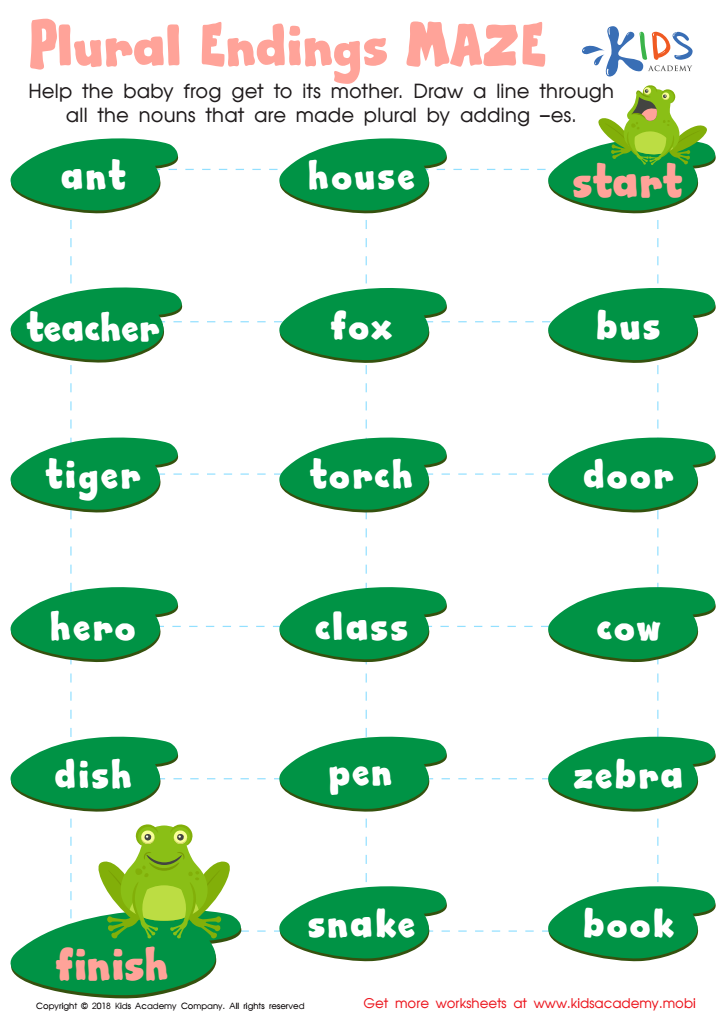
Plural Endings Maze Worksheet
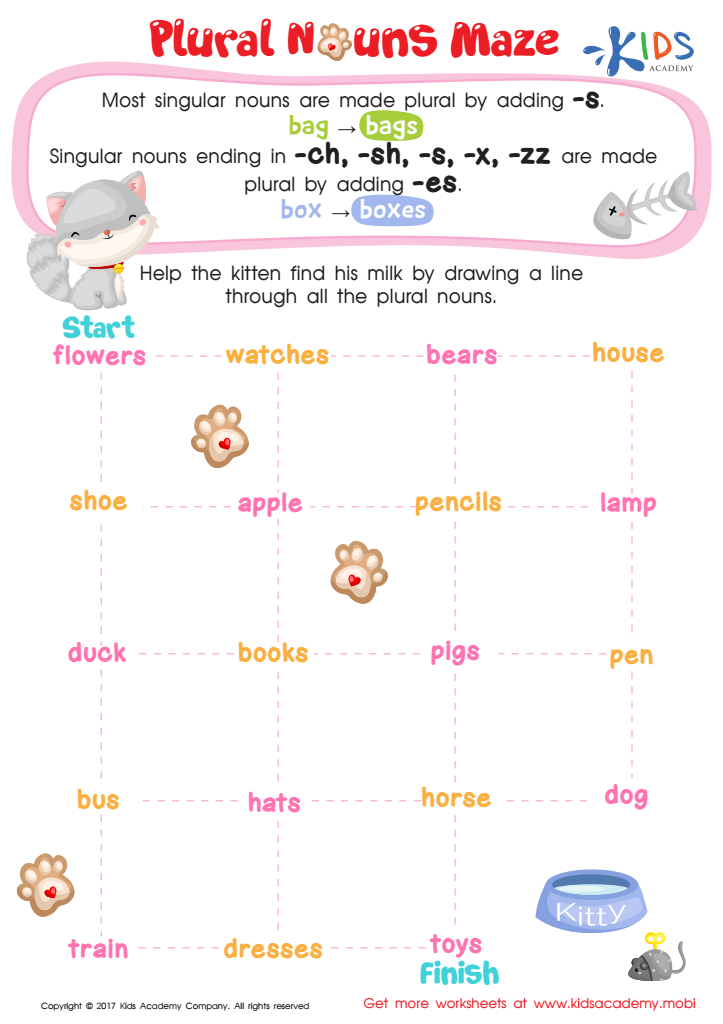
Plural Nouns Maze Worksheet
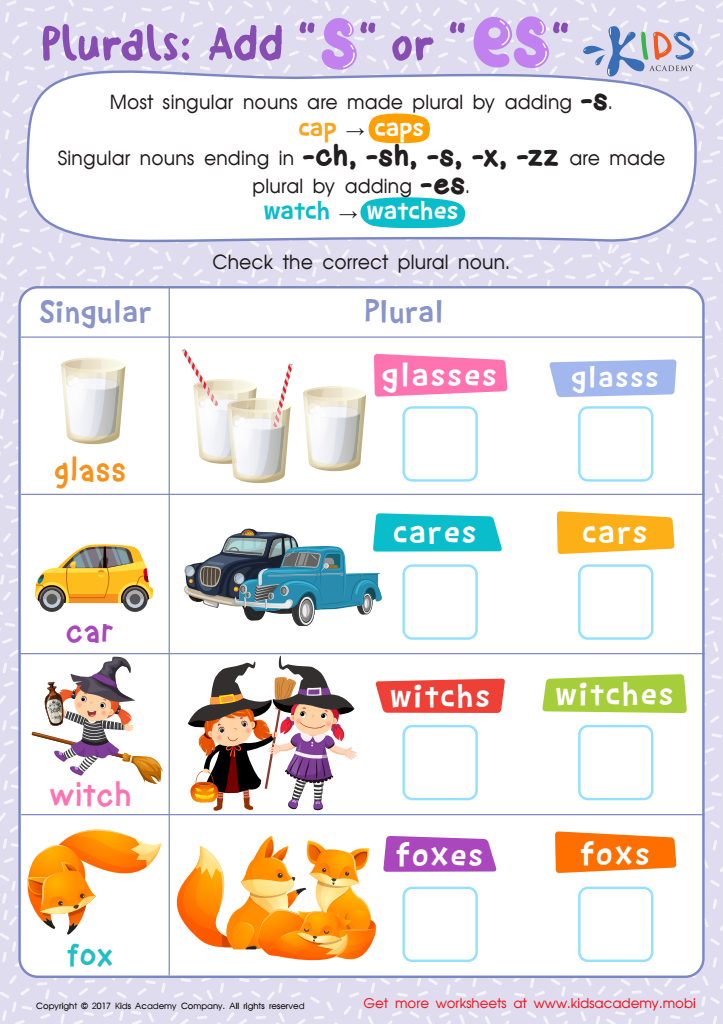
Plurals: "–es" or "–es"? Worksheet
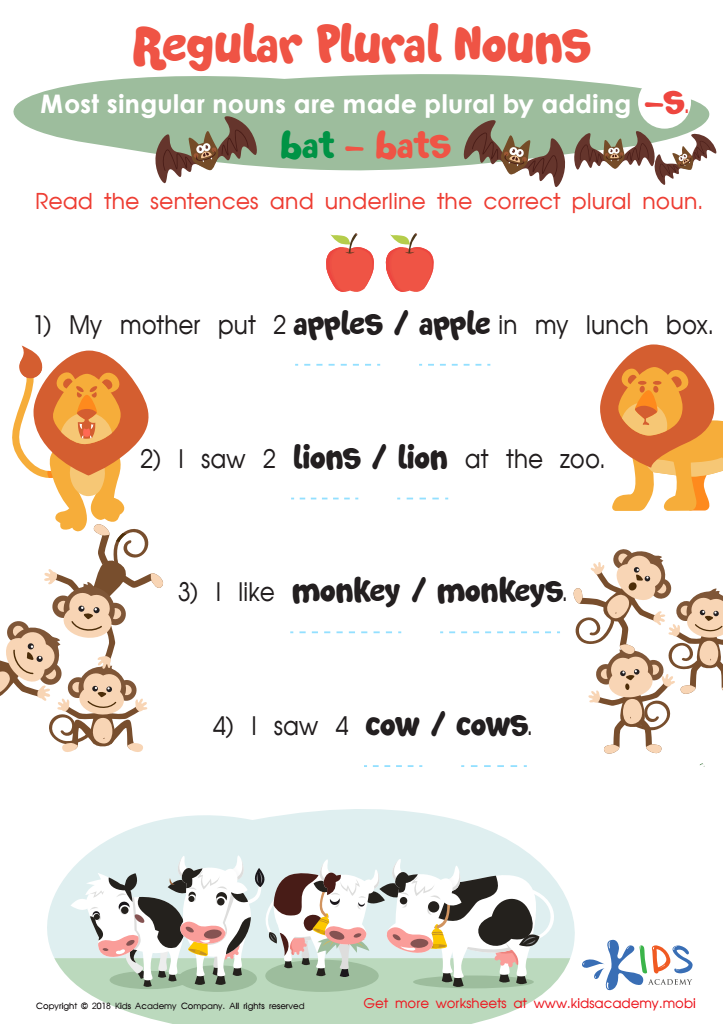
Regular Plural Nouns Worksheet
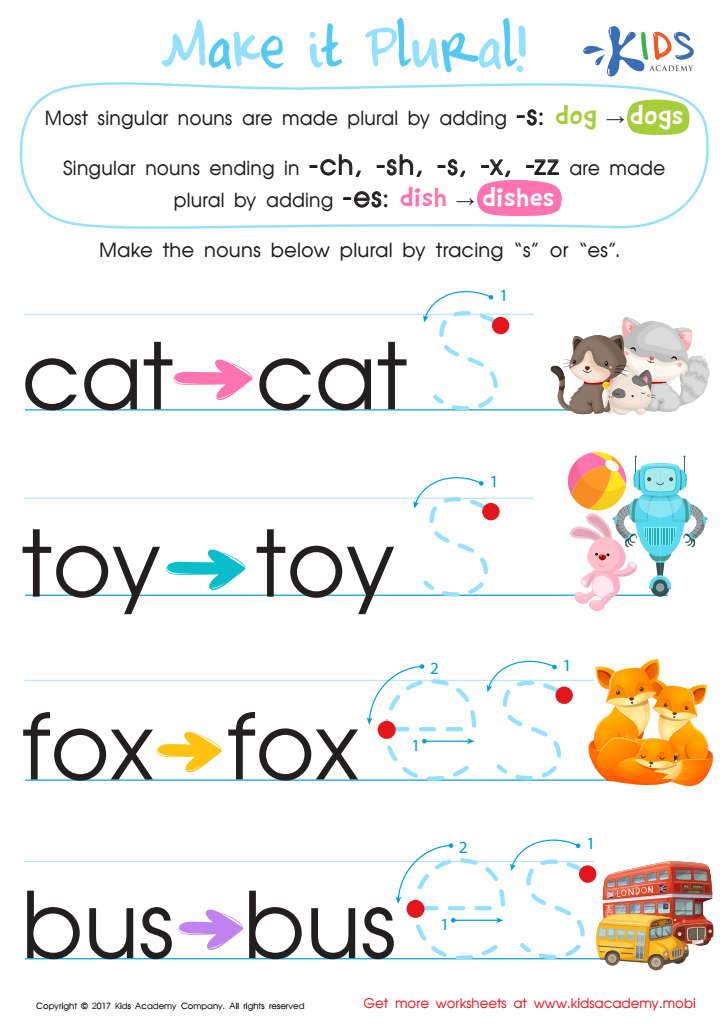
Make it Plural Worksheet





%20(1).jpg)
Understanding plurals is fundamental for young children's language development and communication skills. For ages 3-8, recognizing and using plural forms not only enhances vocabulary but also helps in grammatical structure, laying a crucial foundation for reading and writing. When children learn that adding an “s” or “es” changes a noun from singular to plural, they begin to grasp the concept of quantity and become more adept at expressing themselves.
Parents and teachers play a vital role in this process. When caregivers introduce plural vocabulary during everyday conversations, reading sessions, or playtime, they create a language-rich environment that reinforces these concepts. Activities such as counting objects, engaging in storytelling, and playful grammar games can actively involve children in learning plurals.
Moreover, understanding plurals builds confidence as children become more articulate and capable communicators. It allows them to form clearer thoughts and relationships, facilitating social skills and cognitive development. As they master plural forms, they also become prepared for more complex language structures and academic expectations in future grades. Ultimately, encouraging understanding of plurals empowers children, giving them the tools they need for successful interaction in their world. This investment in their language skills pays dividends in their educational journey.








