Understanding sizes Worksheets for Ages 3-8
4 filtered results
-
From - To
Dive into the world of measurements with our "Understanding Sizes Worksheets for Ages 3-8". These engaging, age-appropriate worksheets are designed to help young learners grasp fundamental concepts of size and comparison. From identifying big and small objects to mastering measurement skills, each activity encourages critical thinking and enhances fine motor skills. Perfect for both classroom and at-home learning, our worksheets provide a fun and interactive way for children to explore, compare, and understand the world around them. Set your child on the path to success with our expertly crafted and thoughtfully designed educational resources.
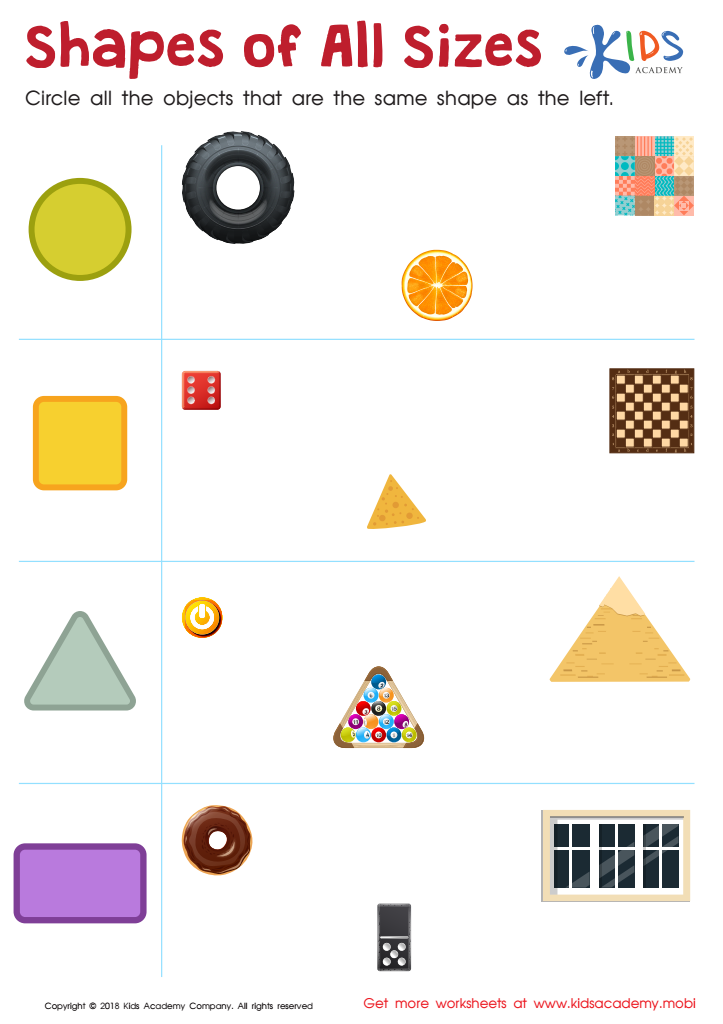
Shapes of All Sizes Worksheet
 Assign to My Students
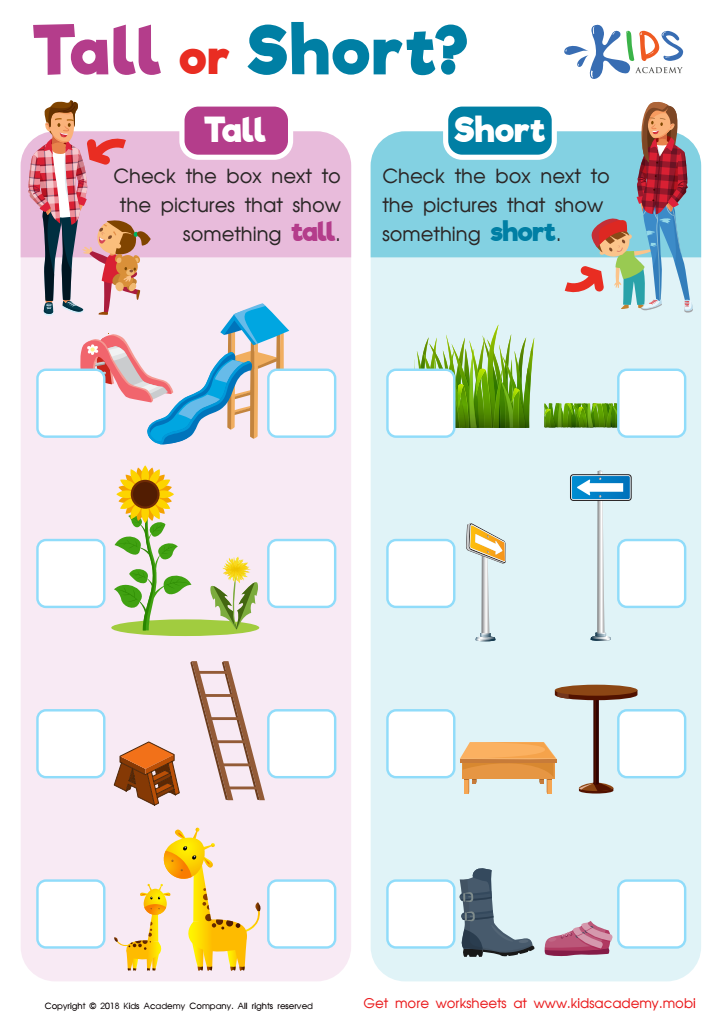
Tall or Short? Worksheet
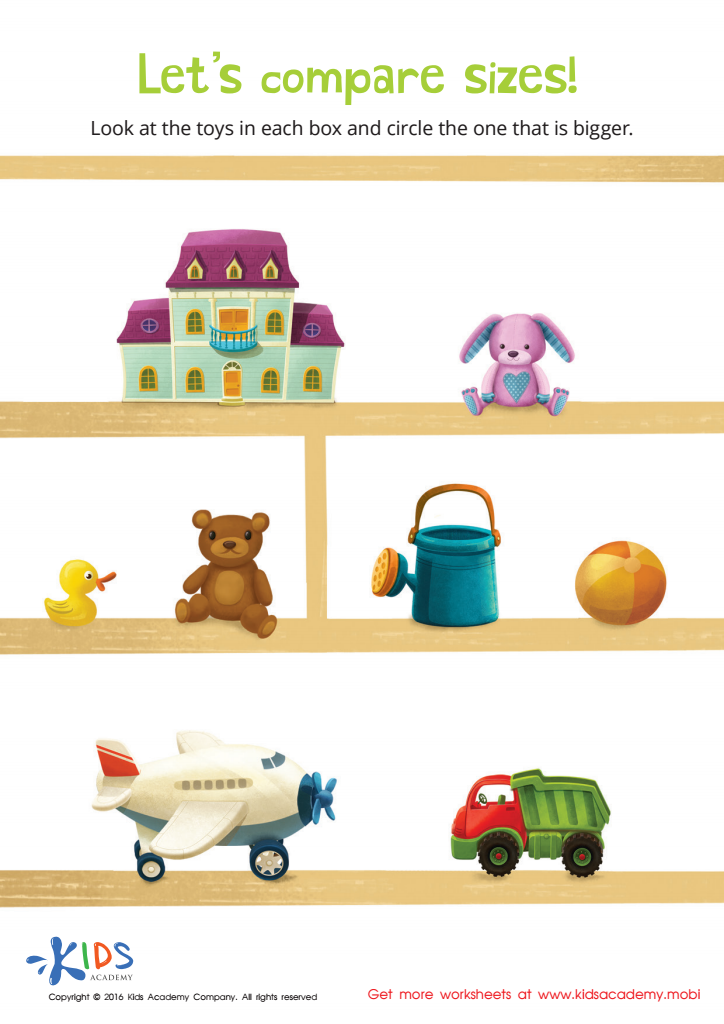
Classifying by Size Sorting Worksheet
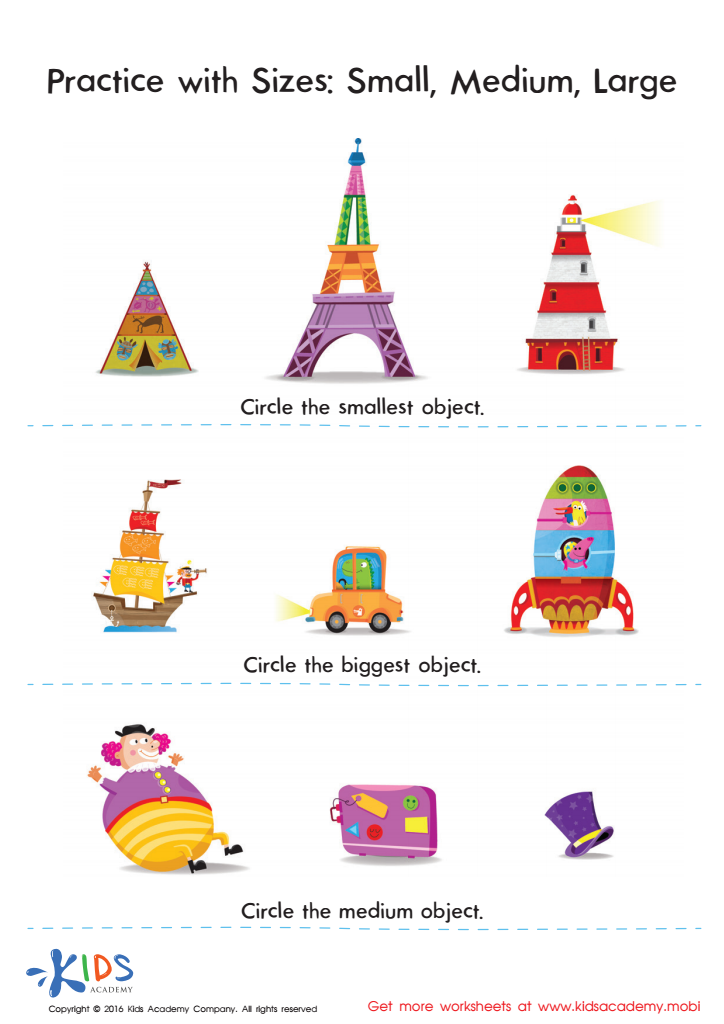







Understanding sizes for children aged 3-8 is crucial because it forms the foundation for cognitive development and practical life skills. At this age, kids are in a prime stage of cognitive growth where they are learning to categorize and organize the world around them. Grasping concepts like big, small, tall, short, heavy, and light helps children develop their spatial awareness, which is critical for tasks such as navigating their environment, following instructions, and solving problems.
For parents and teachers, emphasizing size understanding enhances children's vocabulary and language skills as they learn to describe and compare objects. It also boosts their mathematical abilities, laying groundwork for more complex concepts like measurement, volume, and geometry. For instance, when children compare sizes of different containers, they begin to understand ideas about quantity and capacity, which are fundamental mathematical concepts.
Additionally, understanding sizes can improve fine and gross motor skills. Activities like sorting objects by size, stacking blocks, or measuring ingredients for a recipe require precise movements and coordination.
Lastly, mastering size concepts promotes social skills and independence. Children confidently select appropriately sized clothing, portion their food, or share toys knowing they can make informed decisions based on size. Thus, fostering a strong understanding of sizes helps children in diverse aspects of their overall development.








