Understanding times tables Worksheets for Ages 3-8
6 filtered results
-
From - To
Nurture your child's math skills with our "Understanding Times Tables Worksheets for Ages 3-8." These engaging, printable resources are designed to make learning multiplication easy and fun. With bright visuals and interactive exercises, kids can grasp the core concepts of times tables step-by-step. Suitable for both classroom and home use, our worksheets lay a solid foundation for young learners, helping them build confidence and excel in arithmetic. Whether your child is a beginner or looking to strengthen their skills, these tools are perfect for fostering a love for math from an early age. Explore and download now!
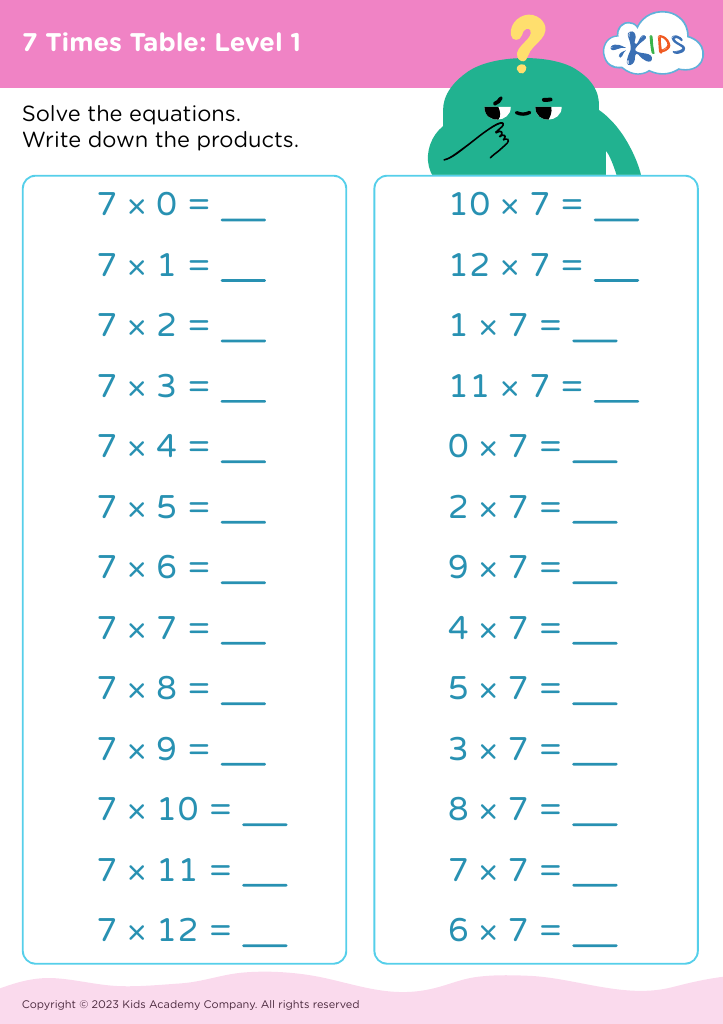
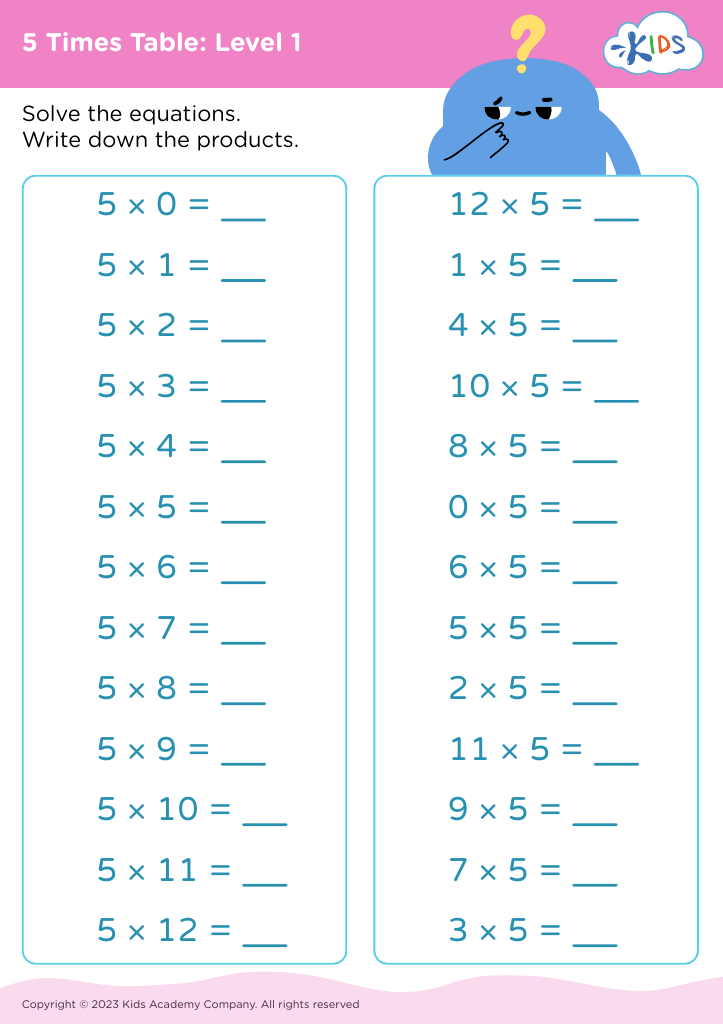
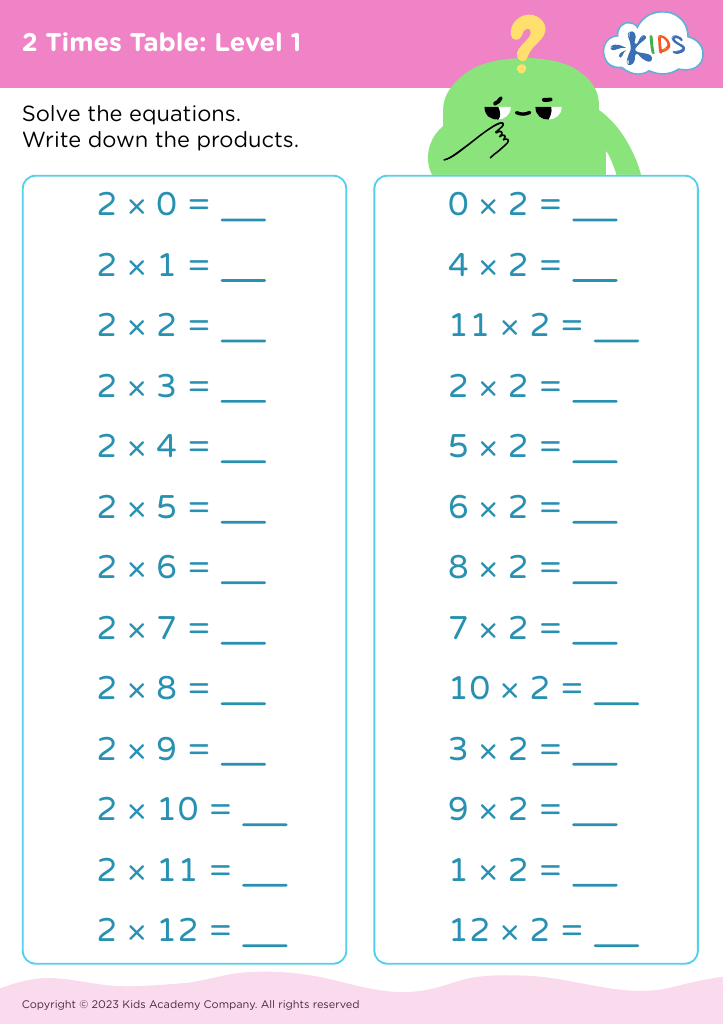
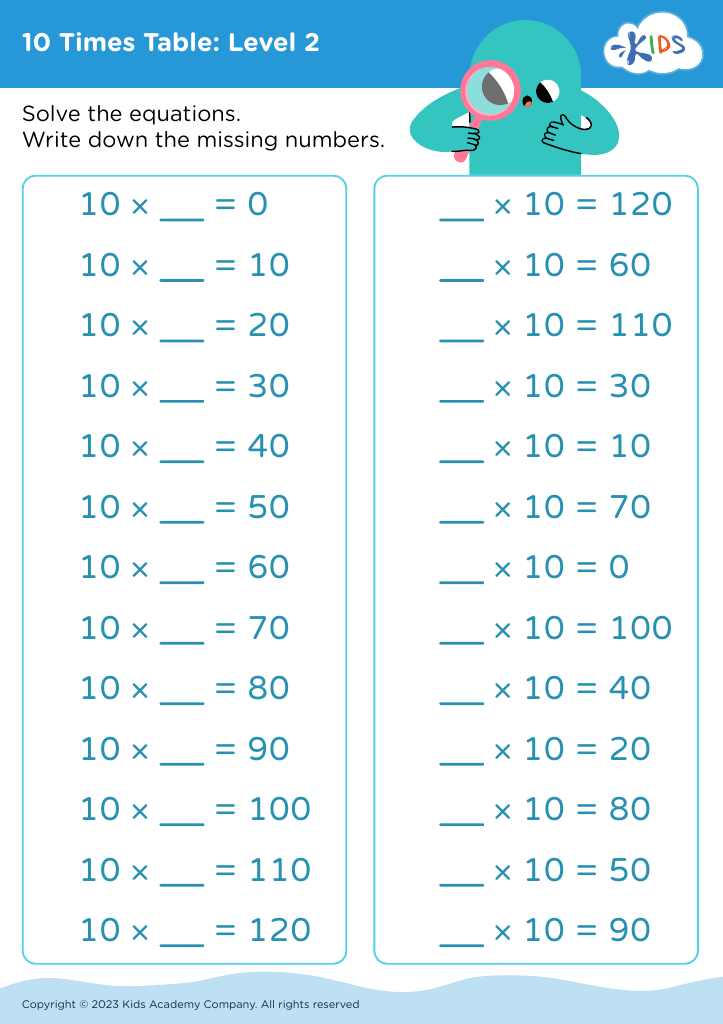
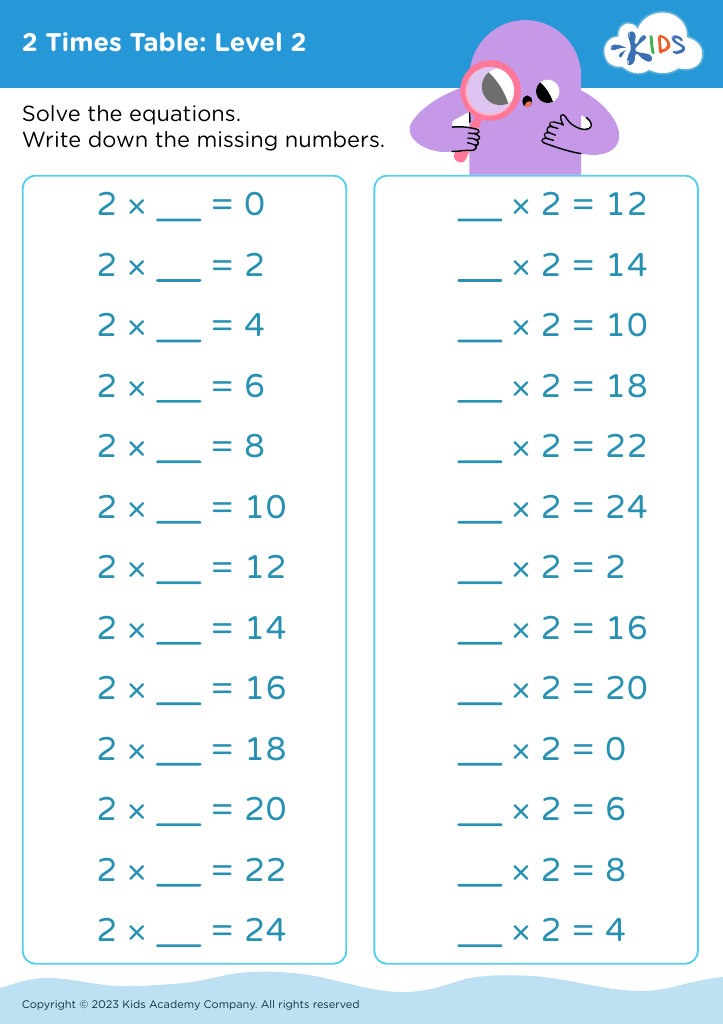
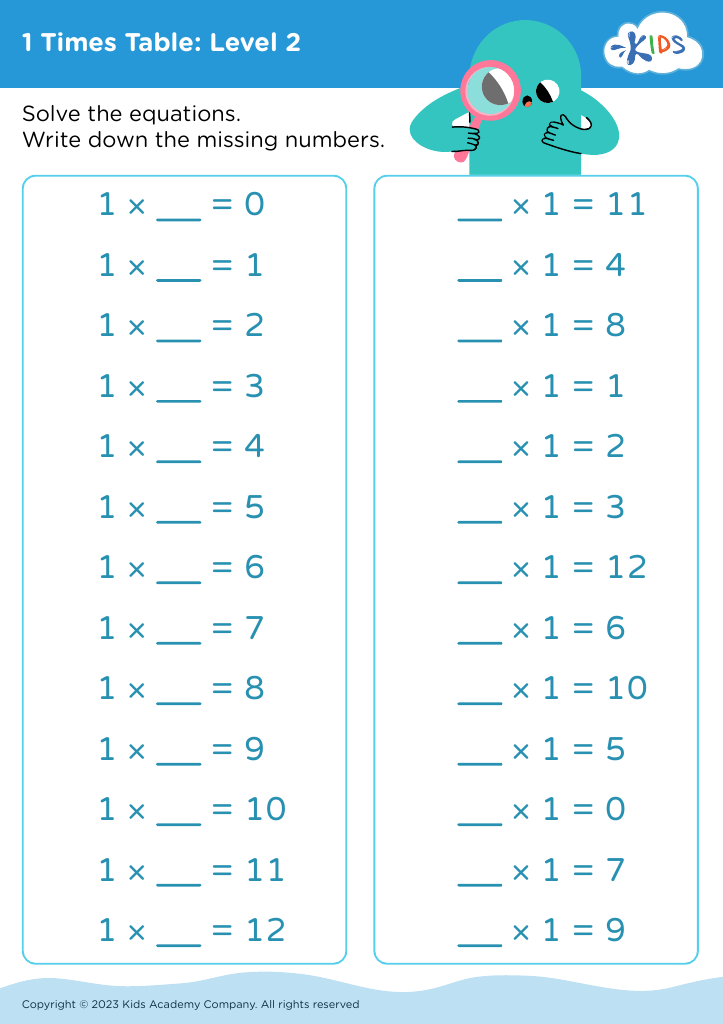







Understanding times tables is foundational for children aged 3-8, as it sets the stage for future mathematical learning and everyday functioning. First, mastering times tables at an early age increases a child's confidence and comfort with numbers, which can make subsequent mathematical concepts—like division, fractions, and algebra—easier to grasp. This foundational skill also promotes problem-solving abilities and logical thinking, crucial not just in academics but in real-life situations.
For parents, aiding their children in understanding times tables can enhance their child’s school performance and foster a positive attitude toward learning. With math being a critical subject for standardized tests, early familiarity makes these assessments less daunting. Teachers should prioritize this since a solid grasp of times tables helps balance classroom activities by necessitating less repetition of basic concepts and allowing more time to explore advanced topics.
Moreover, mental arithmetic encourages brain development, especially in areas related to working memory and cognitive flexibility. With early math skills being a predictor of later academic achievement, fostering a strong mathematical foundation puts children on a path to long-term success. Thus, both parents and teachers play pivotal roles in emphasizing the importance of times tables during these formative years.








