Word formation understanding Worksheets for Ages 3-8
3 filtered results
-
From - To
Enhance your child's language skills with our engaging "Word Formation Understanding Worksheets" designed for ages 3-8. These worksheets promote early literacy by introducing young learners to the fundamentals of word creation, spelling, and vocabulary development. Through fun activities such as matching words, filling in blanks, and simple puzzles, children will develop critical thinking and language comprehension. Ideal for home or classroom use, our worksheets cater to various learning styles, making them perfect for all young learners. Foster a love for words and boost confidence in reading and writing with these essential educational resources. Download your free worksheets today!
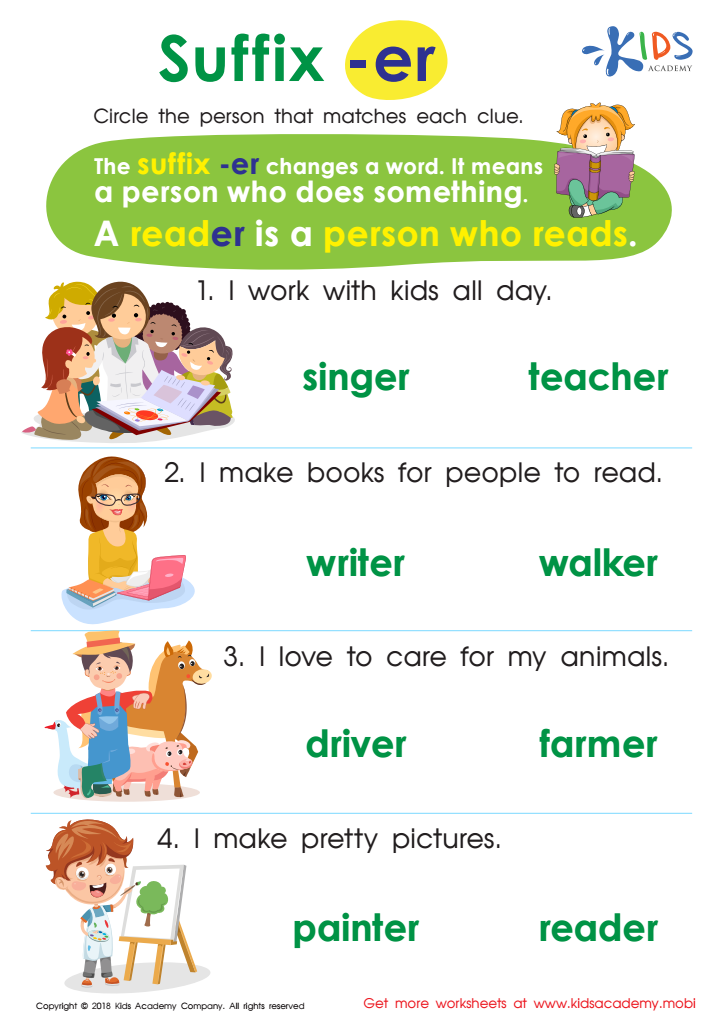
Suffix –er Printable Worksheet
 Assign to My Students
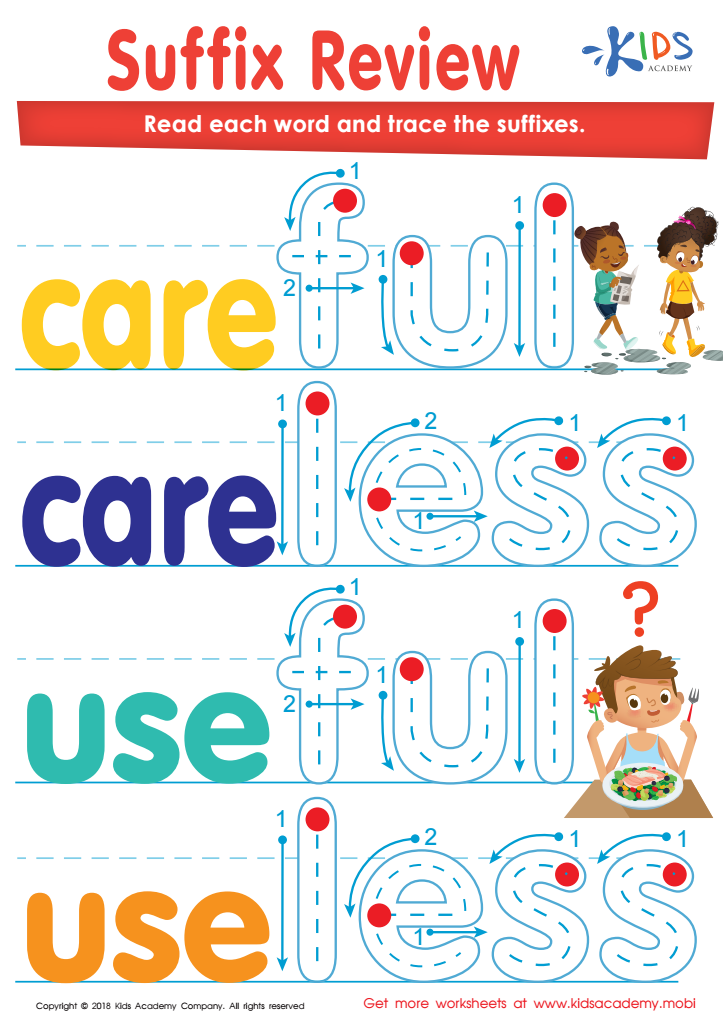
Suffix Review Worksheet
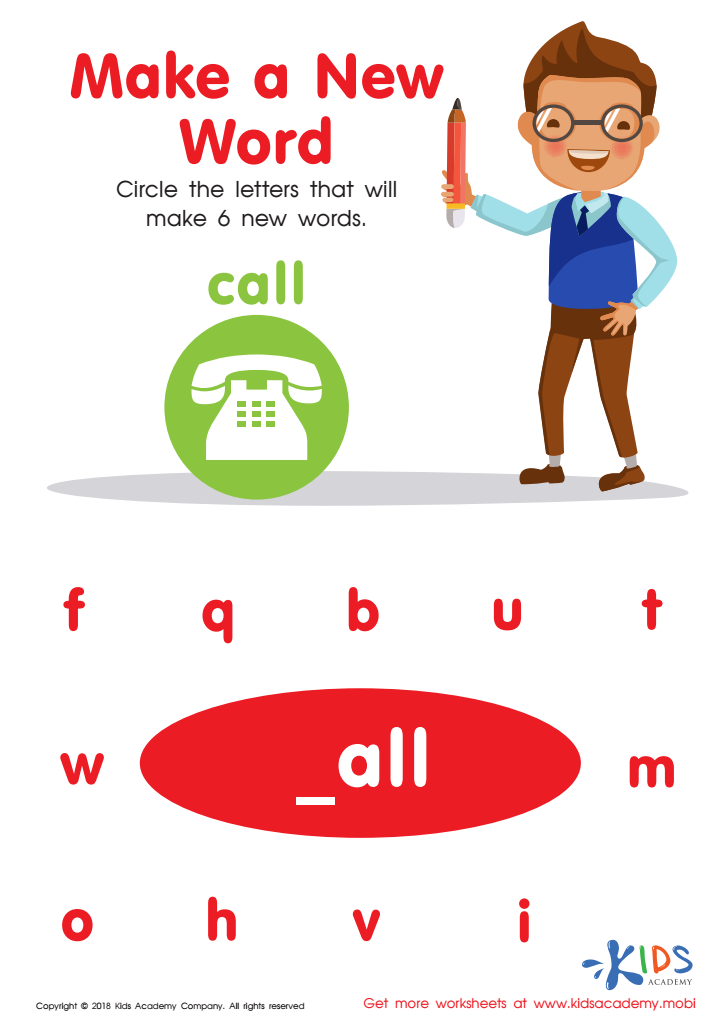
Make a New Word Worksheet








Understanding word formation is crucial for children aged 3 to 8, as it lays the foundation for effective literacy development. At this age, children are highly receptive to language, and exposure to word formation helps them grasp how words are constructed. This knowledge supports vocabulary growth, enabling children to decode new words and understand their meanings in context.
For parents and teachers, fostering this understanding encourages stronger reading and writing skills. When children learn to recognize prefixes, suffixes, and root words, they become more skilled readers and writers, enhancing their overall communication abilities. Additionally, comprehension skills are improved, as children can infer meanings from unfamiliar words based on their components.
Moreover, engaging children with word formation activities can spark their creativity and critical thinking. It can be both fun and educational, making learning engaging through games and interactive tasks that motivate young learners.
Overall, promoting understanding of word formation nurtures children's linguistic awareness, supports academic success, and builds a lifelong love of words and literacy, ultimately aiding their confidence and competence as communicators. Parents and teachers play a vital role in this developmental stage, making word formation a key focus in early education.








