Critical Thinking Adding 2-digit Numbers Worksheets for Ages 3-8
3 filtered results
-
From - To
Welcome to our "Critical Thinking Adding 2-Digit Numbers Worksheets" for children aged 3-8! These thoughtfully designed worksheets engage young learners by promoting critical thinking skills through fun and interactive math challenges. Your child will enhance their ability to solve two-digit addition problems while building strong foundational skills that extend beyond math. With a focus on developing reasoning and problem-solving abilities, our worksheets not only make learning enjoyable, but also foster independent thought processes. Ideal for both parents and educators, these resources transform math practice into an exciting adventure, helping kids master addition with confidence. Explore our critical thinking worksheets today!
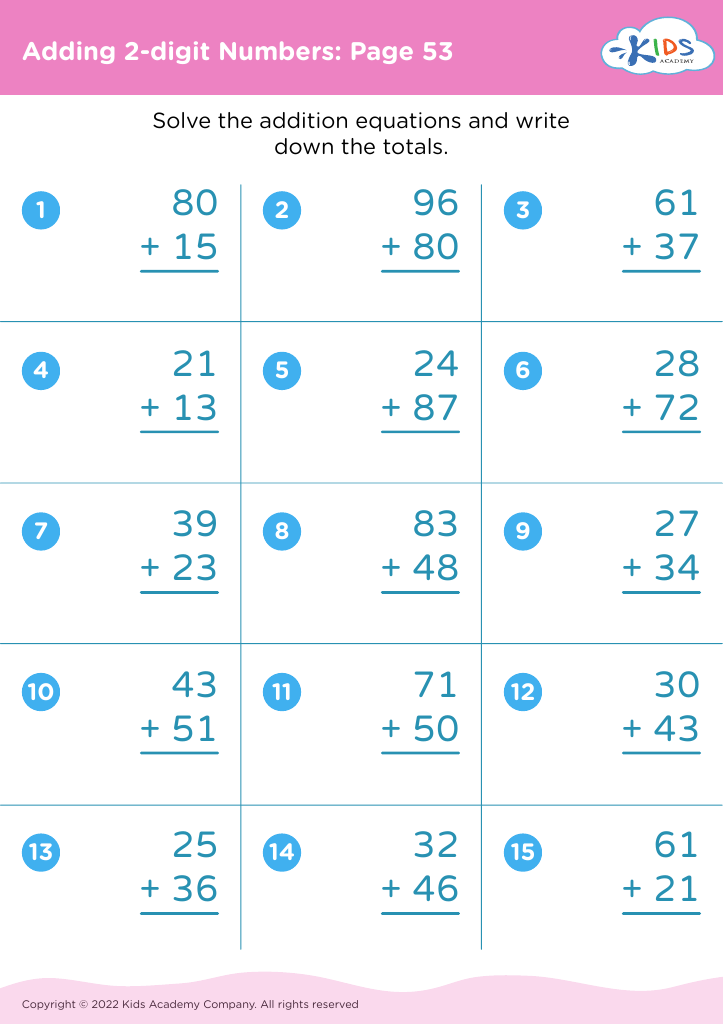
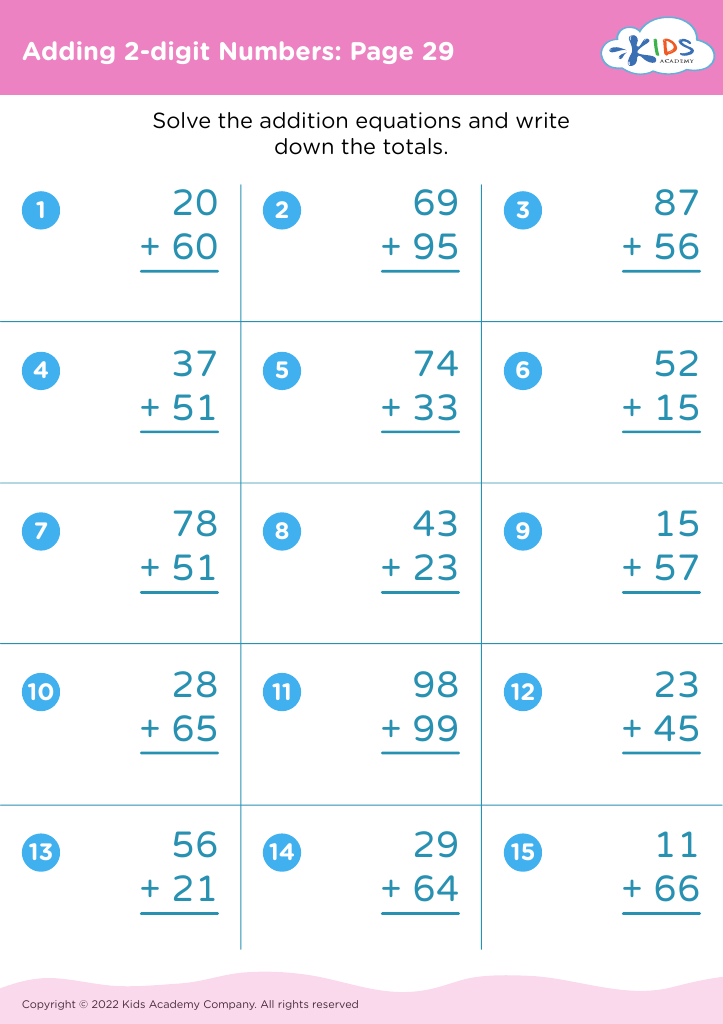
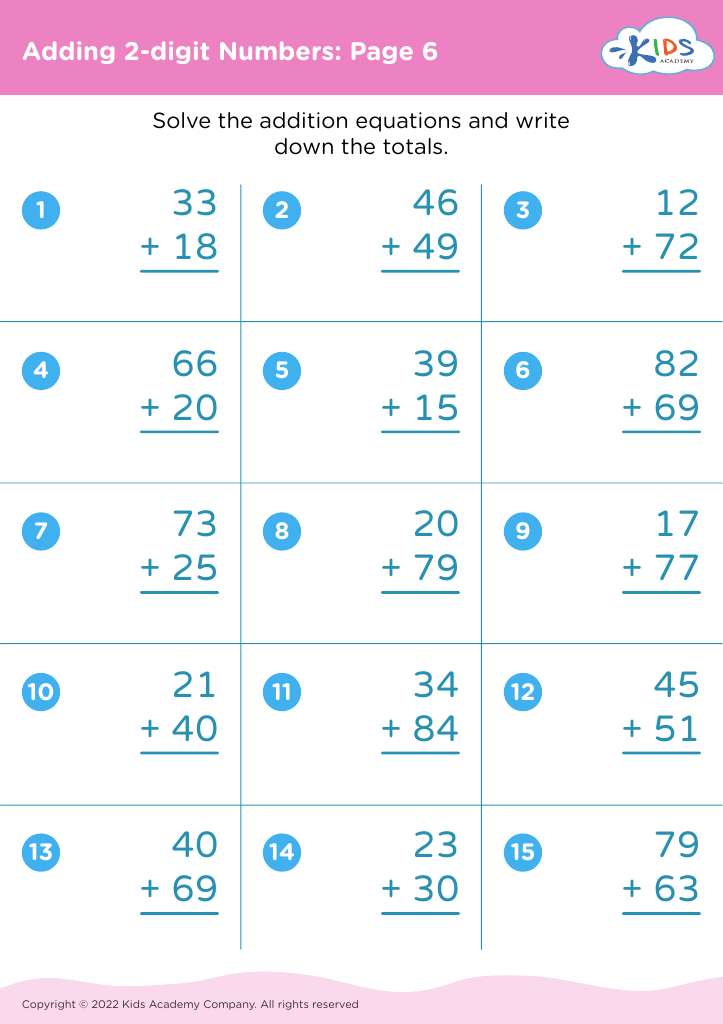








Parents and teachers should prioritize fostering critical thinking skills in young children, particularly when it comes to fundamental concepts like adding 2-digit numbers. Critical thinking empowers children to understand the "why" and "how" behind mathematical operations, rather than just memorizing procedures. This deeper understanding promotes greater confidence in their abilities and encourages a lifelong love of learning.
From ages 3 to 8, children's cognitive abilities are rapidly developing. Providing opportunities for critical thinking enhances their problem-solving abilities, enabling them to approach challenges with creativity and flexibility. When children learn to break down a 2-digit addition problem into manageable parts—such as decomposing numbers or using visual aids—they are practicing vital skills applicable in various areas of life beyond math.
Moreover, critical thinking fosters collaboration and communication skills. Engaging in discussions about different strategies encourages children to articulate their thought processes, listen to others’ viewpoints, and justify their approaches. This not only improves their mathematical understanding but also builds social skills and emotional intelligence.
In an ever-changing world that demands adaptable thinkers, instilling critical thinking in early mathematics lay a strong foundation for future academic success and responsible citizenship. Enriching children’s educational experiences today will prepare them for the complexities of tomorrow.








