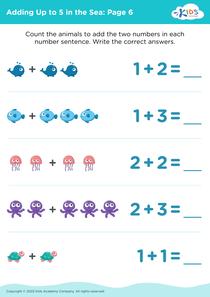
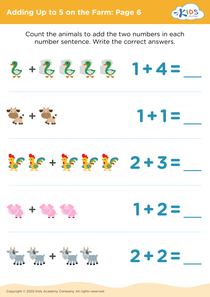
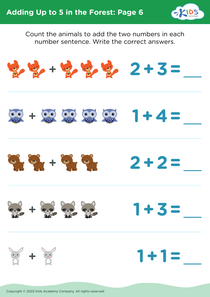
Animal identification Adding at the Zoo Worksheets for Ages 3-8
8 filtered results
-
From - To
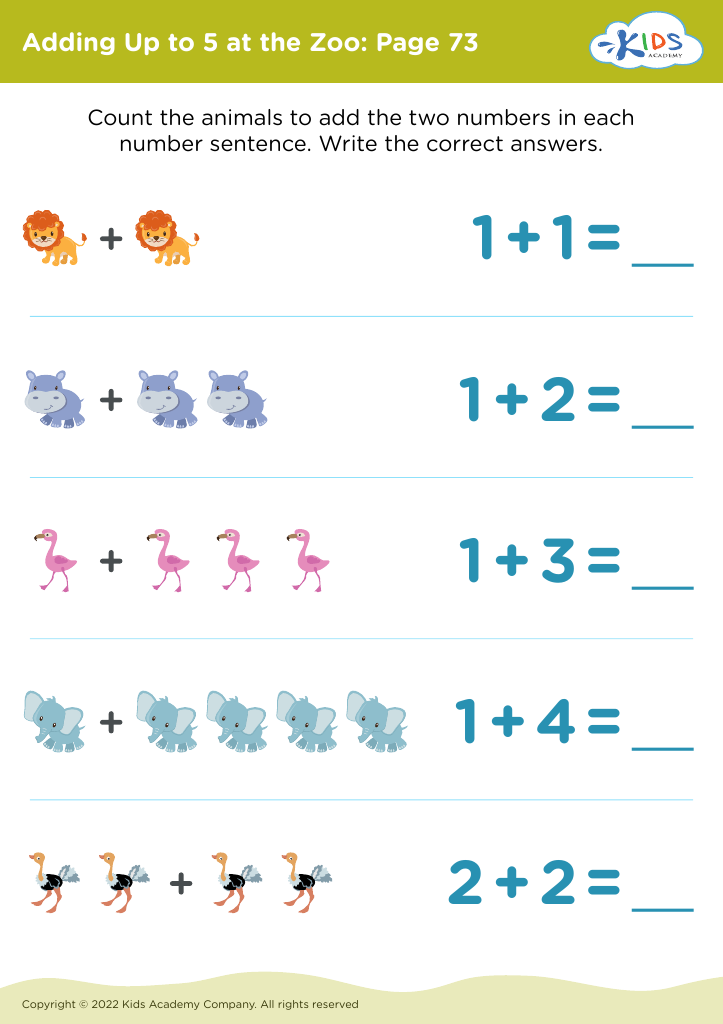
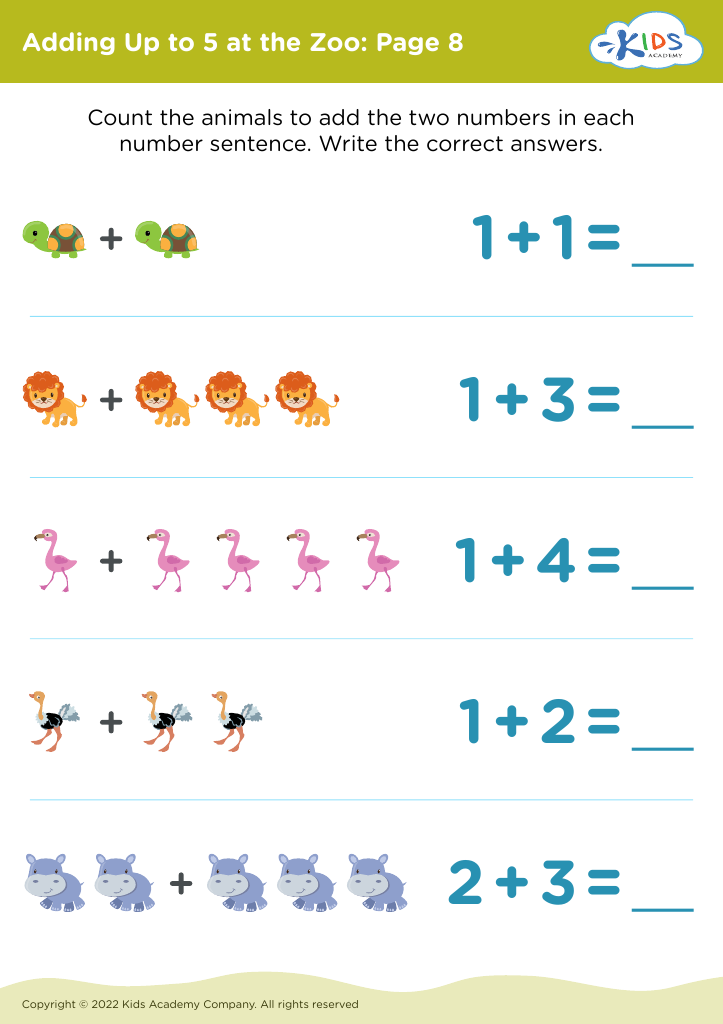
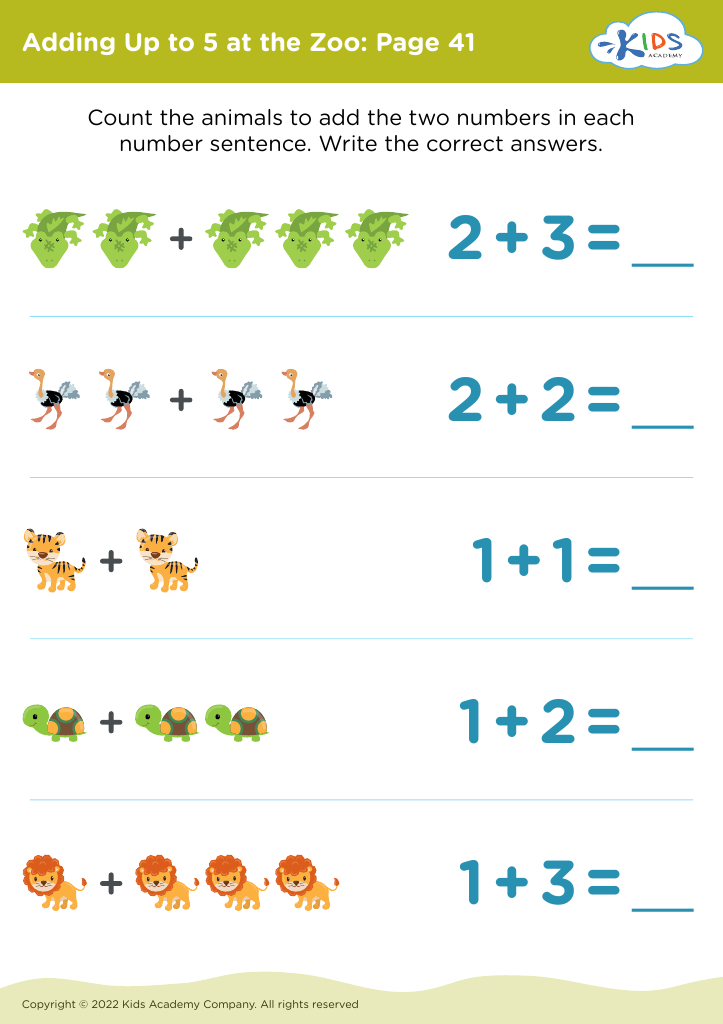
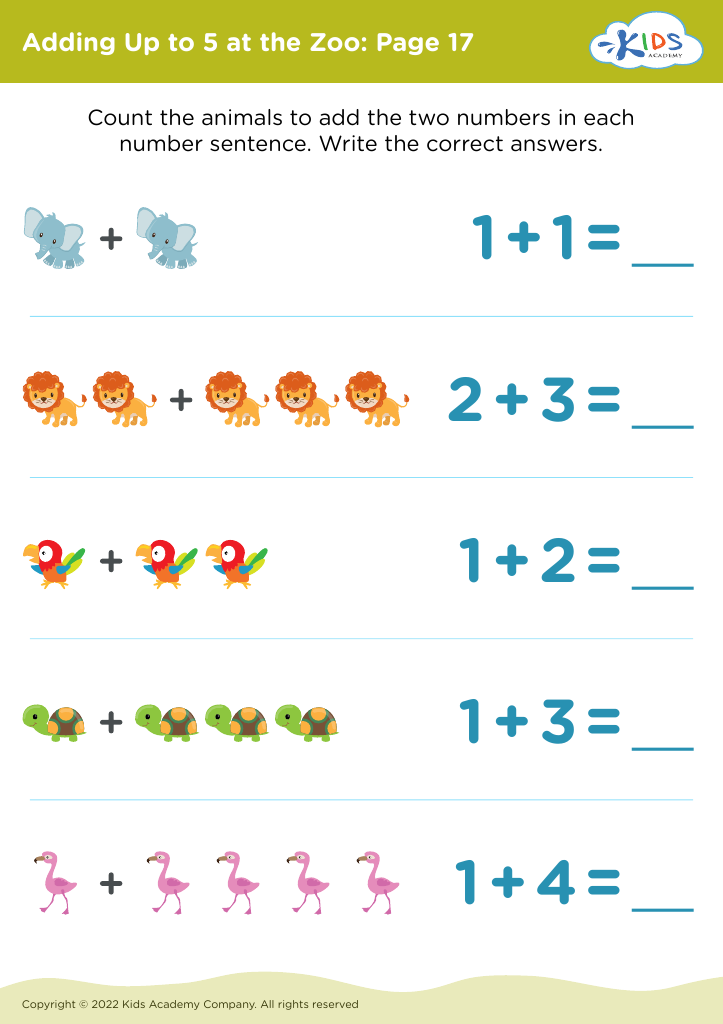
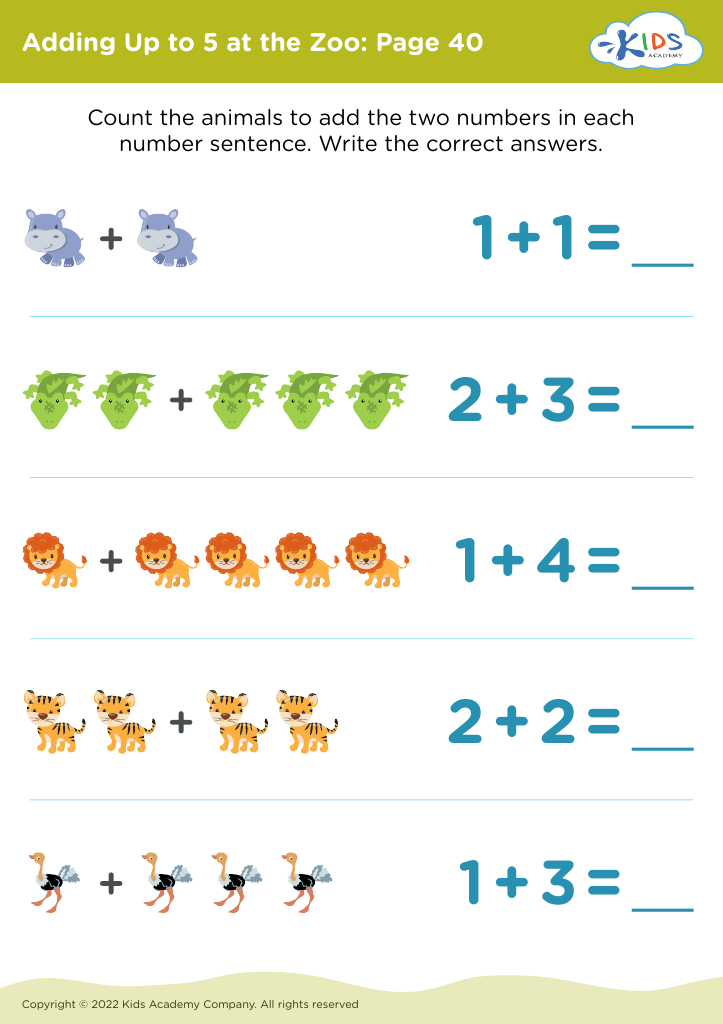
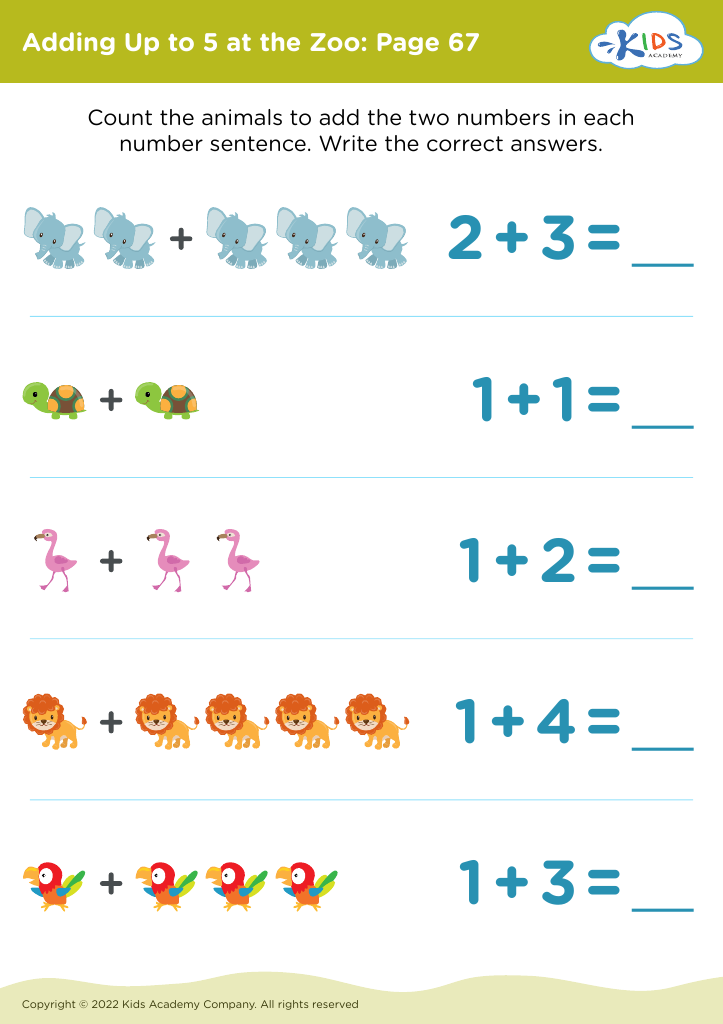
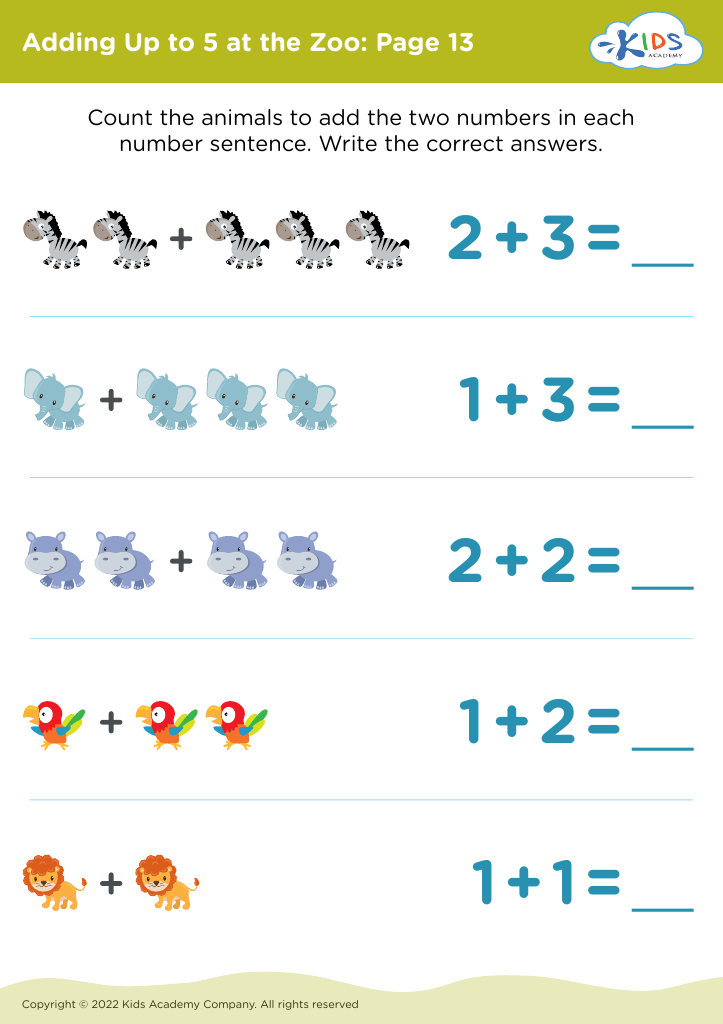
Discover a fun way to boost math and animal knowledge with our "Animal Identification Adding at the Zoo Worksheets" for ages 3-8! Perfect for young learners, these worksheets blend the excitement of a zoo visit with fundamental adding skills. Kids will enjoy identifying various animals, including lions, elephants, and giraffes, while practicing their addition. Designed to engage and educate, these printable activities support cognitive development, critical thinking, and early math confidence. Ideal for homeschooling or classroom settings, our zoo-themed worksheets make learning a wild adventure. Explore and enhance your child's math and animal identification skills today!
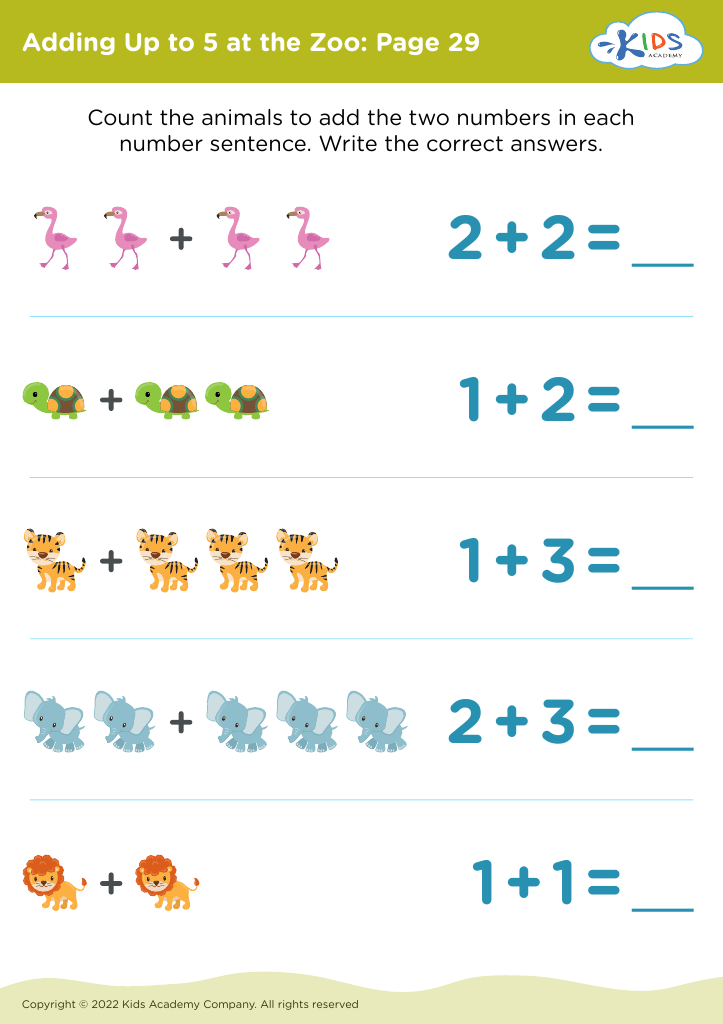



Caring about animal identification and corresponding activities at the zoo for children aged 3-8 is vital for several reasons. Firstly, early exposure to animals broadens young minds and fosters curiosity about the natural world. By learning to identify various animals, children enhance their observational skills and attention to detail, fundamental cognitive abilities that benefit overall academic development.
Secondly, discussing animals and their characteristics helps in the development of language skills. Naming animals, describing their habitats, sounds, and behaviors expands vocabulary and enhances communication abilities. Moreover, these activities can spark interests in sciences, encouraging future learning in biology, ecology, and conservation.
Socially and emotionally, interacting with animals and learning about them can instill empathy and compassion in children. Understanding that animals have needs and feelings encourages responsible and caring behaviors. Games and projects centered around animal identification can also build teamwork and cooperative skills, as children work together in groups.
Finally, zoo visits provide a dynamic, engaging learning environment outside the traditional classroom. The immersive experience, complete with sensory inputs, significantly reinforces learning retention and makes education feel adventurous and fun. Overall, engaging children in animal identification at the zoo sets a strong foundation for lifelong learning and responsible, empathetic citizenship.