Animal recognition Adding at the Zoo Worksheets for Ages 3-8 - Page 2
43 filtered results
-
From - To
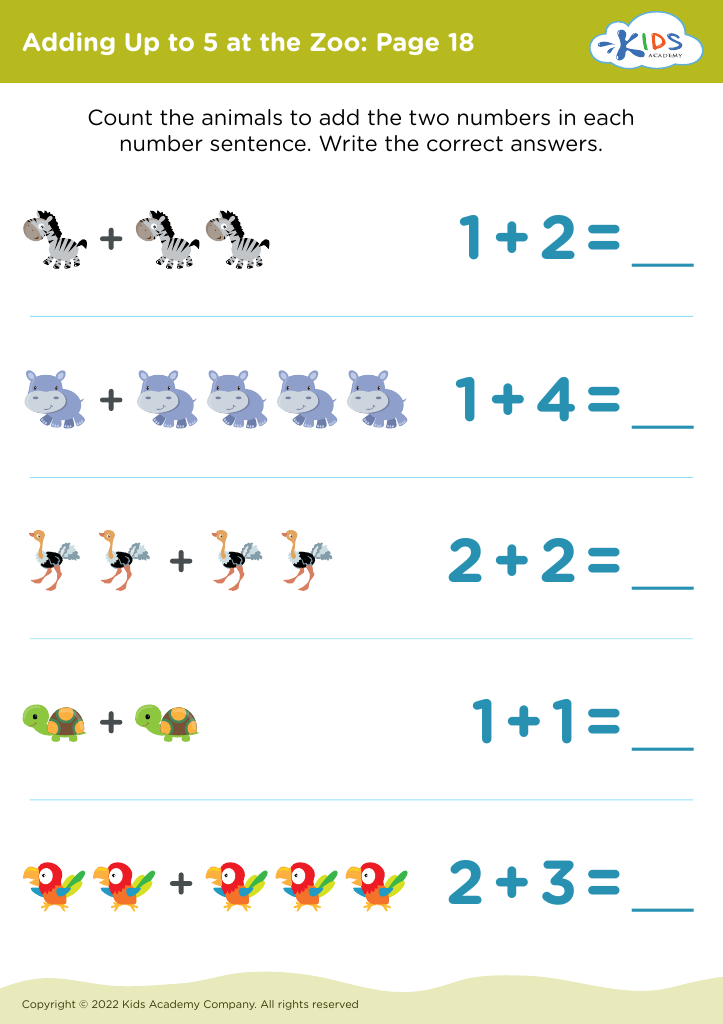
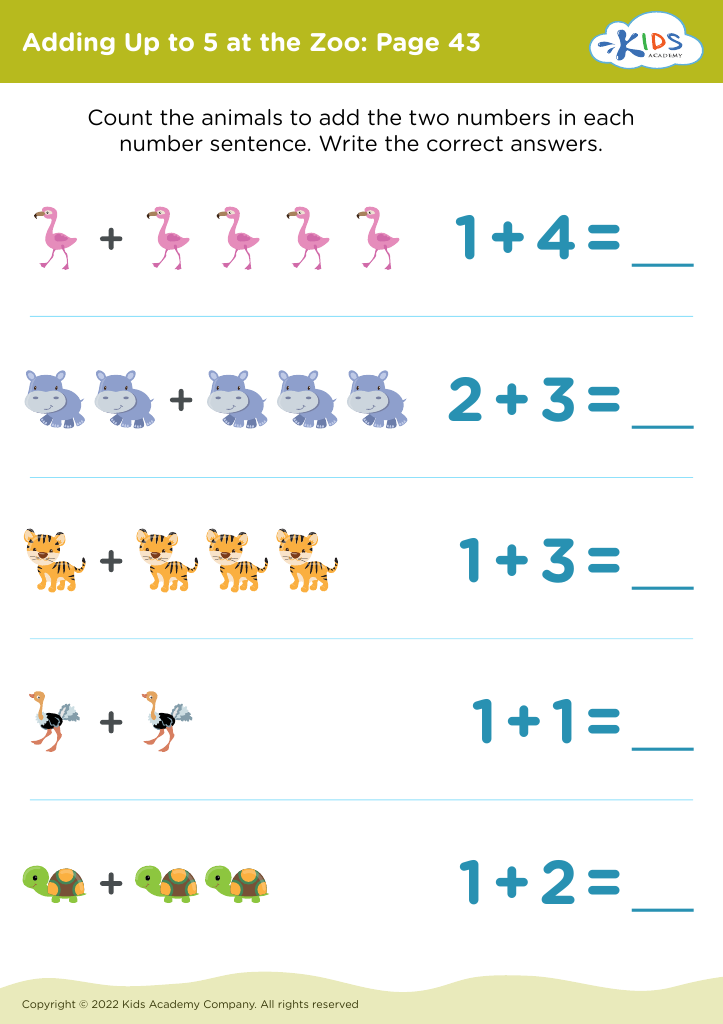
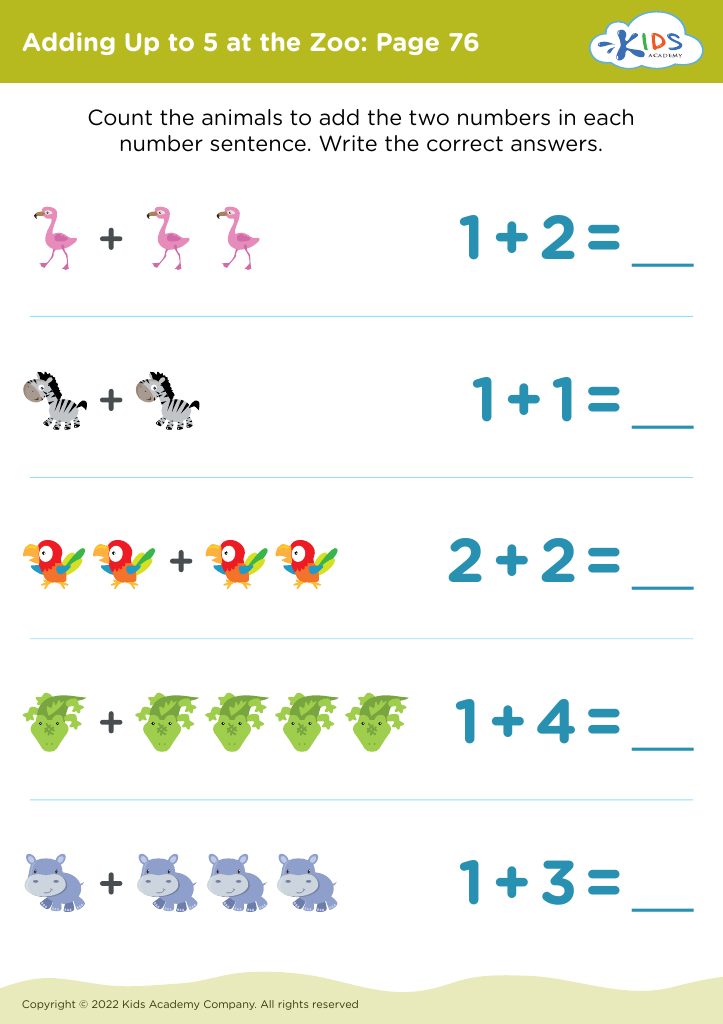
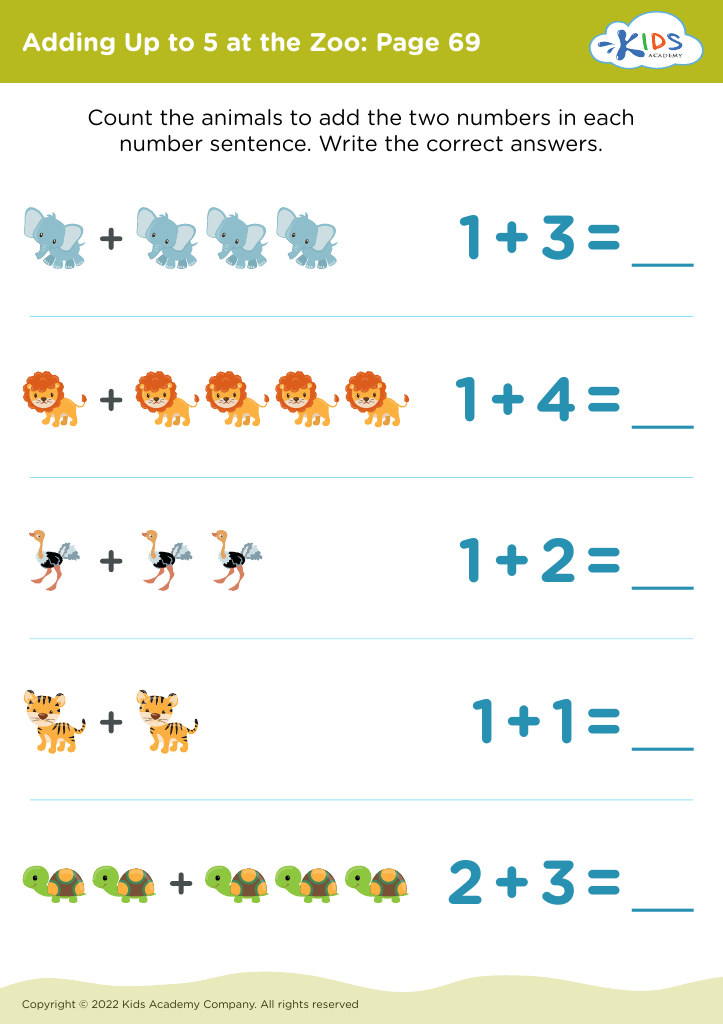
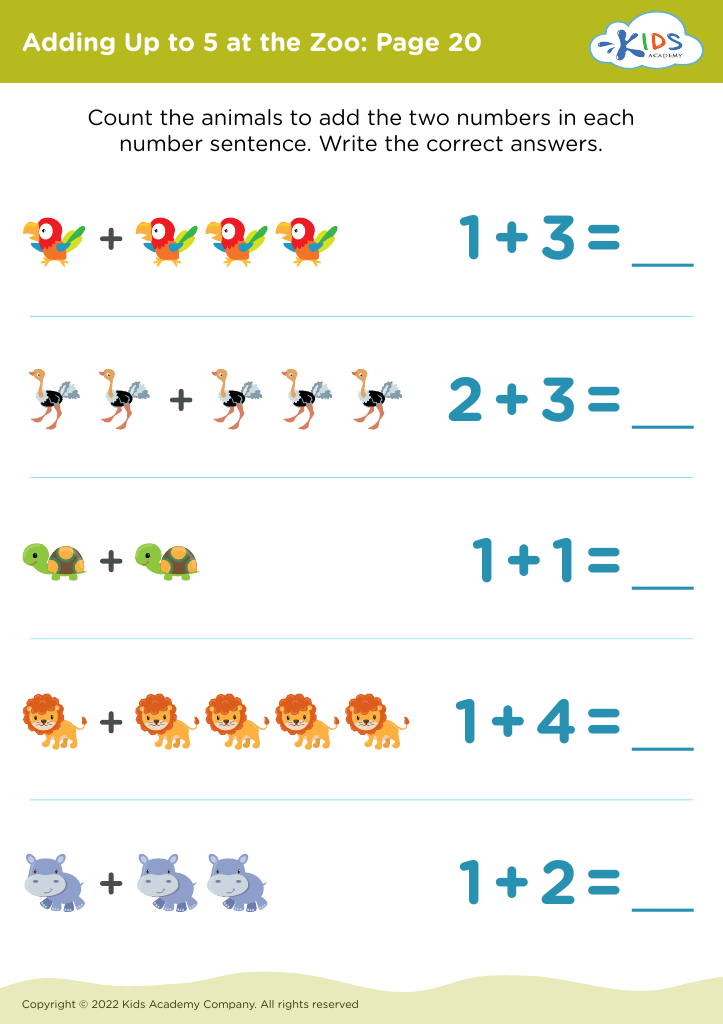
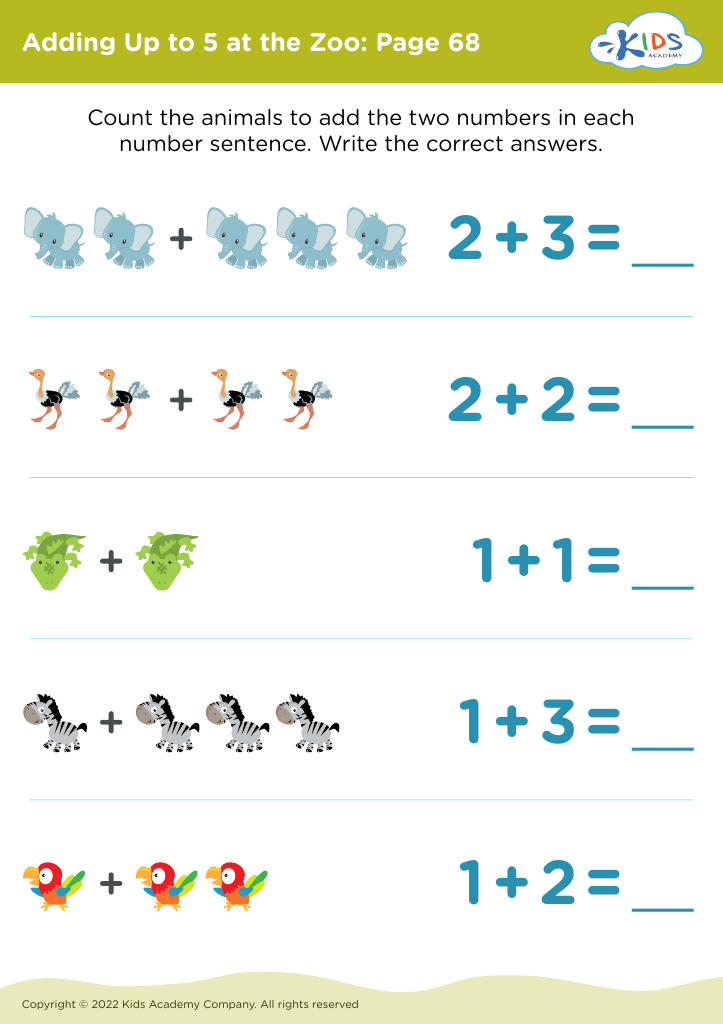
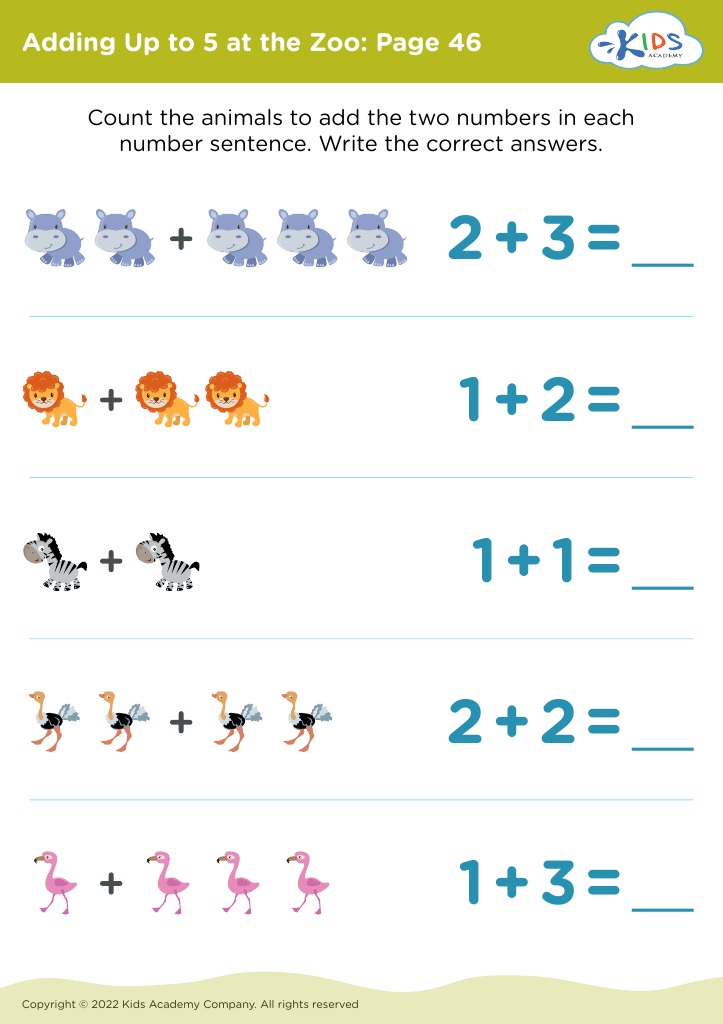
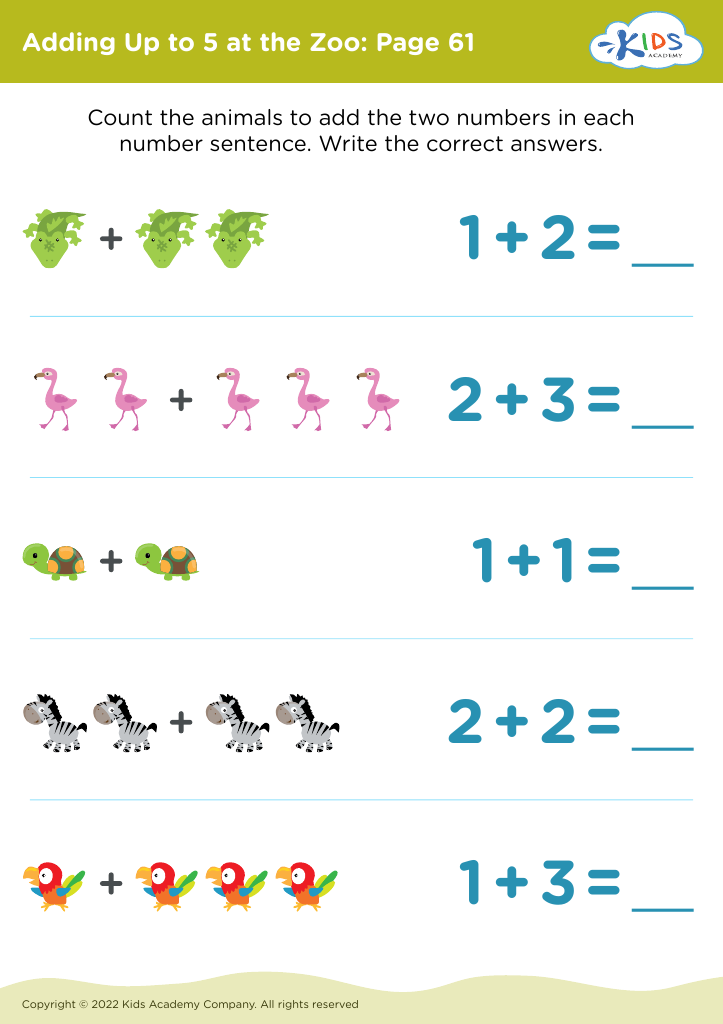
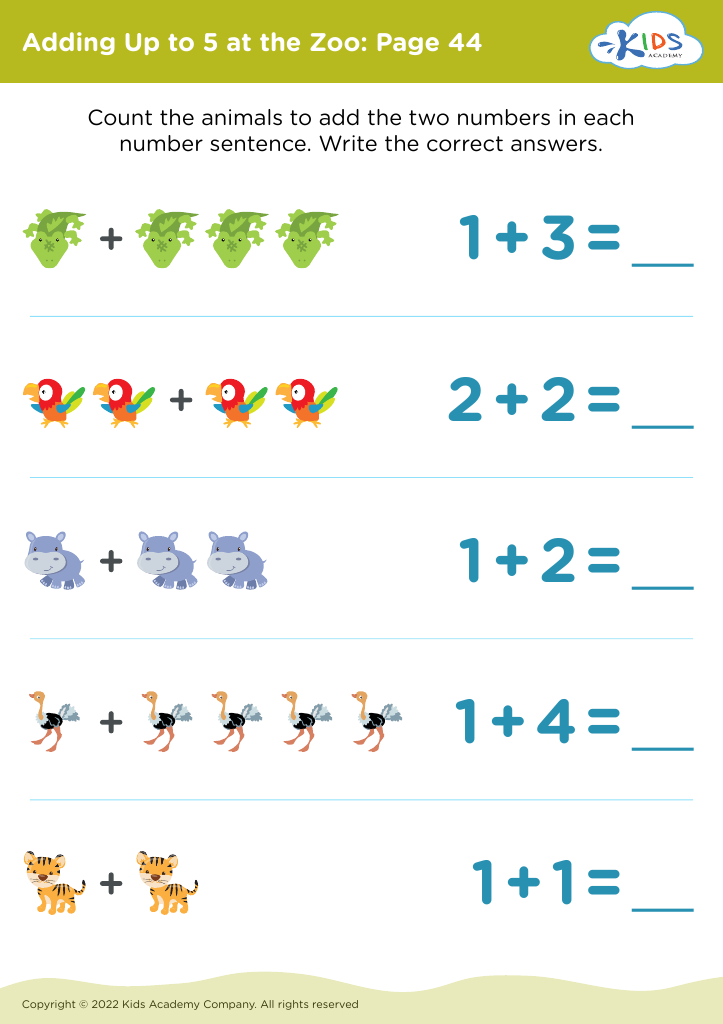
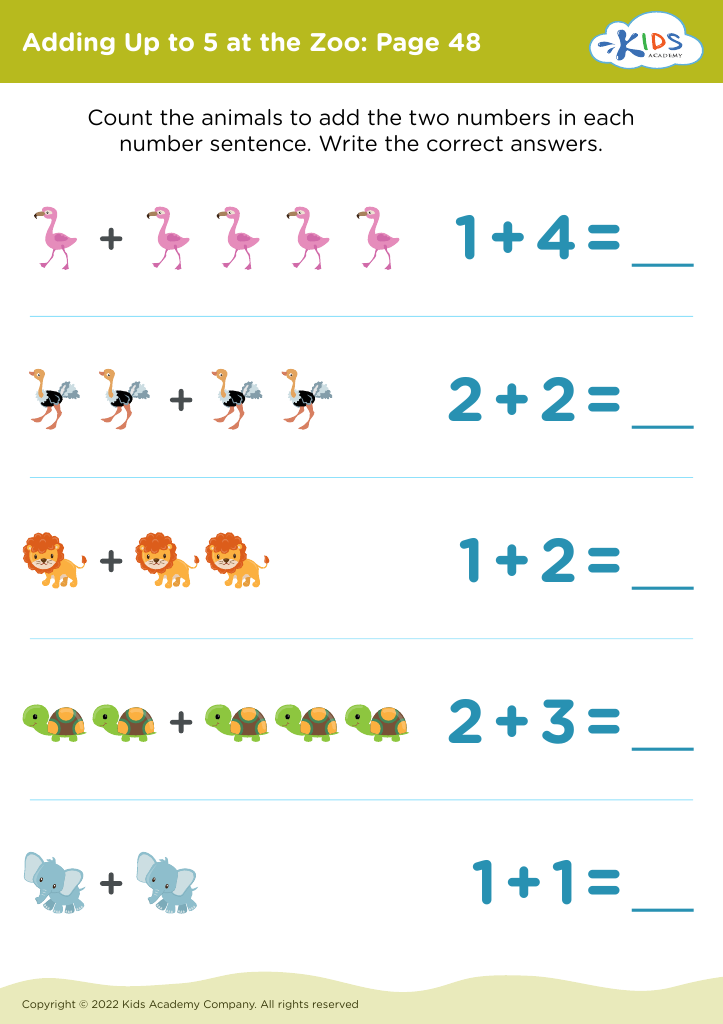
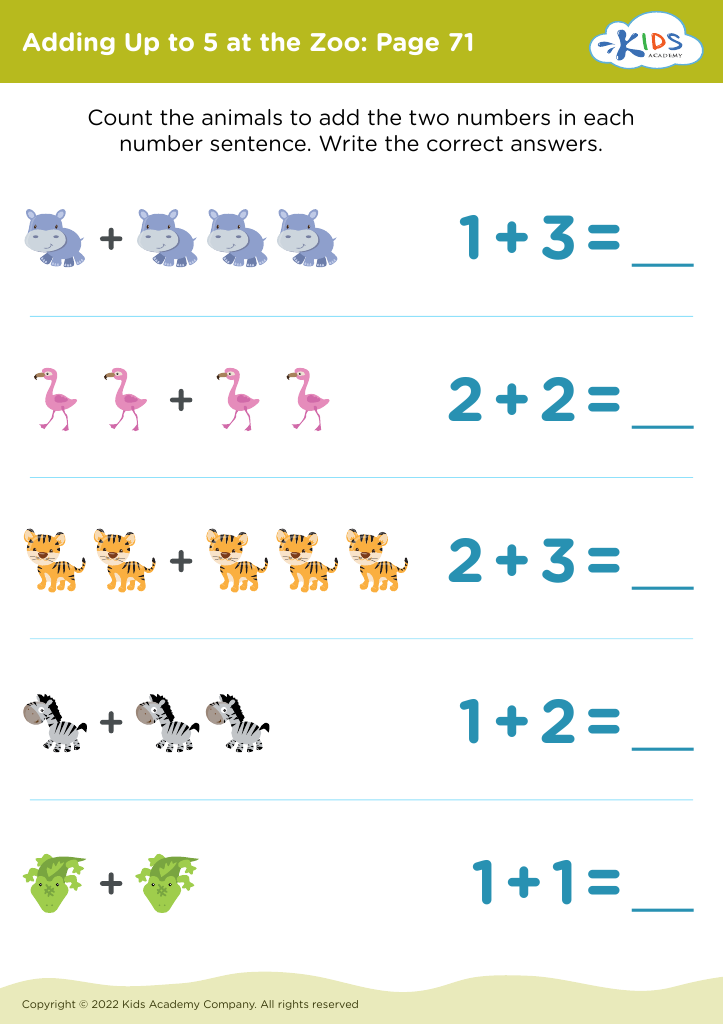
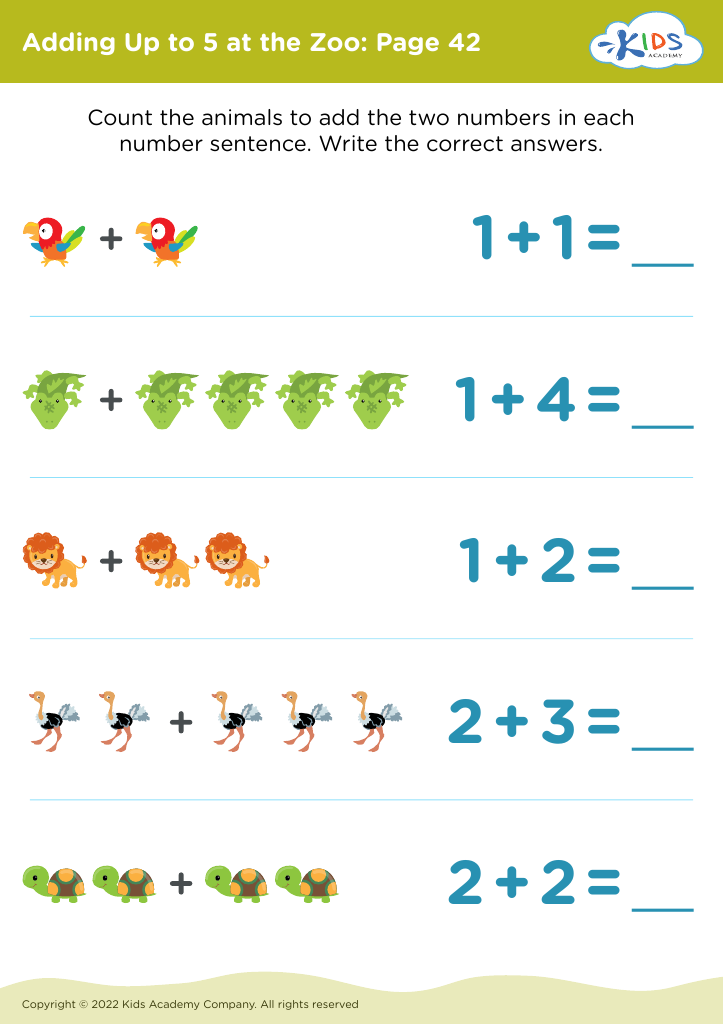
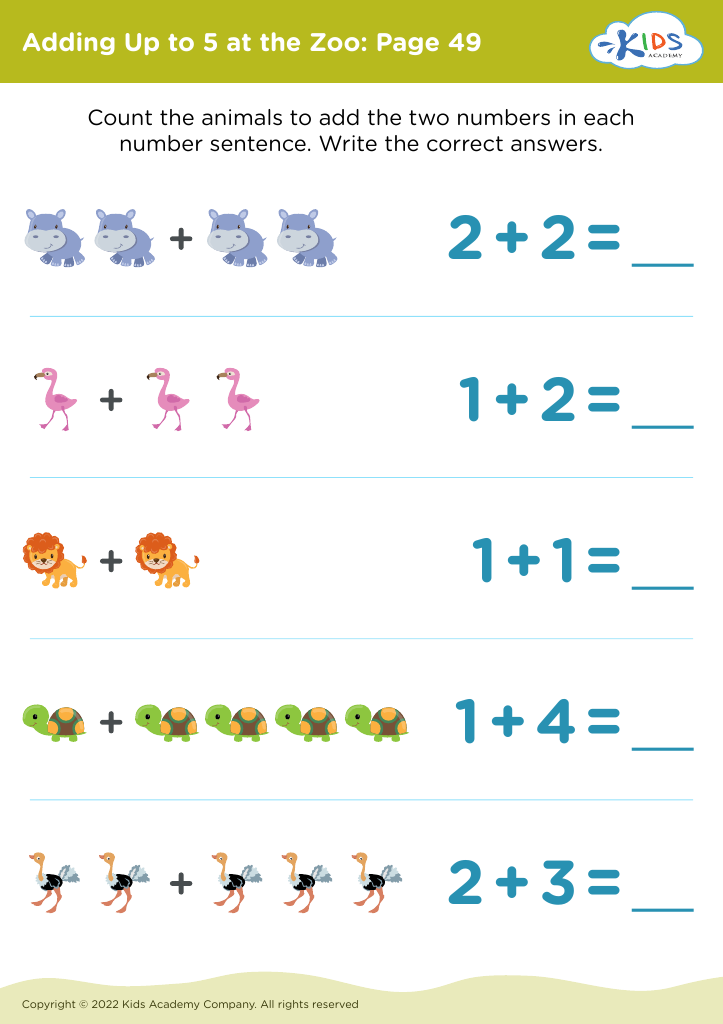
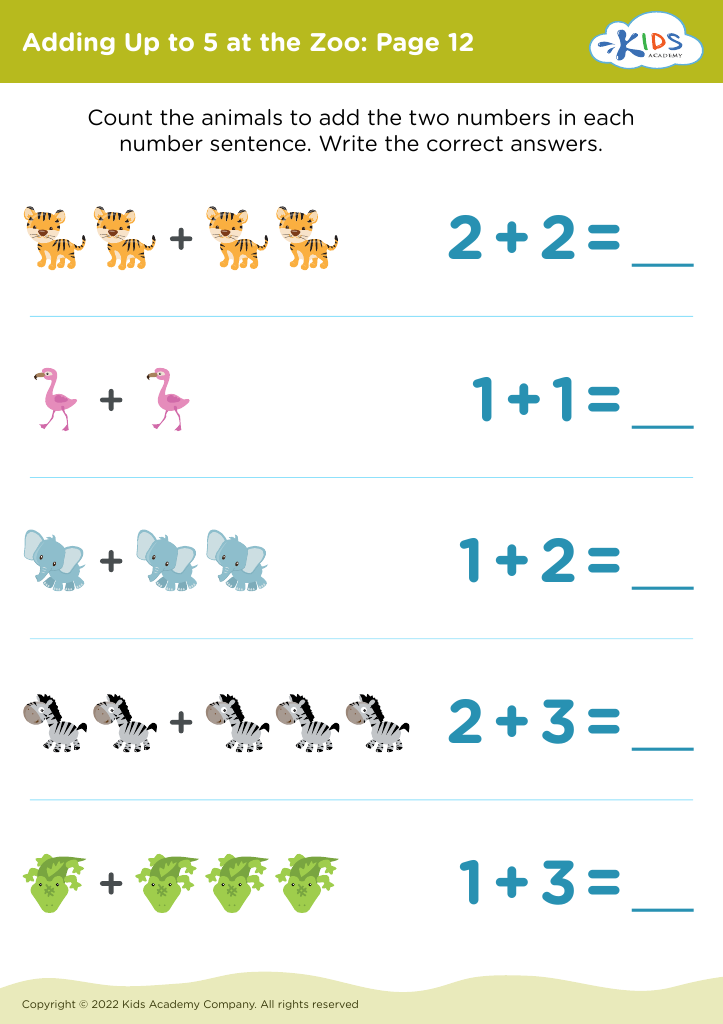
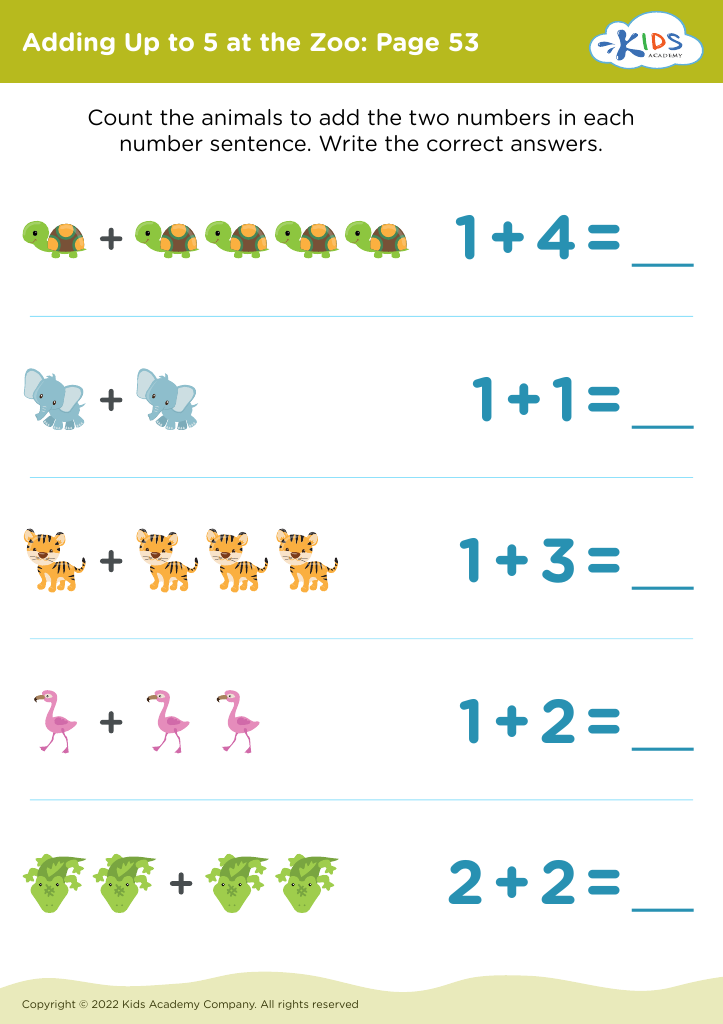
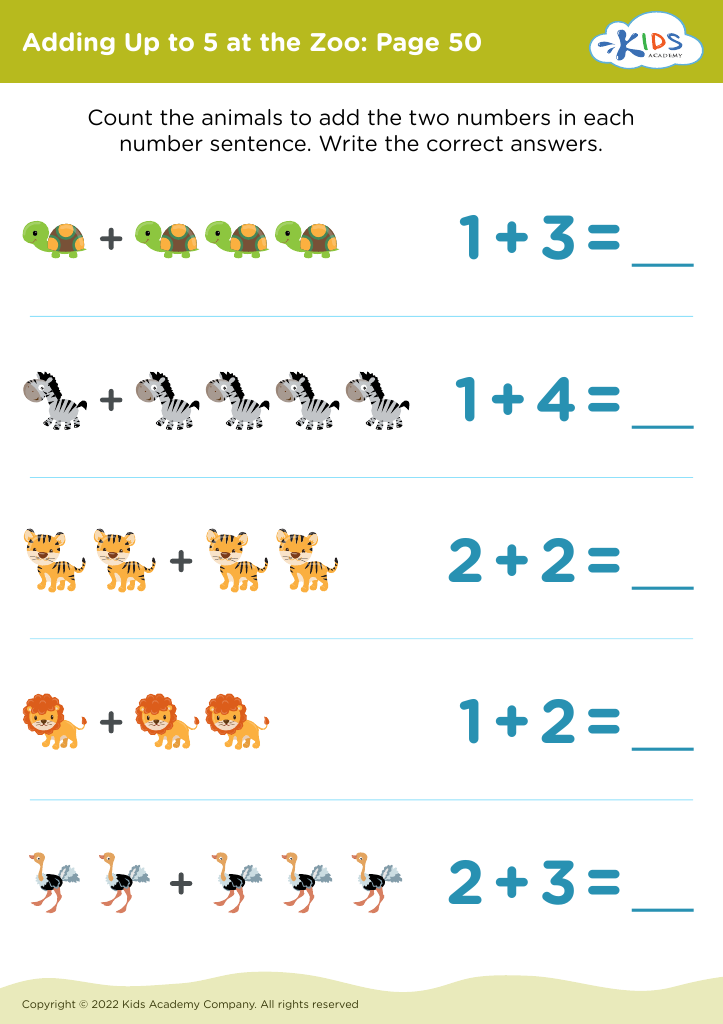
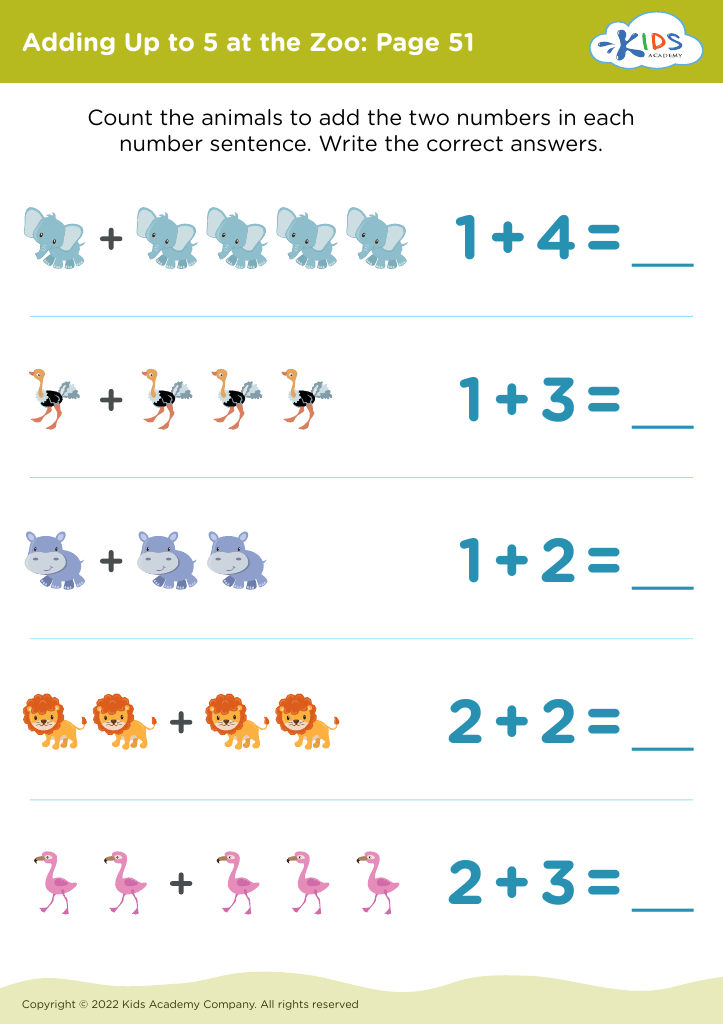
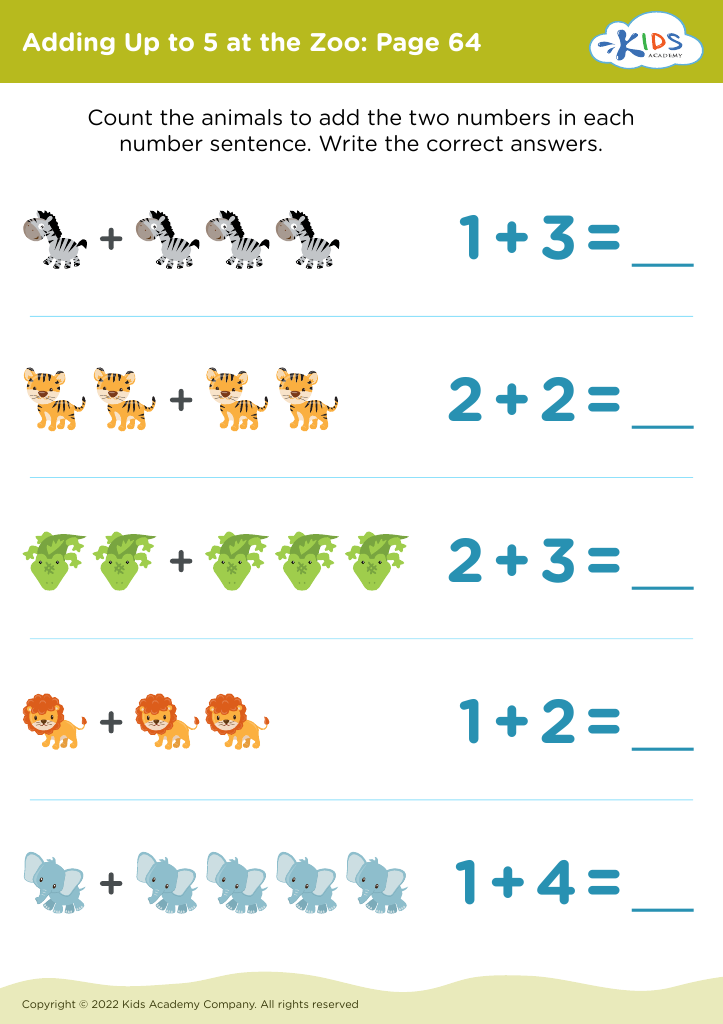
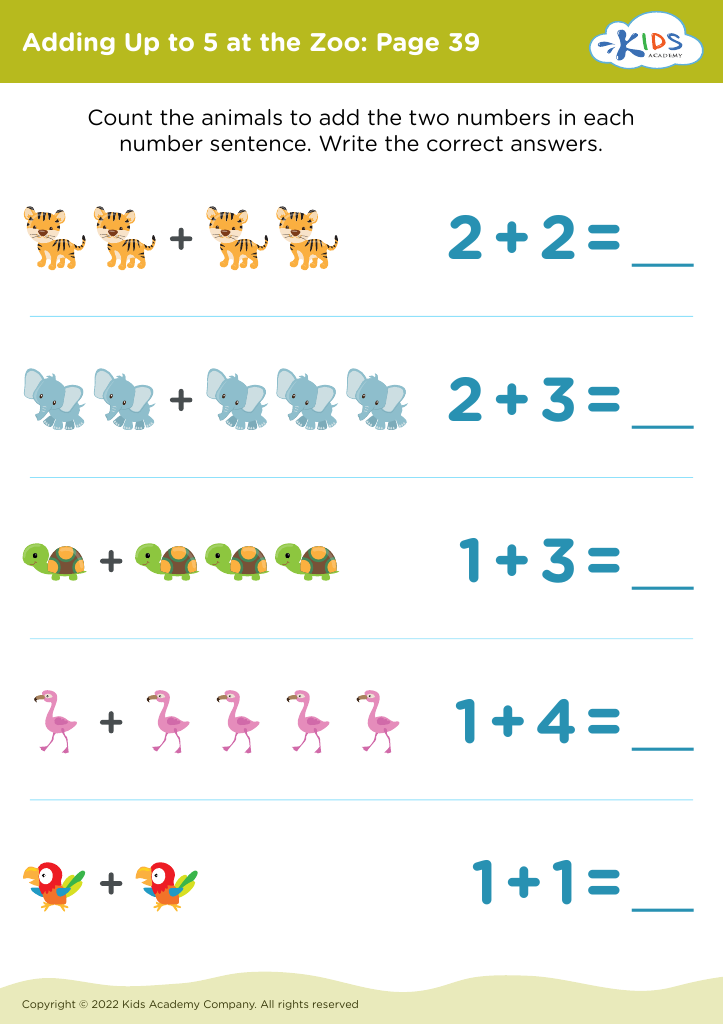



Animal recognition activities at the zoo are incredibly beneficial for young children aged 3-8. These activities promote early learning through play, helping children develop essential skills in a natural and engaging environment. First and foremost, recognizing animals enhances cognitive development. Children learn to identify different species, understand their characteristics, and categorize them, which fosters critical thinking.
Moreover, these experiences aid in language development. As children describe animals, use new vocabulary, and communicate thoughts and observations, they improve their verbal skills. Additionally, zoo visits promote social interactions, allowing children to share their findings, collaborate in groups, and develop teamwork skills.
Emotional benefits are also significant; bonding over animal recognition can deepen parent-child or teacher-student relationships, promoting a shared passion for wildlife. Lastly, these activities ignite curiosity about nature and conservation, instilling a sense of responsibility for protecting the environment.
Incorporating animal recognition at the zoo not only makes learning enjoyable but also cultivates a generation that values biodiversity and empathizes with living creatures. This foundational understanding can lead to lifelong advocacy for wildlife conservation, making it crucial for both parents and teachers to encourage engagement with this enriching experience.