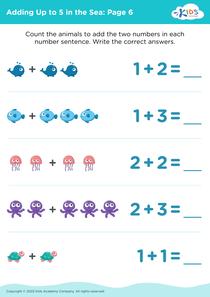
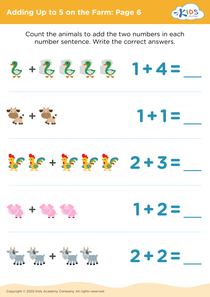
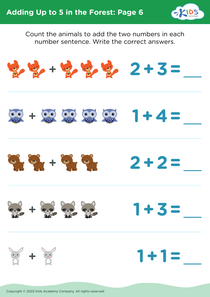
Basic addition practice Adding at the Zoo Worksheets for Ages 3-8
3 filtered results
-
From - To
Transform basic addition into a fun adventure with our "Adding at the Zoo" worksheets, designed for kids ages 3-8. Explore the animal kingdom while boosting math skills by solving simple addition problems featuring zoo animals. Engaging visuals and kid-friendly exercises make learning enjoyable and interactive. These worksheets are perfect for early learners, helping them grasp fundamental addition concepts while having a roaring good time. Ideal for classroom or home use, parents and teachers can support young learners to develop their math prowess with ease. Download today and watch your child's confidence and mathematical abilities grow!
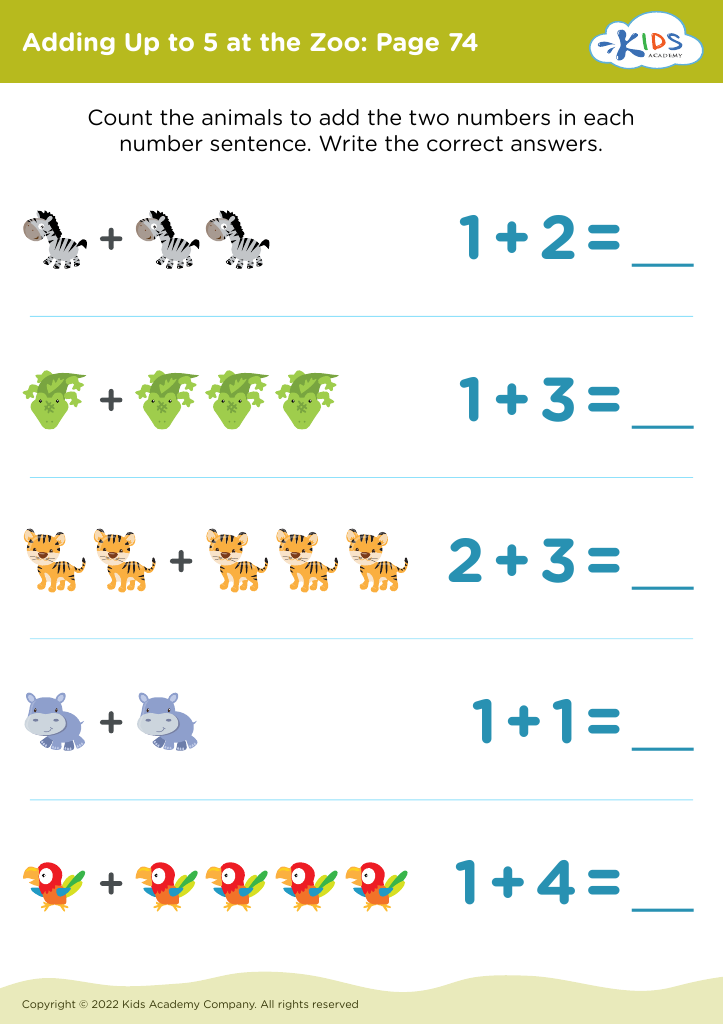
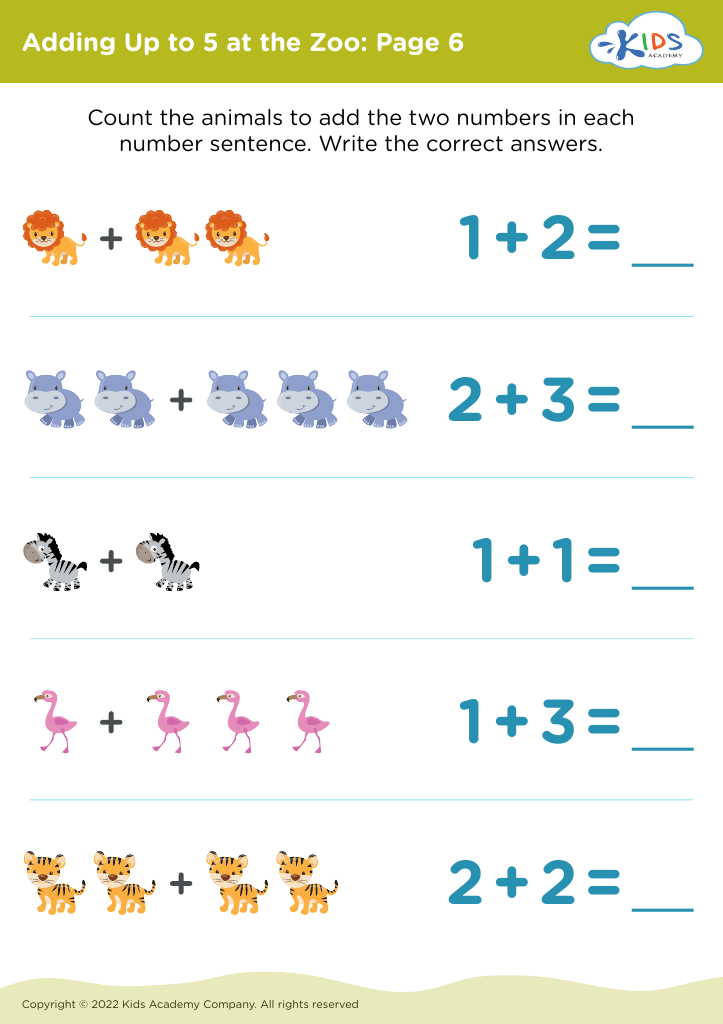
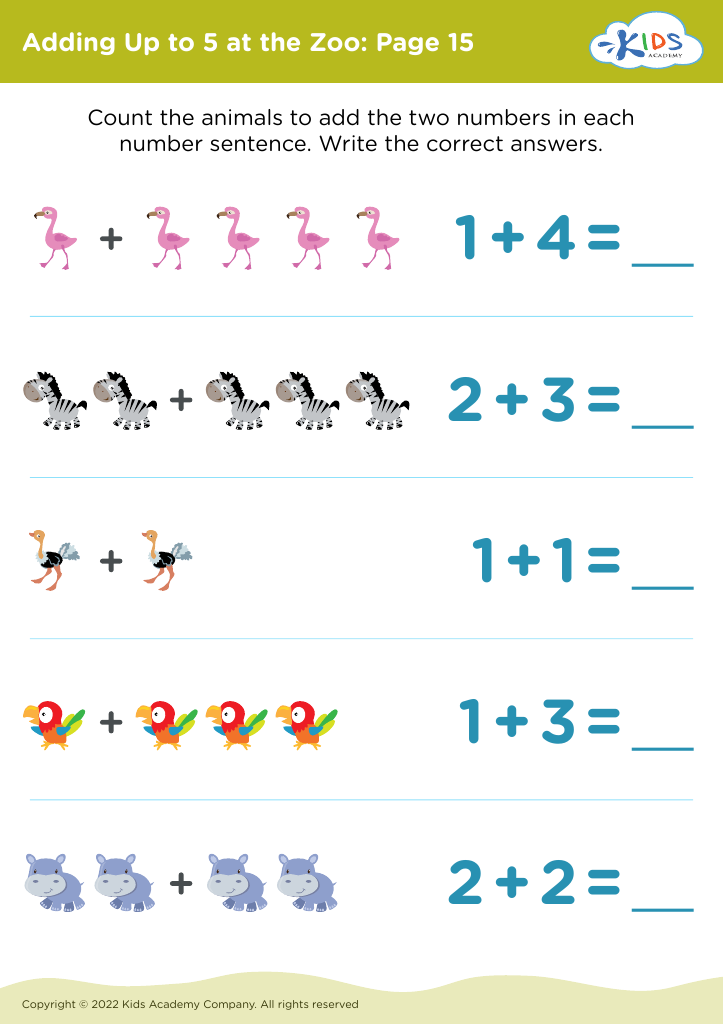



Parents and teachers should care about basic addition practice, like "Adding at the Zoo," for children ages 3-8 because foundational math skills are crucial for a child's ongoing academic success and confidence. Basic addition is one of the first steps in understanding more complex mathematical concepts. Engaging in hands-on and relatable activities, such as counting animals at a zoo, makes learning meaningful and fun for young children. This type of practice helps develop their problem-solving skills, improves their focus, and enhances their ability to process information logically.
Additionally, children at this age are in their formative years of cognitive development. Practices like "Adding at the Zoo" help to build curiosity and an active interest in learning early on. It makes math less of a theoretical concept and more of a tangible, exciting activity, encouraging a positive attitude toward mathematics.
Moreover, incorporating familiar and enjoyable themes, such as zoo animals, aids in holding children's attention longer and more effectively than abstract numbers alone. By presenting basic addition in an engaging, contextual format, both parents and teachers help children develop a solid, positive foundation in math, ensuring a smoother transition to more advanced topics in later grades. This approach also fosters a love for learning, laying the groundwork for lifelong academic enthusiasm and competence.