Filters

18 filtered results

Clear all filters
Favorites
With answer key
Interactive

18 filtered results

Difficulty Level

Grade


Subject

    Explore our "Cognitive Development Adding at the Zoo Worksheets" designed for children ages 3-8! These engaging, colorful worksheets bring math to life through fun zoo-themed activities that promote addition skills. Tailored to foster cognitive growth, each worksheet offers a delightful way for young learners to practice counting and basic math in an interactive format. By incorporating familiar animals and vibrant visuals, these worksheets help to spark enthusiasm for learning while developing critical thinking and problem-solving abilities. Perfect for homeschooling, classroom use, or after-school activities, these resources make learning addition enjoyable and effective. Download and start enriching your child's education today!
    Check out this FREE Trial Lesson on Adding at the Zoo for age 3-8!

    L

    Favorites
    With answer key
    Interactive
    • 3-8
    • Cognitive Development
    • Adding at the Zoo
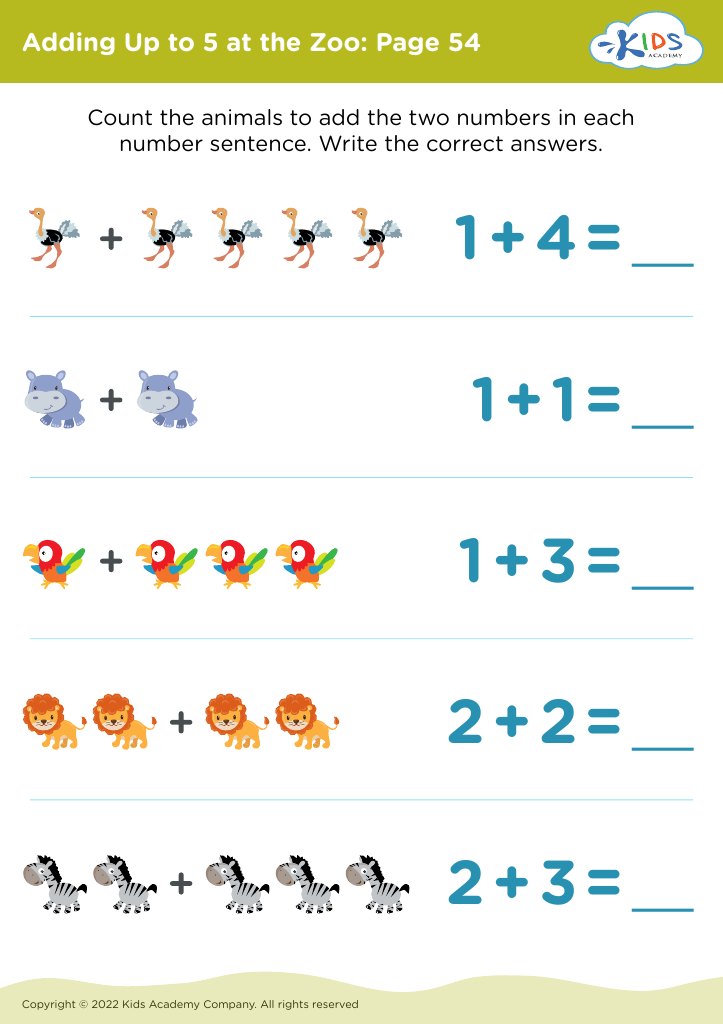
    Adding Up to 5 at the Zoo: Page 54
    Adding Up to 5 at the Zoo: Page 54
    Adding Up to 5 at the Zoo: Page 54
    Worksheet
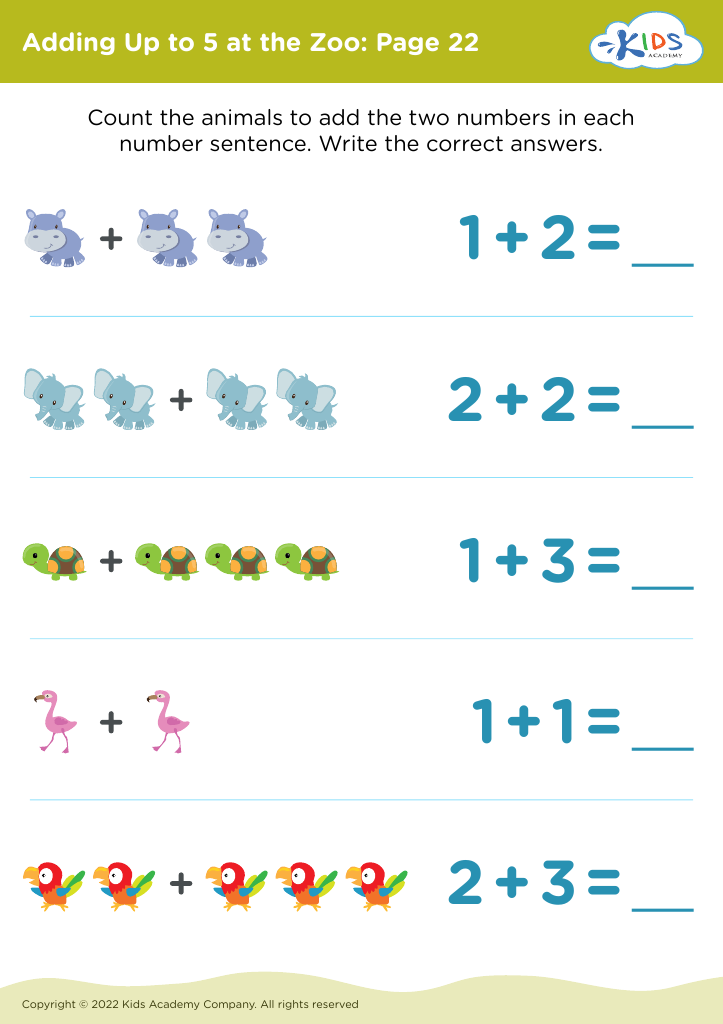
    Adding Up to 5 at the Zoo: Page 22
    Adding Up to 5 at the Zoo: Page 22
    Adding Up to 5 at the Zoo: Page 22
    Worksheet
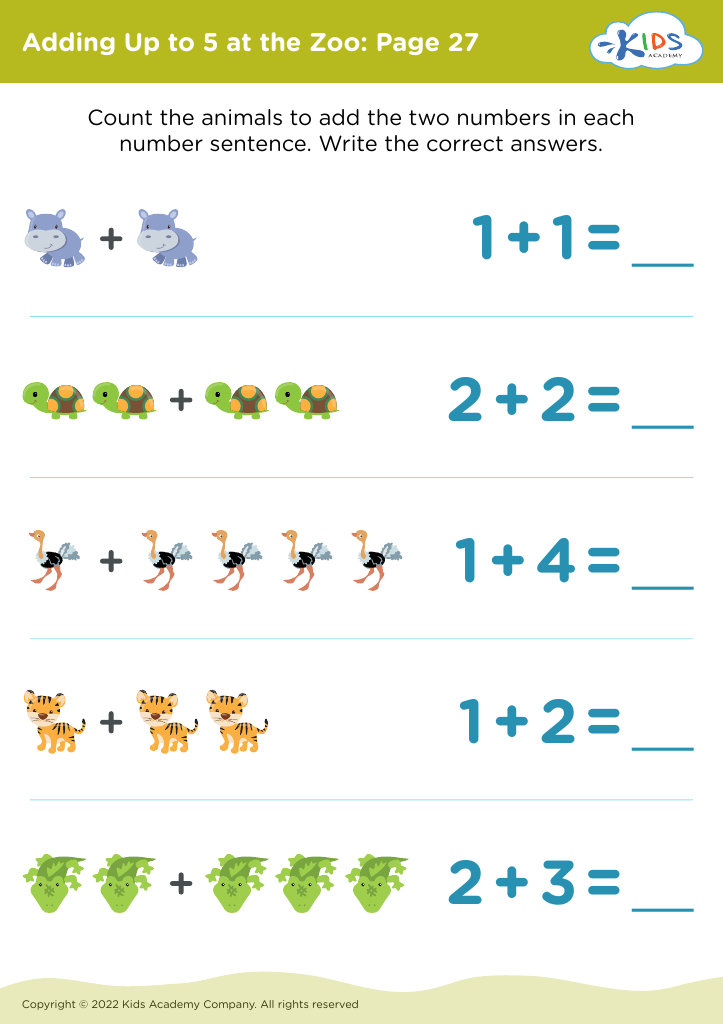
    Adding Up to 5 at the Zoo: Page 27
    Adding Up to 5 at the Zoo: Page 27
    Adding Up to 5 at the Zoo: Page 27
    Worksheet
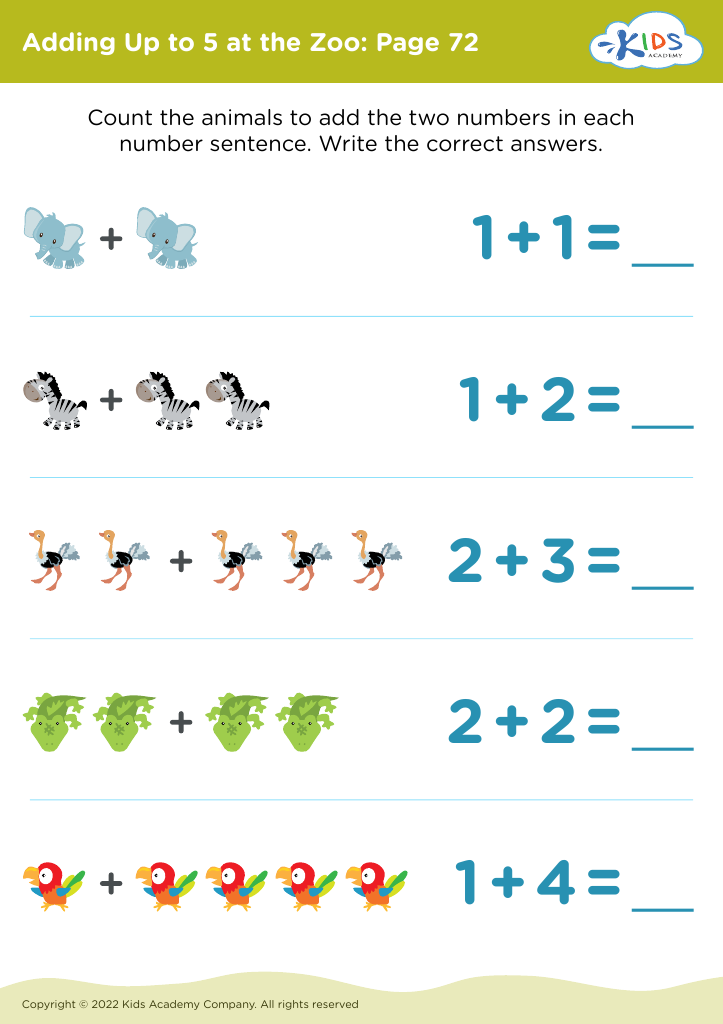
    Adding Up to 5 at the Zoo: Page 72
    Adding Up to 5 at the Zoo: Page 72
    Adding Up to 5 at the Zoo: Page 72
    Worksheet
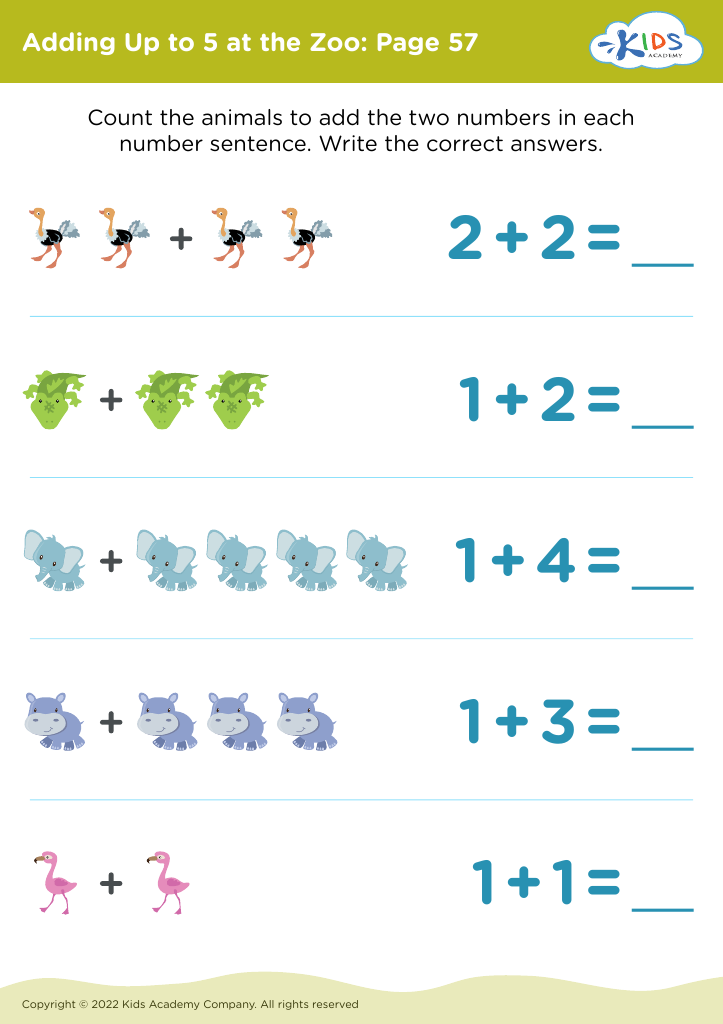
    Adding Up to 5 at the Zoo: Page 57
    Adding Up to 5 at the Zoo: Page 57
    Adding Up to 5 at the Zoo: Page 57
    Worksheet
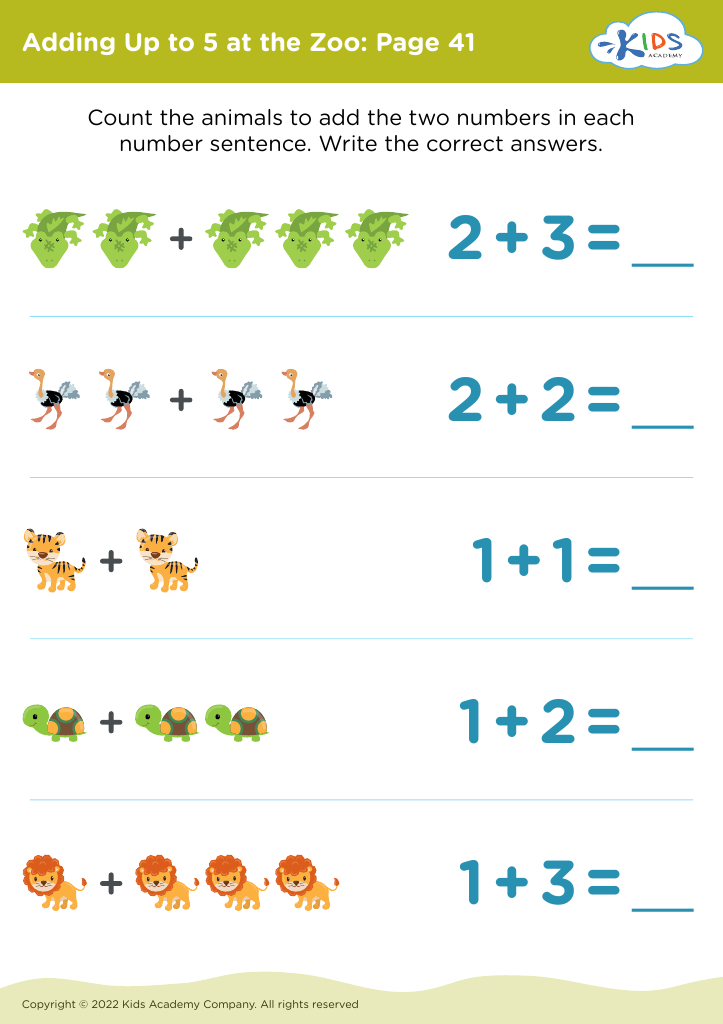
    Adding Up to 5 at the Zoo: Page 41
    Adding Up to 5 at the Zoo: Page 41
    Adding Up to 5 at the Zoo: Page 41
    Worksheet
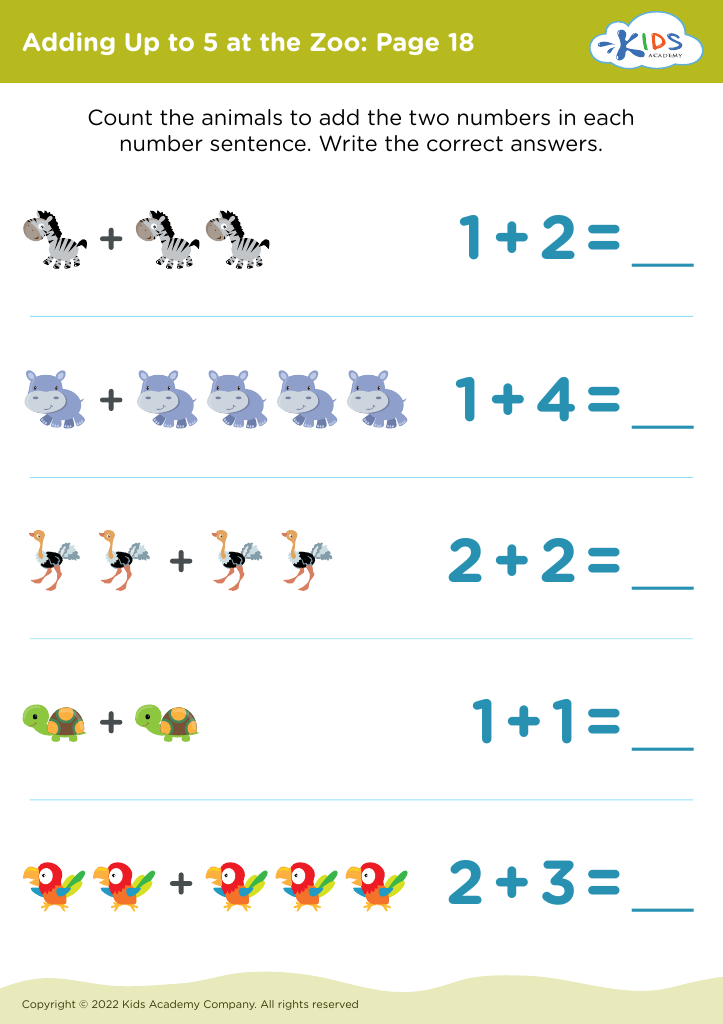
    Adding Up to 5 at the Zoo: Page 18
    Adding Up to 5 at the Zoo: Page 18
    Adding Up to 5 at the Zoo: Page 18
    Worksheet
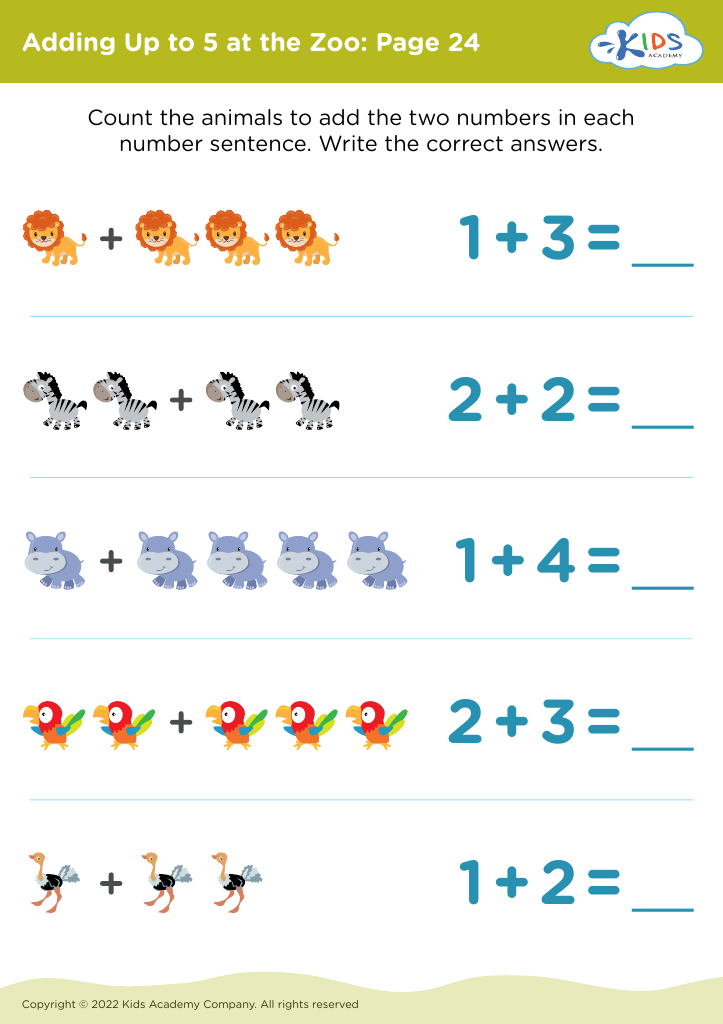
    Adding Up to 5 at the Zoo: Page 24
    Adding Up to 5 at the Zoo: Page 24
    Adding Up to 5 at the Zoo: Page 24
    Worksheet
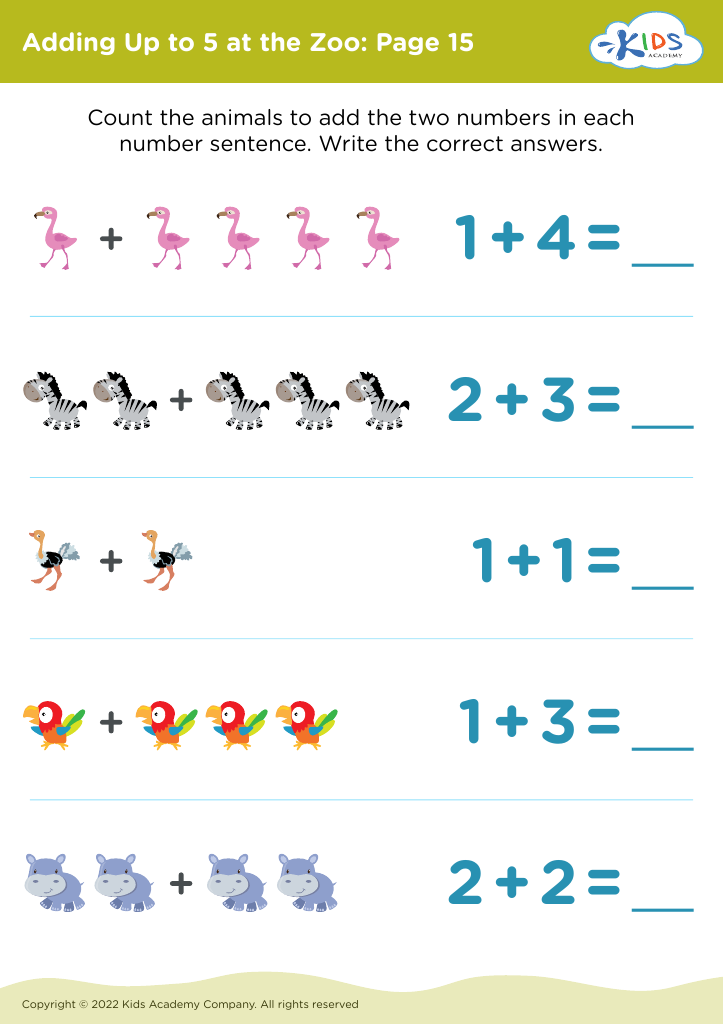
    Adding Up to 5 at the Zoo: Page 15
    Adding Up to 5 at the Zoo: Page 15
    Adding Up to 5 at the Zoo: Page 15
    Worksheet
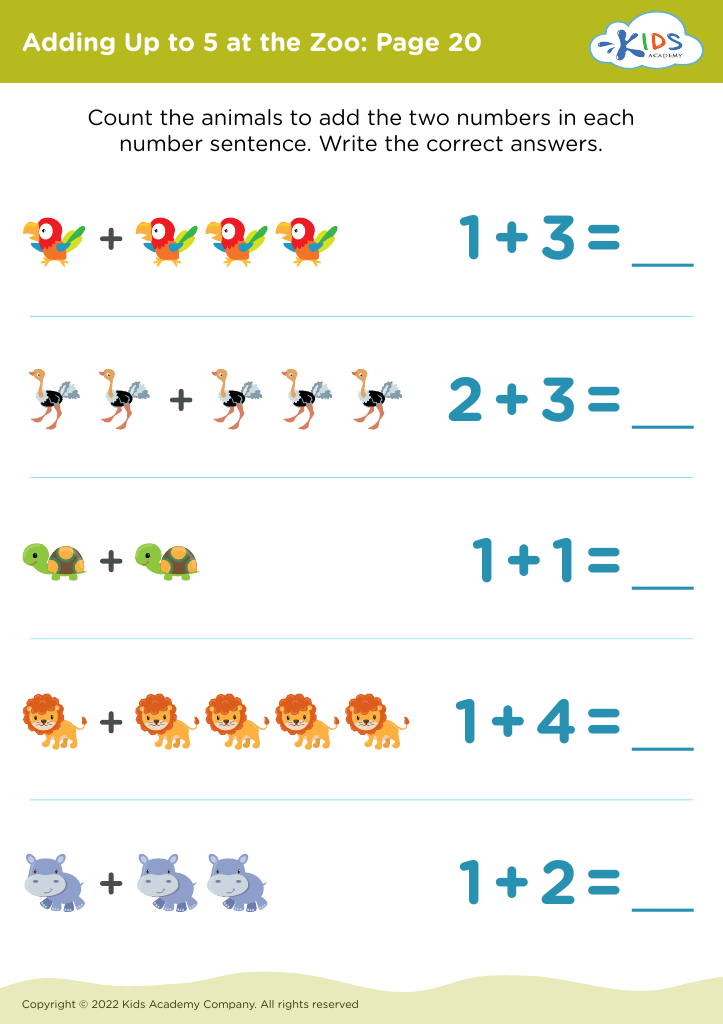
    Adding Up to 5 at the Zoo: Page 20
    Adding Up to 5 at the Zoo: Page 20
    Adding Up to 5 at the Zoo: Page 20
    Worksheet
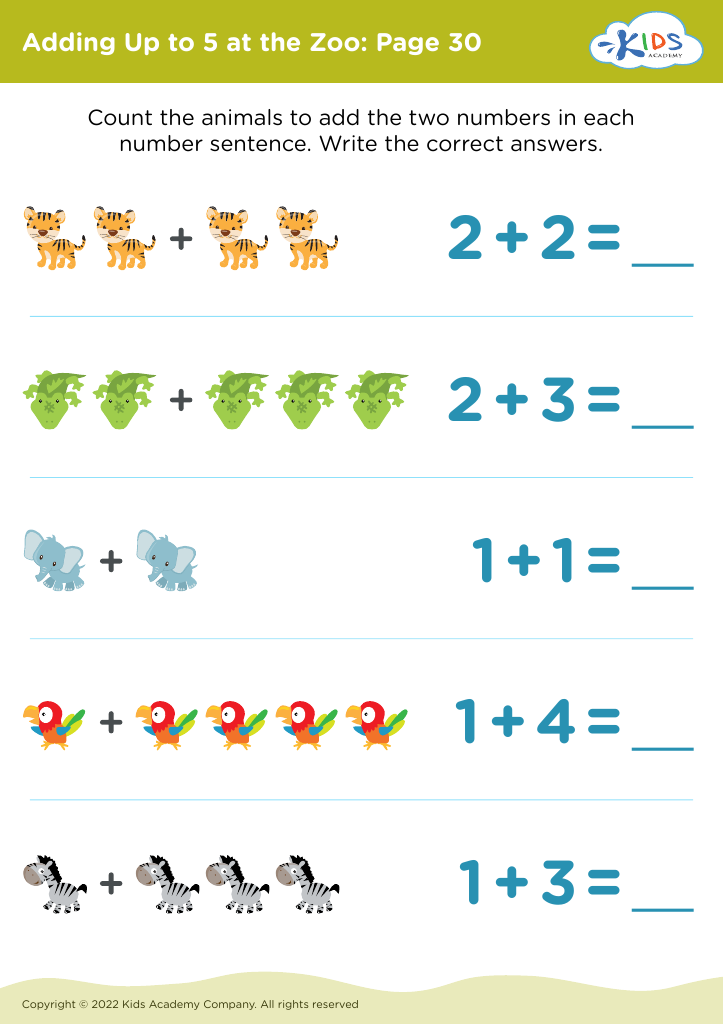
    Adding Up to 5 at the Zoo: Page 30
    Adding Up to 5 at the Zoo: Page 30
    Adding Up to 5 at the Zoo: Page 30
    Worksheet
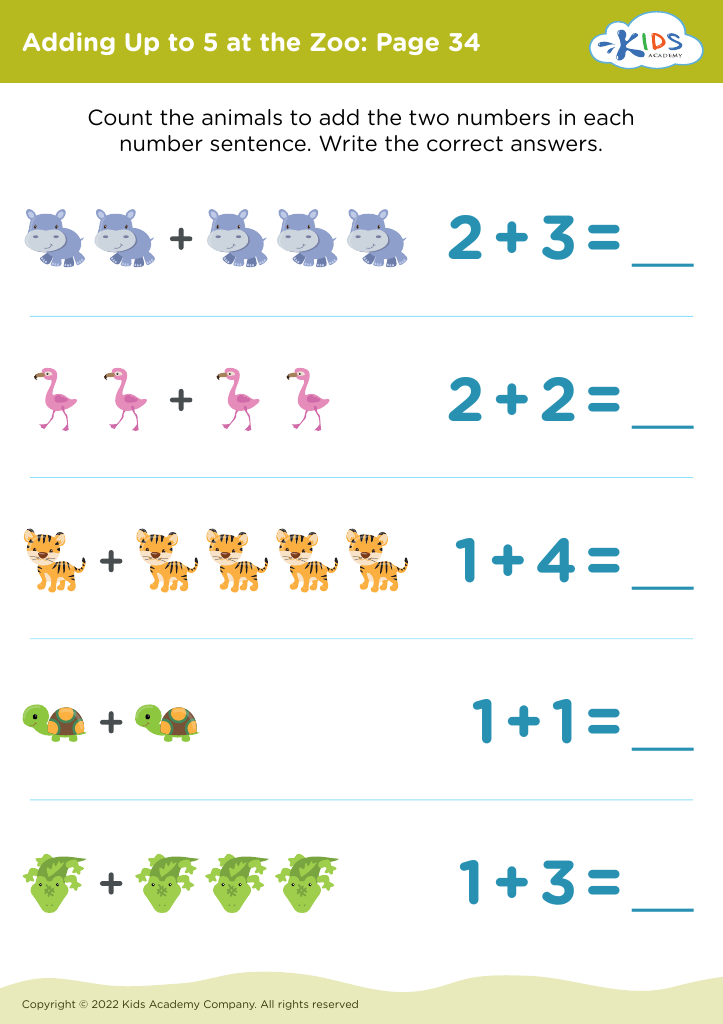
    Adding Up to 5 at the Zoo: Page 34
    Adding Up to 5 at the Zoo: Page 34
    Adding Up to 5 at the Zoo: Page 34
    Worksheet
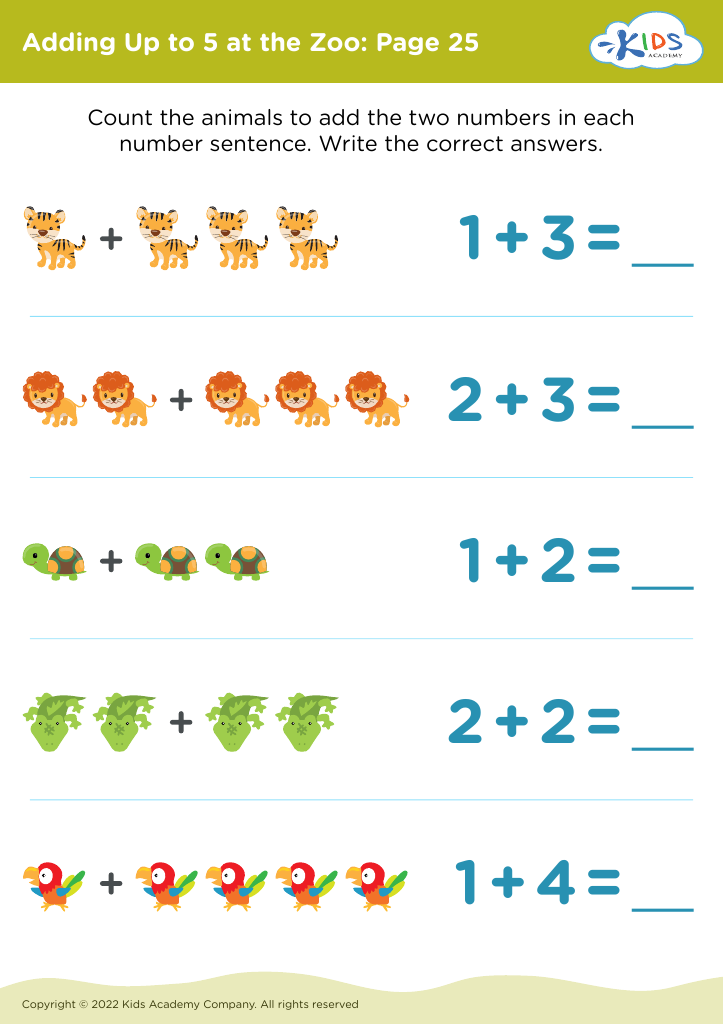
    Adding Up to 5 at the Zoo: Page 25
    Adding Up to 5 at the Zoo: Page 25
    Adding Up to 5 at the Zoo: Page 25
    Worksheet
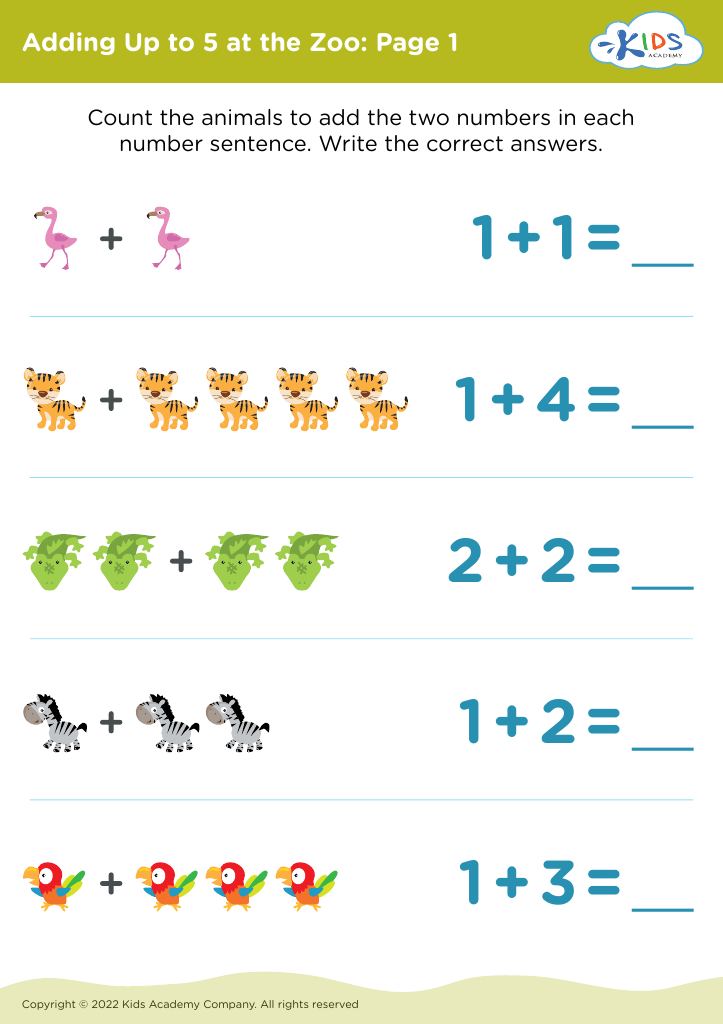
    Adding Up to 5 at the Zoo: Page 1
    Adding Up to 5 at the Zoo: Page 1

    Adding Up to 5 at the Zoo: Page 1

    Adding Up to 5 at the Zoo: Page 1
    Worksheet
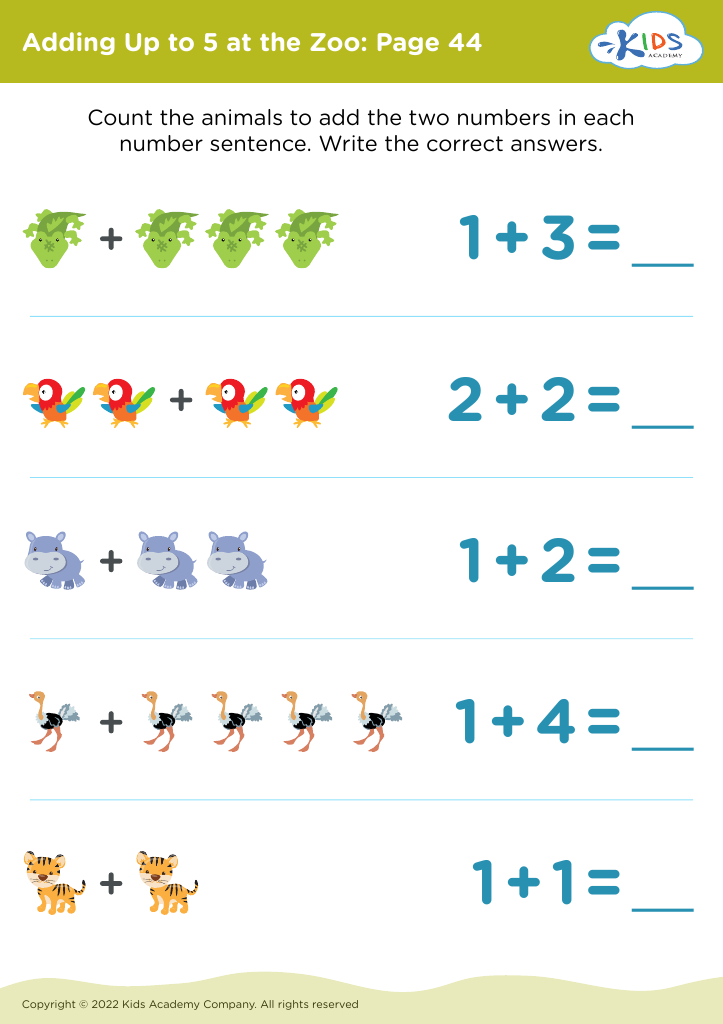
    Adding Up to 5 at the Zoo: Page 44
    Adding Up to 5 at the Zoo: Page 44
    Adding Up to 5 at the Zoo: Page 44
    Worksheet
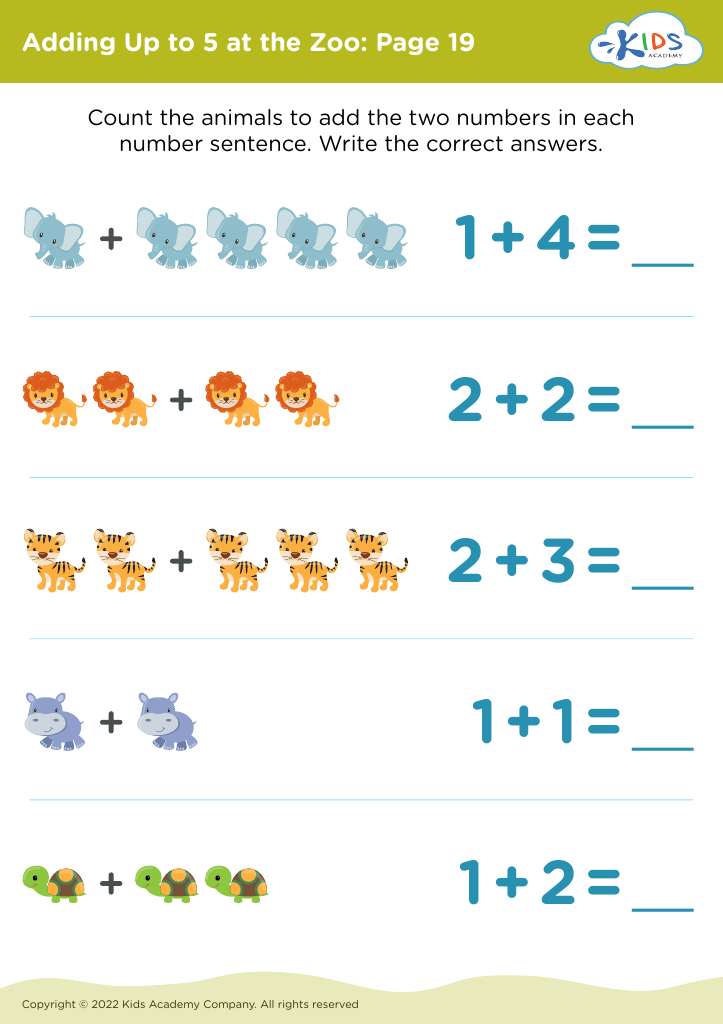
    Adding Up to 5 at the Zoo: Page 19
    Adding Up to 5 at the Zoo: Page 19
    Adding Up to 5 at the Zoo: Page 19
    Worksheet
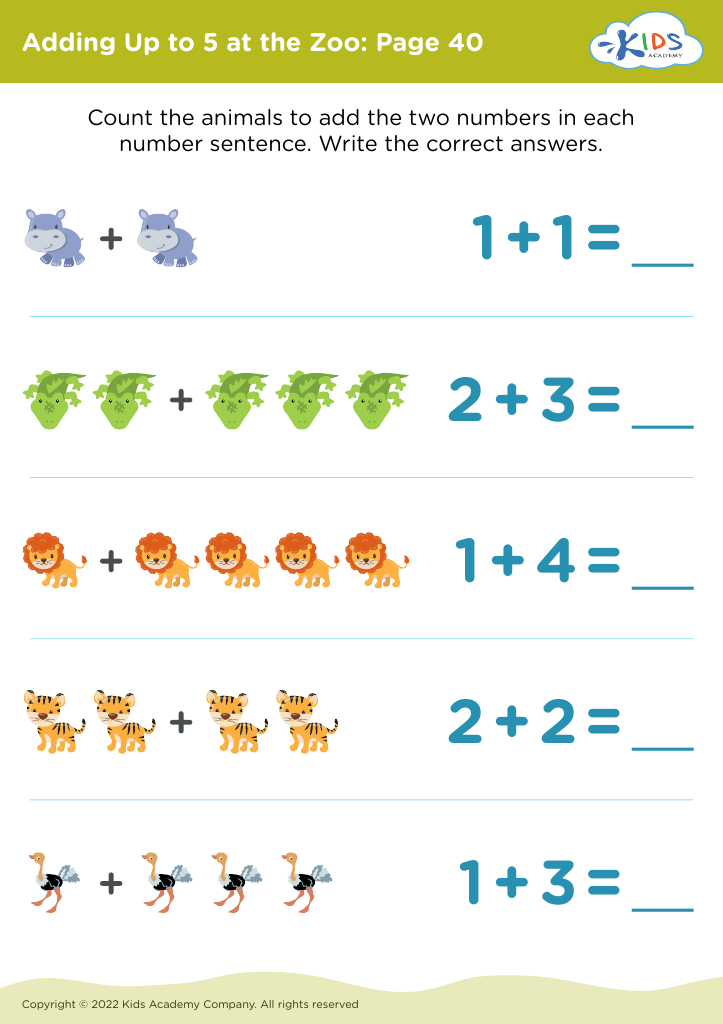
    Adding Up to 5 at the Zoo: Page 40
    Adding Up to 5 at the Zoo: Page 40
    Adding Up to 5 at the Zoo: Page 40
    Worksheet
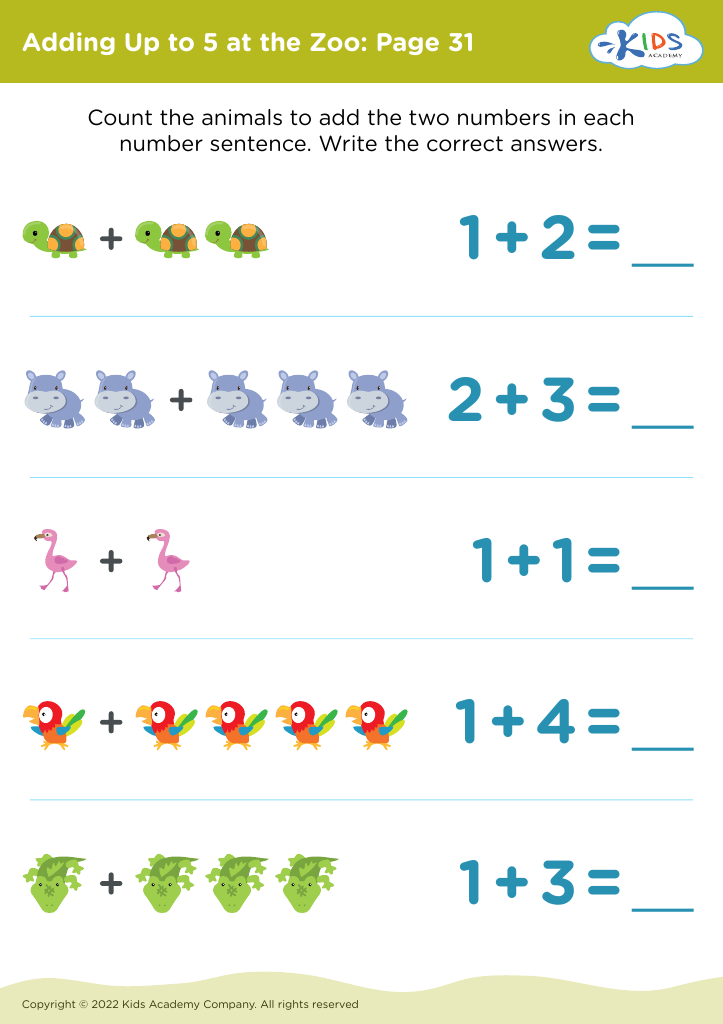
    Adding Up to 5 at the Zoo: Page 31
    Adding Up to 5 at the Zoo: Page 31
    Adding Up to 5 at the Zoo: Page 31
    Worksheet


    Cognitive development is crucial for young children's learning and growth, especially during the ages of 3 to 8 when their brains are rapidly developing. Incorporating activities like "Adding at the Zoo" can greatly enhance this development, and here’s why parents and teachers should care.

    Firstly, children in this age group are naturally curious and eager to explore their environment. Engaging in themed activities, such as learning about animals while practicing basic math skills, allows them to make connections between concepts, boosting their understanding of both zoology and mathematics. This integrated learning approach fosters critical thinking and enhances problem-solving skills.

    Secondly, such activities promote social interactions, as children often participate in groups. Collaborative learning experiences help develop communication skills, emotional intelligence, and the ability to work with others—essential traits for their future education and relationships.

    Moreover, playful learning at venues like zoos stimulates imagination and creativity. By transforming a regular learning experience into a fun, relatable context, children remain engaged, which significantly improves retention and enthusiasm for learning.

    Overall, activities like "Adding at the Zoo" tap into children's inherent interests, making learning enjoyable and impactful, and setting a strong foundation for lifelong learning.