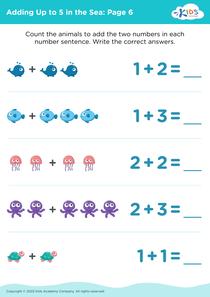
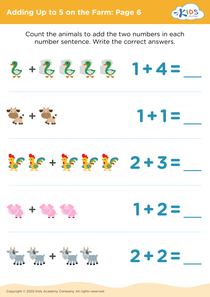
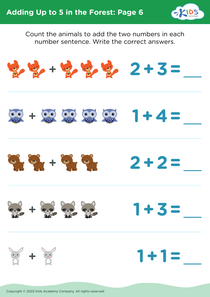
Fine motor skills (writing numbers) Adding at the Zoo Worksheets for Ages 3-8
3 filtered results
-
From - To
Help your child develop fine motor skills with our "Adding at the Zoo" worksheets designed for ages 3-8! These engaging activities make learning numbers and basic addition fun, as kids write and solve problems with adorable zoo animals. Ideal for preschoolers and early learners, our worksheets foster pencil control and precision while reinforcing essential math skills. Let your little one enjoy an adventure in numbers with vibrant, captivating illustrations that turn learning into play. Download today and nurture your child's growth in a joyful, educational way!
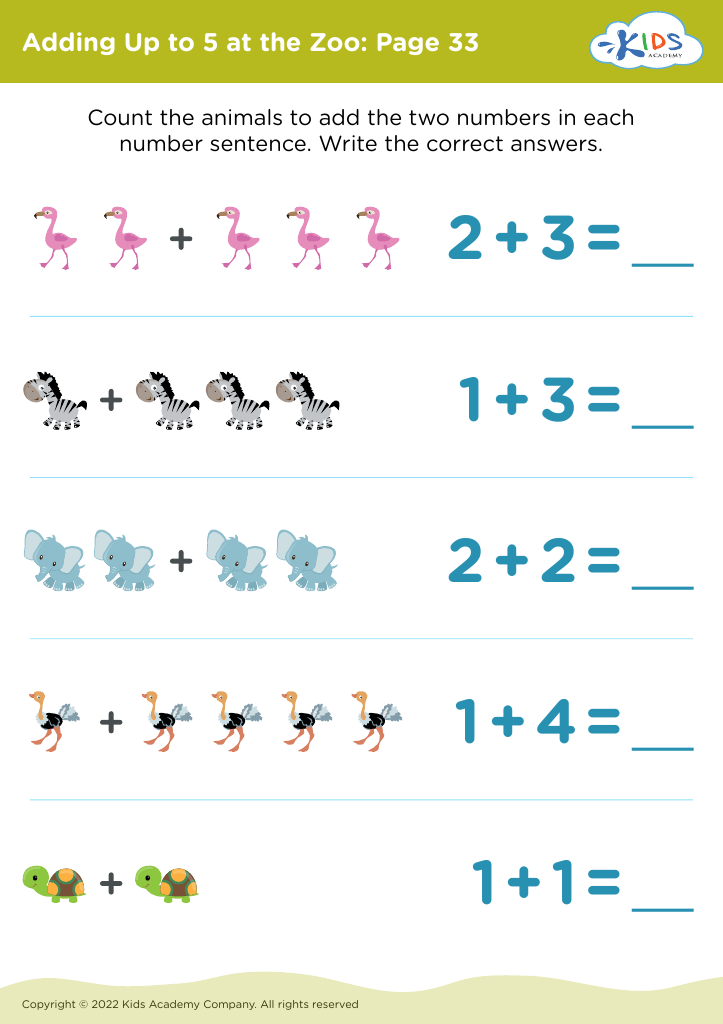
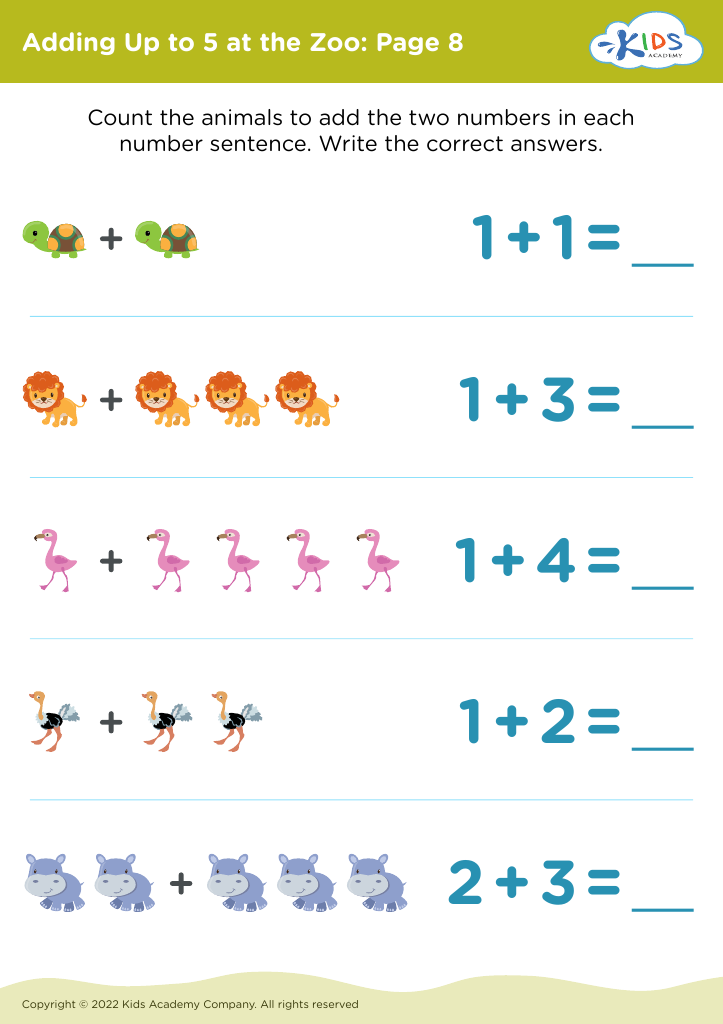
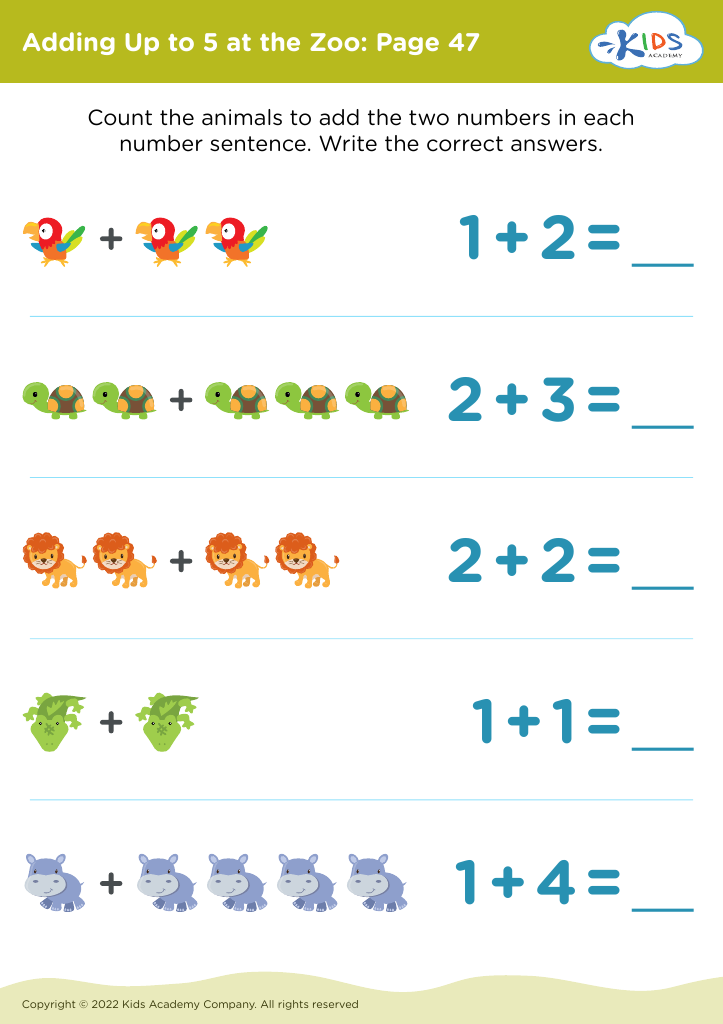



Fine motor skills, which involve the coordination of small muscles in movements like writing, are essential for young children aged 3-8. Parents and teachers should prioritize developing these skills as they lay the groundwork for academic and daily life tasks. Writing numbers, specifically, is critical because it combines cognitive learning with physical dexterity. At an age when children are highly receptive, engaging activities like "Adding at the Zoo" capture their interest and make learning enjoyable.
Fine motor activities enhance hand-eye coordination, increase concentration, and improve hand strength and control, all of which are necessary for writing, drawing, and even self-help skills like buttoning clothes or using utensils. By practicing writing numbers through playful, theme-based activities like adding at the zoo, children are more likely to engage and persist.
Furthermore, writing numbers also introduces children to the fundamentals of math, paving the way for more complex numeric and arithmetic learning in the future. Practical, hands-on experiences like adding animals at the zoo make abstract concepts more tangible. This solidifies their understanding and application of numbers in real-world contexts.
Investing in fine motor skill activities, therefore, equips children with essential academic tools and life skills, fostering both intellectual and physical development in a holistic manner.