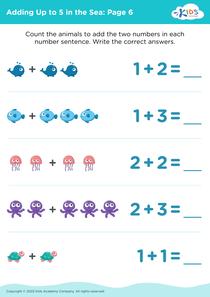
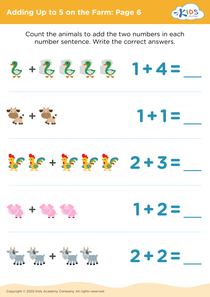
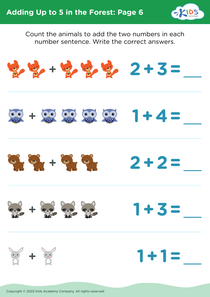
Problem Solving Adding at the Zoo Worksheets for Ages 3-8
3 filtered results
-
From - To
Introducing our engaging "Problem Solving Adding at the Zoo Worksheets," designed for children ages 3 to 8! These fun, interactive worksheets combine early math skills with an exciting zoo theme, making learning enjoyable. Kids will practice addition through vibrant illustrations of animals, helping them develop critical thinking and problem-solving abilities as they navigate various math scenarios. Each worksheet is tailored to different age groups, catering to varying skill levels, ensuring that every child can grow at their own pace. Perfect for classroom use or at-home learning, this resource will enhance your child's mathematical confidence and creativity while fostering a love for learning.
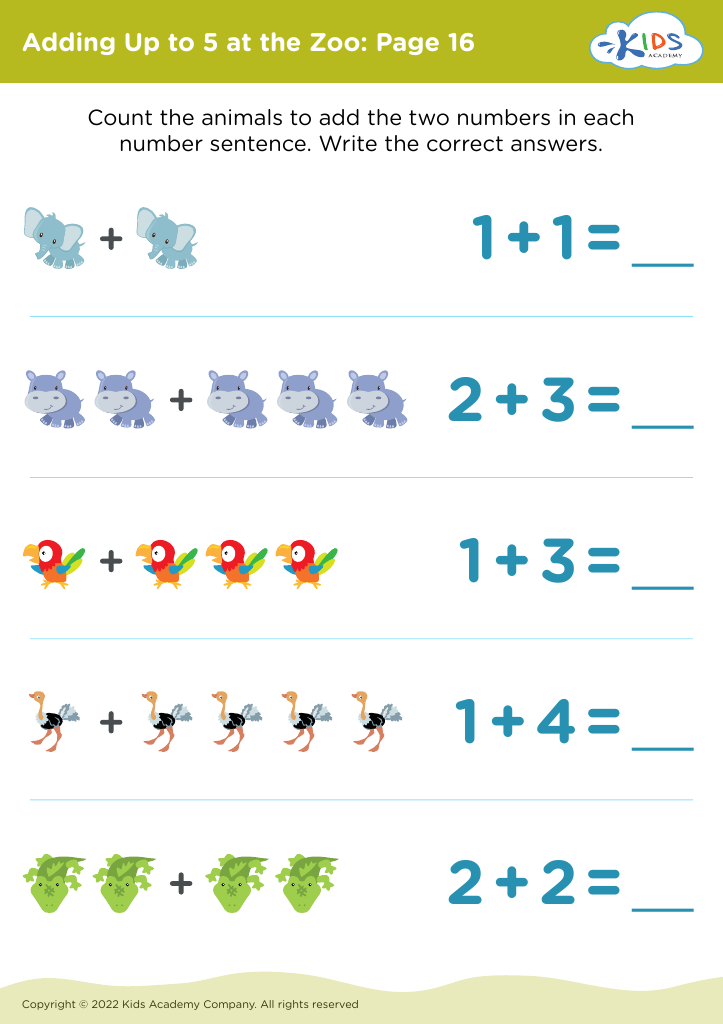
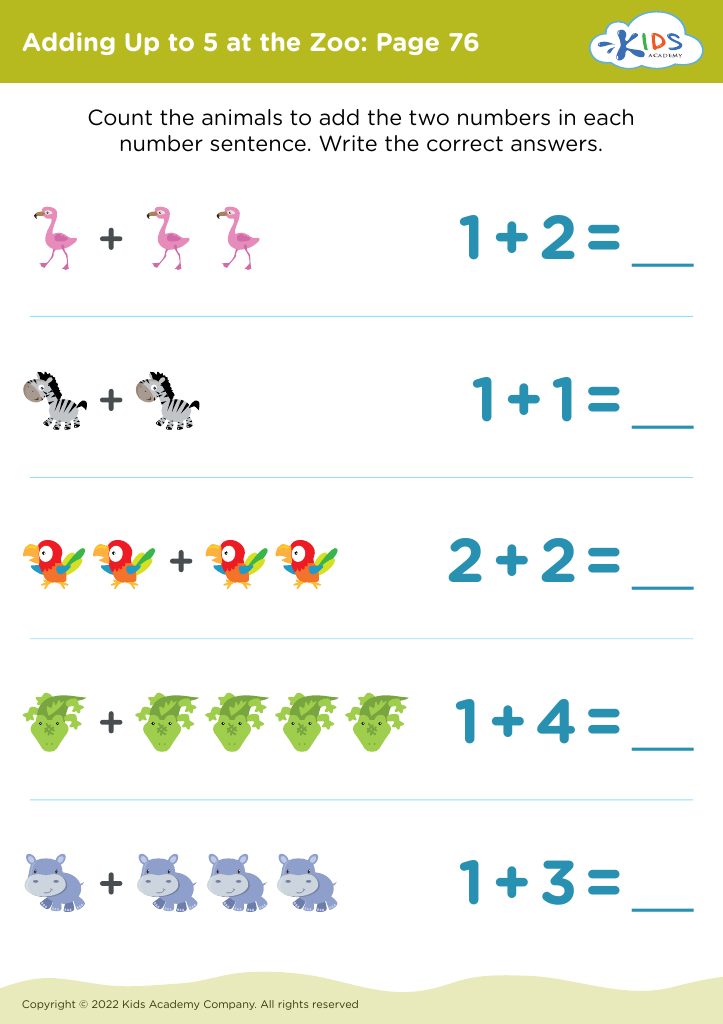
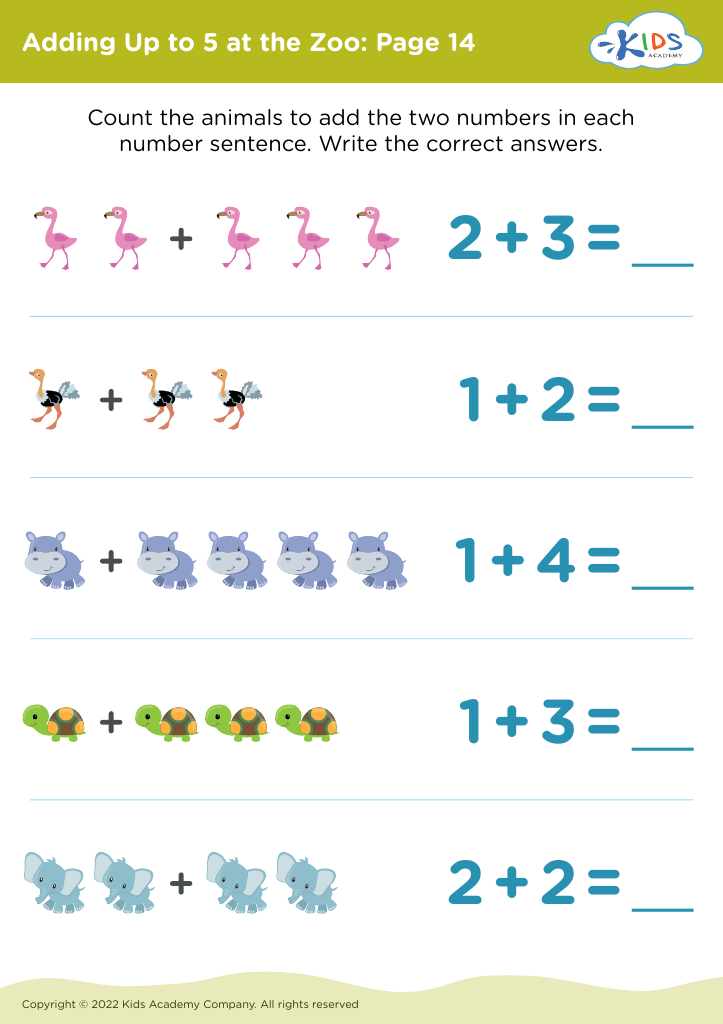



Problem Solving Adding at the Zoo is a valuable educational activity for children ages 3-8, and both parents and teachers should care about its importance. At this age, children are naturally curious and eager to learn, making it an ideal time to engage them in fun and interactive problem-solving activities.
This type of activity promotes critical thinking skills as children learn to approach and solve addition problems in a playful context. By incorporating familiar concepts, such as animals at the zoo, it makes mathematical concepts more relatable and enjoyable. Children begin to understand the application of math in real-world situations and develop their cognitive abilities.
Moreover, this activity enhances social skills through collaboration. When done in groups, children learn the value of teamwork as they work together to solve problems. Furthermore, it fosters a sense of achievement and confidence. As children succeed in solving object-based addition problems, they gain a sense of accomplishment that encourages them to tackle more complex challenges in the future.
Ultimately, early exposure to problem-solving through activities like Adding at the Zoo not only strengthens foundational math skills but also sets the stage for lifelong learning, helping children develop a positive attitude towards education.