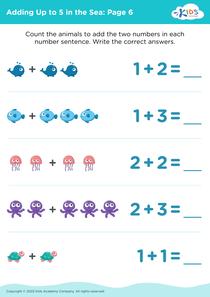
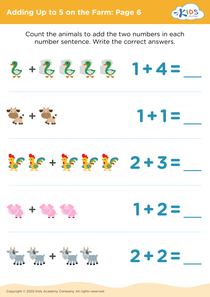
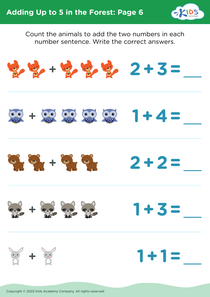
Problem-Solving Skills Adding at the Zoo Worksheets for Ages 3-8
4 filtered results
-
From - To
Enhance your child's problem-solving skills with our engaging "Adding at the Zoo" worksheets, designed for ages 3-8! These fun, interactive activities allow young learners to practice addition while exploring the exciting world of zoo animals. Through colorful illustrations and relatable scenarios, children will solve math problems that require critical thinking and creativity. Our worksheets not only promote early math concepts but also encourage children to develop strategies for tackling challenges. Perfect for home or classroom use, these resources support essential cognitive growth and foster a love of learning. Let your child embark on a mathematical adventure at the zoo!
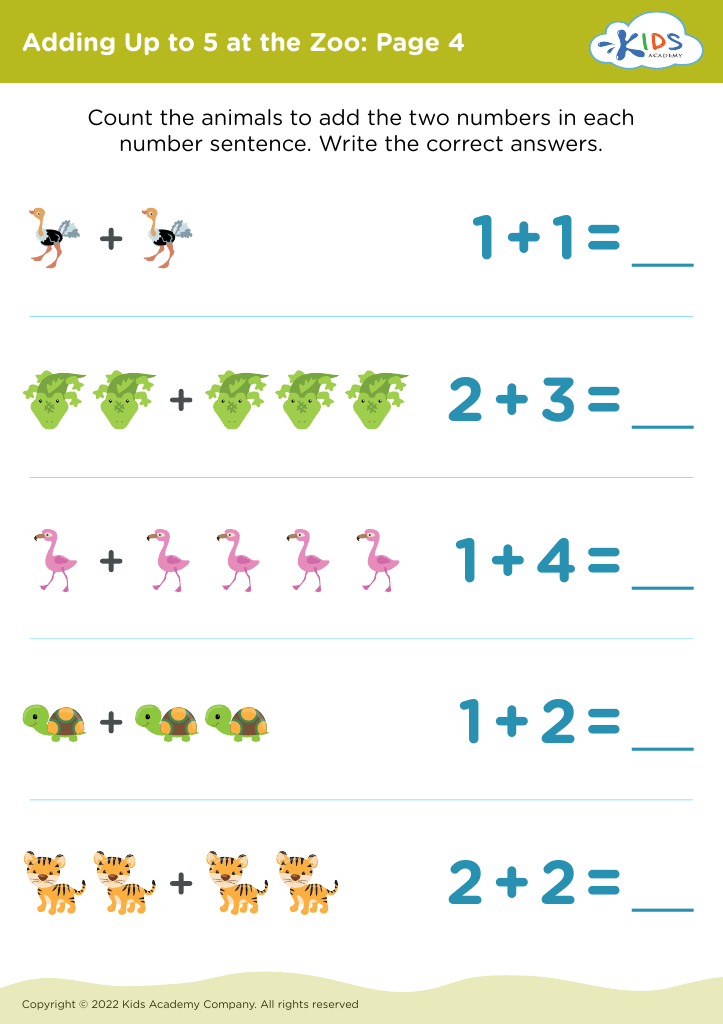
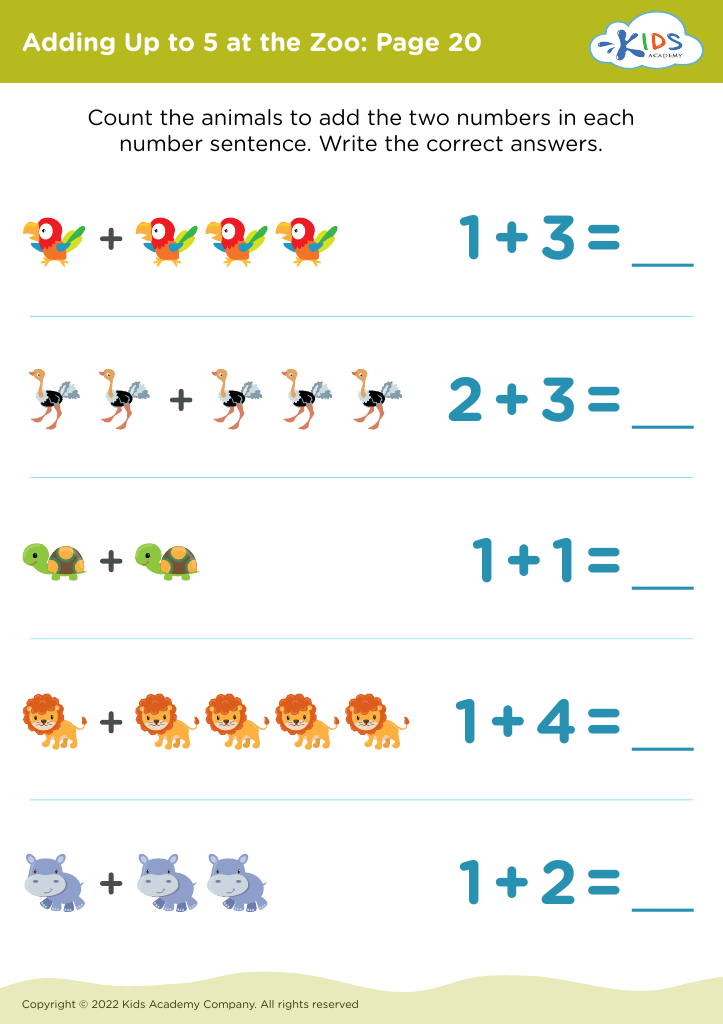
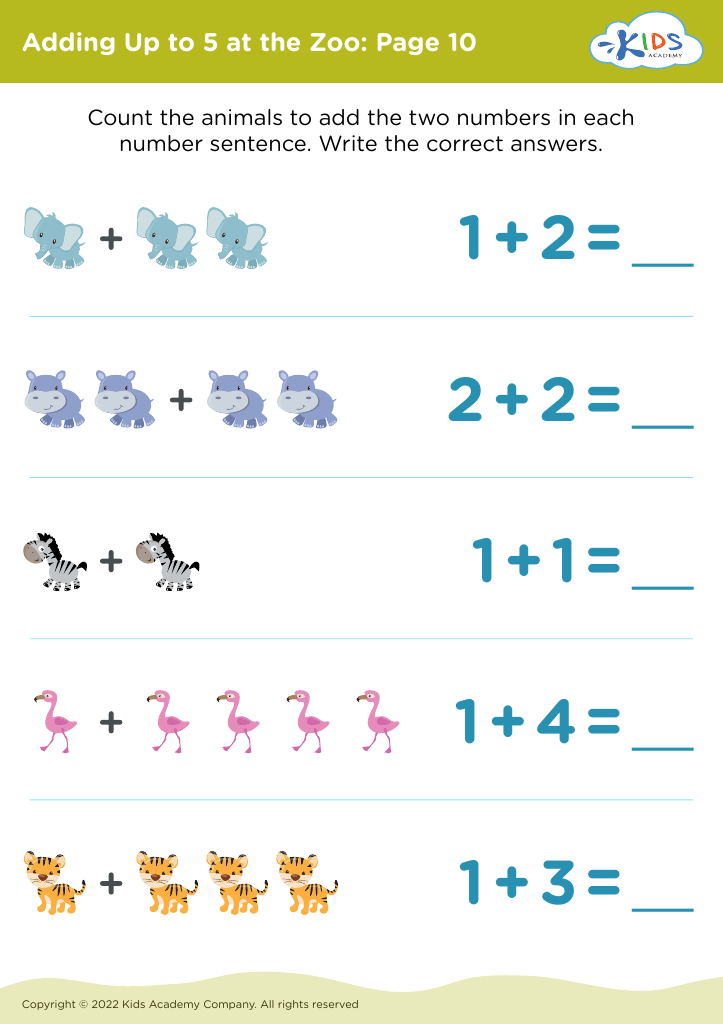
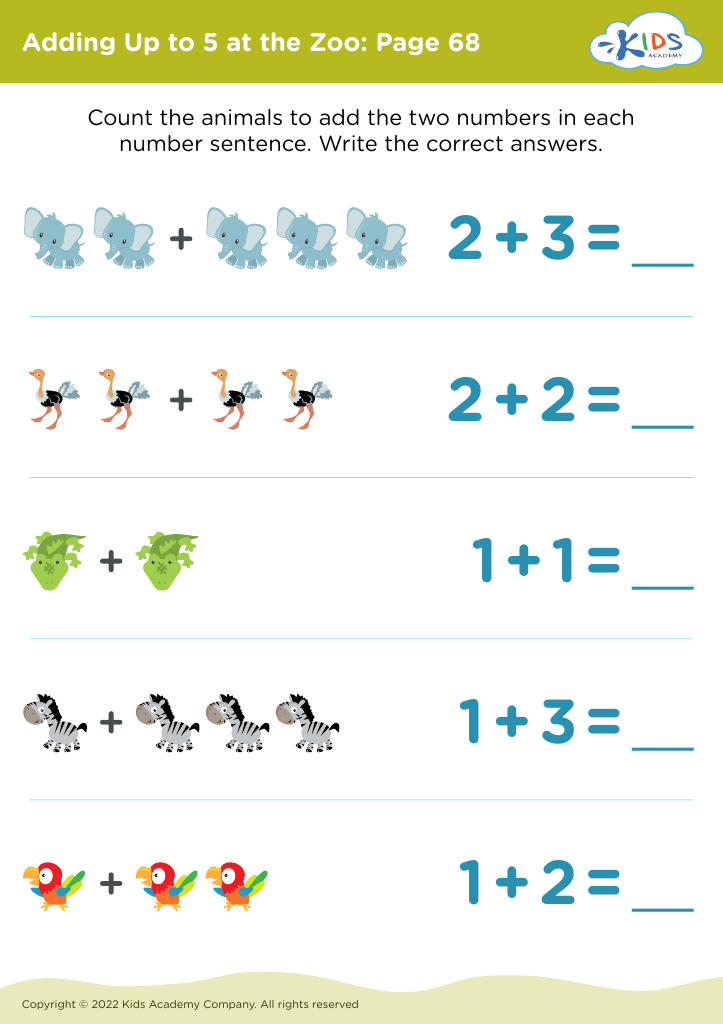



Problem-solving skills are crucial for young children, particularly those aged 3-8, as these skills serve as the foundation for future learning and development. Engaging children in activities like "Problem-Solving Skills Adding at the Zoo" not only makes learning fun but also helps them make meaningful connections to real-world scenarios. When children are presented with engaging contexts, such as counting and adding animals at the zoo, they enhance their mathematical understanding and critical thinking.
Parents and teachers should care about cultivating these skills because they are integral to a child's overall intellectual growth. Activities that encourage problem-solving can boost children's confidence, resilience, and creativity—all essential traits for overcoming challenges in both academic and everyday settings. Furthermore, these experiences help children learn to communicate effectively, collaborate with peers, and strategize on their own, fostering social skills as they work through different challenges.
Incorporating playful, thematic lessons like adding at the zoo sparks interest and motivates exploration, laying the groundwork for enthusiastic, conscientious learners. By nurturing problem-solving skills early on, parents and teachers can ensure that children are well-equipped to navigate the complexities of future education and life challenges, making it an investment in their long-term success.