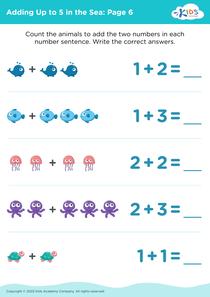
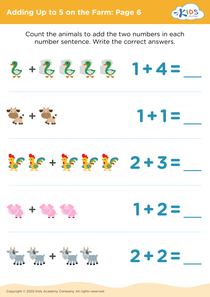
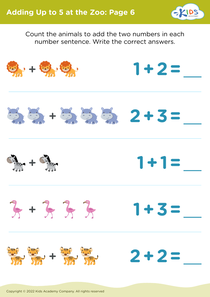
Fine Motor Skills Adding in the Forest Worksheets for Ages 3-8
5 filtered results
-
From - To
Discover the joy of learning with our "Fine Motor Skills Adding in the Forest Worksheets" designed specifically for children ages 3-8! These engaging worksheets combine math and nature, fostering essential addition skills while enhancing fine motor development. Your little ones will immerse themselves in the forest theme as they complete fun activities, such as tracing, coloring, and connecting numbers. Perfect for playful learning at home or in the classroom, these worksheets encourage creativity and coordination. Make math an adventure with our captivating, educational resources that keep young learners excited about exploring numbers and developing their dexterity! Start the learning journey today!
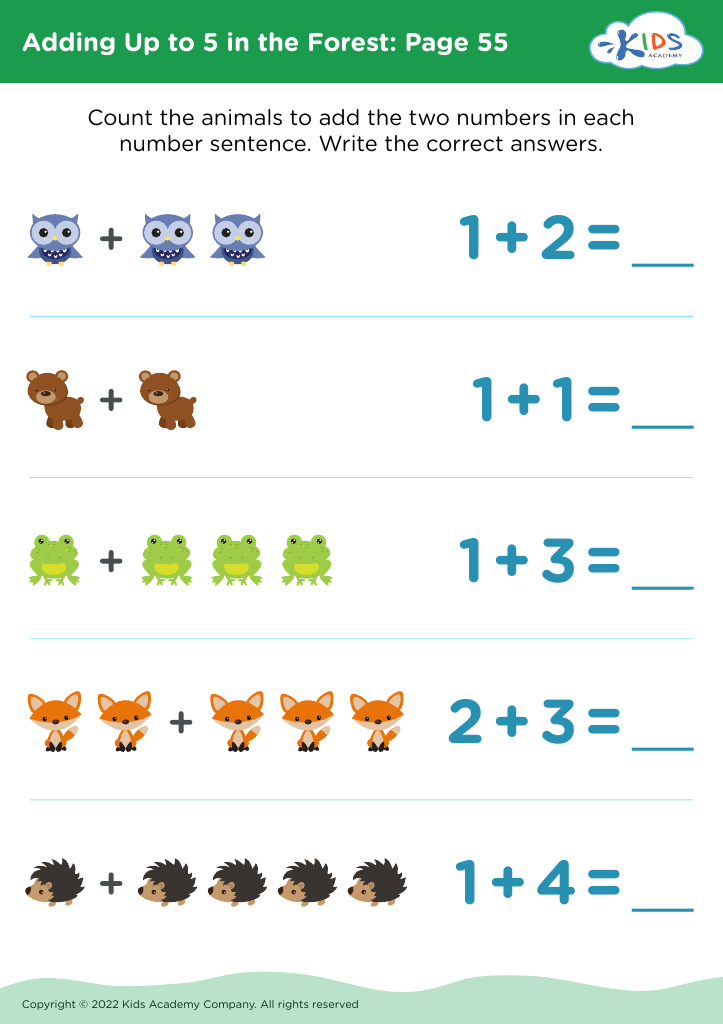
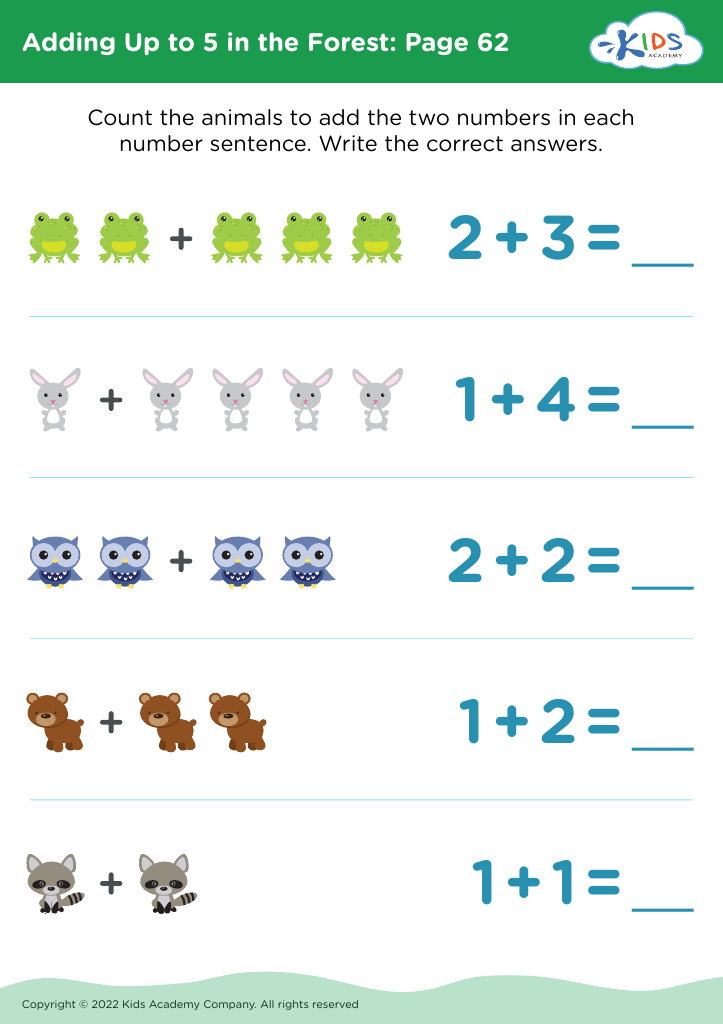
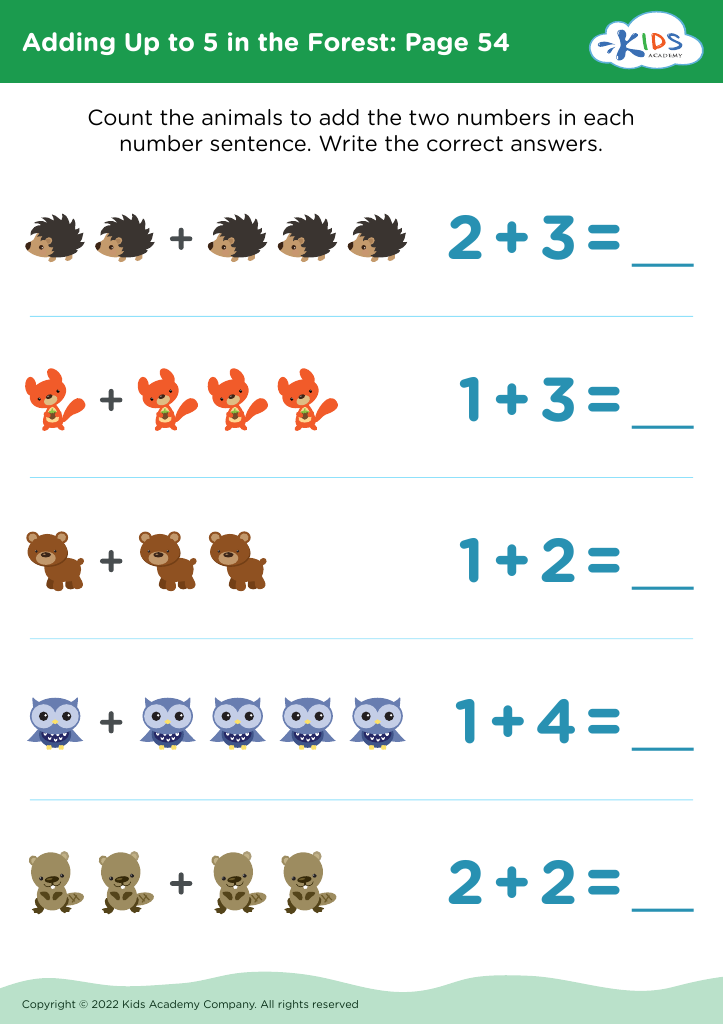
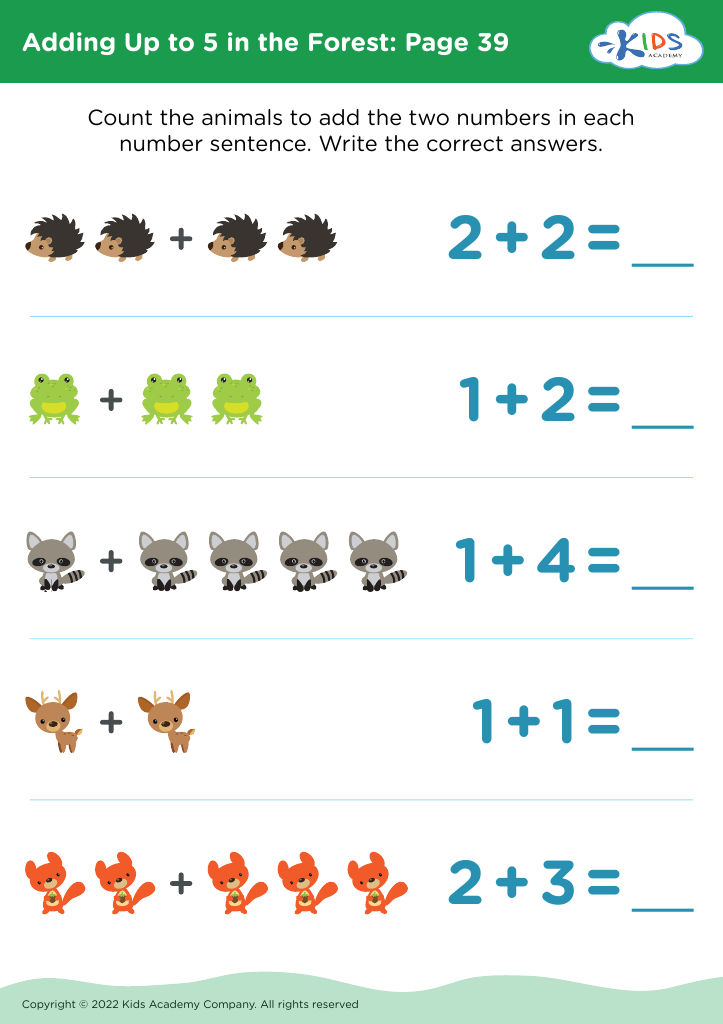
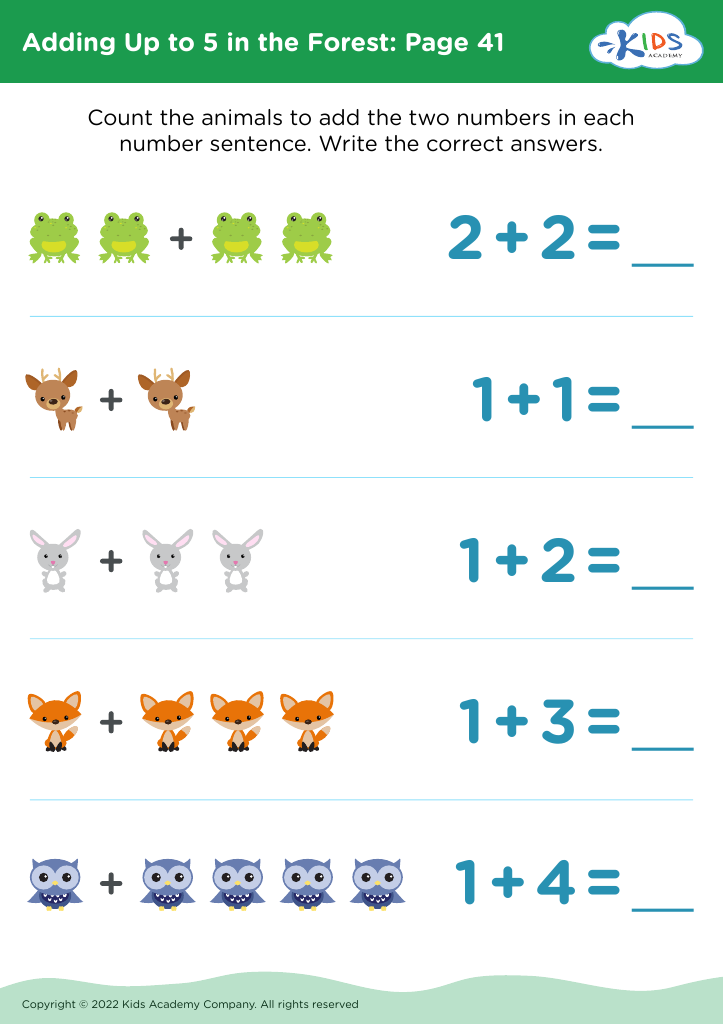



Fine motor skills are essential for children's development, especially for ages 3-8, and incorporating activities like "Fine Motor Skills Adding in the Forest" can greatly enhance their learning experience. These skills involve the coordination of small muscles, particularly in the hands and fingers, which are crucial for tasks such as writing, drawing, and manipulating objects.
Parents and teachers should care about these skills because they form the foundation for many everyday activities. As children learn to grasp and manipulate items while exploring the natural environment—such as picking up sticks, counting acorns, or arranging leaves—these activities not only engage them but also develop their dexterity and hand-eye coordination.
Moreover, purposeful play in a forest setting provides a multisensory experience where children can learn about numbers and counting in an organic way. This encourages cognitive development as children associate their fine motor practice with mathematical concepts while fostering a deeper connection to nature.
Instilling these foundational skills can help build confidence and independence in a child's early schooling. As they master fine motor tasks, they are better prepared for future academic challenges, making activities like Fine Motor Skills Adding in the Forest invaluable for parents and educators alike.