Filters

47 filtered results

Clear all filters
Favorites
With answer key
Interactive

47 filtered results

Difficulty Level

Grade


Check out this FREE Trial Lesson on Adding in the Sea for age 3-8!

H

Favorites
With answer key
Interactive
  • 3-8
  • Basic Addition Skills
  • Adding in the Sea
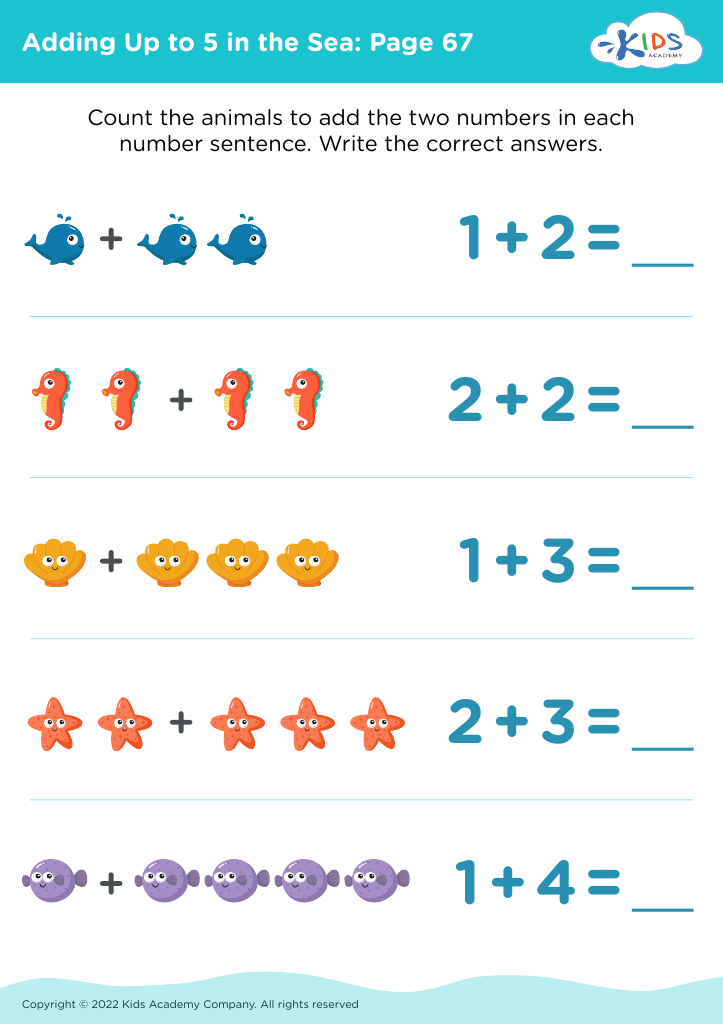
Adding Up to 5 in the Sea: Page 67
Worksheet
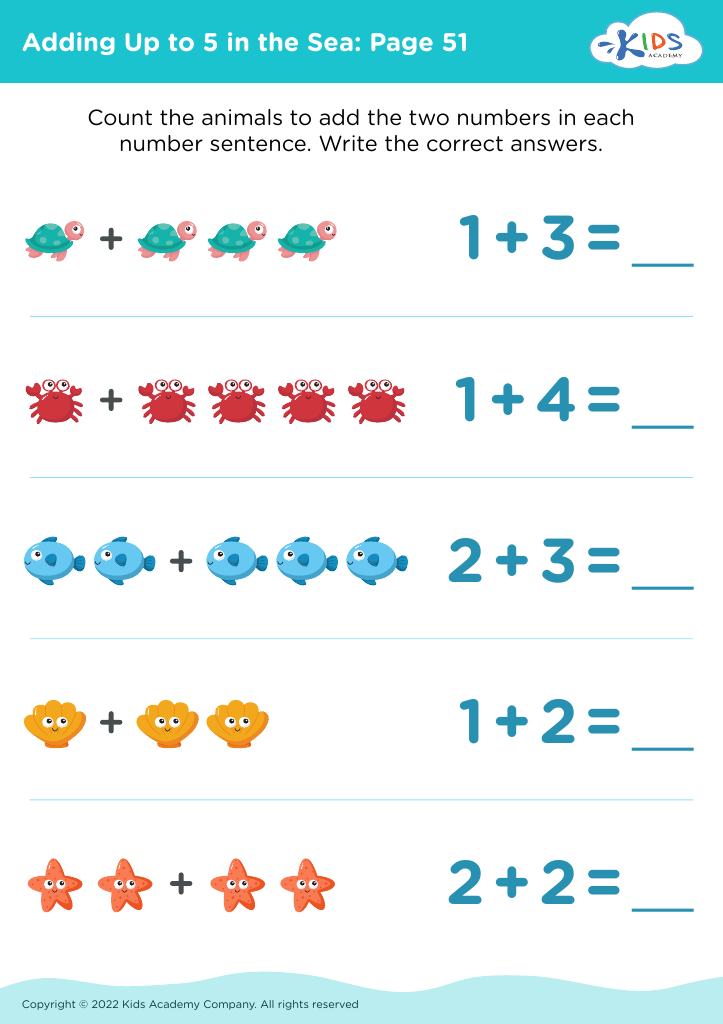
Adding Up to 5 in the Sea: Page 51
Worksheet
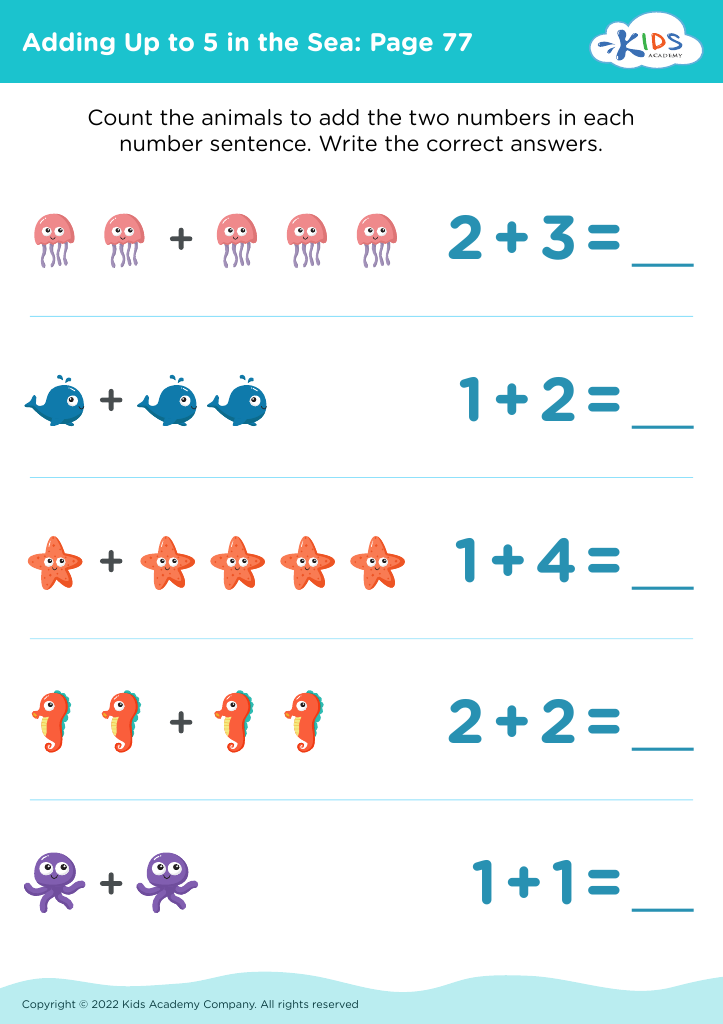
Adding Up to 5 in the Sea: Page 77
Worksheet
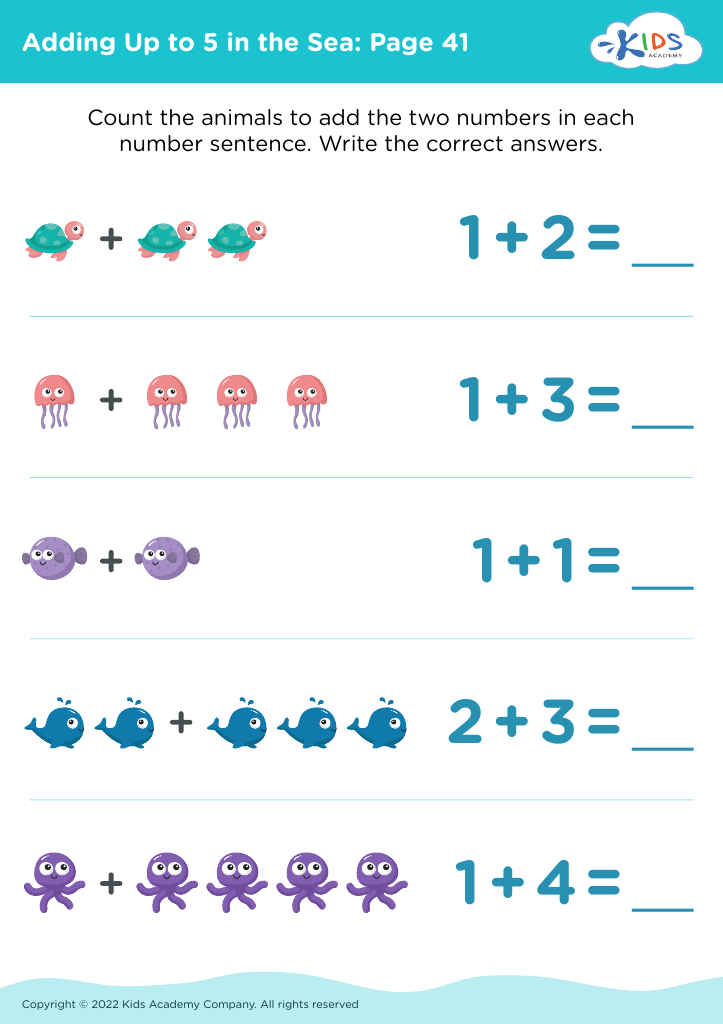
Adding Up to 5 in the Sea: Page 41
Worksheet
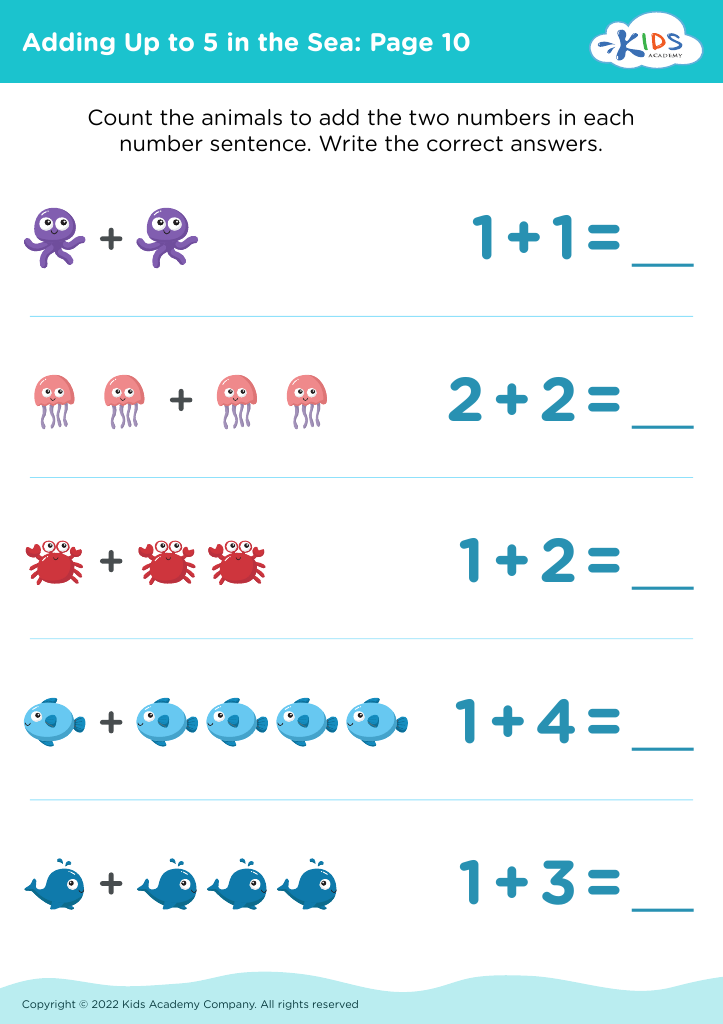
Adding Up to 5 in the Sea: Page 10
Worksheet
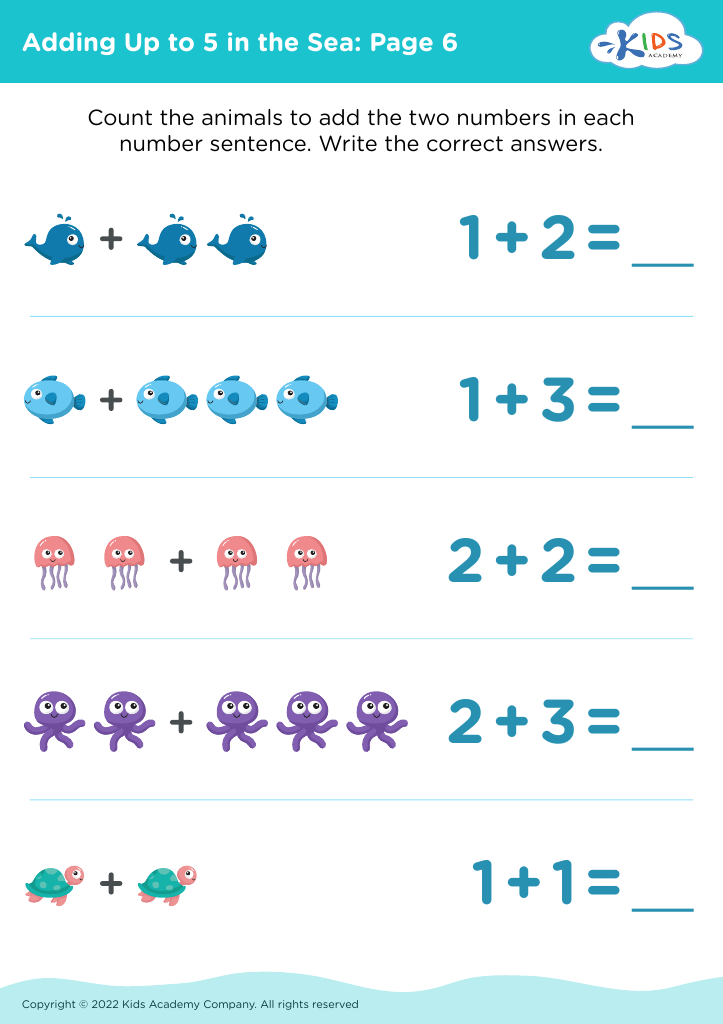
Adding Up to 5 in the Sea: Page 6

Adding Up to 5 in the Sea: Page 6

Adding Up to 5 in the Sea: Page 6
Worksheet
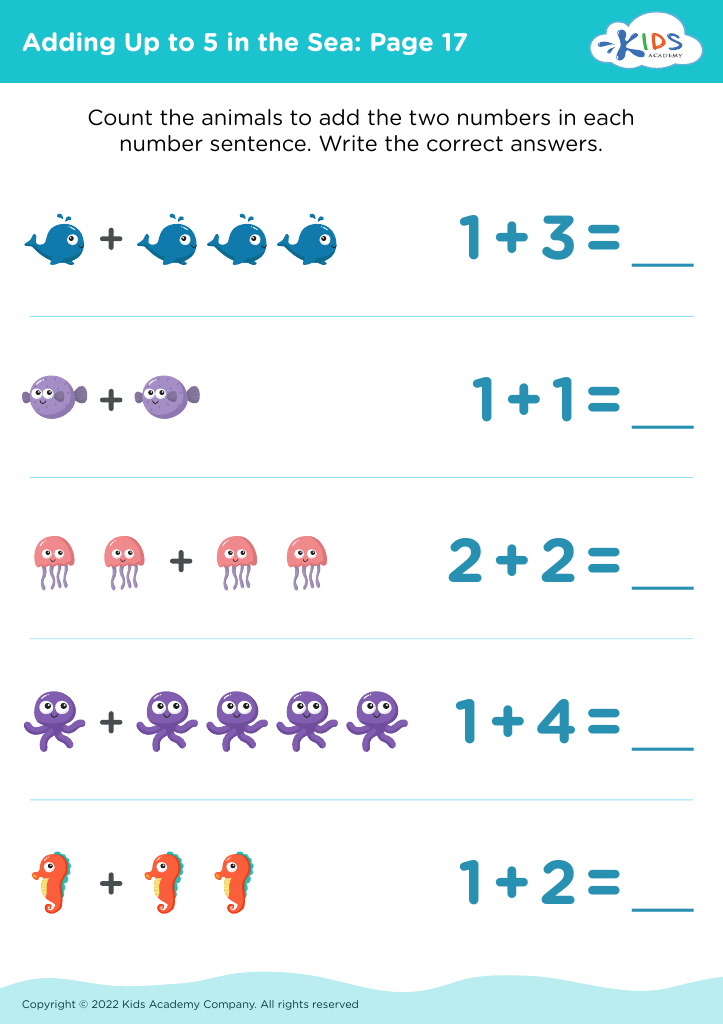
Adding Up to 5 in the Sea: Page 17
Worksheet
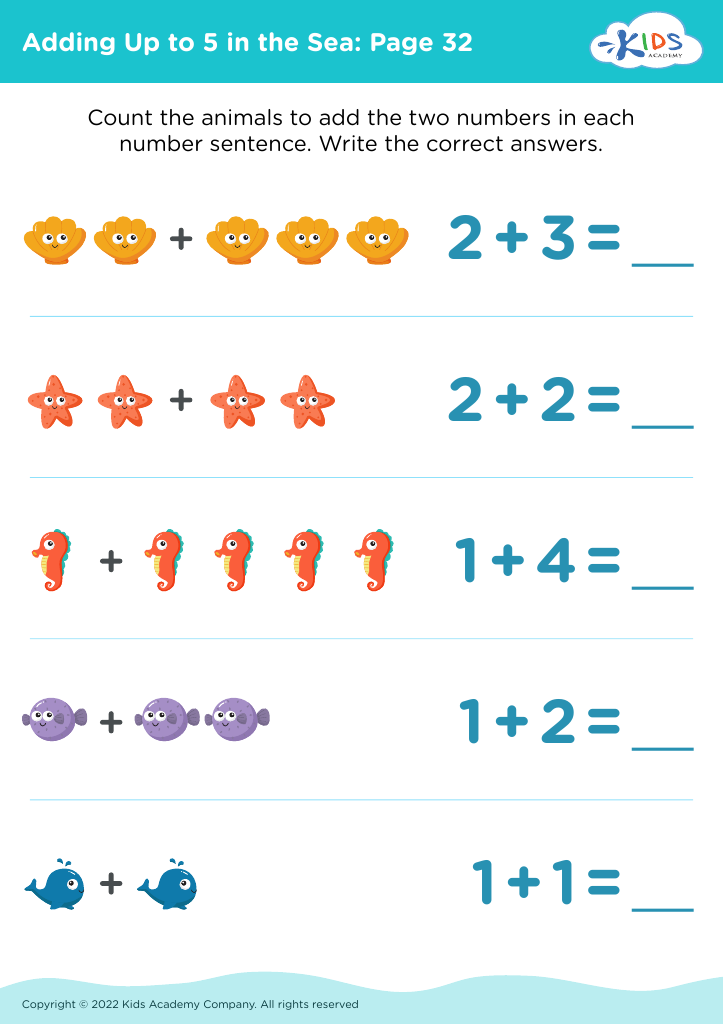
Adding Up to 5 in the Sea: Page 32
Worksheet
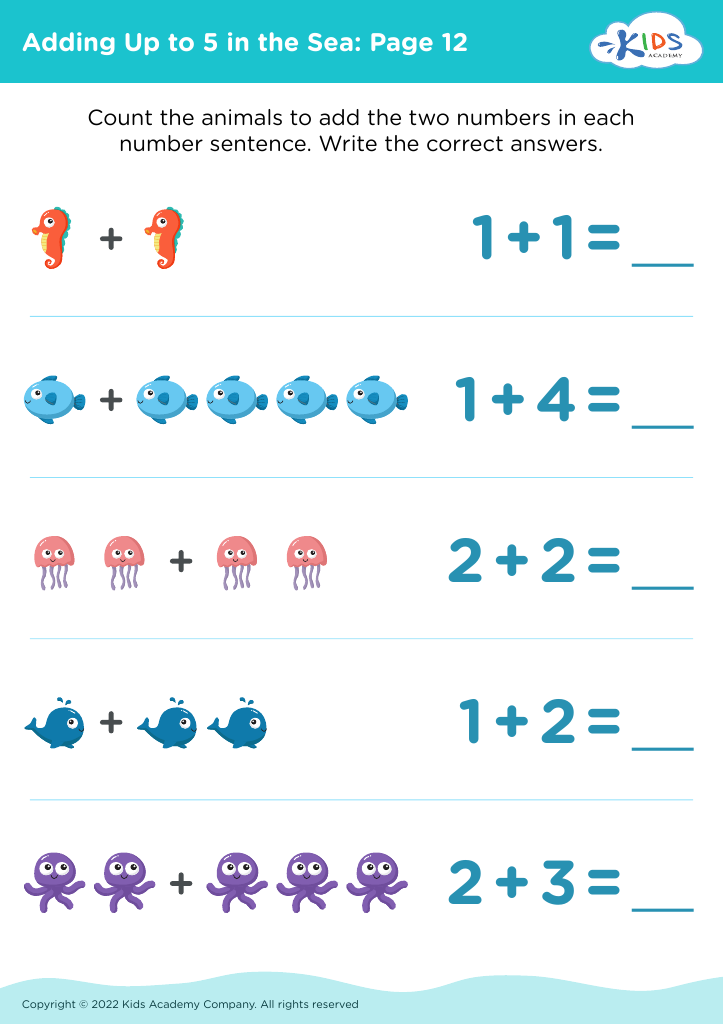
Adding Up to 5 in the Sea: Page 12
Worksheet
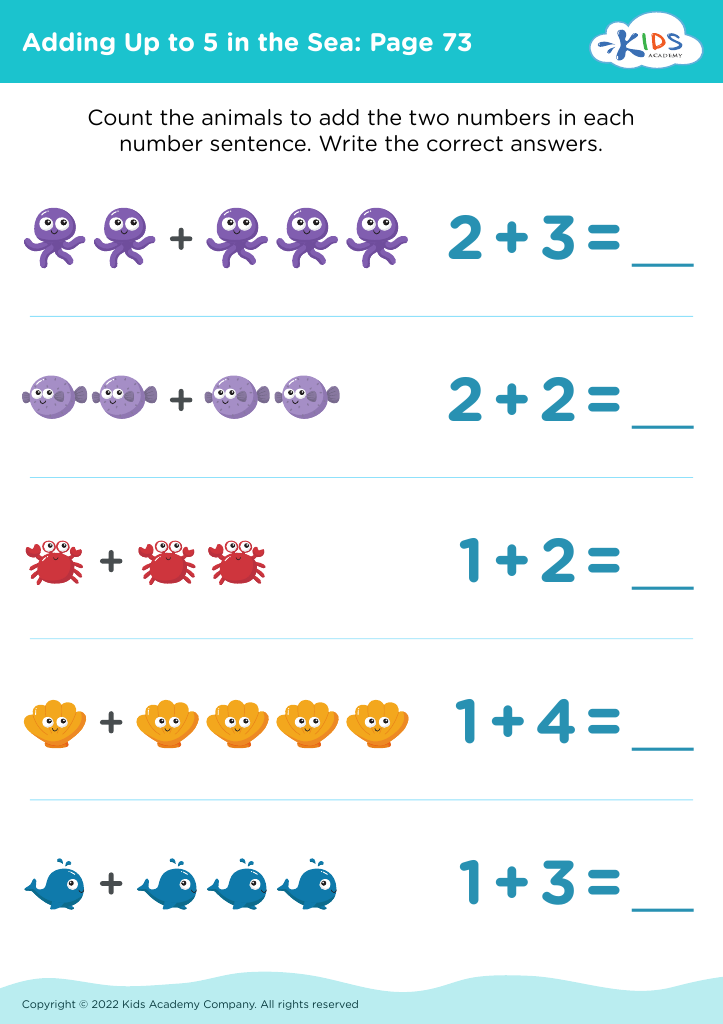
Adding Up to 5 in the Sea: Page 73
Worksheet
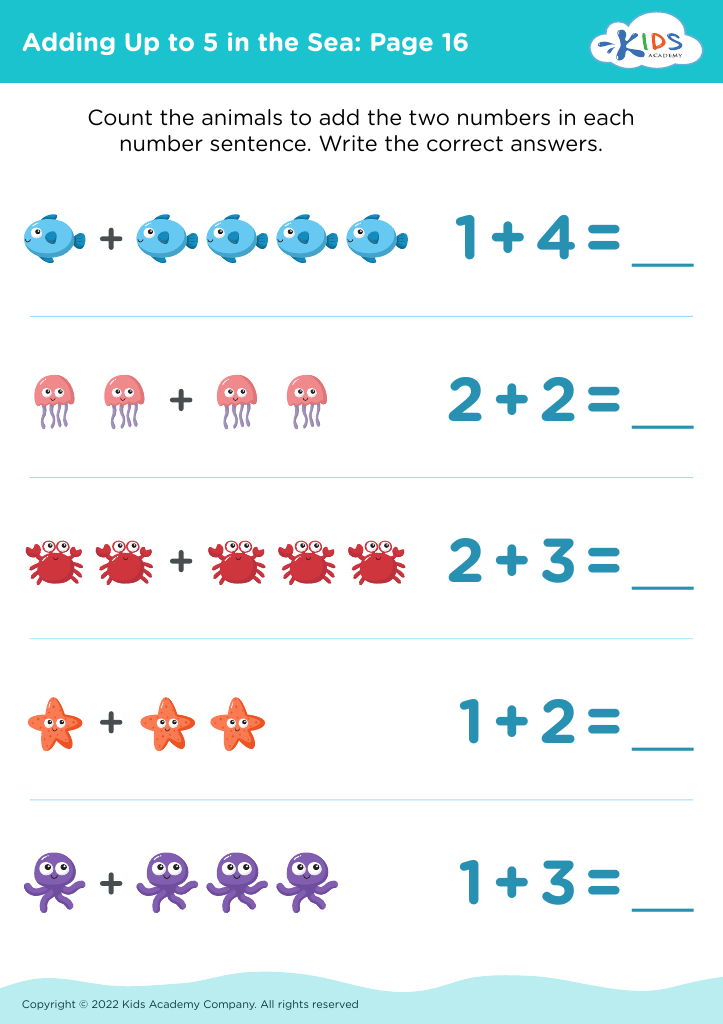
Adding Up to 5 in the Sea: Page 16
Worksheet
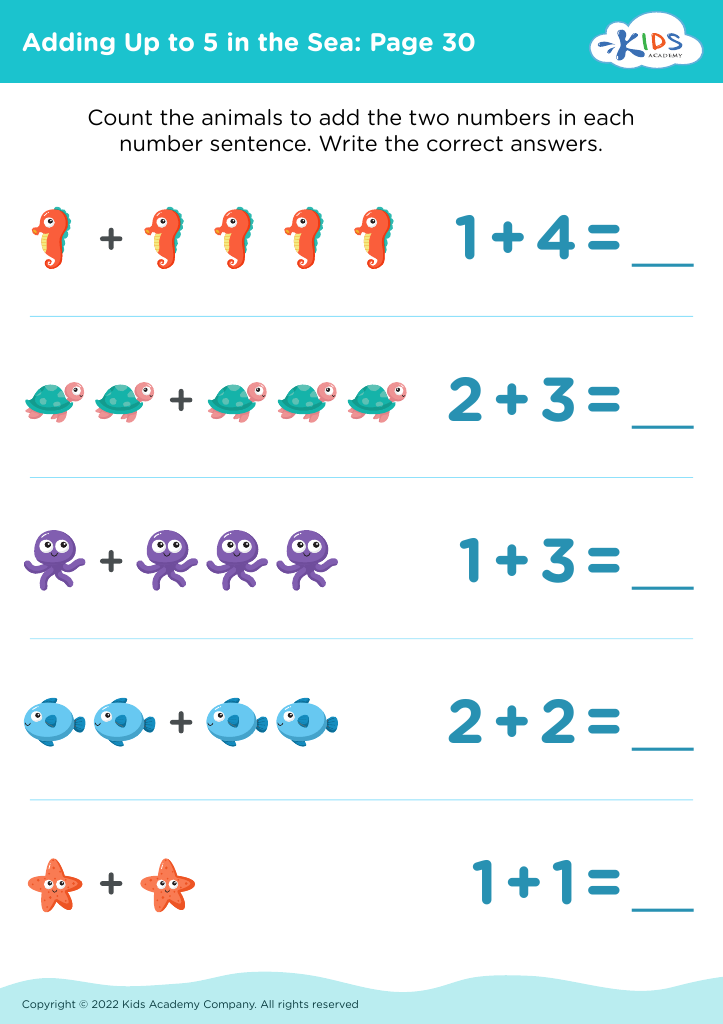
Adding Up to 5 in the Sea: Page 30
Worksheet
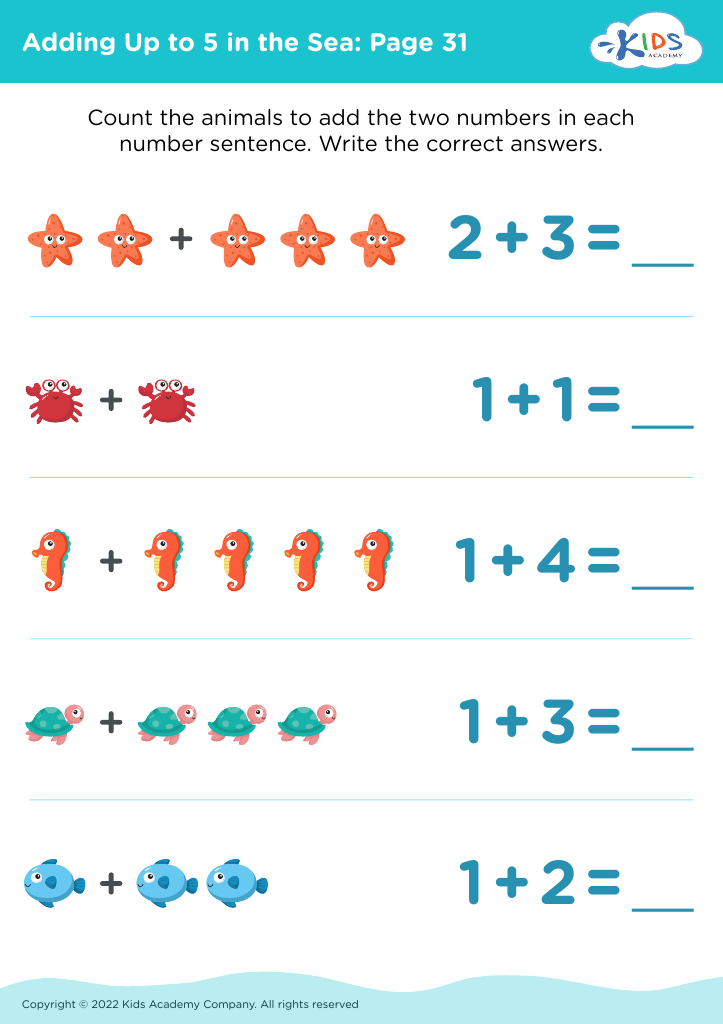
Adding Up to 5 in the Sea: Page 31
Worksheet
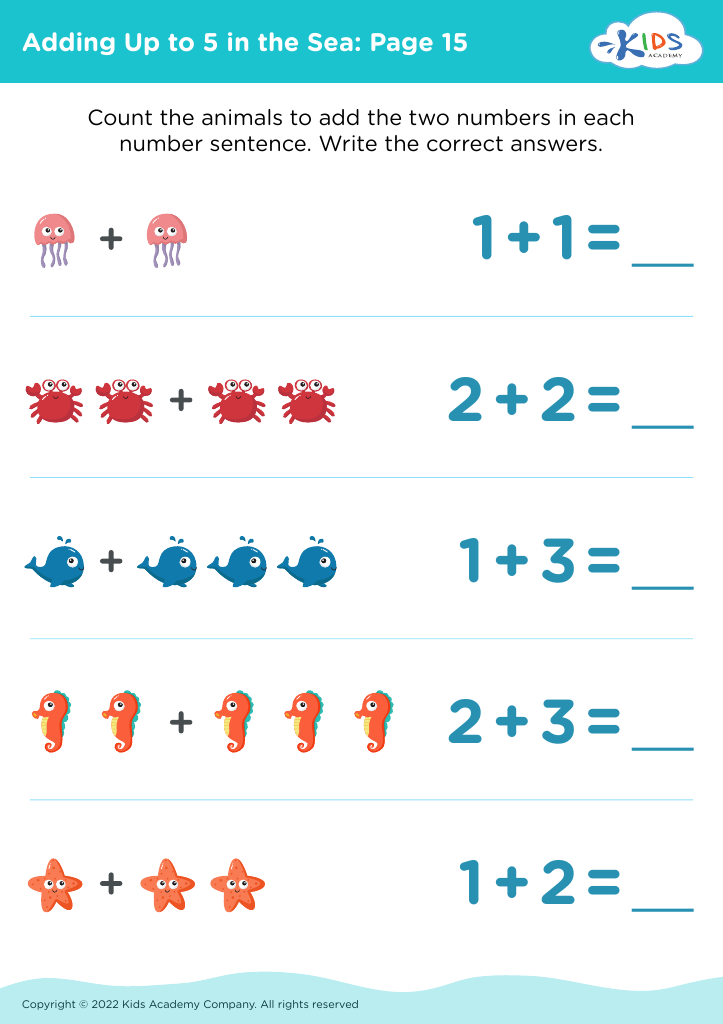
Adding Up to 5 in the Sea: Page 15
Worksheet
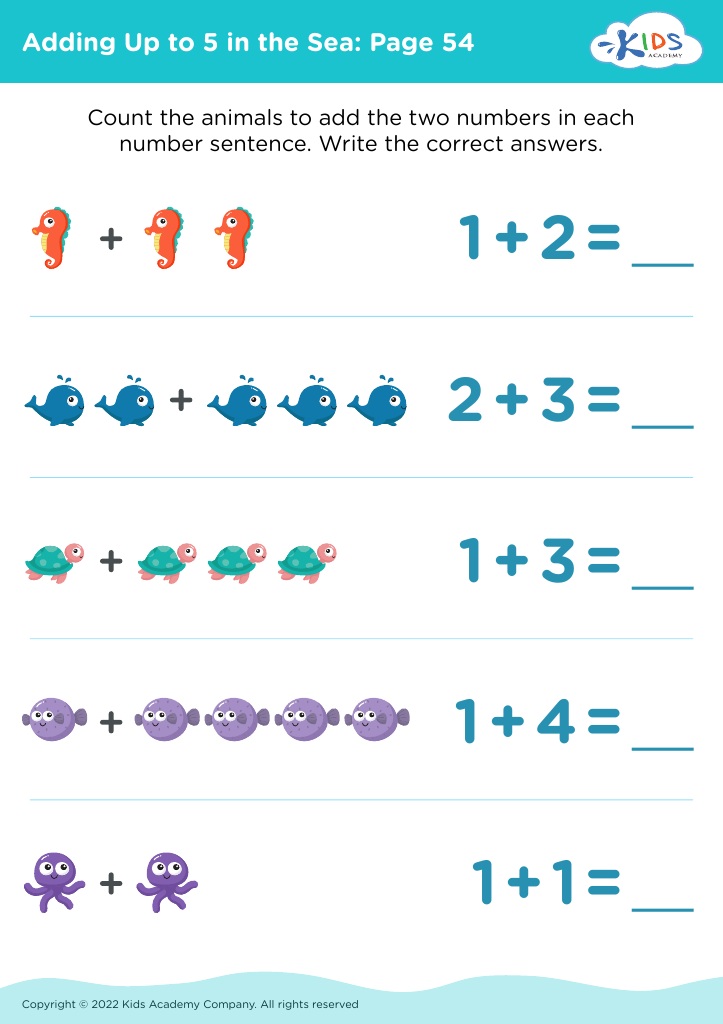
Adding Up to 5 in the Sea: Page 54
Worksheet
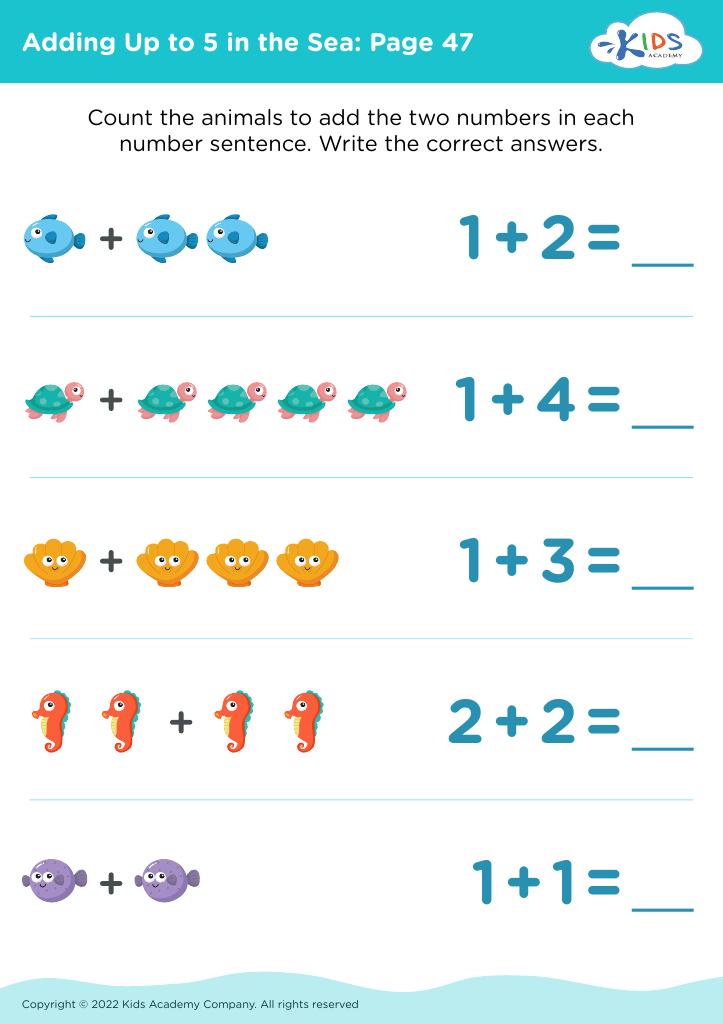
Adding Up to 5 in the Sea: Page 47
Worksheet
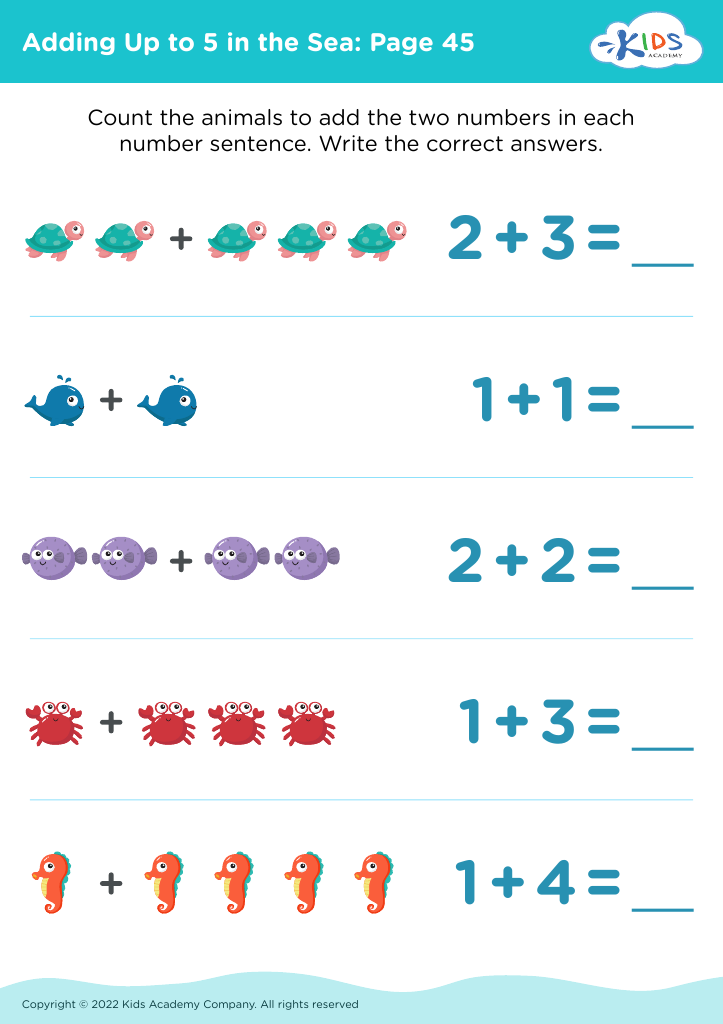
Adding Up to 5 in the Sea: Page 45
Worksheet
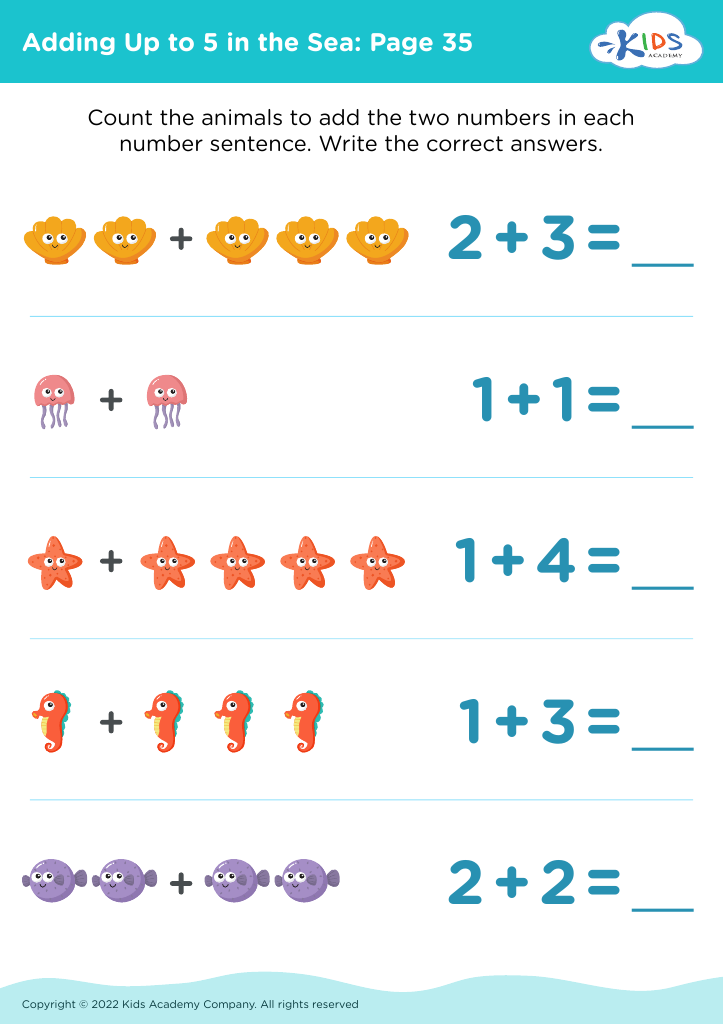
Adding Up to 5 in the Sea: Page 35
Worksheet
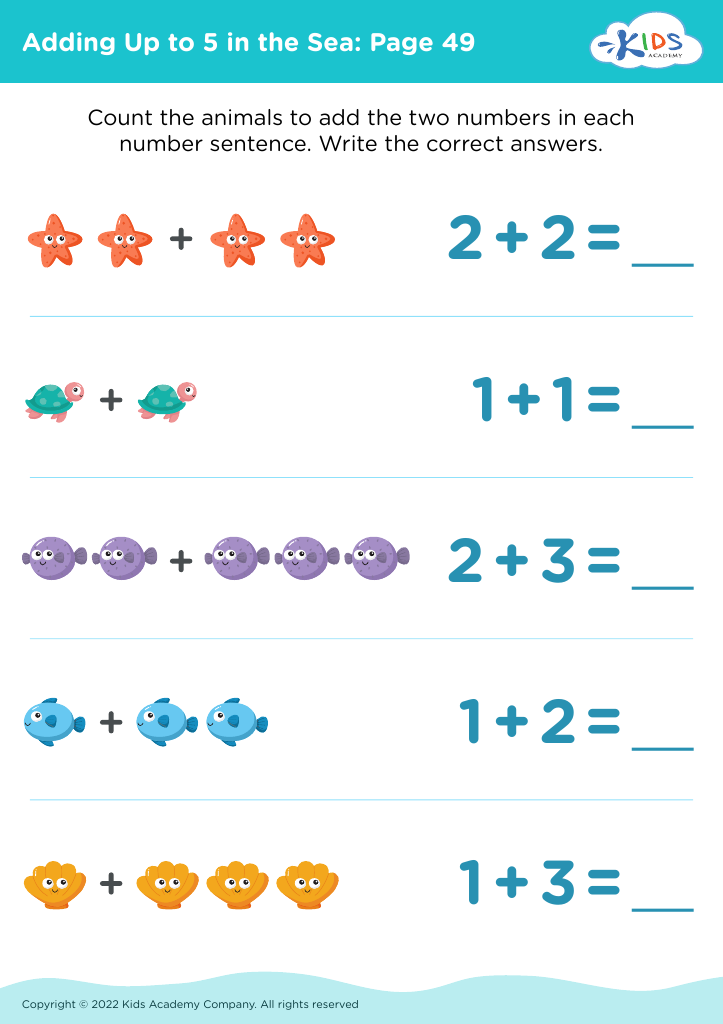
Adding Up to 5 in the Sea: Page 49
Worksheet
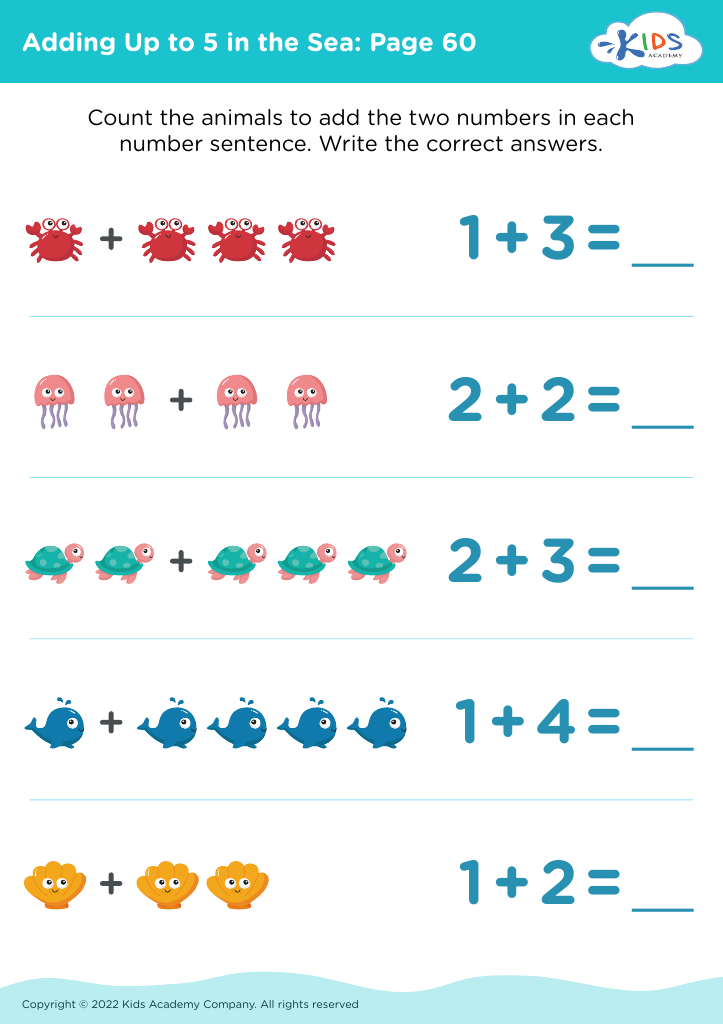
Adding Up to 5 in the Sea: Page 60
Worksheet
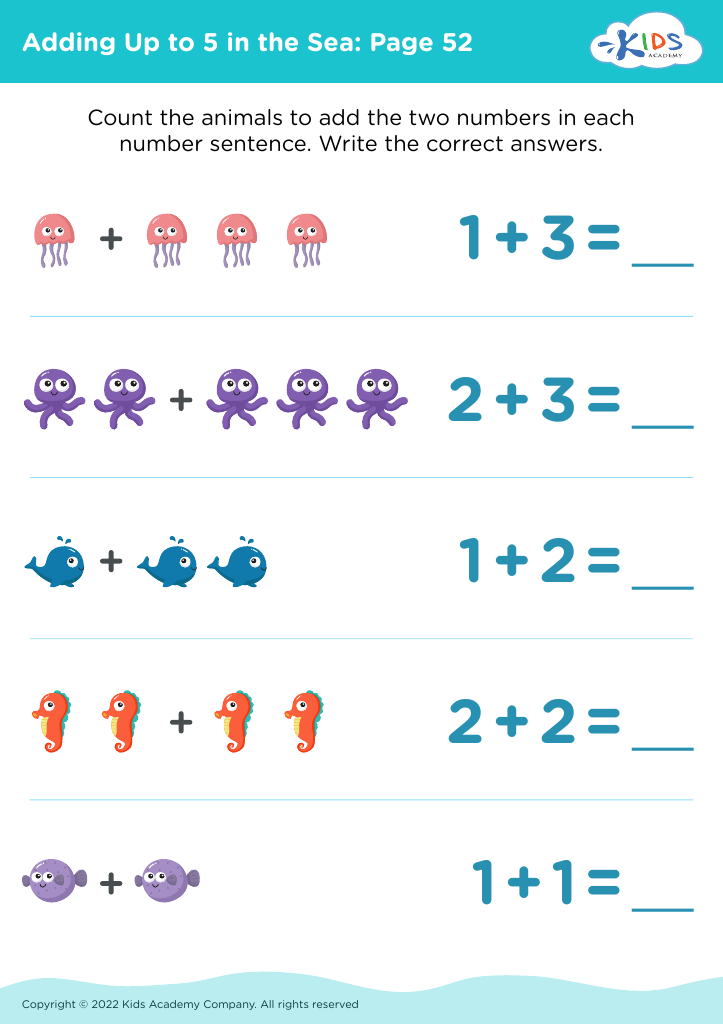
Adding Up to 5 in the Sea: Page 52
Worksheet
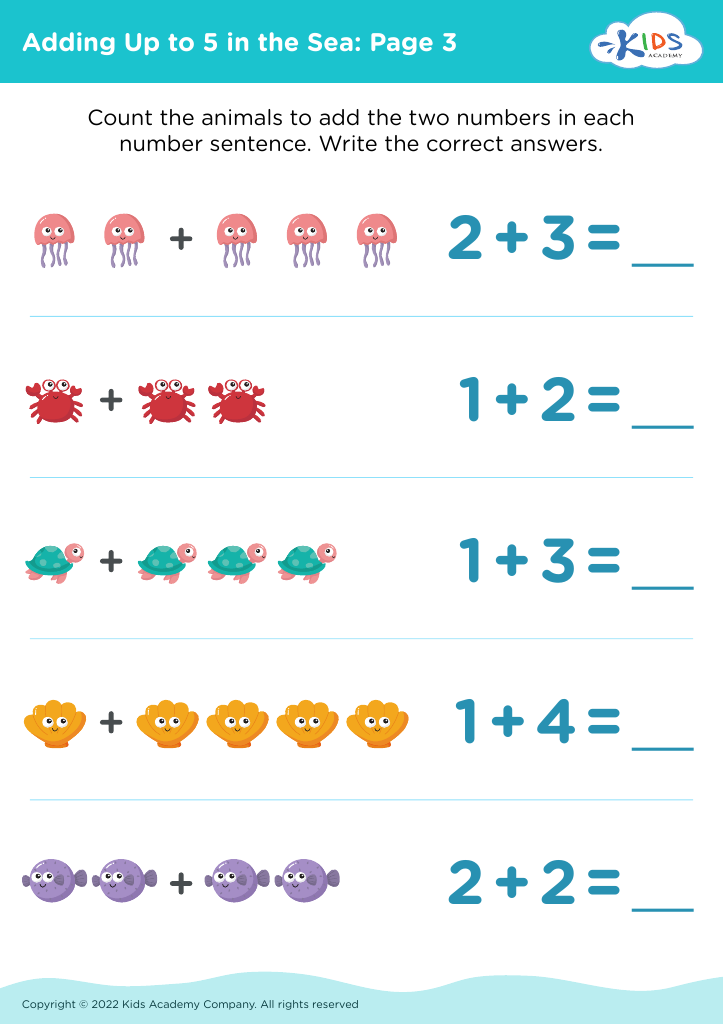
Adding Up to 5 in the Sea: Page 3

Adding Up to 5 in the Sea: Page 3

Adding Up to 5 in the Sea: Page 3
Worksheet
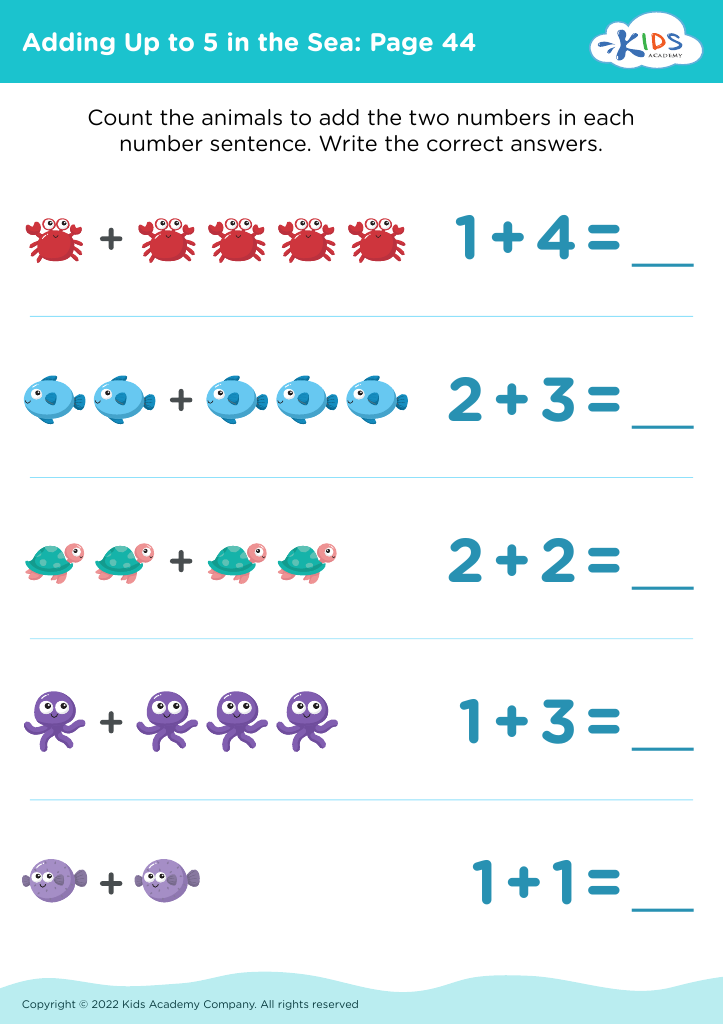
Adding Up to 5 in the Sea: Page 44
Worksheet


Basic addition skills provide a vital foundation for a child’s future mathematical education, and the introduction of engaging resources like "Adding in the Sea" for ages 3-8 can make all the difference. Early arithmetic helps bolster essential cognitive skills, such as problem-solving and logical thinking, which are foundational for academic success across subjects. For parents and teachers, fostering these skills through a fun and thematic approach captures a child's interest and motivates them to practice more consistently.

"Adding in the Sea" incorporates colorful imagery and captivating themes related to the ocean, which can make learning feel more like play. As young children are naturally curious and responsive to visual stimuli, this approach can help demystify math concepts, making them more understandable and less intimidating. By learning basic addition in an enjoyable context, children develop a positive attitude toward math, which can boost their confidence and readiness for more complex concepts later on.

Furthermore, early mastery of addition contributes to better classroom participation and a smoother educational journey. Teachers and parents who invest time in nurturing these fundamental skills are essentially building the bedrock for a child’s successful academic experience. This hands-on, engaging method respects their developmental stages, making learning both effective and enjoyable.