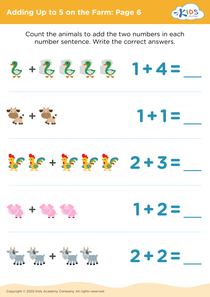
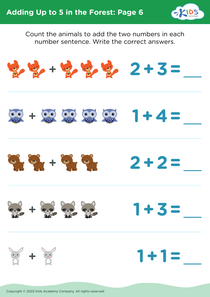
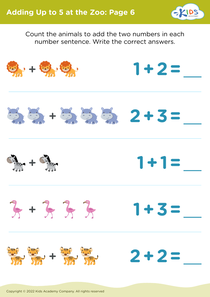
Basic Math Skills Adding in the Sea Worksheets for Ages 3-8
4 filtered results
-
From - To
Discover our engaging "Adding in the Sea" worksheets, designed specifically for young learners aged 3-8. These colorful and interactive activities make mastering basic math skills a fun underwater adventure! Each worksheet focuses on addition, encouraging children to enhance their numeracy skills through visually appealing illustrations of sea creatures. As they complete each task, kids will not only practice their adding abilities but also develop critical thinking and problem-solving skills. Ideal for classrooms or at-home learning, these worksheets provide educators and parents with excellent tools to inspire young minds while nurturing a love for math. Dive into learning today!
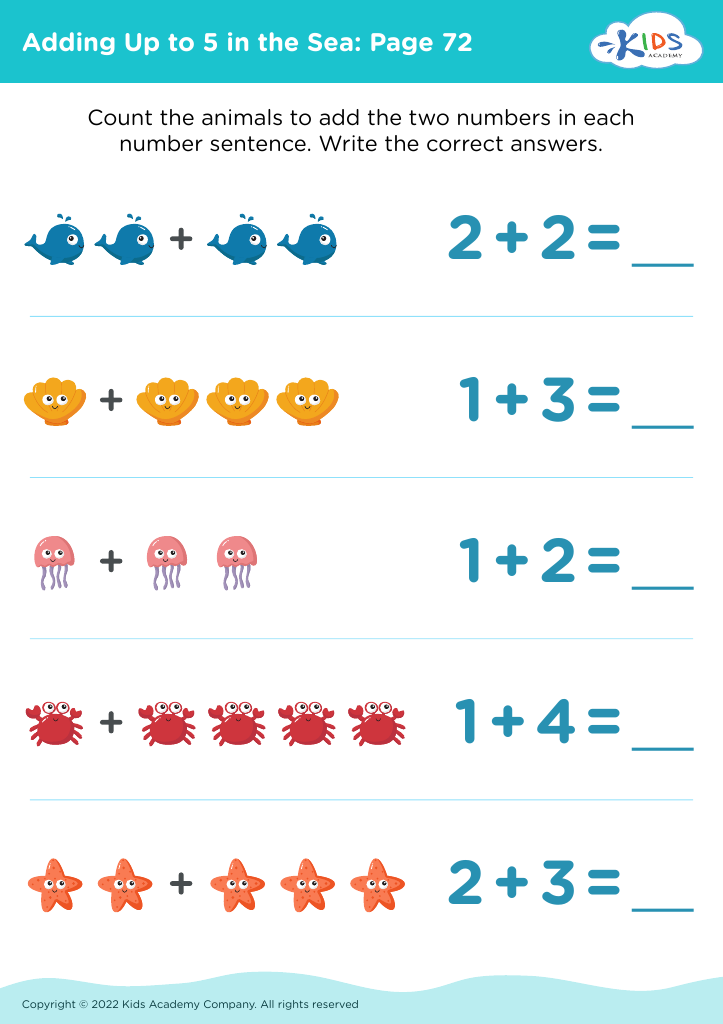
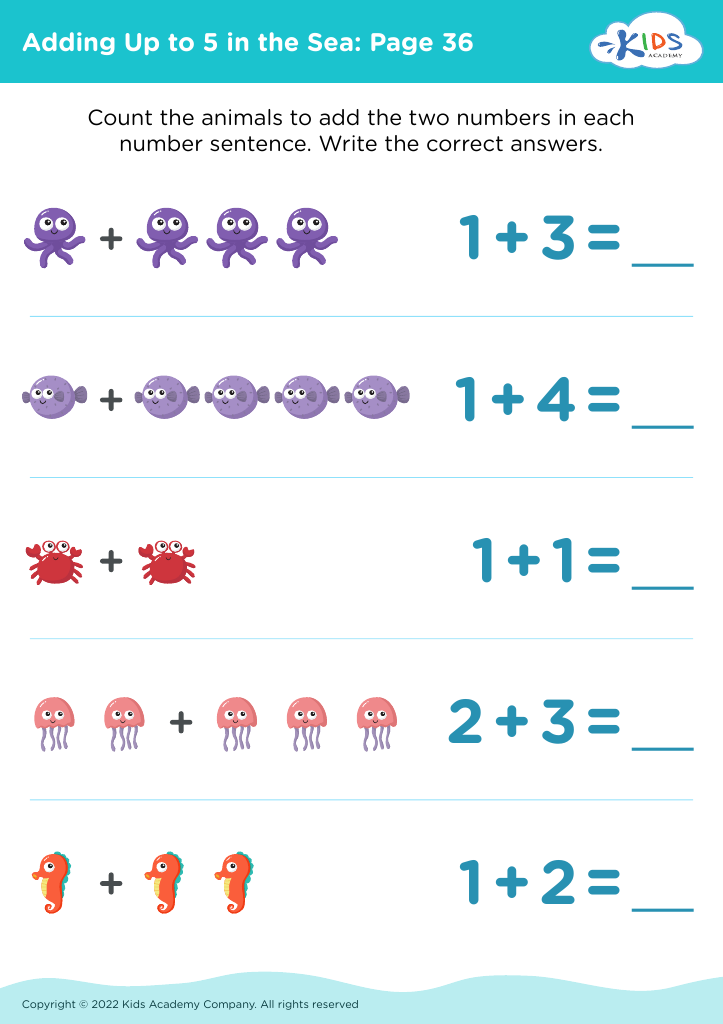
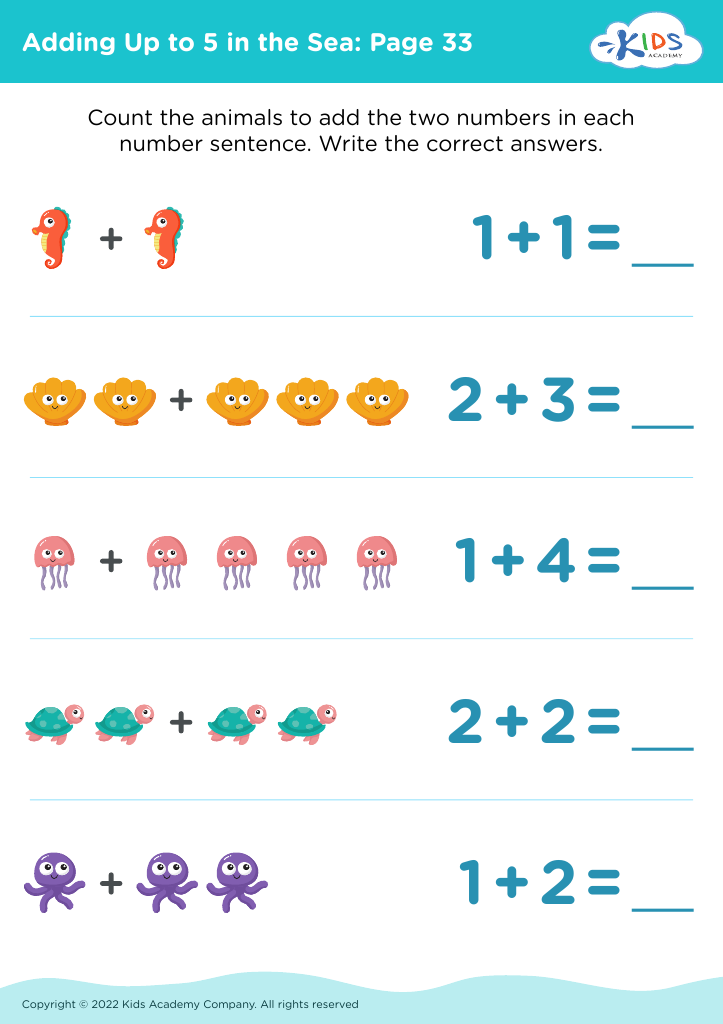
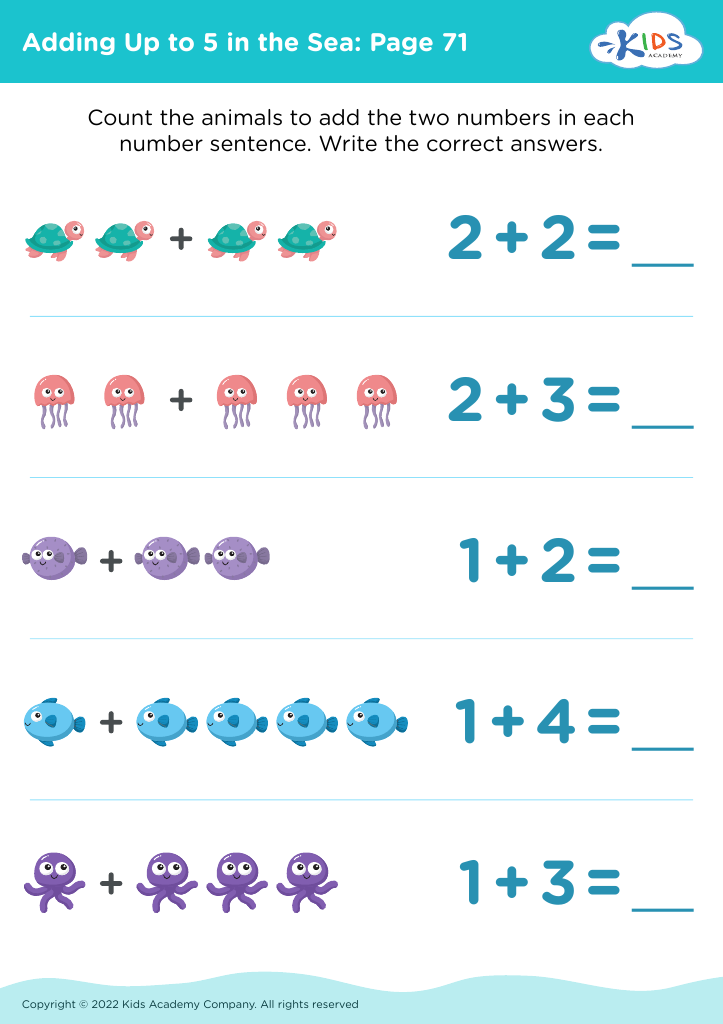



Parents and teachers should prioritize basic math skills through engaging activities like "Adding in the Sea" because early mathematical understanding lays the foundation for future learning. For children aged 3-8, developing these skills enhances not only their mathematical competencies but also promotes critical thinking and problem-solving abilities. Incorporating fun, themed activities, such as sea-based addition games, captivates young learners, making mathematics enjoyable and relatable.
Understanding basic addition promotes number sense, which is essential for more complex math concepts later on. It helps children grasp relationships between numbers and can enhance their confidence in handling math challenges. Additionally, through playful interaction, children learn to work cooperatively, take turns, and engage socially, which are vital life skills.
As parents and teachers foster an environment where math is seen as enjoyable and interesting, they encourage a positive outlook towards learning. This can instill a long-lasting love for mathematics that children carry into their future education. Furthermore, these skills are not only applicable in academic settings but also in day-to-day life, empowering children to navigate everyday situations with ease. Investing in early math skills nurtures well-rounded young individuals equipped for the challenges of the future.