Hand-eye Coordination Adding in the Sea Worksheets for Ages 3-8
4 filtered results
-
From - To
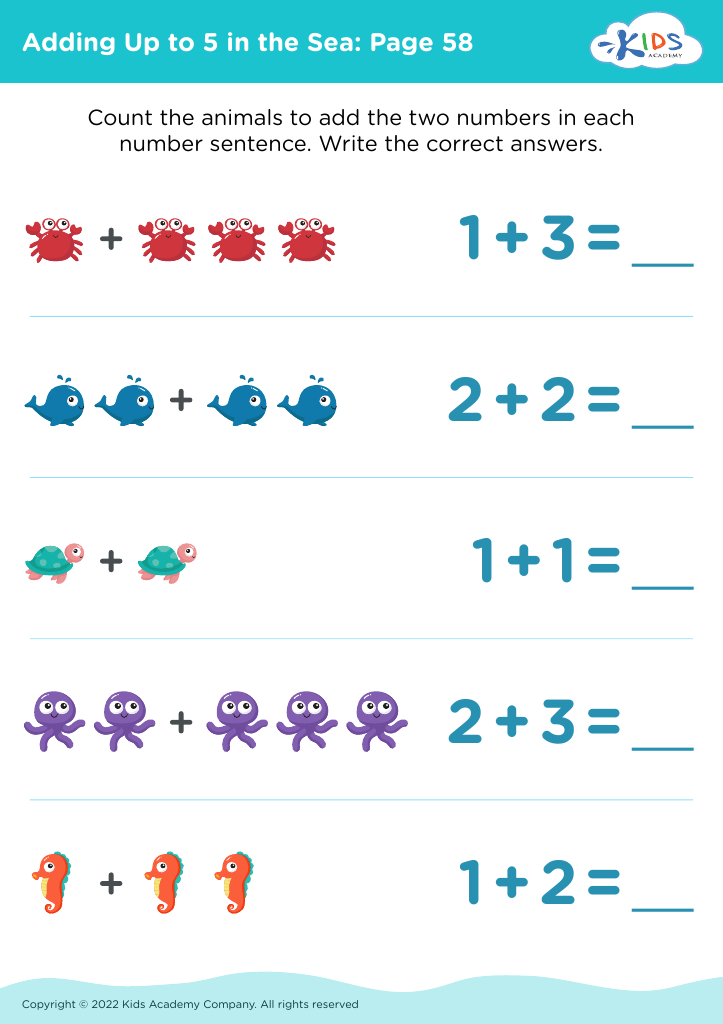
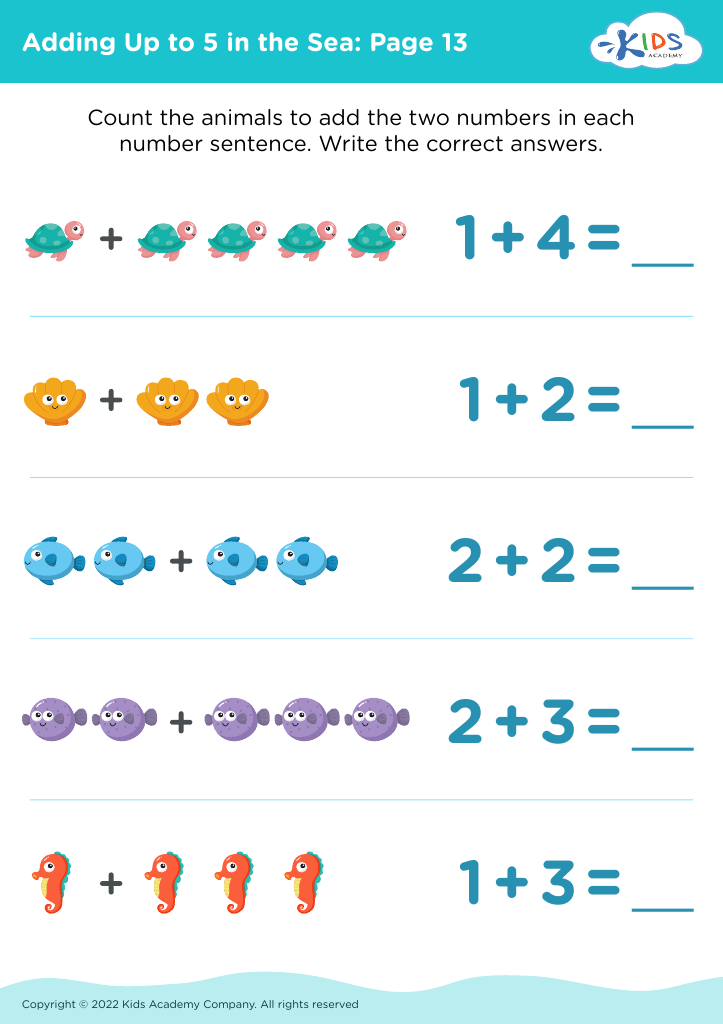
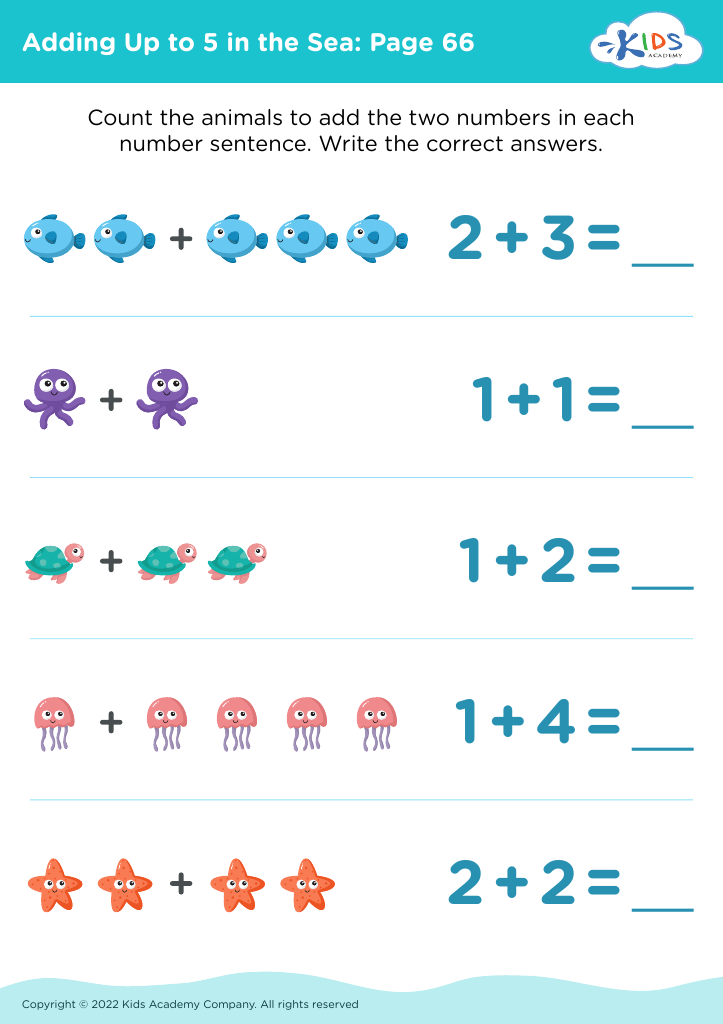
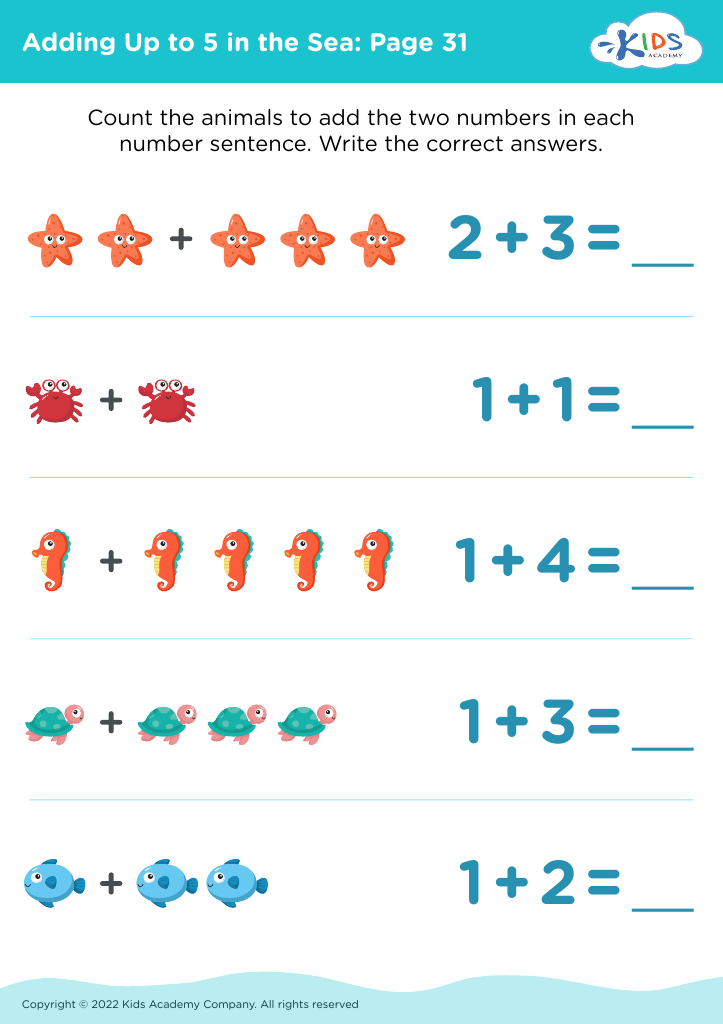
Enhance your child's hand-eye coordination with our engaging "Adding in the Sea" worksheets, designed specifically for ages 3-8! These fun, aquatic-themed activities combine fundamental math skills with hands-on practice, allowing young learners to develop precision and focus while mastering addition. Each worksheet provides a colorful, interactive experience, encouraging kids to connect counting with movement as they scoop, trace, or match playful sea creatures. Perfect for early grade teachers and parents alike, these worksheets not only promote mathematical understanding but also strengthen fine motor skills. Dive into learning with our ocean-inspired resources and watch your little one's confidence soar!



Hand-eye coordination is a crucial developmental skill for children, particularly between ages 3-8, as it supports various aspects of their growth and learning. This skill refers to the ability to process visual information and coordinate it with hand movements, which is essential for tasks such as writing, drawing, sports, and daily activities like buttoning clothes or throwing a ball.
Incorporating activities like "Adding in the Sea" can enhance hand-eye coordination in an engaging way. This playful activity often involves counting sea creatures, sorting them, or even using physical manipulatives to practice addition. These actions require children to focus their vision on the objects while coordinating their hands to manipulate them, thus fostering the development of fine motor skills and cognitive abilities.
Parents and teachers should care about this development not only for its immediate benefits but also for its long-term impact on academic success and physical activity. Improved hand-eye coordination can boost confidence and independence, enabling children to tackle more complex tasks both in and out of the classroom. By integrating fun, educational games, caregivers can effectively nurture this essential skill during these formative years.