Underwater animal identification Adding in the Sea Worksheets for Ages 3-8
3 filtered results
-
From - To
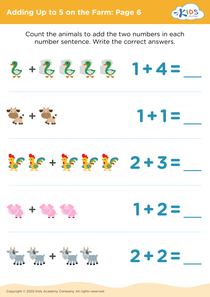
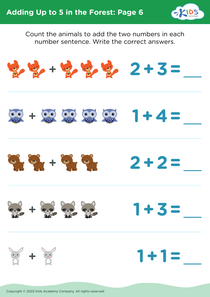
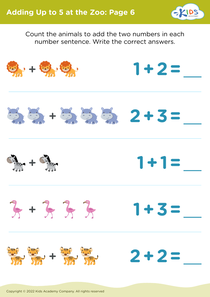
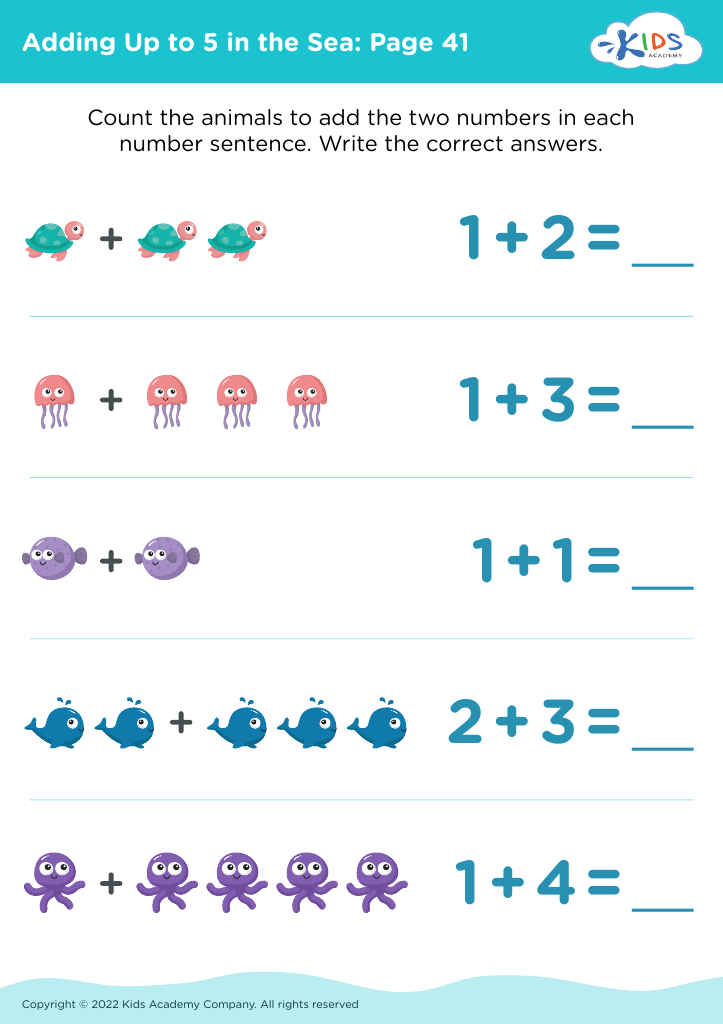
Introduce young learners to the captivating world beneath the waves with our "Underwater Animal Identification: Adding in the Sea" worksheets designed for ages 3-8! These engaging resources combine playful illustrations of marine life with fundamental math skills, making learning subtraction thrilling and interactive. By identifying colorful underwater animals, children will not only improve their addition skills but also foster their curiosity about different sea creatures. Whether at home or in the classroom, these worksheets serve as a fun, educational way to blend mathematics with ocean exploration. Dive into learning today and watch your child's confidence soar as they master essential math concepts!
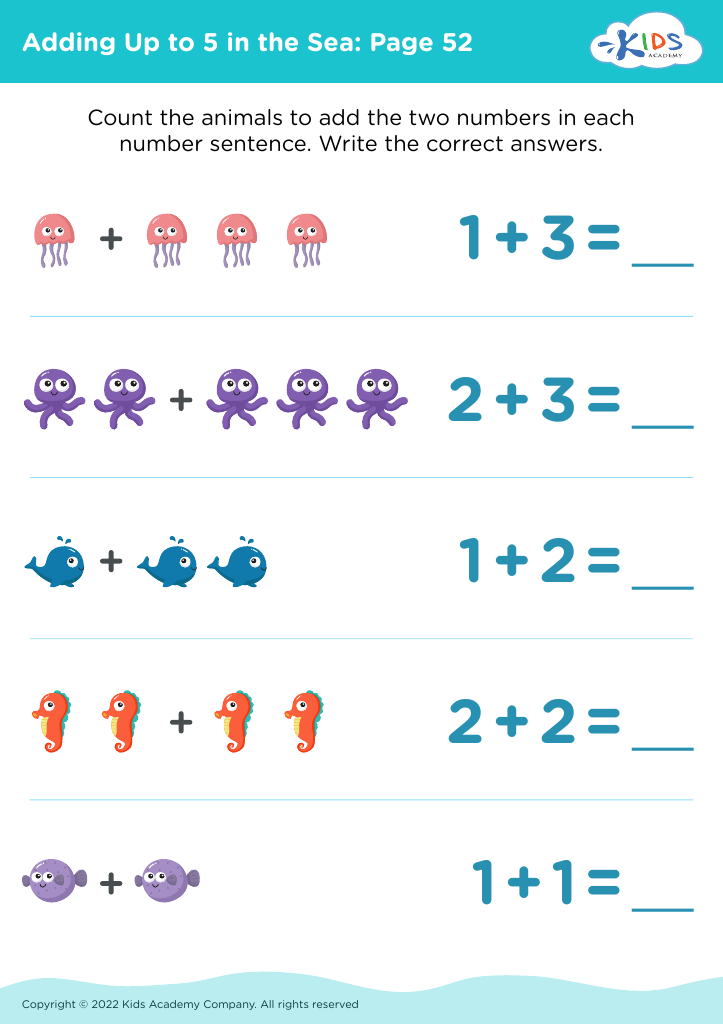
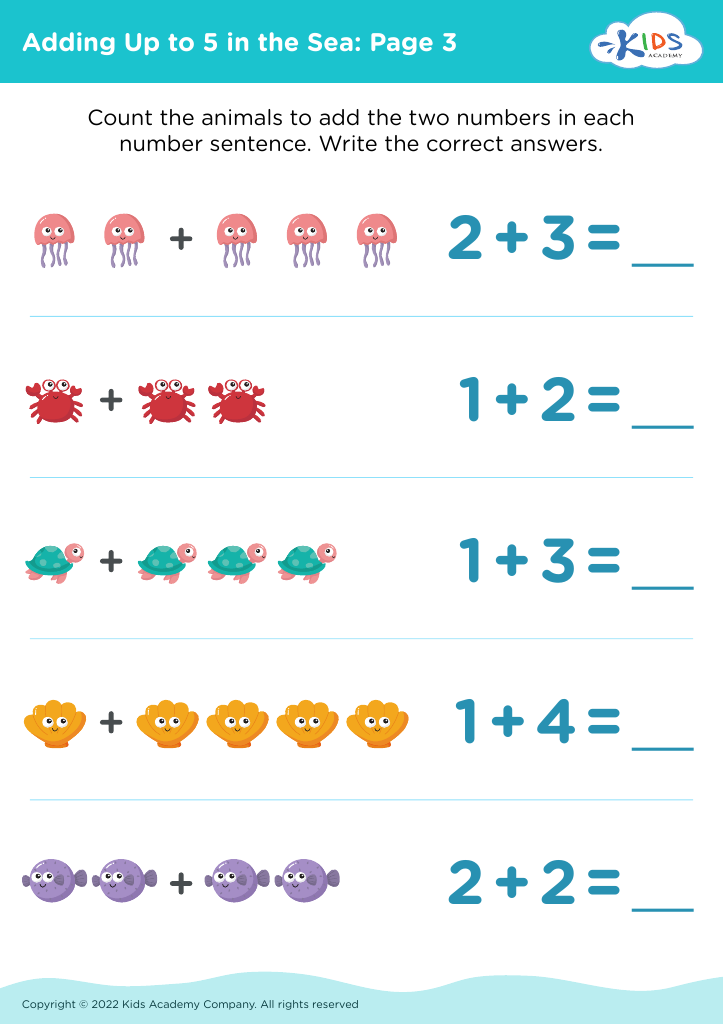



Parents and teachers should care about underwater animal identification for children ages 3-8 for several important reasons. Firstly, introducing young learners to marine life fosters curiosity and appreciation for the environment. At this age, children are naturally inquisitive, and identifying underwater animals helps satisfy that curiosity, encouraging exploratory learning.
Secondly, learning about these creatures enhances children's cognitive development. Recognizing different species aids in vocabulary building and reinforces memory skills as children learn names, characteristics, and habitats of marine animals. This can be a fun, interactive experience that engages them both mentally and physically through activities like field trips to aquariums or beach explorations.
Importantly, underlining the importance of marine biodiversity can instill values of environmental stewardship in young children. By understanding the roles animals play in their ecosystems, they grasp the significance of conservation and preservation efforts, fostering a sense of responsibility towards the ocean and its inhabitants.
Lastly, incorporating underwater animal identification into educational experiences promotes teamwork and social skills during group activities, where children can share discoveries and work together in hands-on learning experiences. Overall, this foundational knowledge sets the stage for lifelong learning and promotes a deeper connection to our oceans.