Fine Motor Skills Adding up to 100 Misc Worksheets for Ages 3-8
5 filtered results
Difficulty Level
Grade
Age
-
From - To
Subject
Activity
Standards
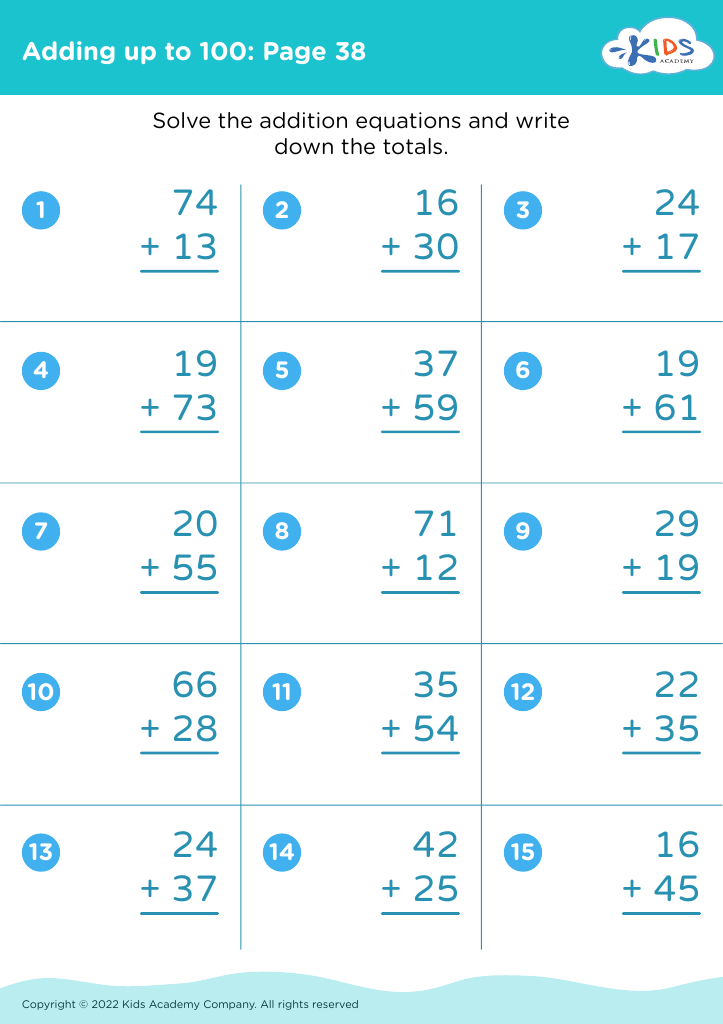
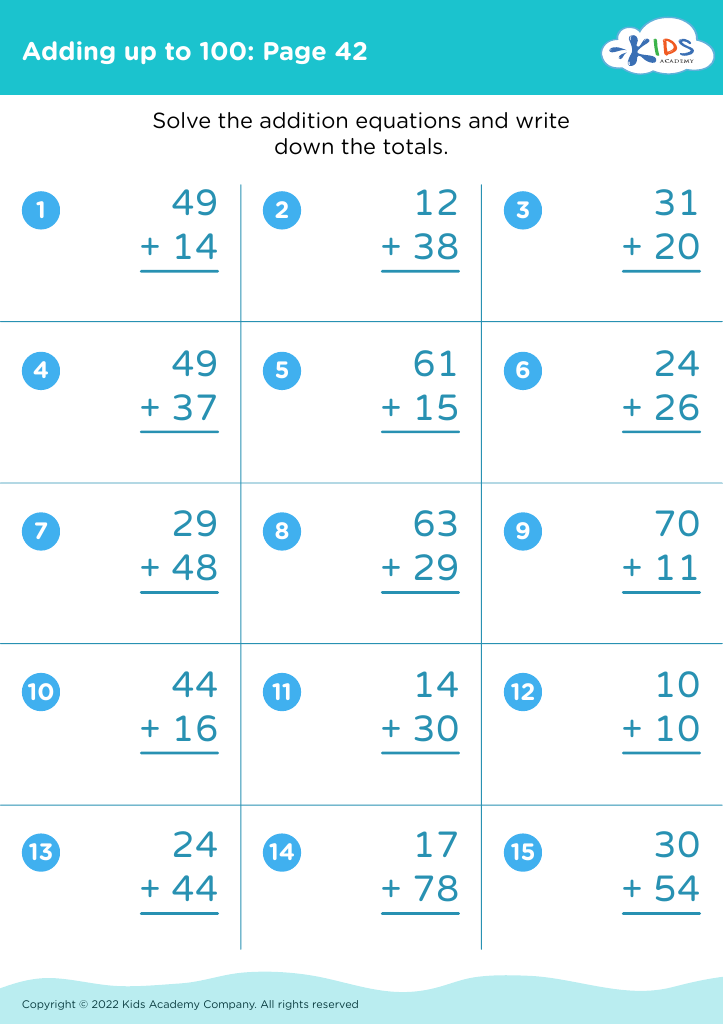
Discover our diverse collection of Fine Motor Skills Adding up to 100 Worksheets designed for children aged 3-8. These engaging, printable worksheets are perfect for young learners to practice addition while honing their fine motor skills. Each activity combines fun and education, encouraging children to solve math problems through tracing, coloring, and more. Whether at home or in the classroom, our worksheets provide an enjoyable way for kids to improve their mathematical abilities and hand-eye coordination. Foster your child's growth with our expertly crafted resources at Kids Academy, where learning meets play!
Favorites
With answer key
Interactive
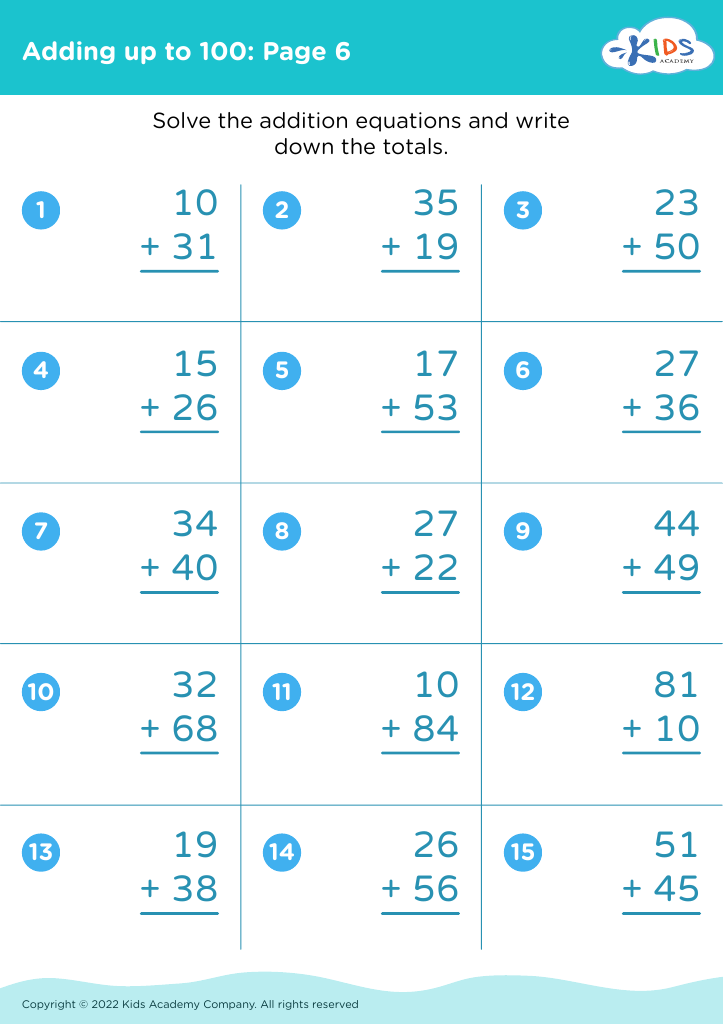
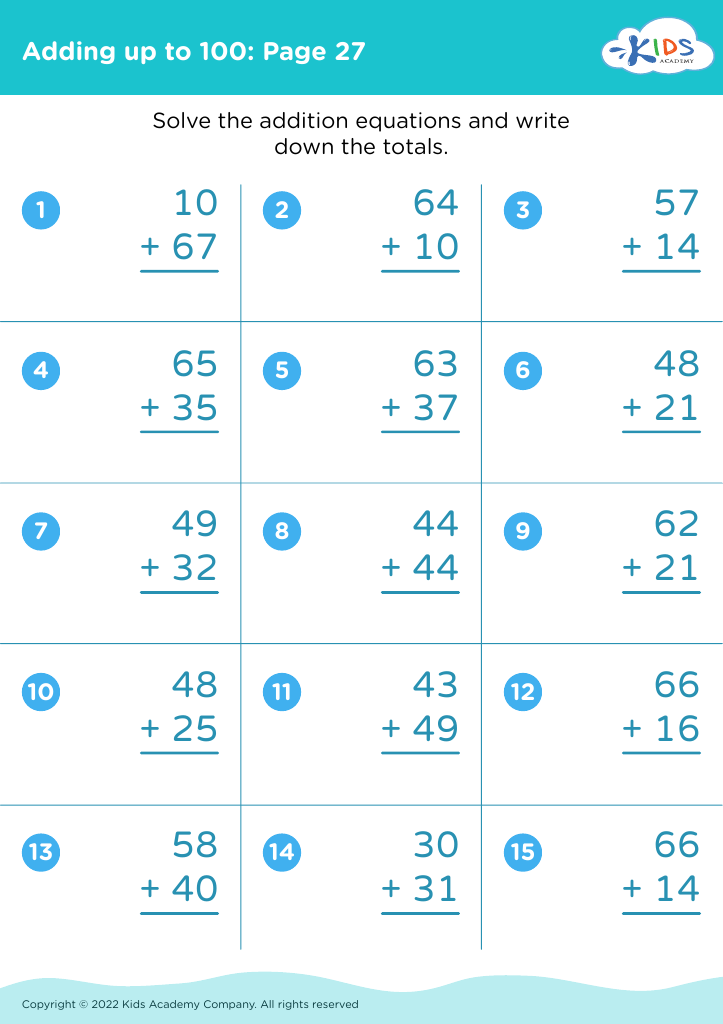
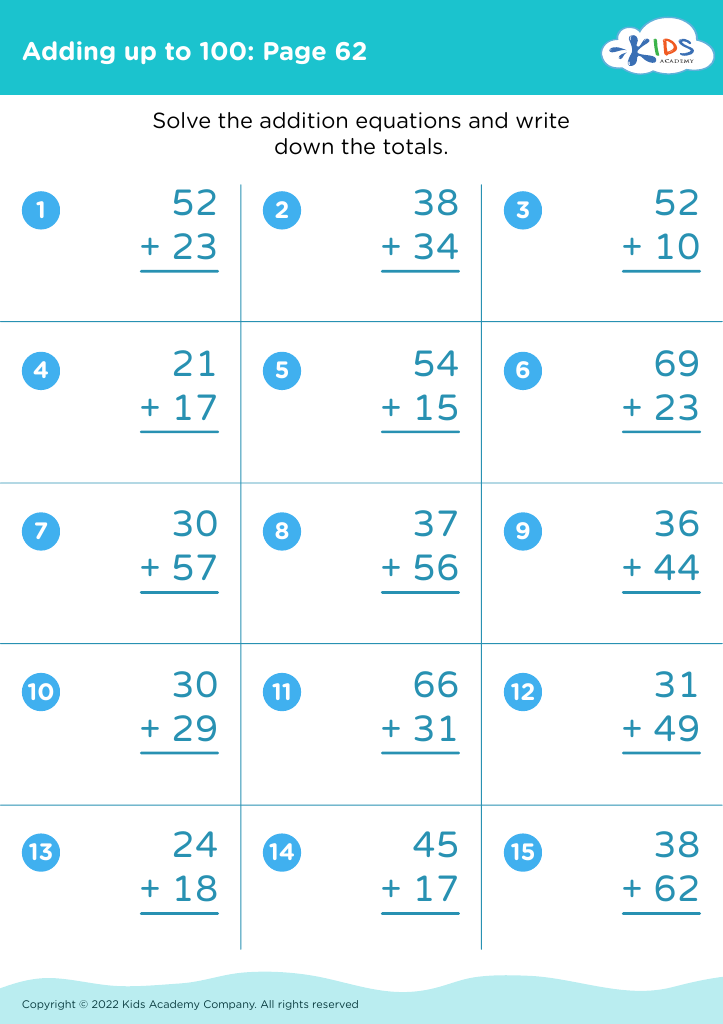
Join Kids Academy for Free
Who is primarily going to use this learning content?


Fine motor skills are essential for young children aged 3-8 as these foundational skills underpin many critical aspects of early development and learning. Fine motor skills involve the coordination of small muscles in the hands and fingers, enabling children to perform tasks such as writing, drawing, buttoning clothes, and cutting with scissors. These tasks might seem simple to adults, but for young children, they are complex activities that require practice and refinement.
Focusing on fine motor skills, particularly through activities like "Fine Motor Skills Adding up to 100," can offer significant benefits. Firstly, it helps improve hand-eye coordination, allowing children to navigate and manipulate their environment more effectively. For instance, solving simple math problems while handling physical objects (like counters or building blocks) can translate abstract concepts into tangible learning experiences, reinforcing cognitive connections.
Additionally, engaging in fine motor activities supports the development of concentration and patience, qualities that are pivotal for classroom learning. As children improve their dexterity and precision, their confidence in performing everyday tasks grows, promoting a sense of independence.
Lastly, proper mastery of fine motor skills establishes a cornerstone for success in school tasks, such as writing neatly and managing school supplies, which fosters academic achievement and overall development. Hence, parents and teachers should prioritize nurturing these skills as an investment in their child’s holistic growth.