Improve number recognition Adding up to 100 Misc Worksheets for Ages 3-8
3 filtered results
-
From - To
Enhance your child's number recognition skills with our "Adding Up to 100 Misc Worksheets," designed for ages 3-8. These engaging worksheets incorporate colorful illustrations and interactive exercises to make learning fun and effective. Children will practice identifying and counting numbers in a variety of formats, aiding their comprehension and confidence in mathematics. Each worksheet encourages hands-on learning, ensuring a solid foundation as they progress toward more complex math concepts. Whether at home or in the classroom, these resources are perfect for developing essential skills through enjoyable activities. Start your child's math journey today and watch them thrive!
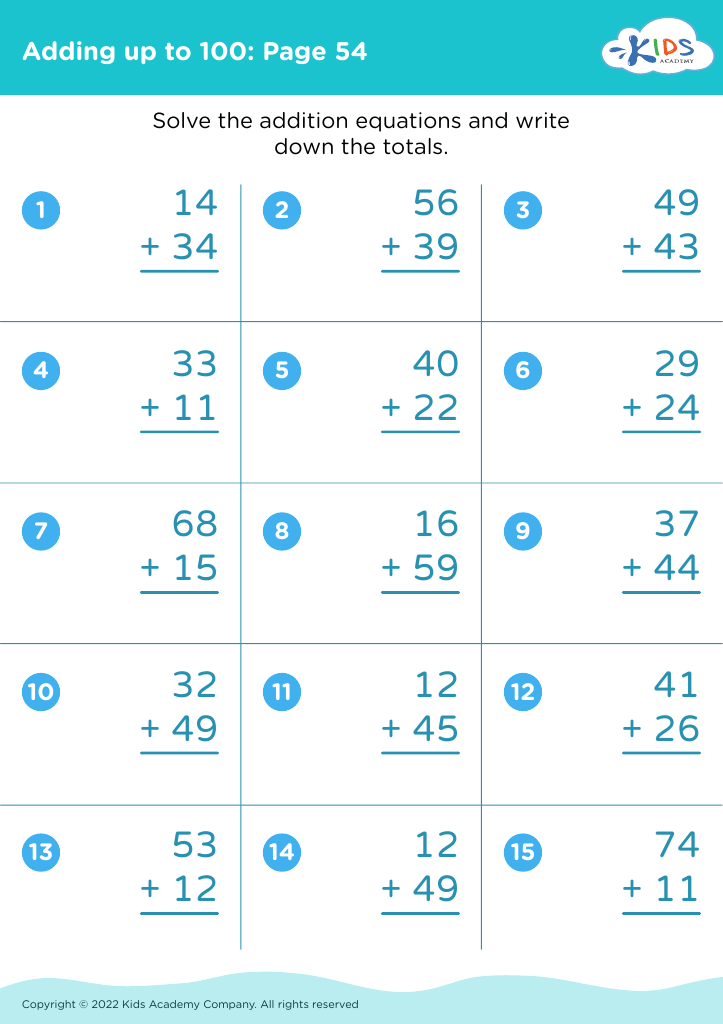
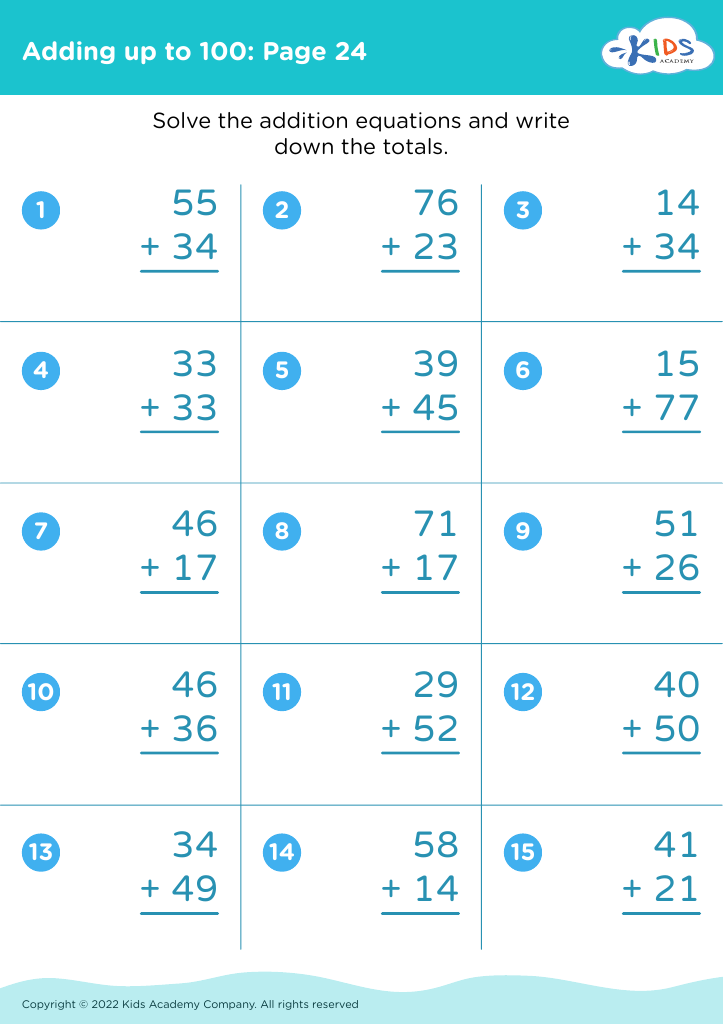
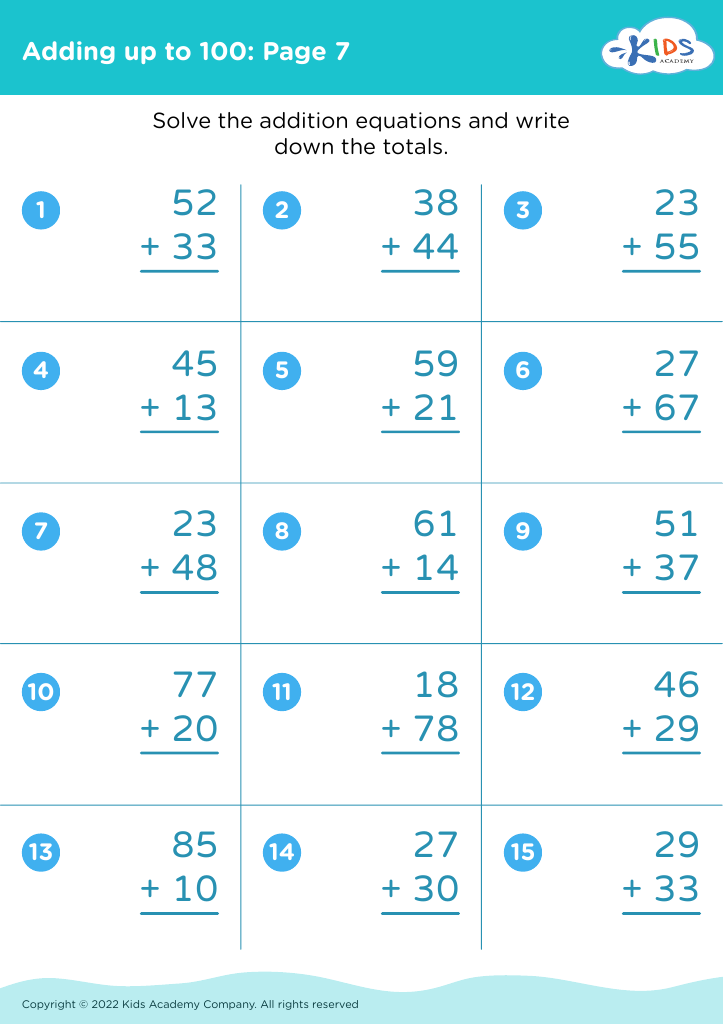


Improving number recognition and basic addition skills for children ages 3-8 is crucial for their overall mathematical development. At this young age, children are forming foundational skills that will support their future learning, both in mathematics and other subjects. Early proficiency in number recognition enables children to identify quantities, which is essential for critical thinking and problem-solving.
When children learn to add up to 100, they are not just mastering numbers; they are engaging in cognitive processes that enhance their analytical capabilities. These skills promote deeper understanding of concepts and relationships in math, paving the way for more complex calculation and reasoning in later grades.
Moreover, teachers and parents play a vital role in fostering a positive learning environment. Celebrating progress in number recognition and addition encourages confidence in children, making them more eager to explore math-related tasks. Games, hands-on activities, and everyday scenarios wherein children can apply these skills can make learning enjoyable and relatable.
Ultimately, by prioritizing number recognition and foundational math skills early on, we equip children with the tools they need for academic success and lifelong learning, ensuring they develop into confident learners in an increasingly numerate world.