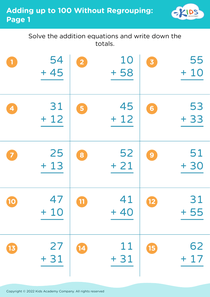
Addition Practice Adding up to 100 with Regrouping Worksheets for Ages 3-8
4 filtered results
-
From - To
Welcome to our "Addition Practice: Adding Up to 100 with Regrouping Worksheets for Ages 3-8"! Our engaging and interactive worksheets are designed to make learning addition fun and effective for young learners. Tailored for children aged 3 to 8, these resources focus on adding numbers up to 100, introducing the essential concept of regrouping. Each worksheet offers a variety of exercises that promote number recognition, enhance problem-solving skills, and strengthen mathematical confidence. Whether used in the classroom or at home, our addition practice sheets will empower your child to master foundational math skills in an enjoyable way. Explore and watch your child excel in math!
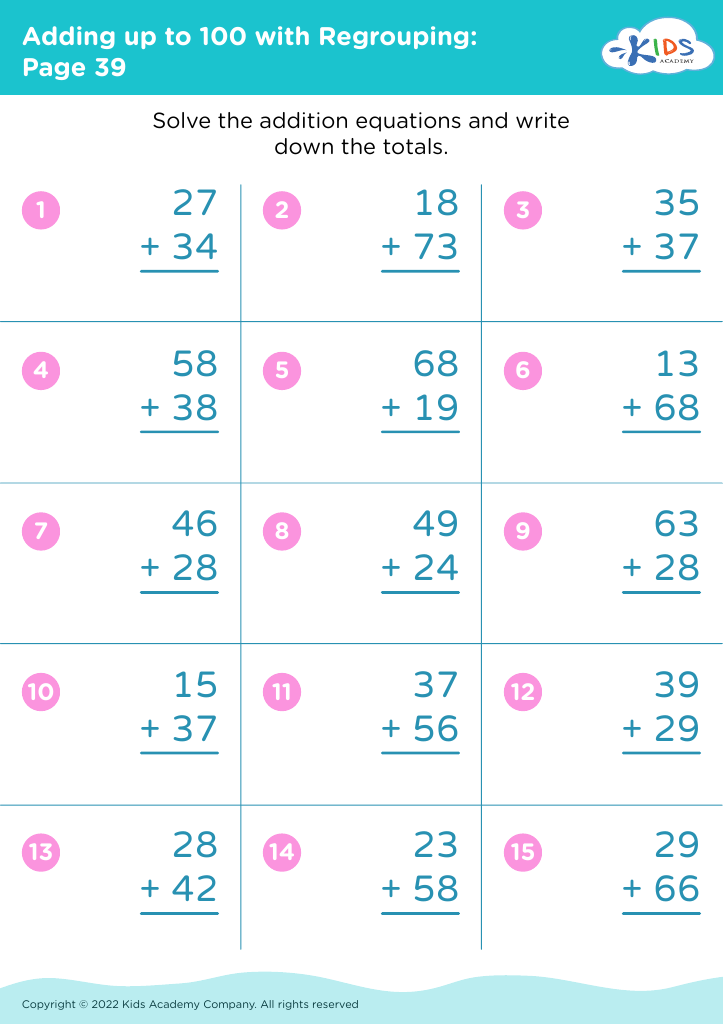
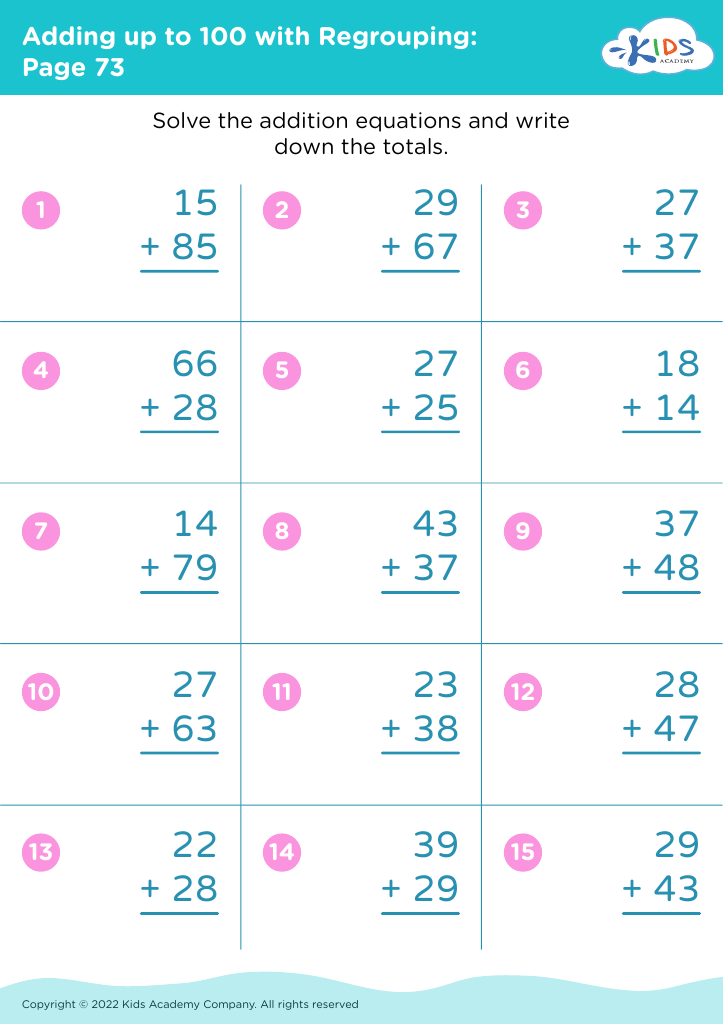
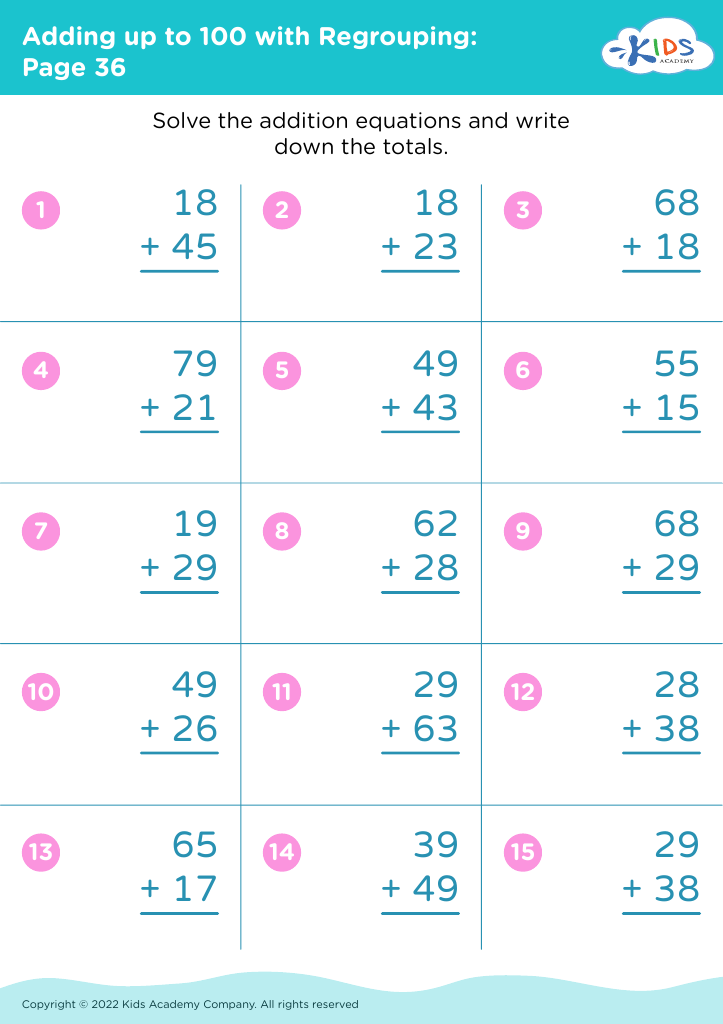
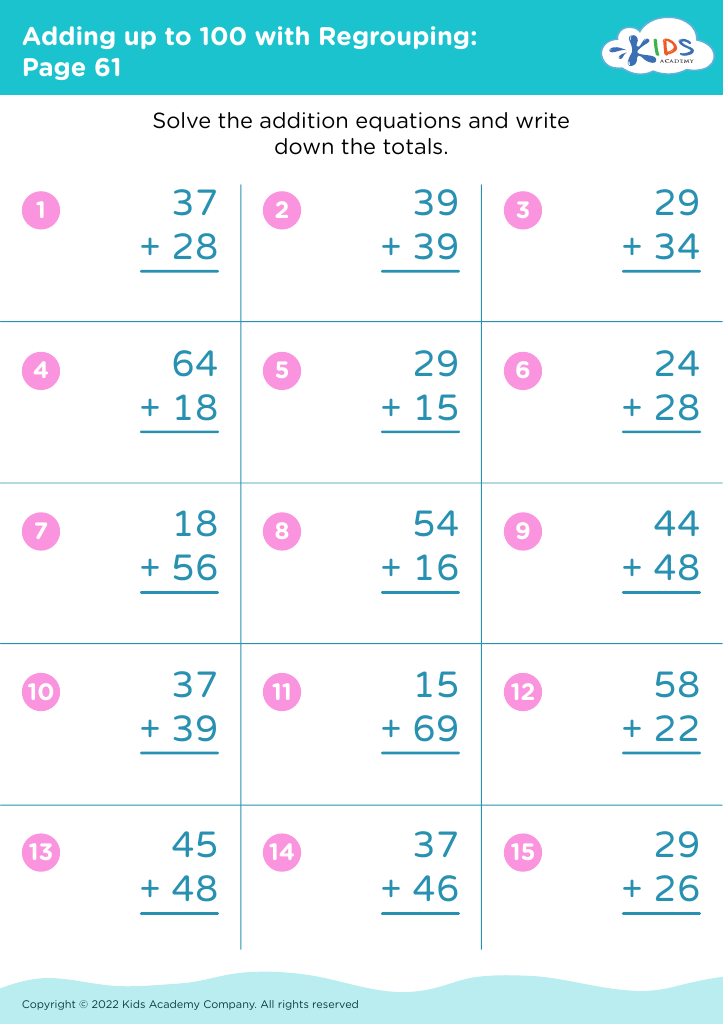




Addition practice, especially adding up to 100 with regrouping, is essential for children aged 3-8 as it lays a robust mathematical foundation. Mastering this skill promotes numerical fluency, enabling children to perform math operations confidently and efficiently. When students engage in addition practice, they learn to regroup—an essential concept that teaches them to manage and manipulate larger numbers. This skill is critical as it helps children understand place value, which is foundational for all future mathematical learning.
Moreover, early mastery of addition with regrouping fosters problem-solving skills and critical thinking. It encourages kids to approach challenges strategically, enhancing their cognitive development. It also nurtures perseverance; facing the intricacies of regrouping helps teach resilience when encountering complex problems.
For parents and teachers, supporting this practice can heighten a child's interest in math, making it a positive experience rather than a chore. Games and engaging activities involving addition help to sew excitement around numbers and learning experiences. Ultimately, when children feel comfortable with addition and hear the positive reinforcement from caregivers, it builds their self-esteem, setting them up for longer-term success in mathematics and beyond. Thus, a concerted effort in this area is crucial for their holistic development.