Basic Math Skills Adding up to 100 with Regrouping Worksheets for Ages 3-8
3 filtered results
-
From - To
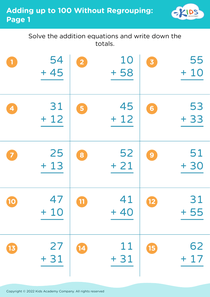
Boost your child's math confidence with our "Basic Math Skills: Adding Up to 100 with Regrouping" worksheets, designed for ages 3-8. These engaging activities introduce essential regrouping concepts, helping young learners understand how to add numbers effectively. With vibrant illustrations and progressive challenges, our worksheets cater to varying skill levels, making learning both fun and impactful. As children practice addition within 100, they develop critical problem-solving abilities and foundational math skills. Perfect for classroom use or home learning, our resources ensure a solid grasp of mathematics while nurturing a love for numbers. Start your child's math journey today!
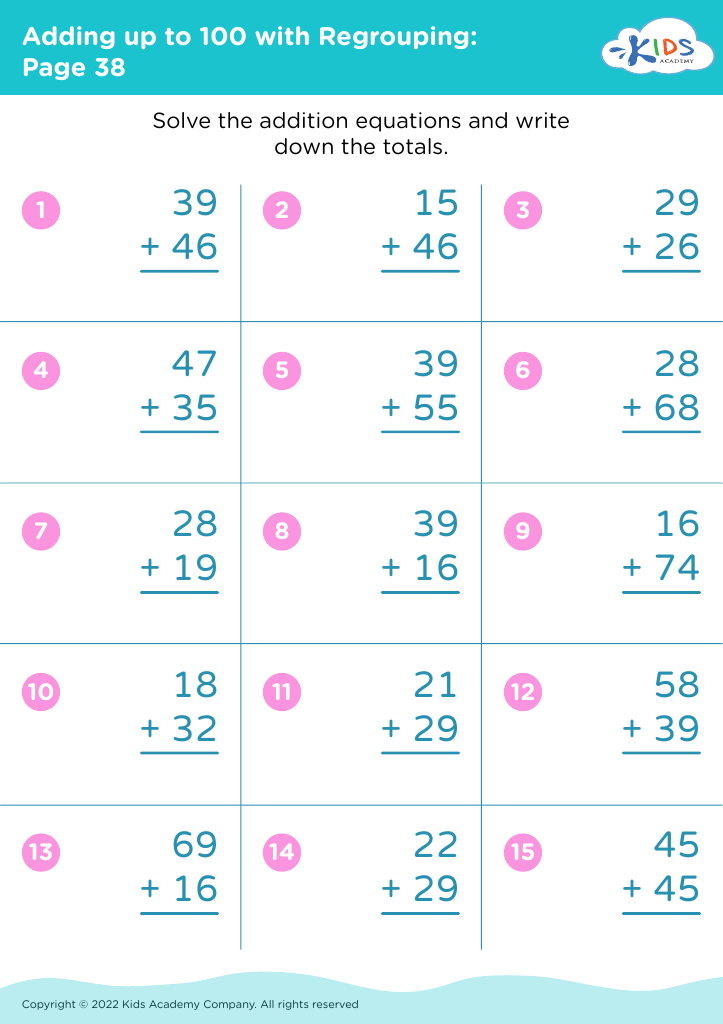
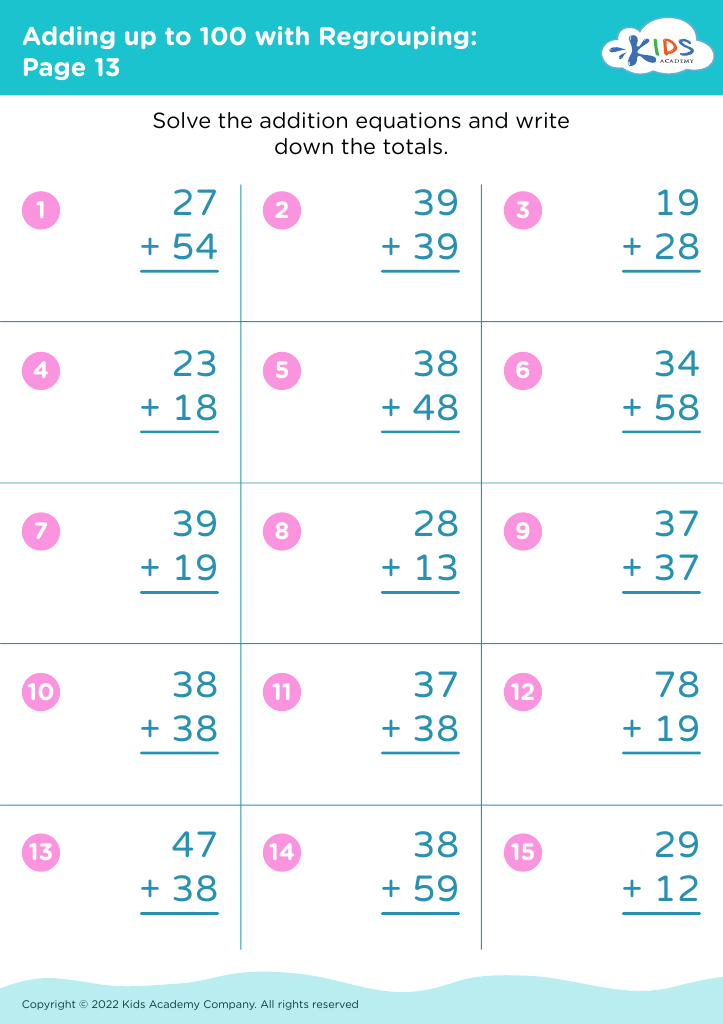
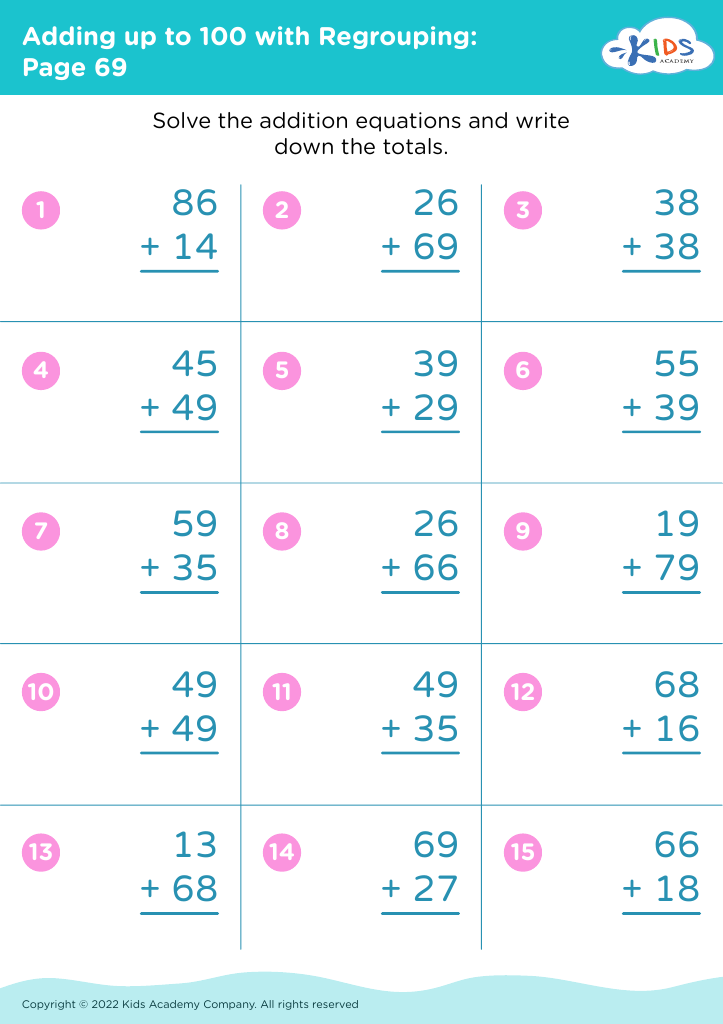




Parents and teachers should prioritize basic math skills, such as adding up to 100 with regrouping, for children aged 3-8 because these foundational skills form the bedrock for more complex mathematical concepts. Mastery of addition with regrouping fosters critical thinking, problem-solving, and cognitive development. This skill enhances a child's ability to break down larger problems into manageable steps, which is essential not just in math but in everyday life challenges.
By encouraging practice in regrouping, educators and parents help children understand place value, improving their number sense, which is vital as they progress in math. Early experiences with addition build confidence and positive attitudes toward math, counteracting common anxieties associated with the subject later in life. Additionally, working on these skills fosters a collaborative learning environment where parents and teachers can engage with children through fun games and activities, making learning enjoyable.
Investing in basic math skills now means developing capable learners who can tackle more advanced concepts smoothly as they grow. Consequently, early math competency not only supports academic success but also prepares children for practical situations involving budgeting, planning, and logical reasoning in their future endeavors.