Comparing Fractions Adding up to 100 with Regrouping Worksheets for Ages 3-8
9 filtered results
-
From - To
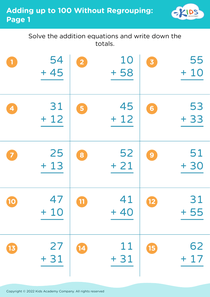
Discover our engaging "Comparing Fractions Adding Up to 100 with Regrouping" worksheets, specially designed for children aged 3-8! These interactive resources make learning math fun and accessible. Kids will practice comparing fractions while developing essential skills like regrouping, enhancing their understanding of number relationships. With colorful visuals and age-appropriate challenges, these worksheets will keep young learners motivated and excited about math. Perfect for classroom use or at-home learning, our materials encourage critical thinking and problem-solving. Help your child build a strong foundation in math with our carefully crafted worksheets that promote learning through play! Visit us to get started today!
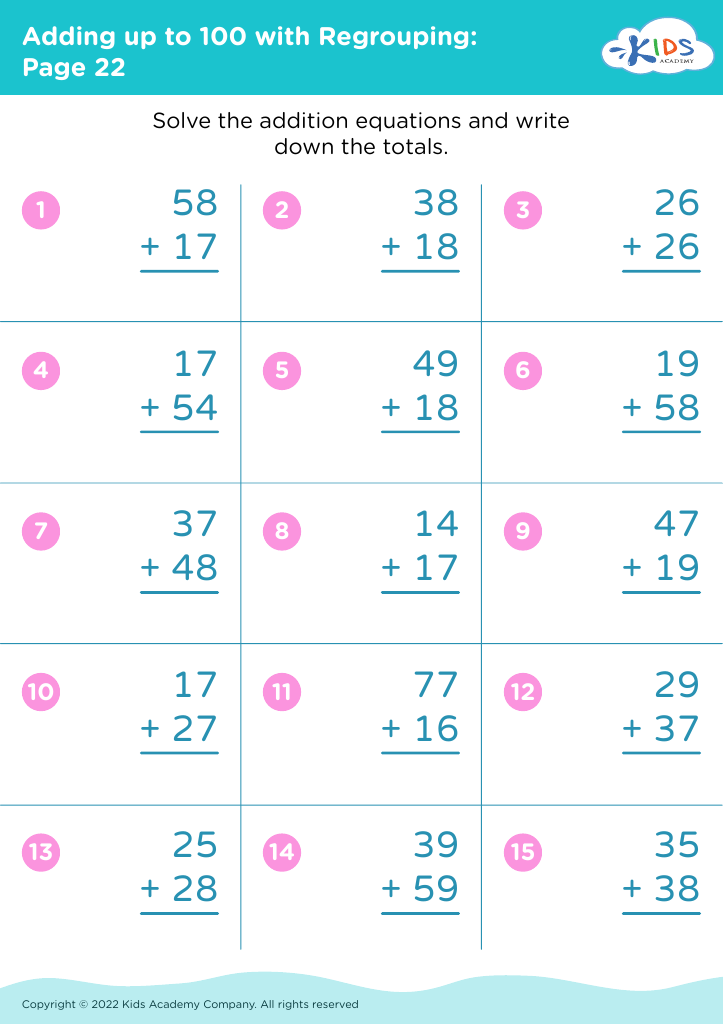
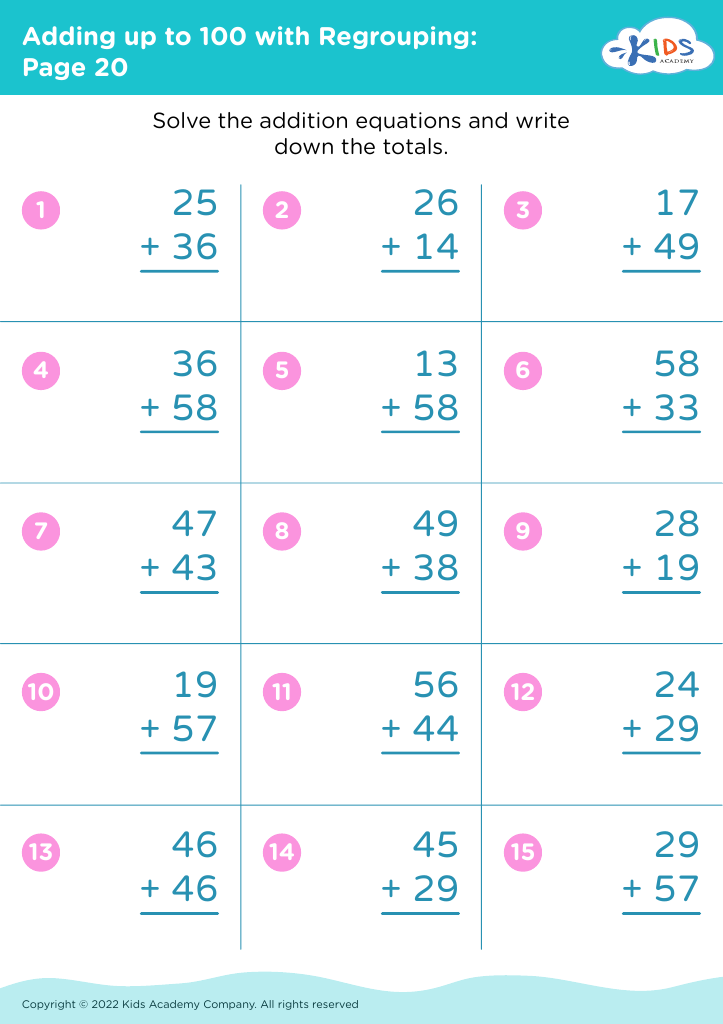
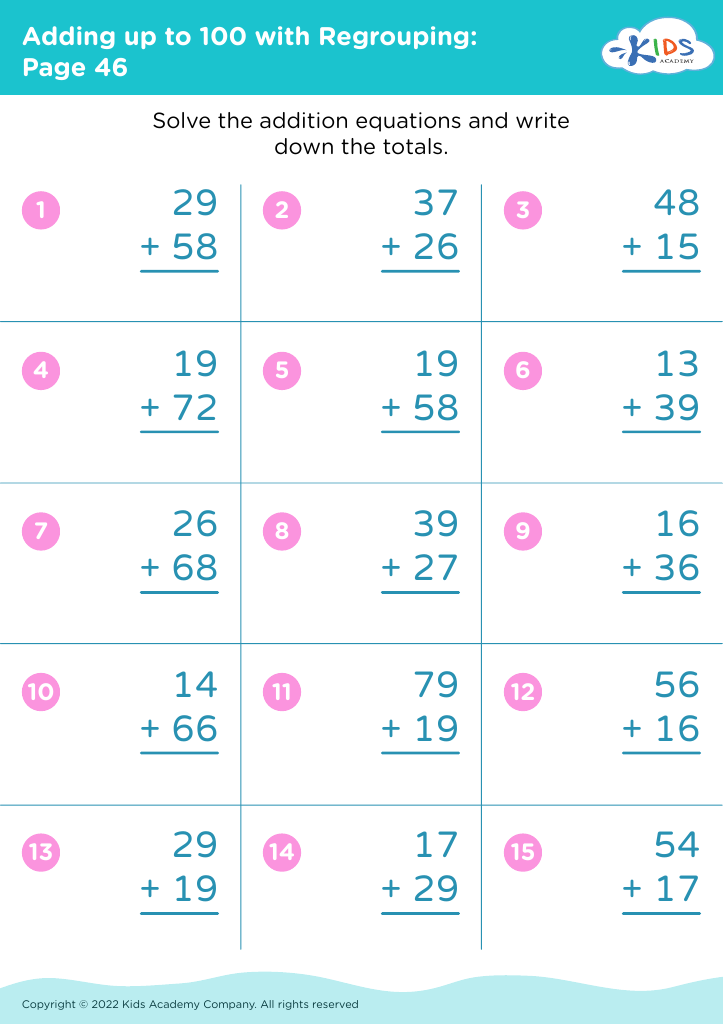
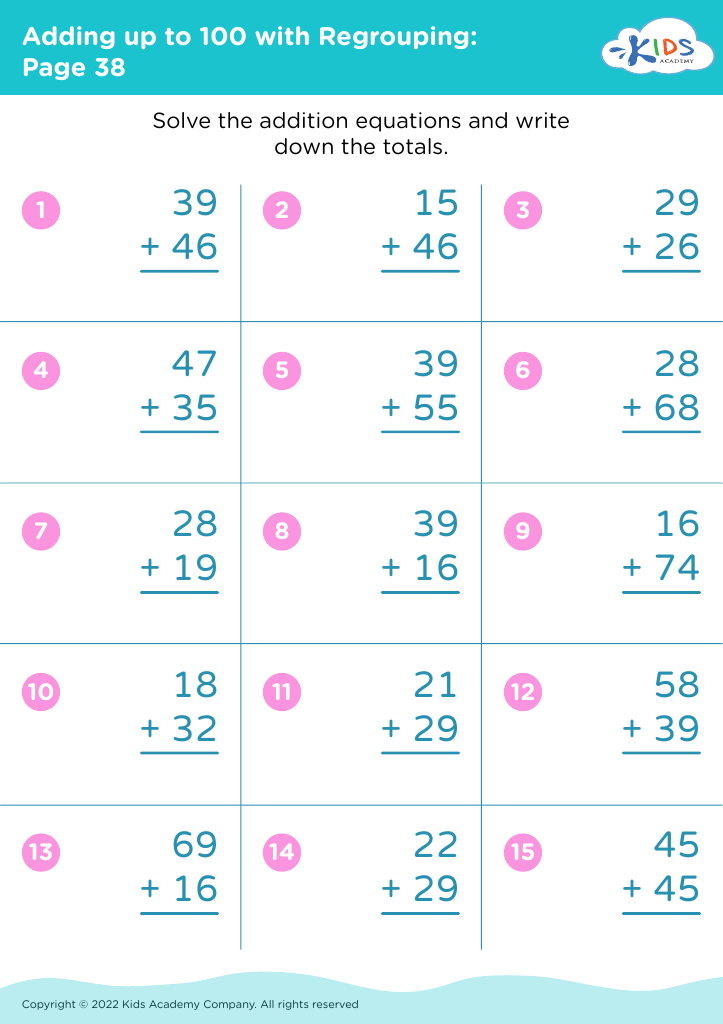
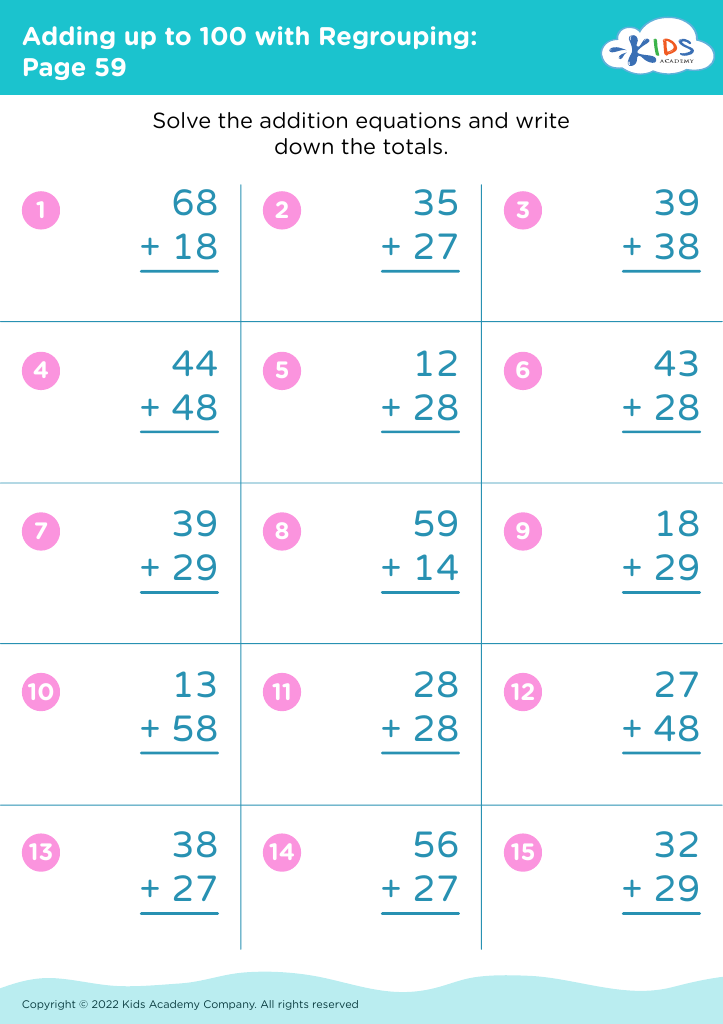
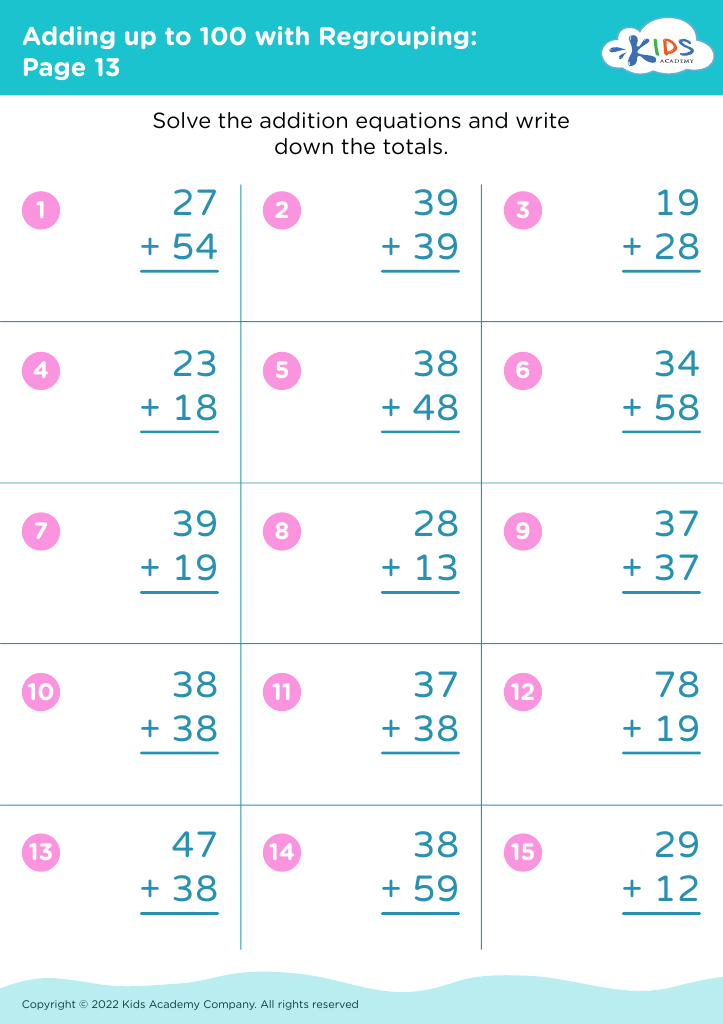
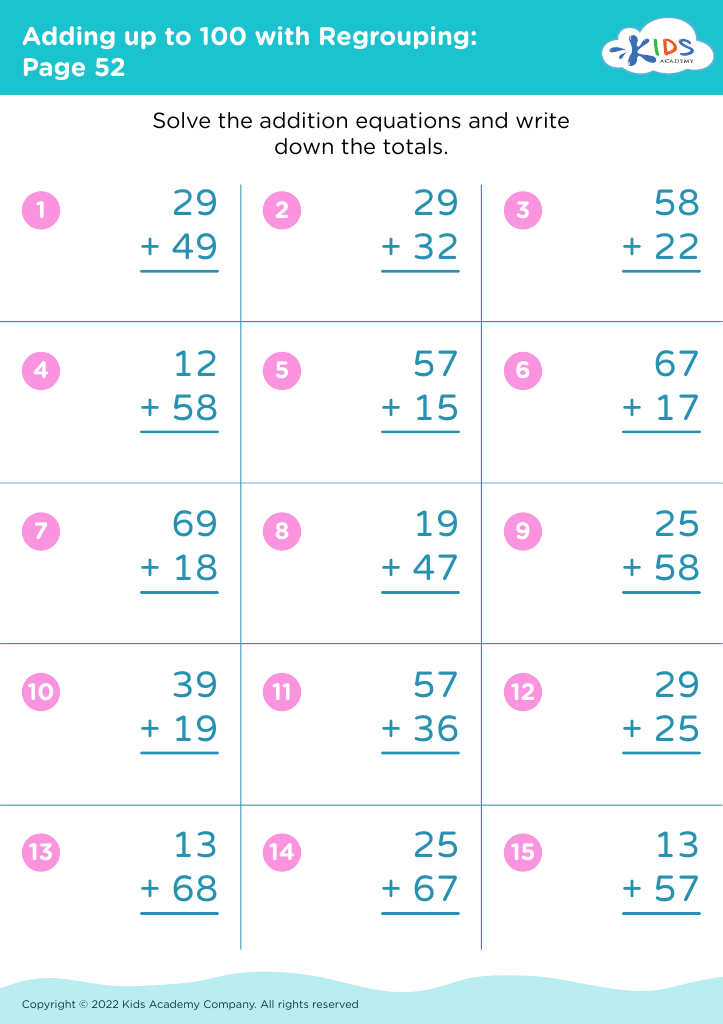
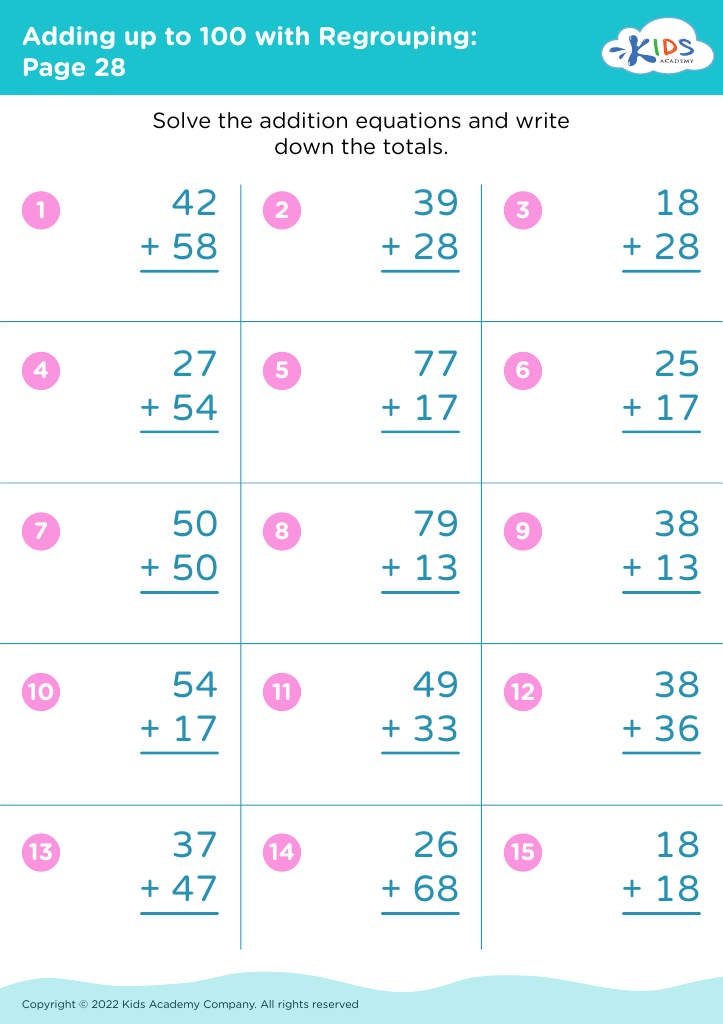
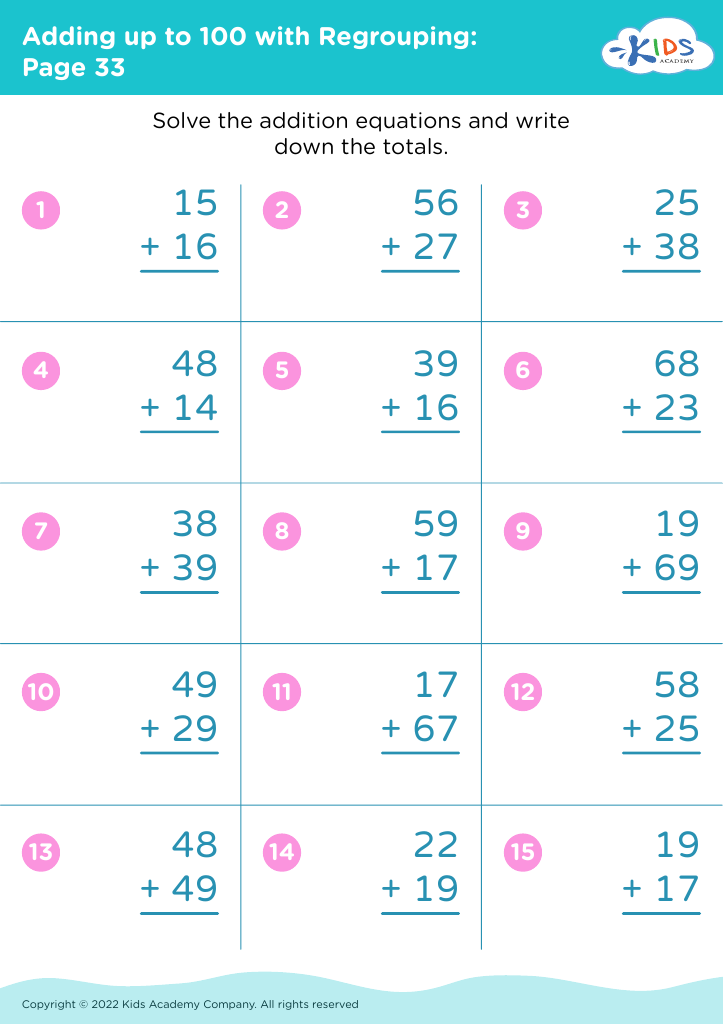




Comparing fractions and adding them up to 100 with regrouping is a foundational concept in mathematics that young learners, ages 3-8, are introduced to during their early education. Understanding fractions develops critical thinking and problem-solving skills, essential for future mathematical learning.
For parents and teachers, focusing on this concept is crucial because it enhances a child's ability to comprehend parts of a whole, fostering a strong mathematical foundation. Mastering these skills allows children to progress confidently to algebra and beyond. Moreover, understanding regrouping reinforces number sense, helping children recognize relationships between numbers and a broader understanding of quantity.
Introducing these concepts in an engaging manner, using visual aids and real-life examples, makes learning more relatable and enjoyable. As children practice comparing fractions and regrouping, they develop persistence and resilience—vital skills for overcoming challenges in academic settings.
Furthermore, a solid grasp of comparing fractions prepares students for assessments and future math courses, ensuring they are not left behind. Involving parents in the learning process also strengthens their confidence in supporting their children’s education. Ultimately, investing time in these early concepts can lead to lifelong skills, benefiting children academically and personally.