Fraction comparison Adding up to 100 with Regrouping Worksheets for Ages 3-8
3 filtered results
-
From - To
Discover our engaging "Fraction Comparison: Adding Up to 100 with Regrouping Worksheets" designed for children ages 3-8. These interactive worksheets introduce young learners to the concept of comparing fractions while practicing their addition skills up to 100. Through a variety of fun activities, children will develop essential math capabilities by learning how to regroup numbers effectively. Our thoughtfully crafted resources foster a solid mathematical foundation, ensuring students become confident in their abilities. Ideal for classroom use or homeschooling, these worksheets make learning fractions enjoyable and accessible, inspiring a love for math from an early age. Start your child's learning journey today!
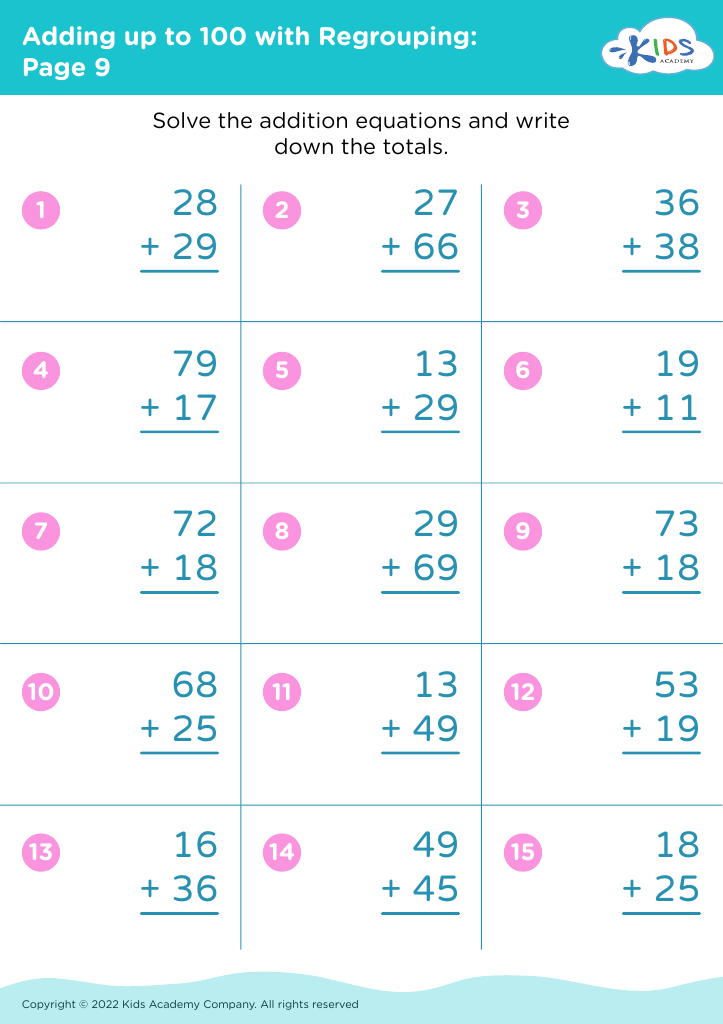
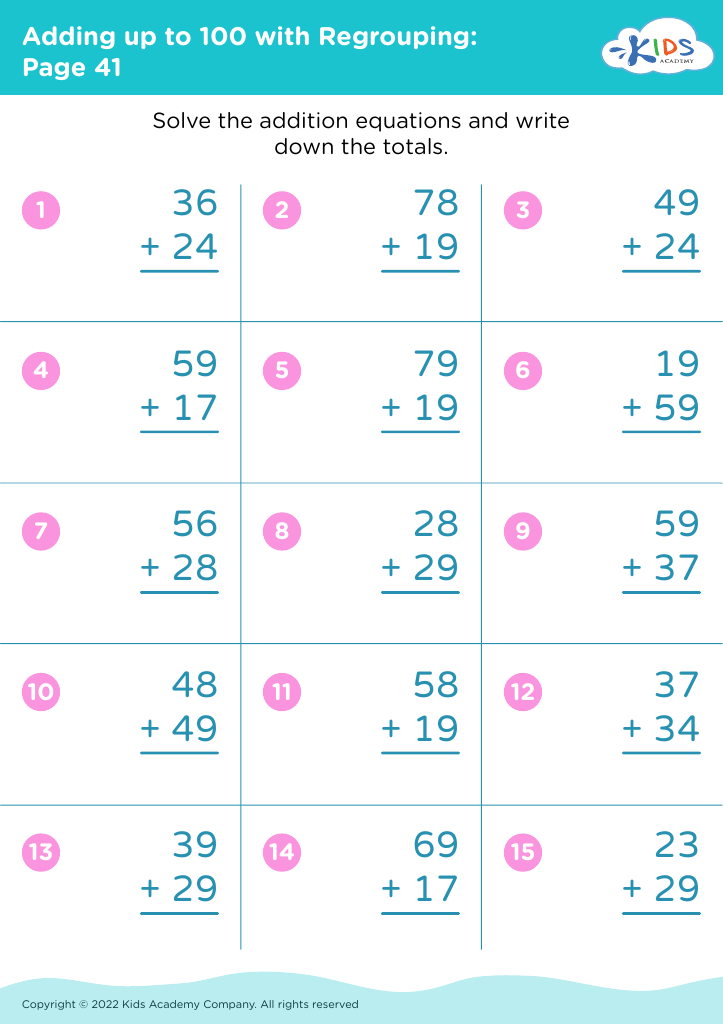
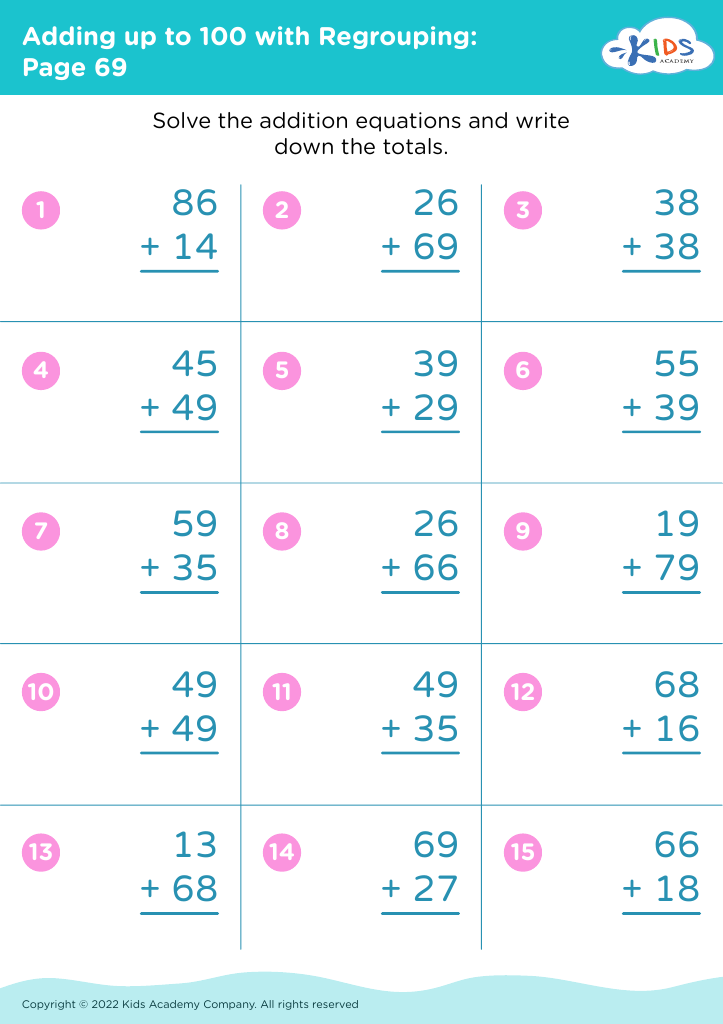




Teaching young children about fraction comparison and adding up to 100 with regrouping is crucial for several reasons. First, a solid understanding of fractions lays the groundwork for more advanced mathematical concepts. Early exposure helps children grasp the concept of parts and wholes, essential for everyday situations like slicing a pizza or sharing treats.
Additionally, teaching regrouping fosters critical thinking and problem-solving skills. When children learn to regroup, they acquire strategies that enhance their ability to manage numbers, making complex calculations easier. This skill is not only vital for math but also promotes cognitive development across various subjects.
Moreover, engaging children in activities involving fractions makes learning fun and interactive. This can spark their interest in mathematics at an early age, promoting a positive attitude that can shape their academic futures. Parents and teachers who focus on these areas empower children with tools to navigate both simple and complex math in daily life.
Finally, as math education evolves, being equipped with these foundational skills ensures children are prepared for future learning opportunities, boosting their confidence and fostering a lifelong love for learning. Thus, understanding fraction comparison and regrouping is essential for both academic success and practical life skills.