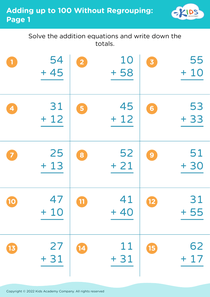
Fraction simplification Adding up to 100 with Regrouping Worksheets for Ages 3-8
7 filtered results
-
From - To
Discover engaging "Fraction Simplification with Adding up to 100 with Regrouping Worksheets" designed for ages 3-8. Our carefully crafted resources align with early math standards and foster foundational skills. Young learners will master key concepts through fun, interactive activities that present fraction simplification in a digestible manner. These worksheets encourage problem-solving and critical thinking while easing the complexity of regrouping in addition. Perfect for classroom and at-home learning, these exercises make mastering math both enjoyable and effective. Download today to boost your child’s math proficiency and confidence!
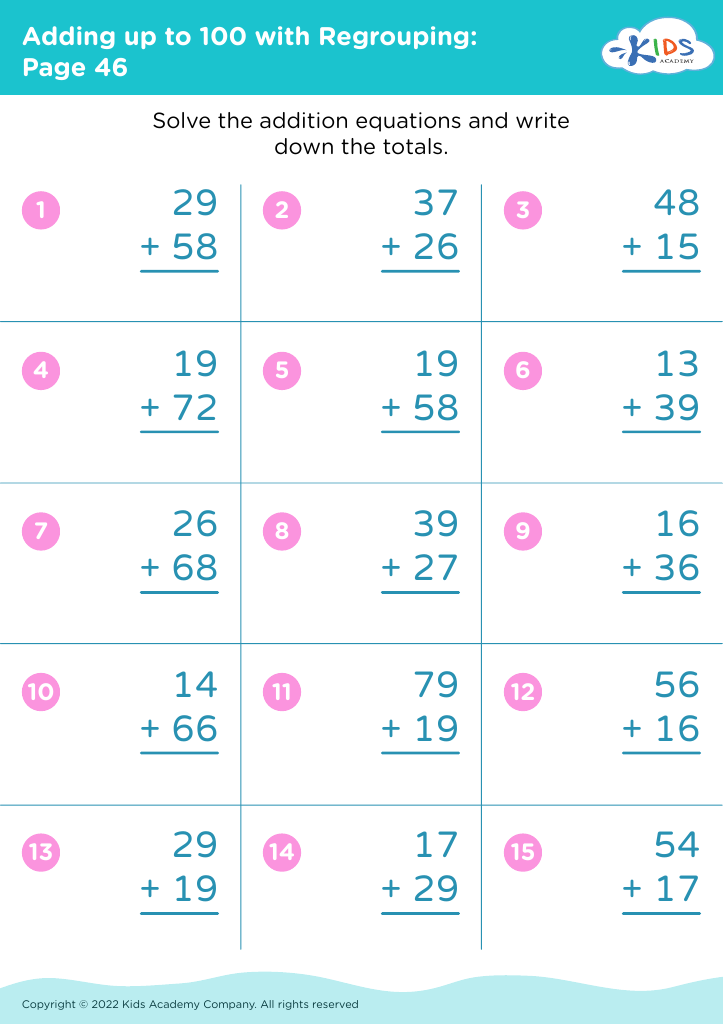
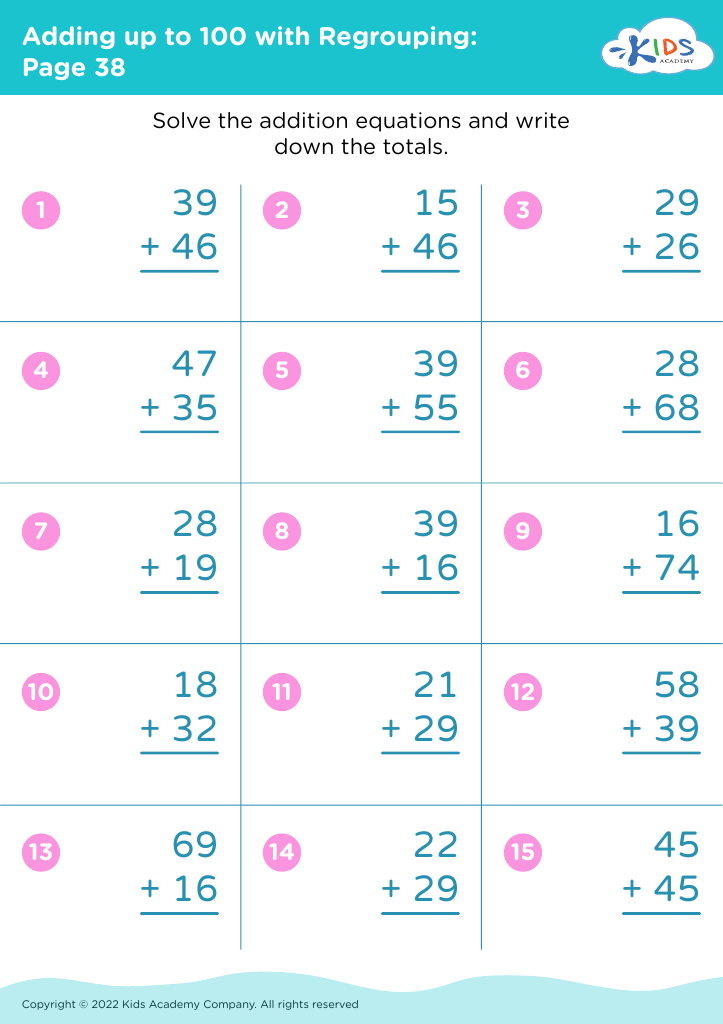
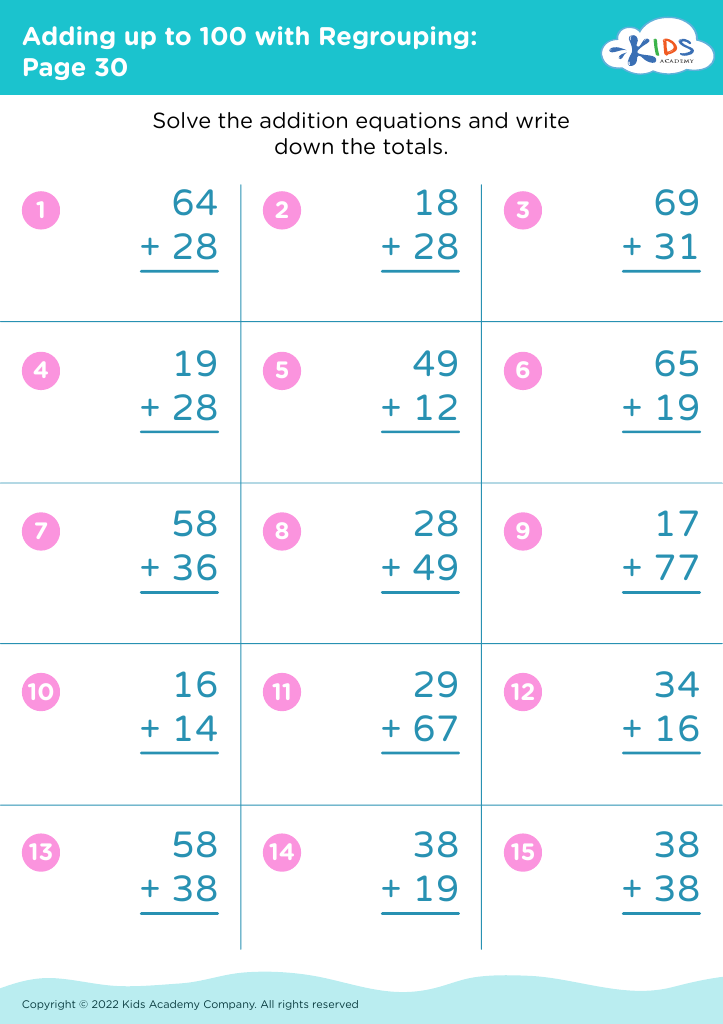
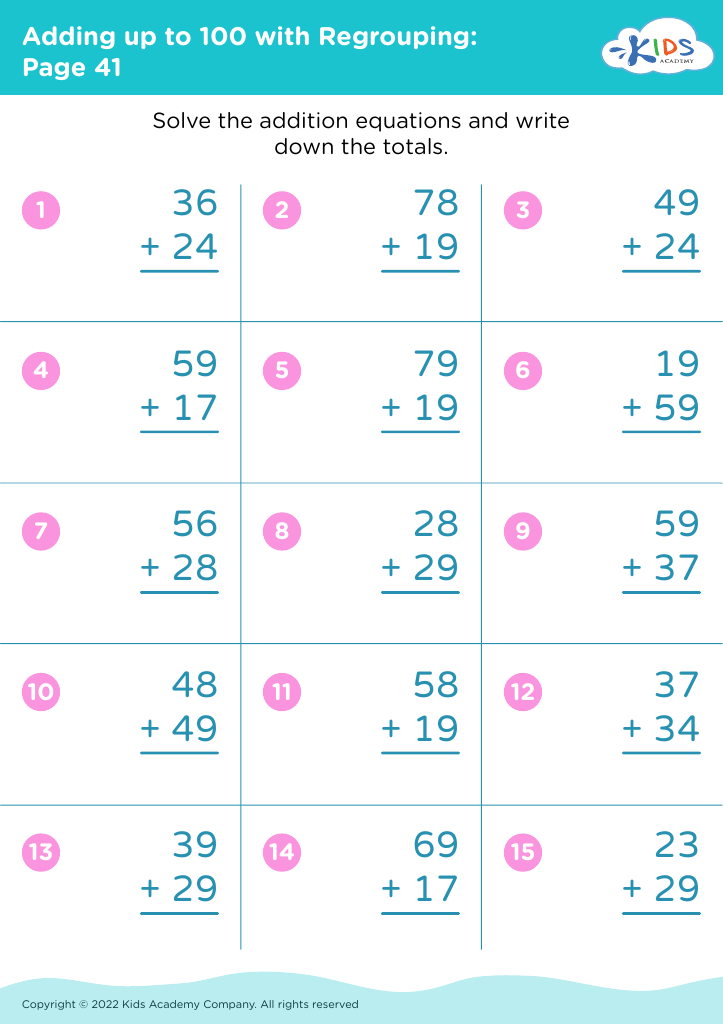
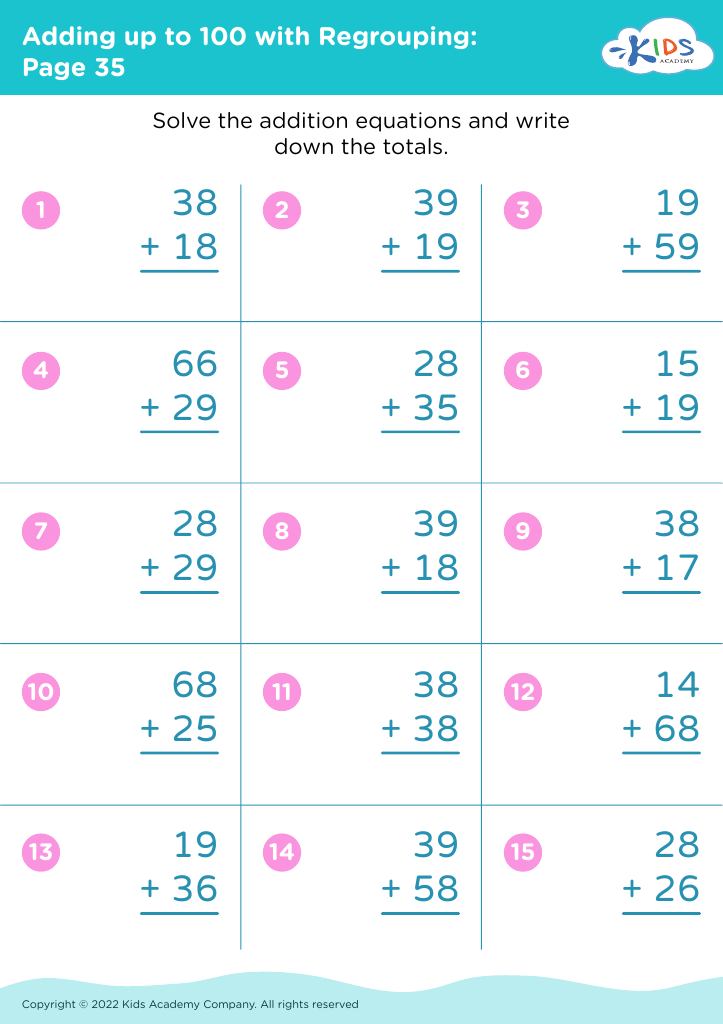
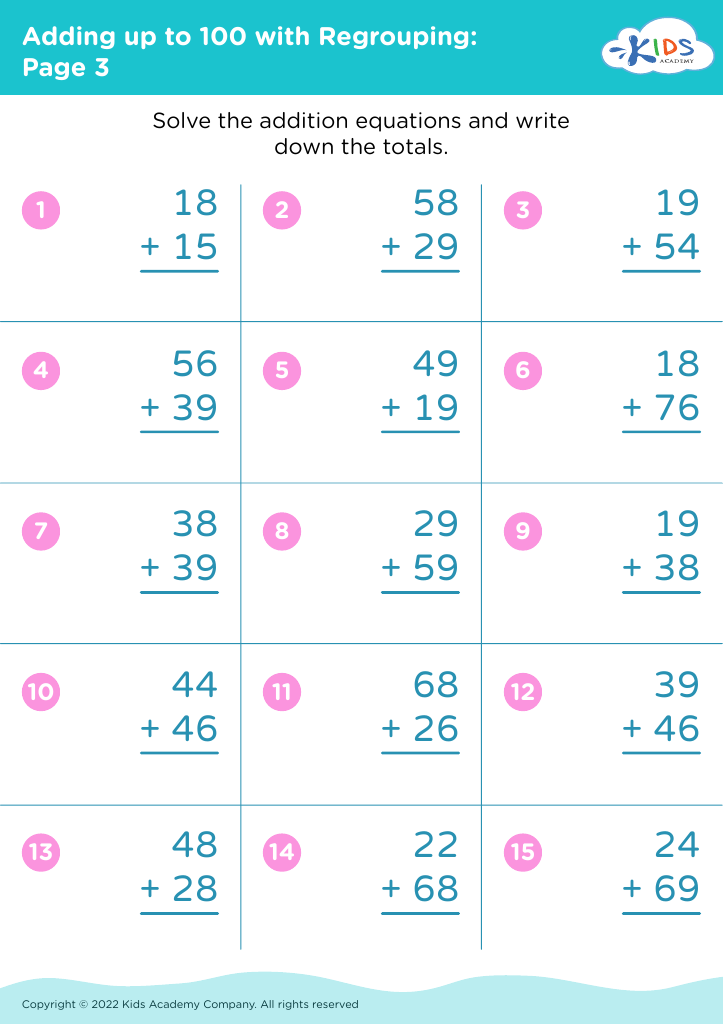
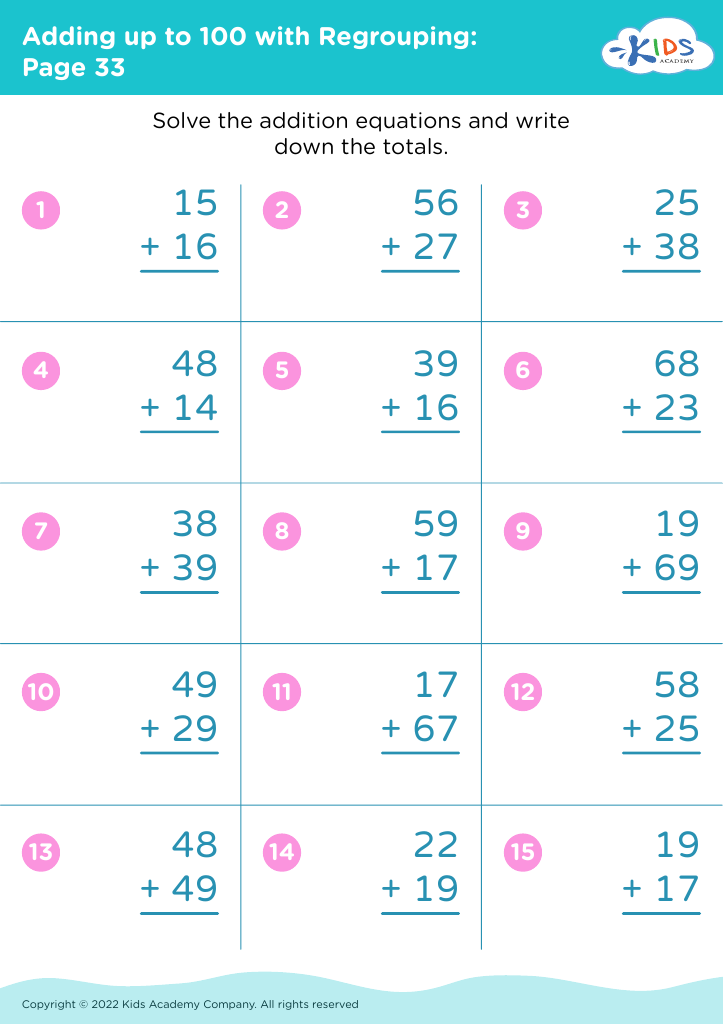




Understanding fraction simplification, adding up to 100, and regrouping is crucial for young children aged 3-8 as these foundational math concepts lay the groundwork for more advanced mathematical learning. Parents and teachers should care about these topics for several reasons.
First, studying fraction simplification teaches children to recognize relationships between parts and wholes, improving their number sense and problem-solving skills. Simplifying fractions also helps them understand equivalency, a critical concept in working with more complex fractions later in their educational journey.
Adding up to 100 supports place value comprehension and enhances mental arithmetic skills. These skills are essential for basic arithmetic accuracy and fluency, as well as more complex operations in future math learning. Mastery of adding numbers up to 100 provides confidence and eases the transition to larger numbers and more complex operations.
Regrouping is another fundamental concept; it introduces the idea that numbers can be divided into smaller parts (like breaking 10 into 1s) and then recombined, which is essential for operations such as addition, subtraction, and beyond. Regrouping builds the foundation for understanding the base-10 system and arithmetic algorithms.
When parents and teachers focus on these foundational skills, they contribute to a child's critical thinking abilities, foster a love for learning, and establish a strong mathematical foundation necessary for success in more advanced stages.