Practice problem-solving Adding up to 100 with Regrouping Worksheets for Ages 3-8
3 filtered results
-
From - To
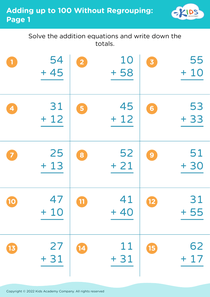
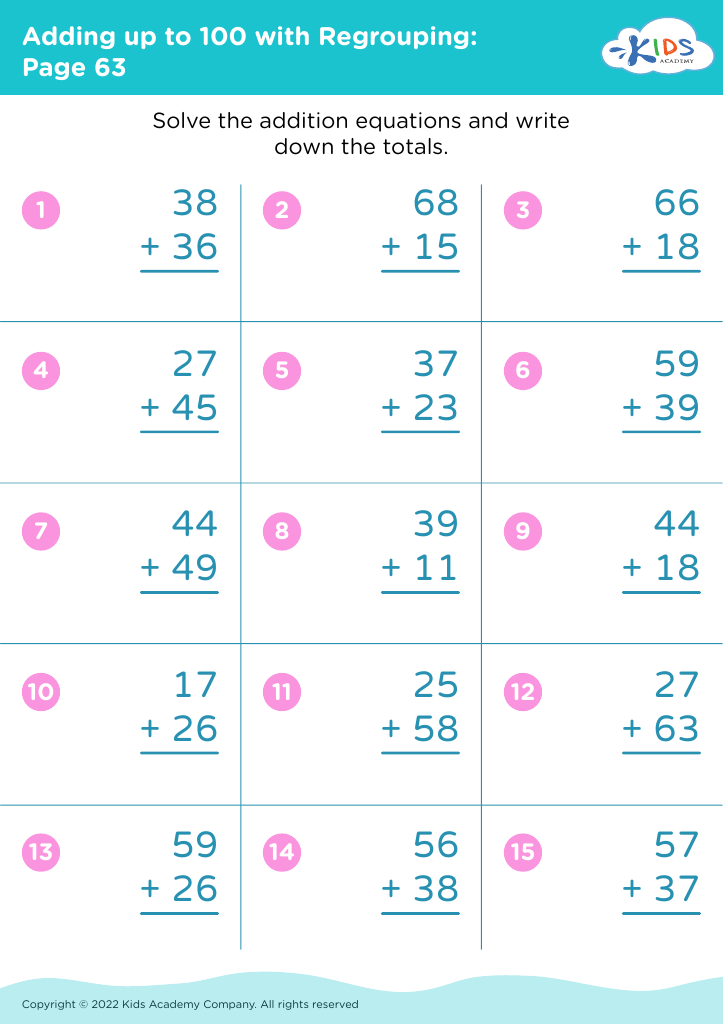
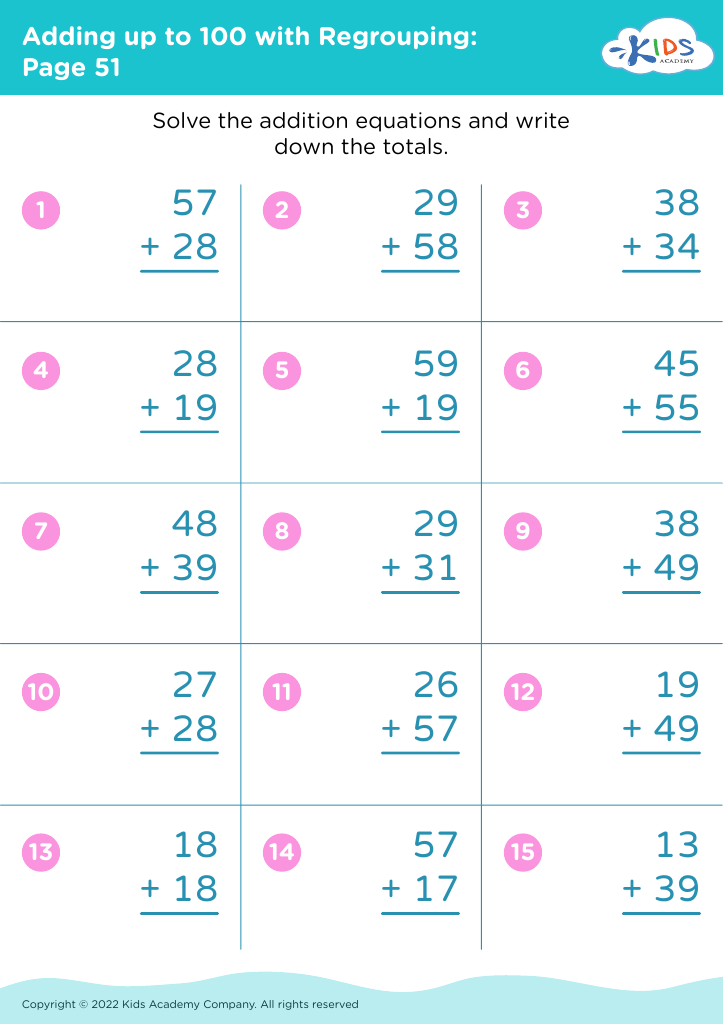
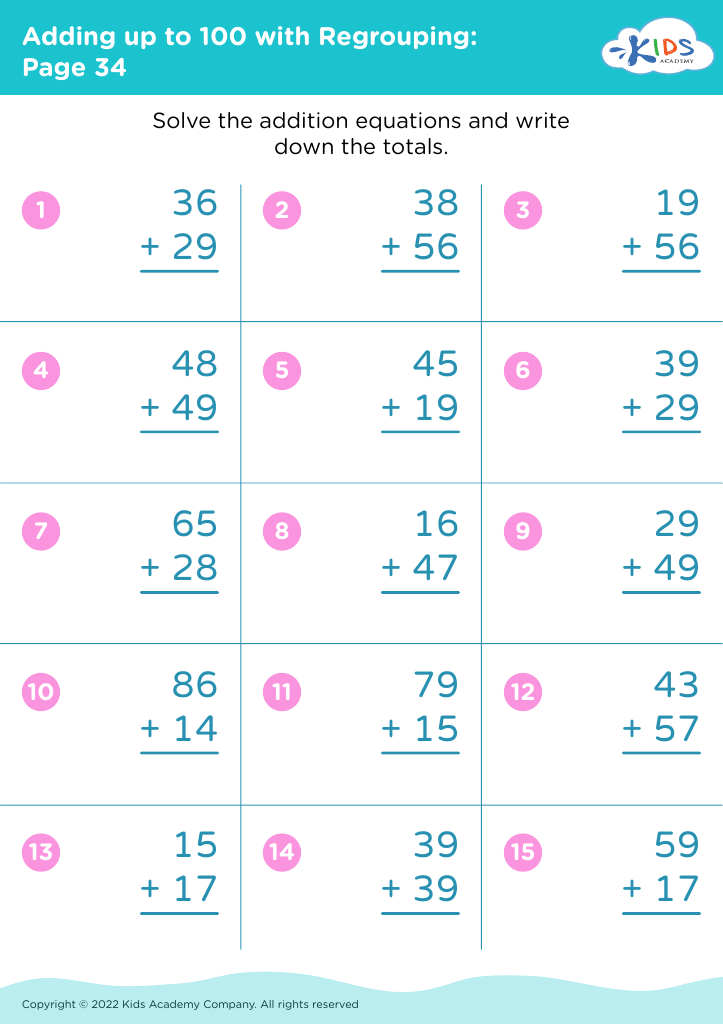
Our "Practice Problem-Solving: Adding up to 100 with Regrouping Worksheets" are specially designed for children ages 3-8. These engaging and educational worksheets help young learners develop essential math skills while making practice fun. Focusing on addition problems with regrouping, kids will sharpen their ability to add numbers up to 100 efficiently. Each worksheet features clear instructions and visually appealing activities to keep young minds motivated and challenged. With these worksheets, kids will build confidence and improve their problem-solving abilities, laying a strong foundation for future math success. Perfect for classroom use or extra practice at home!




Practicing problem-solving and adding up to 100 with regrouping for children aged 3-8 is vital for several reasons. Firstly, these foundational math skills develop critical thinking and cognitive abilities, forming the bedrock for more advanced arithmetic and problem-solving later in life. When parents and teachers engage children in these exercises, they promote numerical literacy, ensuring kids grasp the concepts of place value and the fundamentals of addition and subtraction, which are crucial in almost all mathematical operations.
Moreover, mastering regrouping—a method where numbers are broken down into more manageable parts—instills a deeper understanding of how numbers work, making it easier for children to tackle more complex calculations as they advance. This practice also builds confidence, stamina, and a positive attitude toward math, reducing anxiety and making learning more enjoyable.
Furthermore, integrating such exercises enhances fine motor skills and improves concentration and patience. Demonstrating real-life applications, such as through educational games or interactive activities, can make math relatable and relevant, fostering a lifelong appreciation for learning. Parents and teachers collaborating to teach these essential skills can significantly impact a child’s academic trajectory, allowing them to achieve greater success not only in math but across all areas of their education.