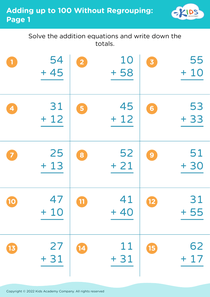
Shape Recognition Adding up to 100 with Regrouping Worksheets for Ages 3-8
5 filtered results
-
From - To
Discover our engaging "Shape Recognition Adding up to 100 with Regrouping Worksheets" designed for children ages 3-8! These interactive worksheets combine essential shape recognition skills with foundational math concepts, helping young learners master addition up to 100 through fun activities. Each worksheet encourages kids to explore shapes while practicing regrouping techniques, fostering both mathematical and spatial reasoning abilities. Perfect for classroom or home use, these worksheets promote critical thinking and build confidence in young mathematicians. Download now and watch your child enhance their skills in an enjoyable and supportive learning environment!
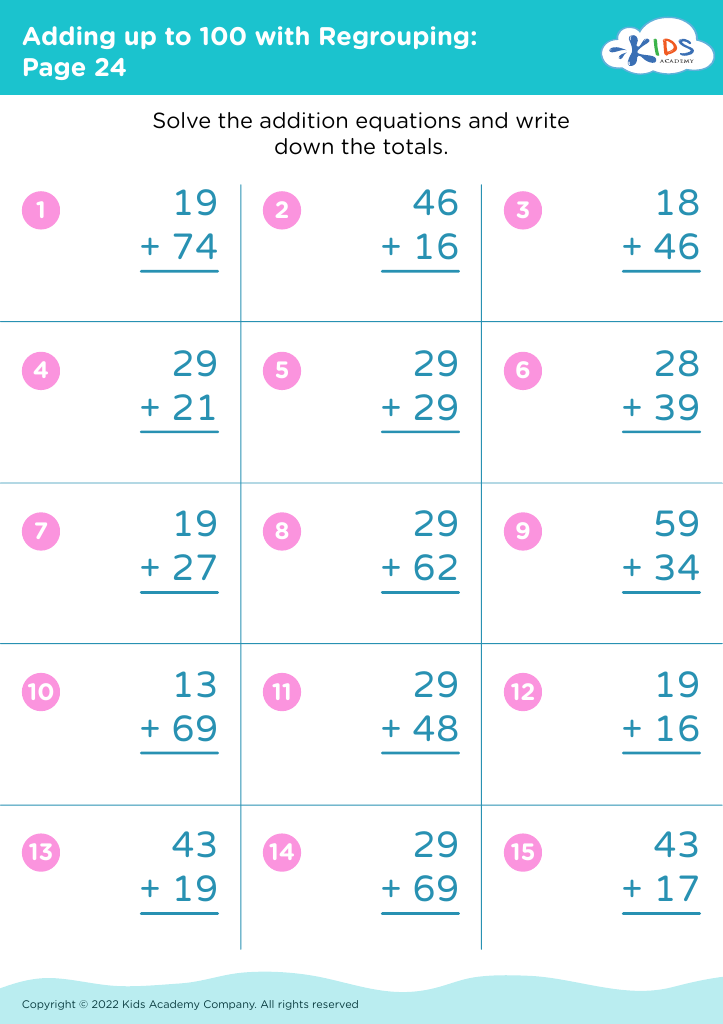
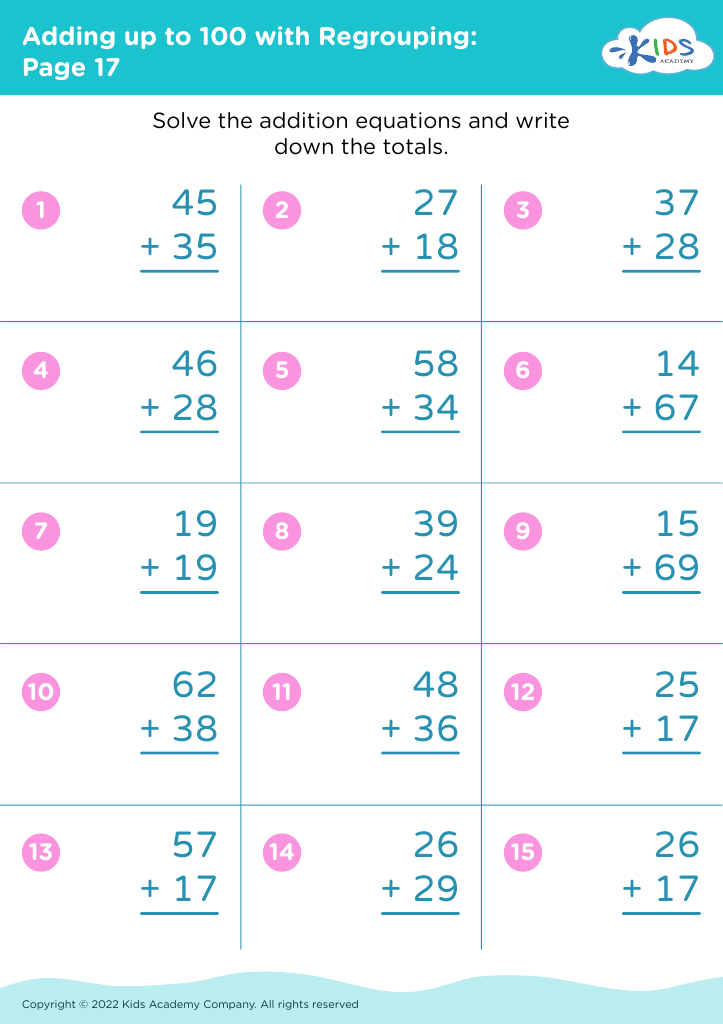
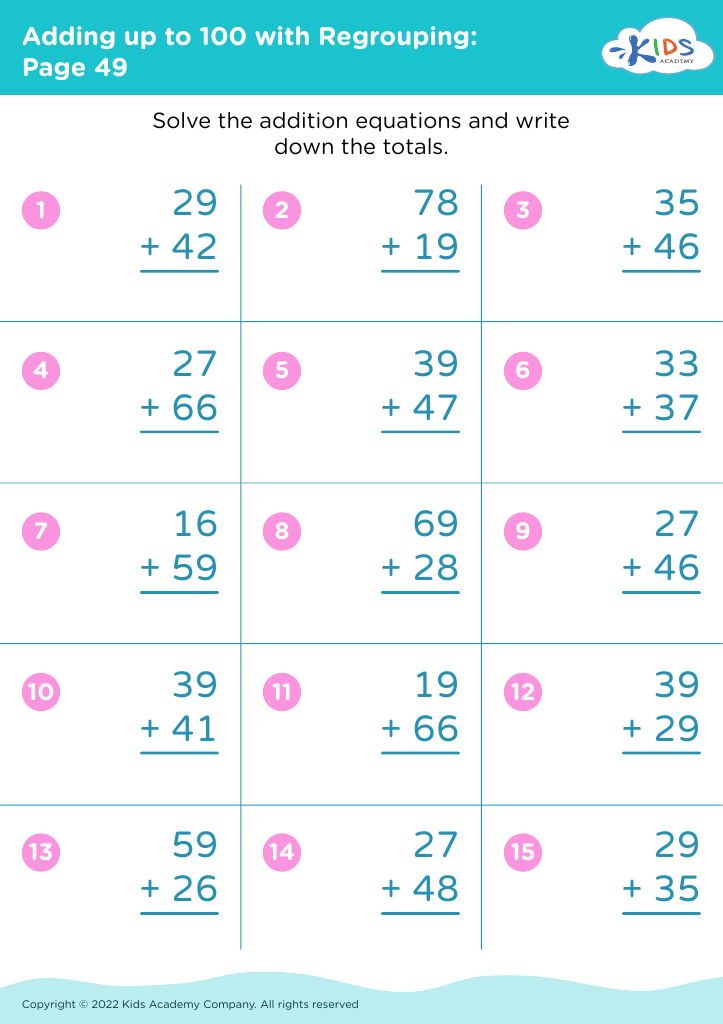
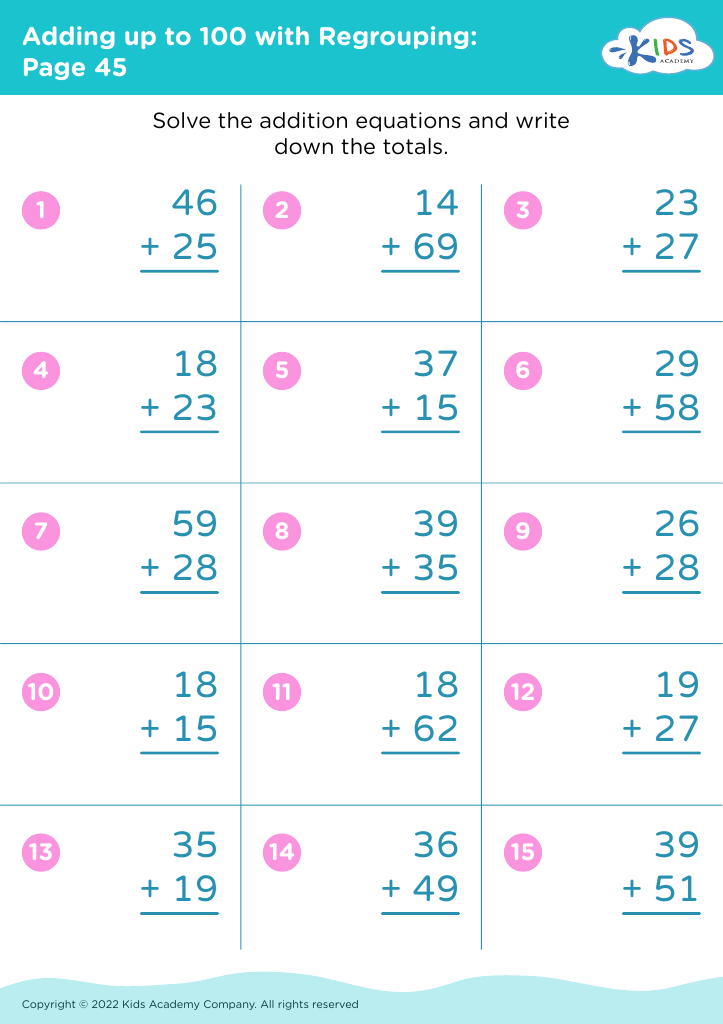
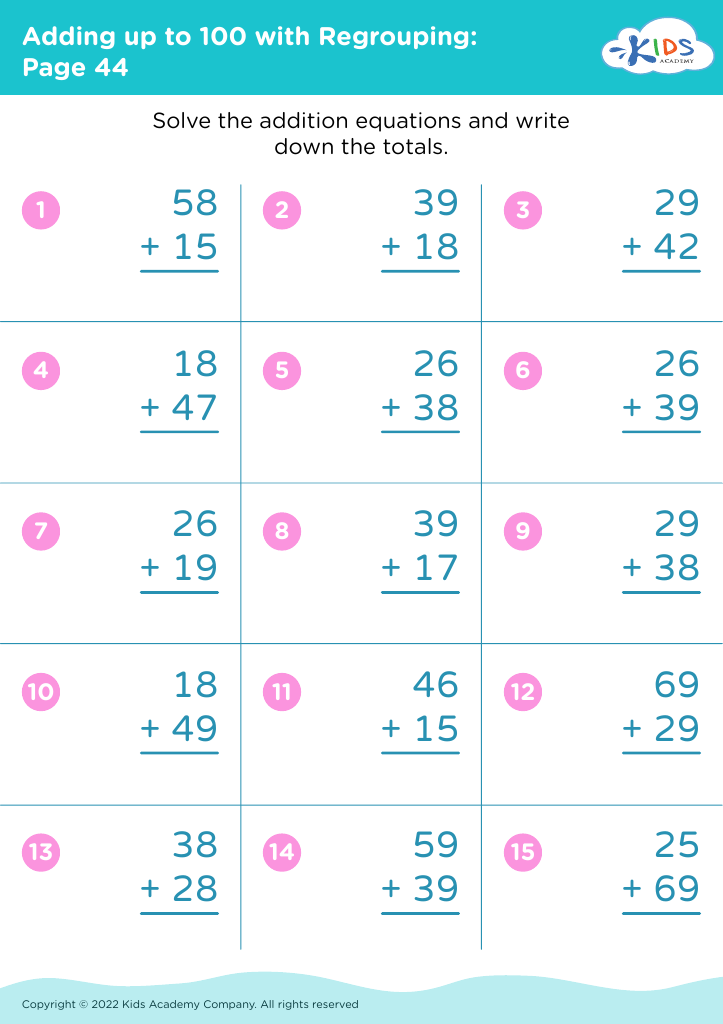




Shape recognition and addition skills, especially to 100 with regrouping, are fundamental in developing early mathematical concepts for children aged 3-8. Understanding shapes helps children identify and classify items in their environment, fostering critical thinking and spatial awareness. This foundational skill enhances geometry knowledge, which is vital in later math learning.
As children engage with numbers, particularly the concept of regrouping in addition, they learn to combine numbers in ways that reinforce problem-solving abilities. Regrouping is a crucial stepping-stone to more complex arithmetic, making it essential for building confidence in math skills. When children understand how to break numbers apart and combine them, they develop flexible thinking, which helps in tackling more significant math challenges as they progress in their education.
Additionally, early exposure to these concepts supports cognitive development, preparing children for fluency in mathematics and enhancing their analytical thinking. For parents and teachers, fostering a love for learning shapes and numbers transforms math from a daunting task into an engaging experience. Ultimately, these skills not only contribute to academic success but also instill a lifelong appreciation for learning and problem-solving in young learners.