Comparing Fractions Adding up to 100 Without Regrouping Worksheets for Ages 3-8
11 filtered results
-
From - To
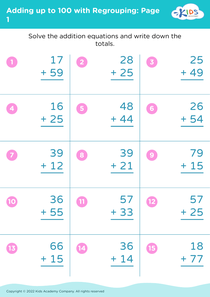
Enhance your child’s math skills with our "Comparing Fractions Adding Up to 100 Without Regrouping" worksheets, specifically designed for ages 3-8. These engaging worksheets introduce the concept of fractions while encouraging young learners to compare and analyze values easily. Each activity fosters number recognition, critical thinking, and problem-solving skills, laying a strong foundation for future math concepts. Your little ones will love the fun, interactive exercises that make learning fractions enjoyable and stress-free. Perfect for both home and classroom use, these printable worksheets are an excellent way to make math a fun adventure. Start exploring fractions today and build confidence!
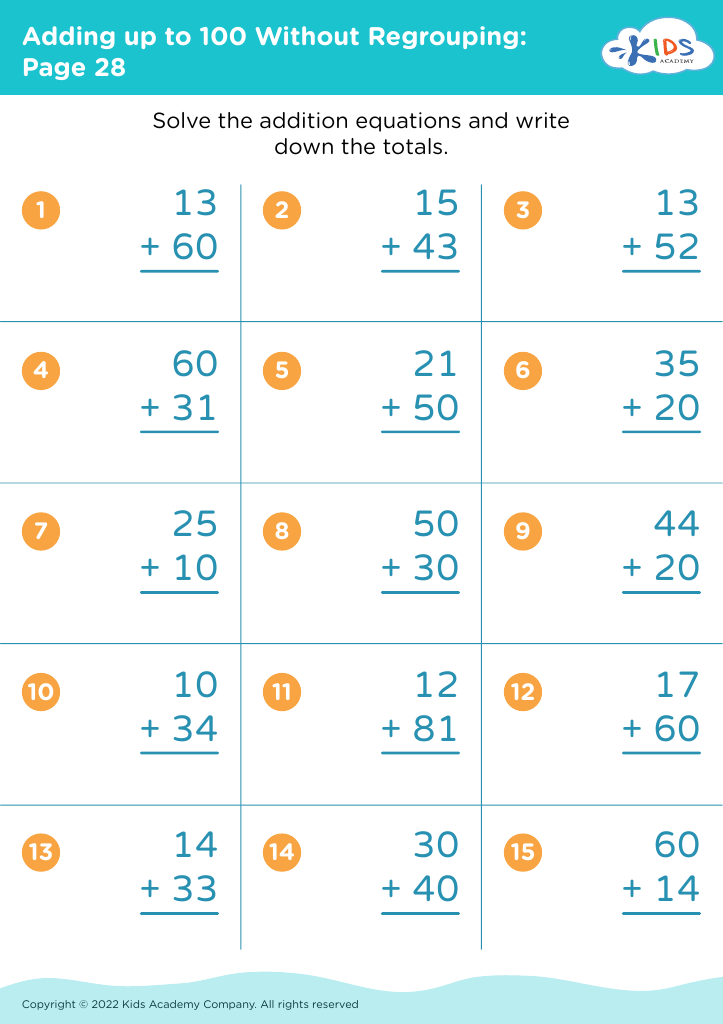
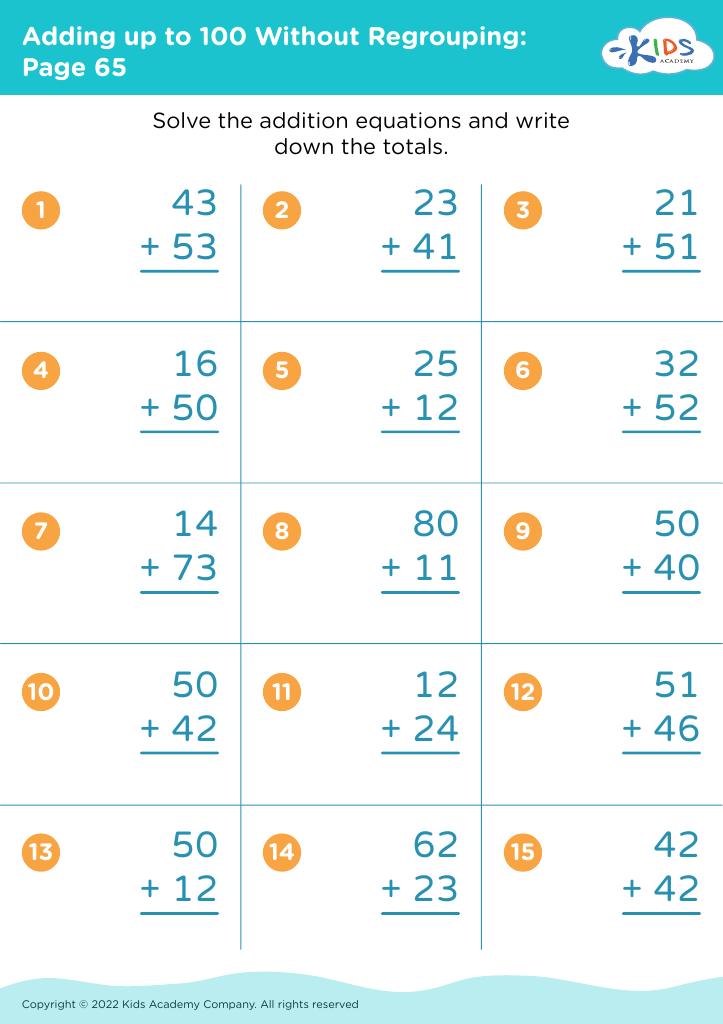
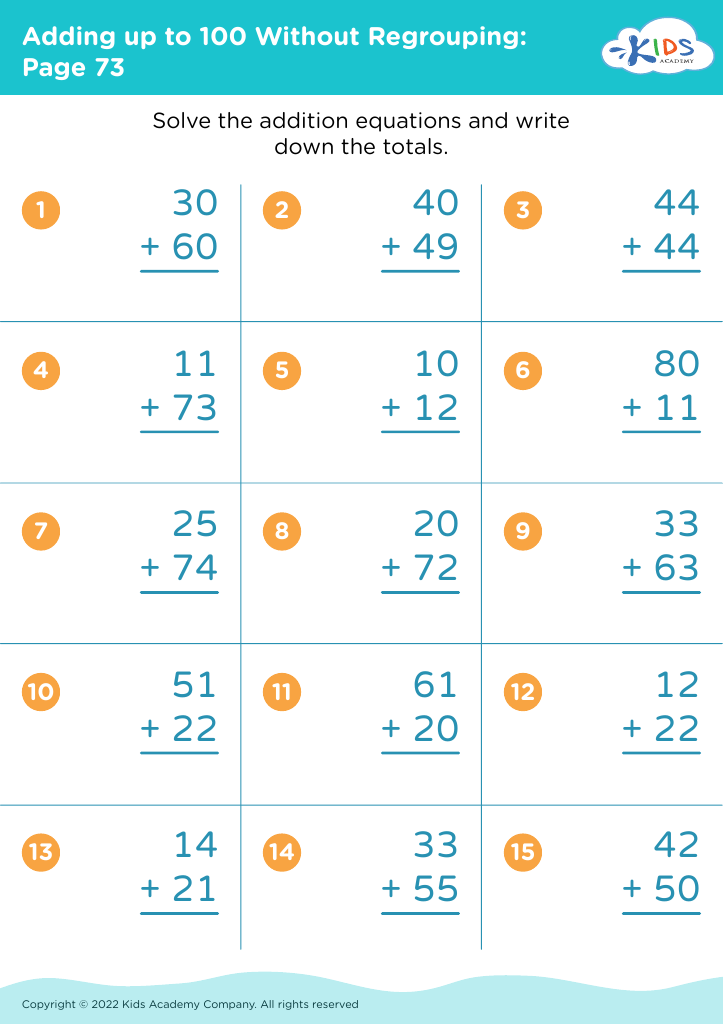
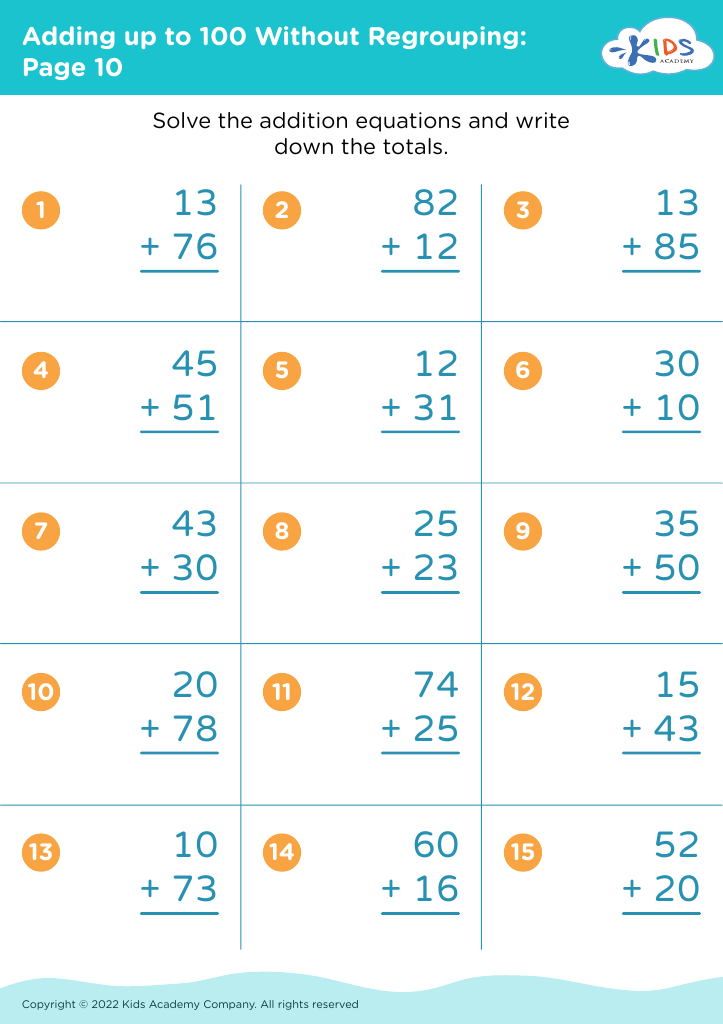
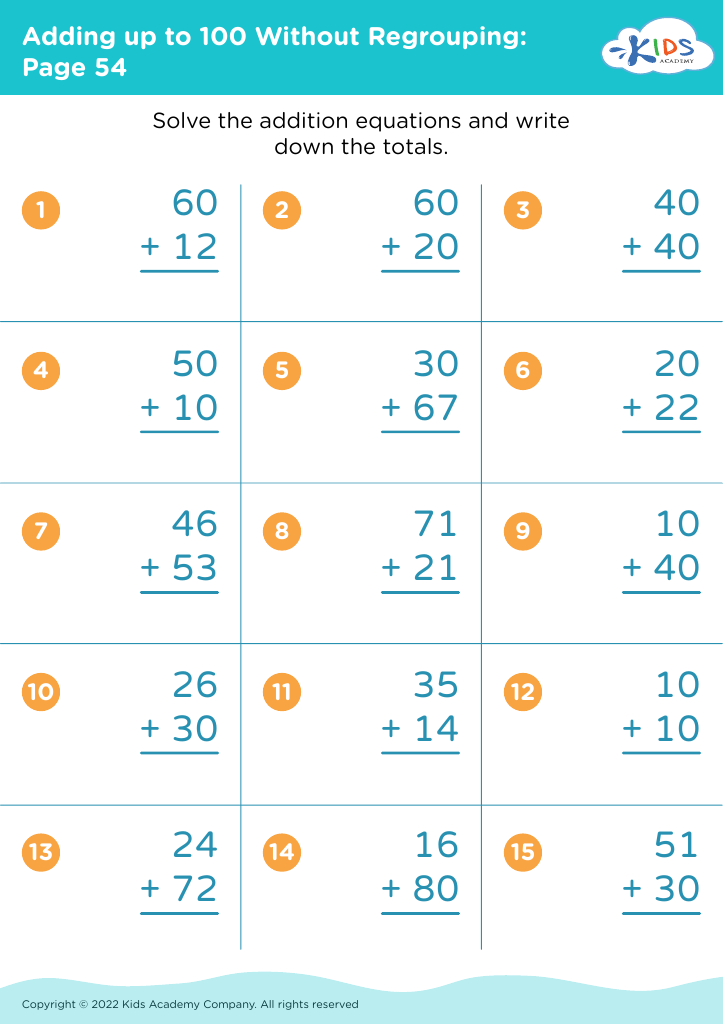
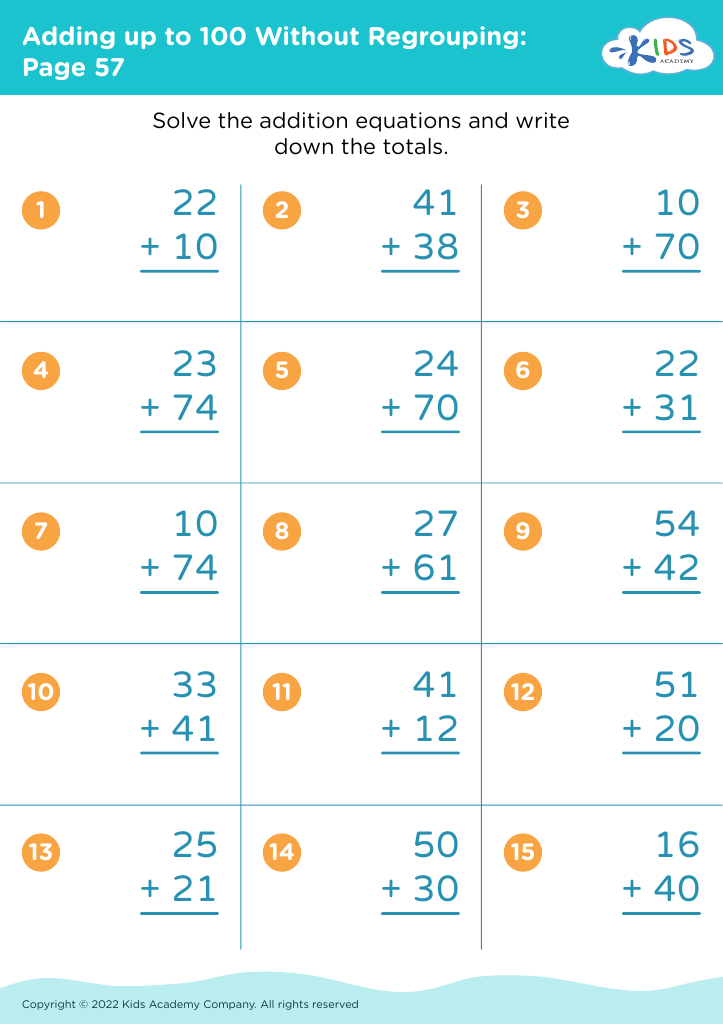
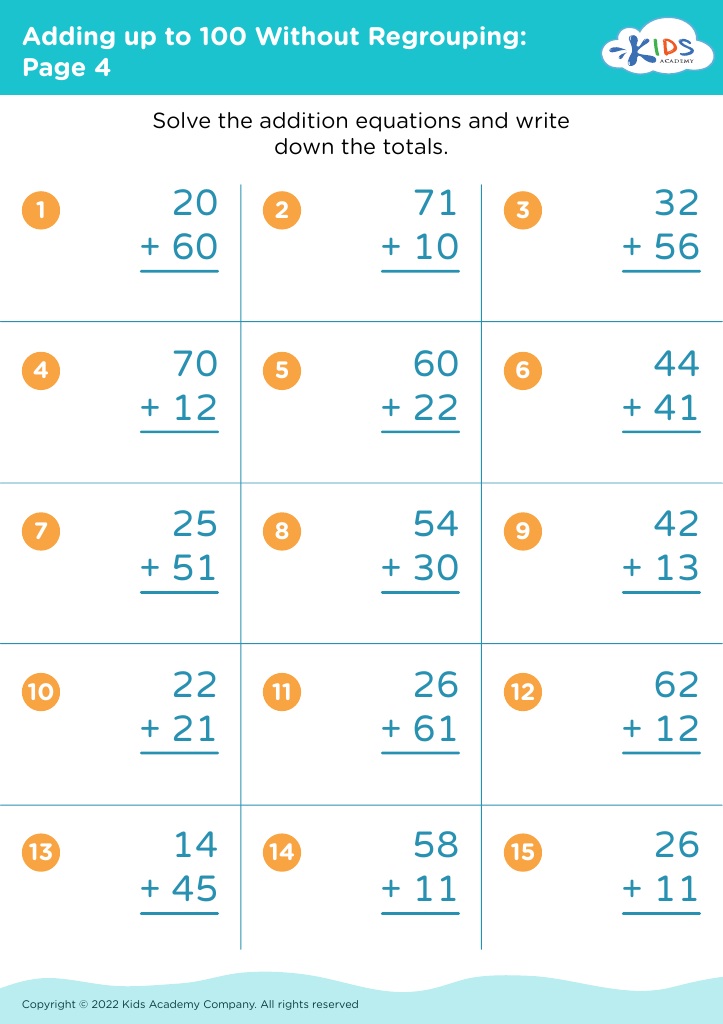
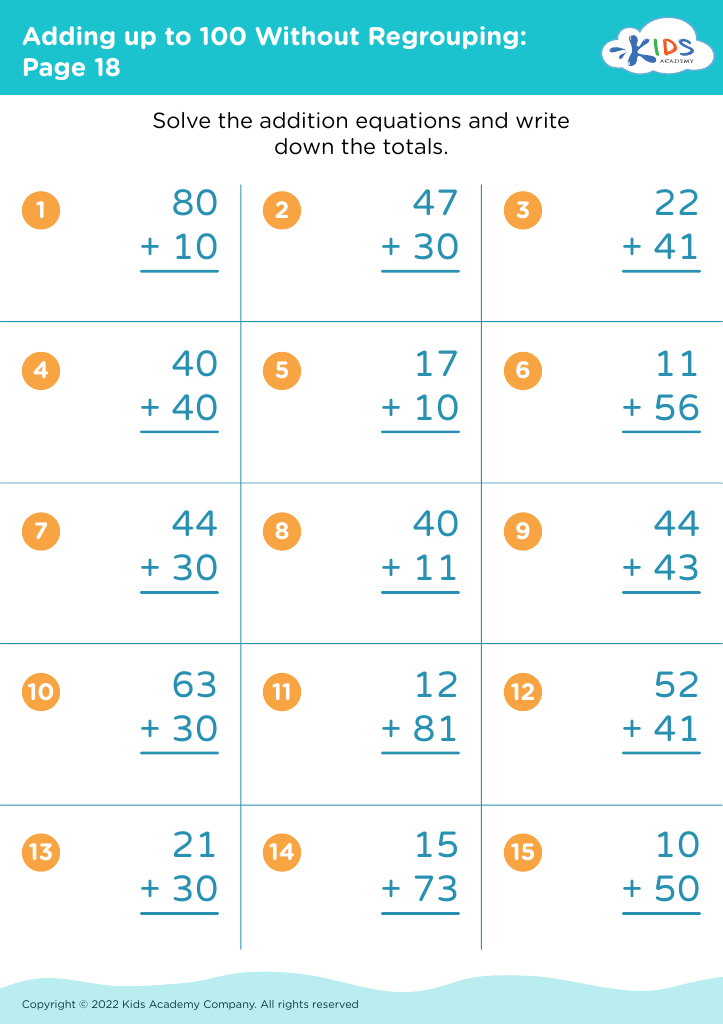
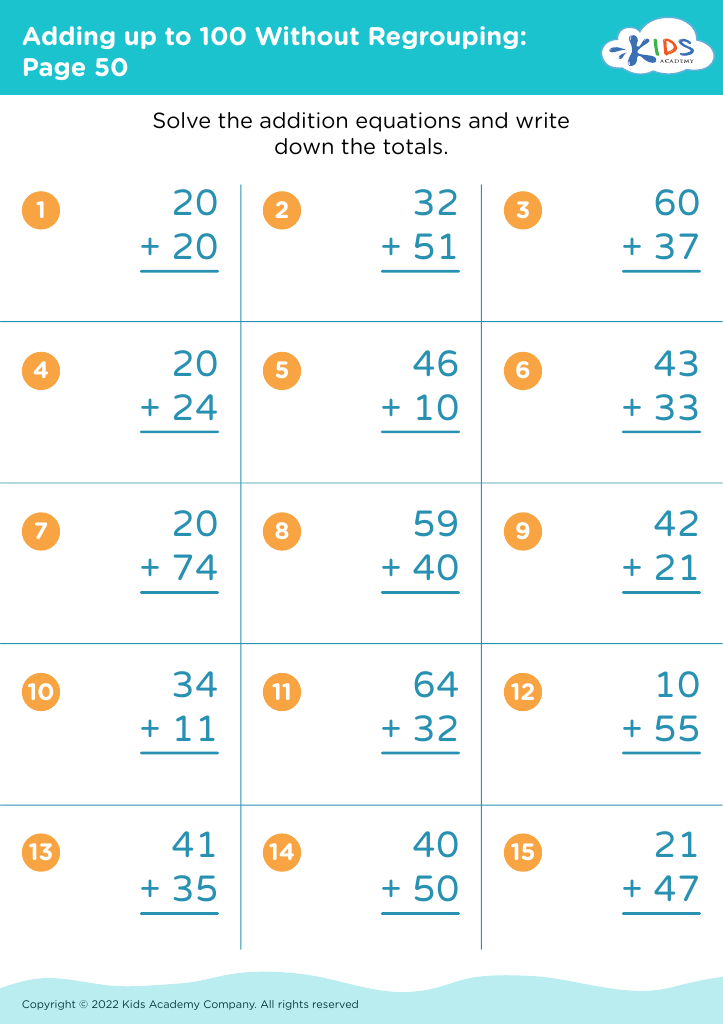
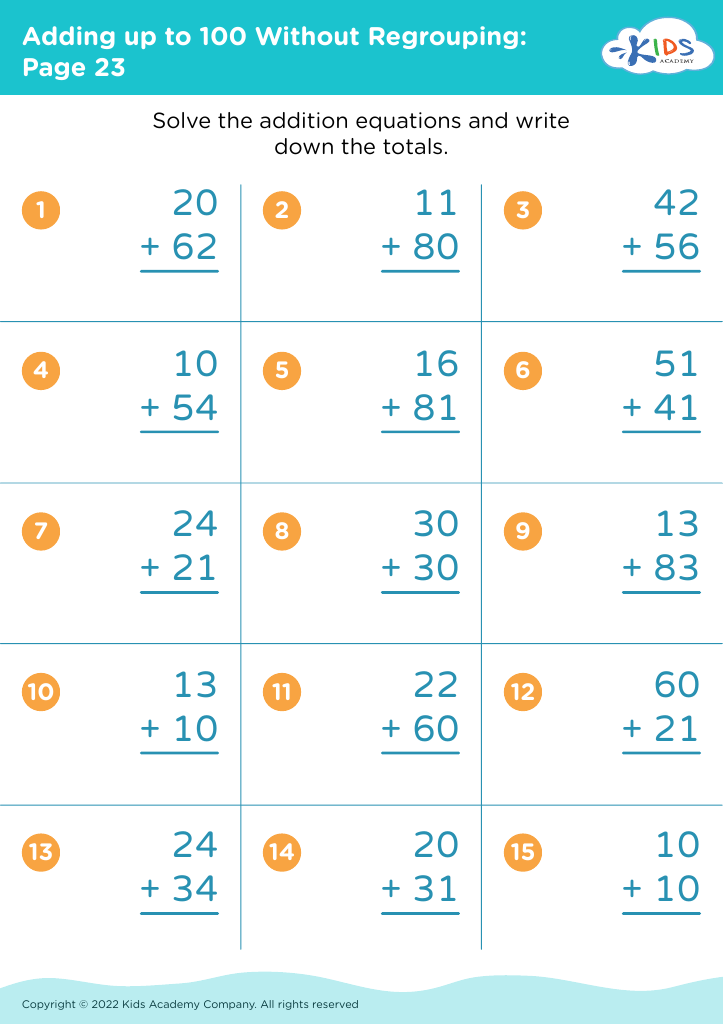
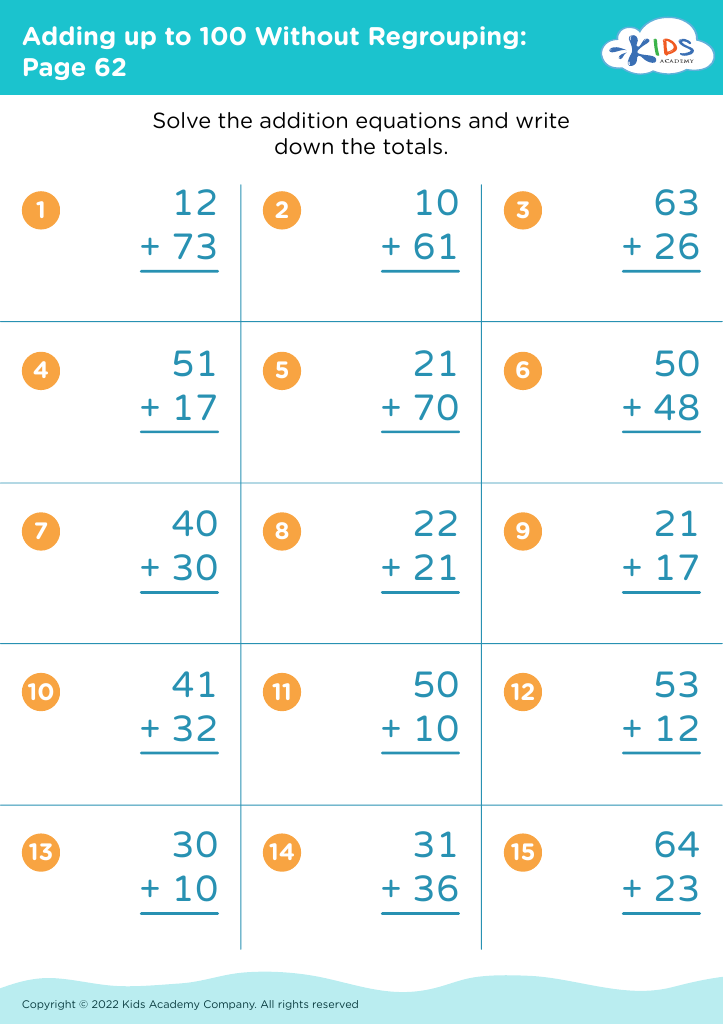




Understanding how to compare fractions that add up to 100 is an essential skill for students aged 3-8, laying a foundational understanding for more complex mathematical concepts. Parents and teachers should care because this skill enhances critical thinking and problem-solving abilities. By comparing fractions, children learn to assess values and make decisions based on their observations, fostering their analytical skills early on.
Moreover, engaging with fractions helps promote numerical fluency, which is crucial in their overall mathematical development. It encourages students to visualize and manipulate portions, bridging the gap between whole numbers and more abstract mathematical concepts. With practical applications seen in everyday scenarios, from cooking to dividing snacks, grasping fractions makes math relatable and fun.
Additionally, mastering this concept helps build confidence in students as they tackle challenging problems. When teachers and parents take an active interest in these skills, they model a positive attitude toward math and reinforce its importance. Ultimately, comparing fractions not only enriches children’s mathematical understanding but also empowers them with essential life skills. Early encouragement can lead to a lifelong appreciation of math, making it vital for educators and parents to support this learning journey.