Develop critical thinking Adding up to 100 Without Regrouping Worksheets for Ages 3-8
3 filtered results
-
From - To
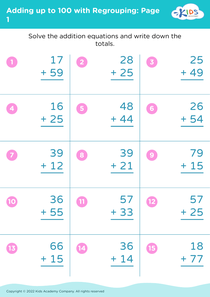
Our "Adding up to 100 Without Regrouping Worksheets" for ages 3-8 are designed to build essential math skills while fostering critical thinking. These engaging, printable worksheets help children develop problem-solving abilities by practicing addition within 100. As they solve each task, kids enhance their logical reasoning and analytical thinking skills, essential for future academic success. Ideal for parents and educators, these fun-filled learning resources support the mastery of basic math concepts, encouraging young learners to approach challenges confidently and thoughtfully. Empower your child’s journey in mathematics with our expertly crafted, developmentally appropriate worksheets.
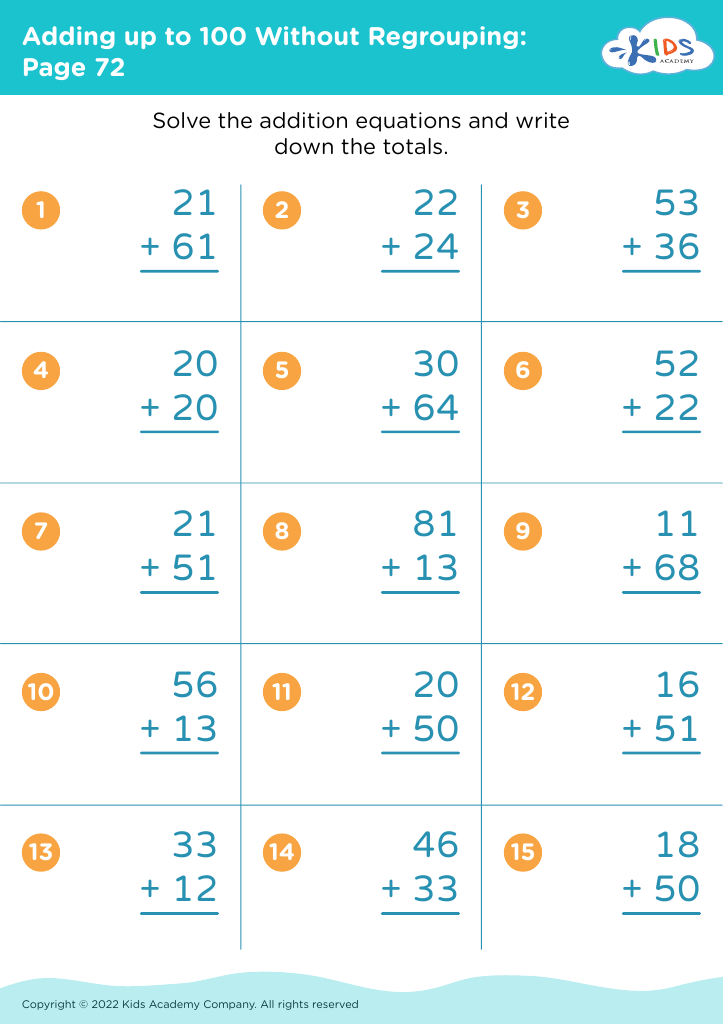
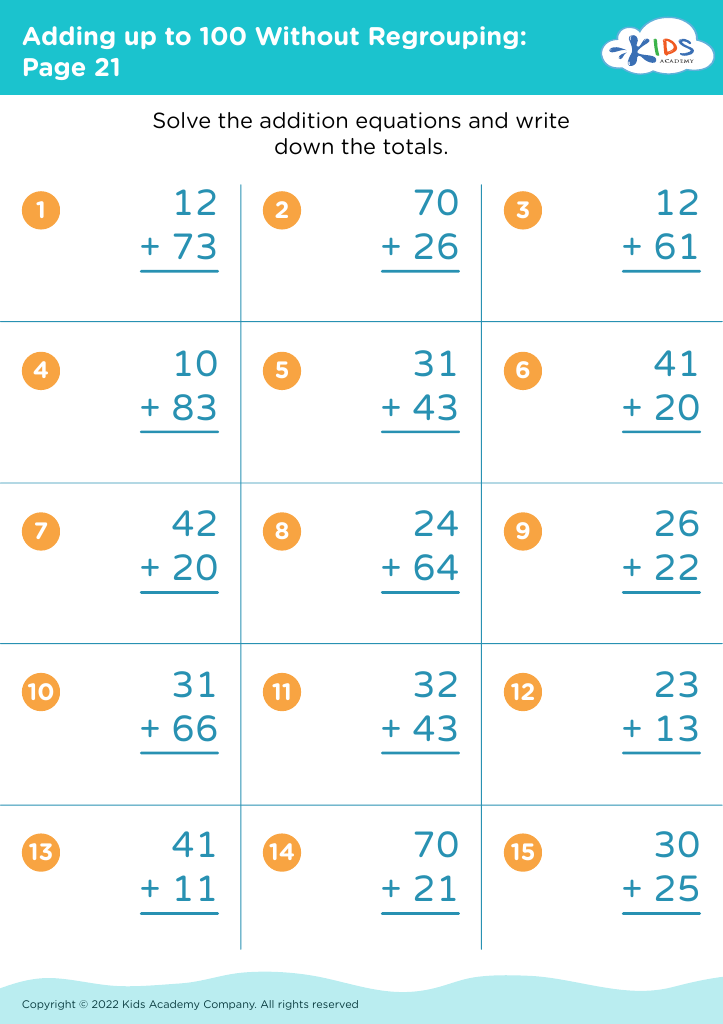
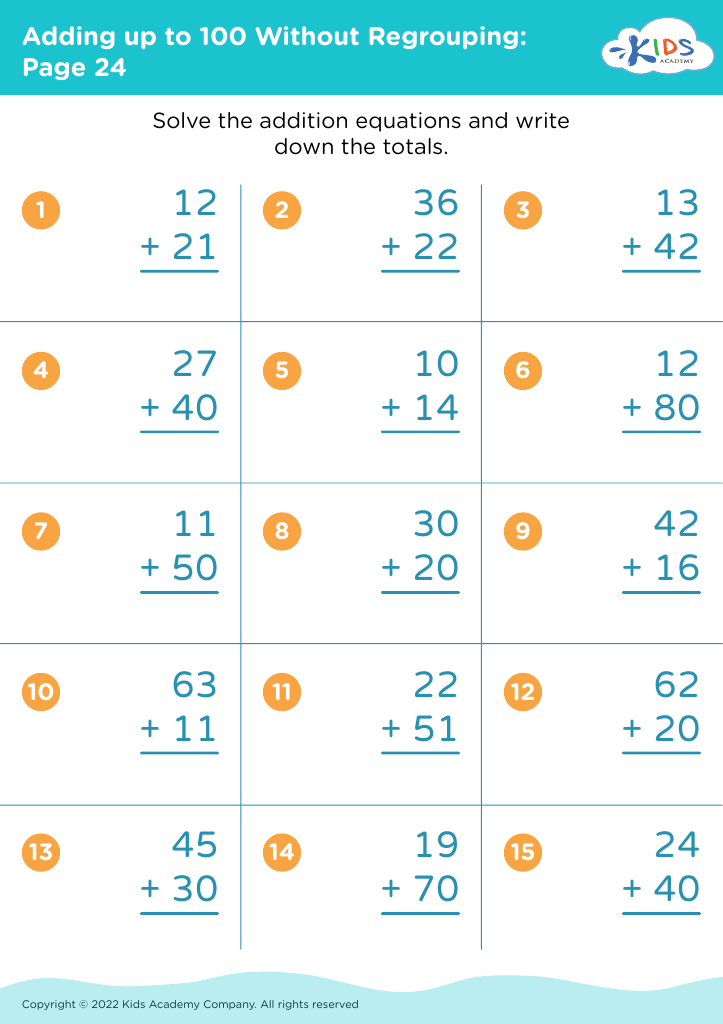




Developing critical thinking and teaching addition up to 100 without regrouping for children aged 3-8 are foundational skills that set the stage for lifelong learning and intellectual growth. For parents and teachers, emphasizing critical thinking means nurturing a child's ability to analyze information, solve problems creatively, and make informed decisions. These skills influence not just academic success, but also everyday life activities. Children adept at critical thinking are more adaptable, better at emotional regulation, and more equipped to handle complex issues later in life.
Furthermore, early math skills are strongly correlated with future academic achievement. Teaching addition up to 100 without regrouping helps children build number sense, understand mathematical concepts, and gain confidence in their abilities. Without the hassle of regrouping, children can focus on mastering addition basics, laying a solid foundation for more complex math skills. Working within this number range allows young learners to experience success and develop a positive attitude towards mathematics.
Combining critical thinking with fundamental arithmetic addresses cognitive, emotional, and academic needs, facilitating comprehensive development. Therefore, it’s crucial for parents and teachers to make these skills a priority in early education, fostering educated, resourceful, and capable individuals ready to navigate a complex world.