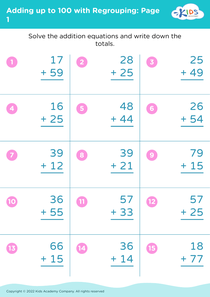
Improve reading comprehension Adding up to 100 Without Regrouping Worksheets for Ages 3-8
3 filtered results
-
From - To
Enhance your child's reading comprehension and math skills simultaneously with our "Adding up to 100 Without Regrouping Worksheets" for ages 3-8. Designed by educational experts, these engaging printable worksheets blend simple addition exercises with reading practices, ensuring balanced mental growth. Children will delight in colorful visuals and relatable themes, which facilitate their ability to focus, understand instructions, and solve math problems without regrouping. By integrating imaginative reading passages and practical math tasks, these worksheets foster a love of learning, reinforcing core academic abilities and setting a strong foundation for future success. Perfect for both classroom and home settings!
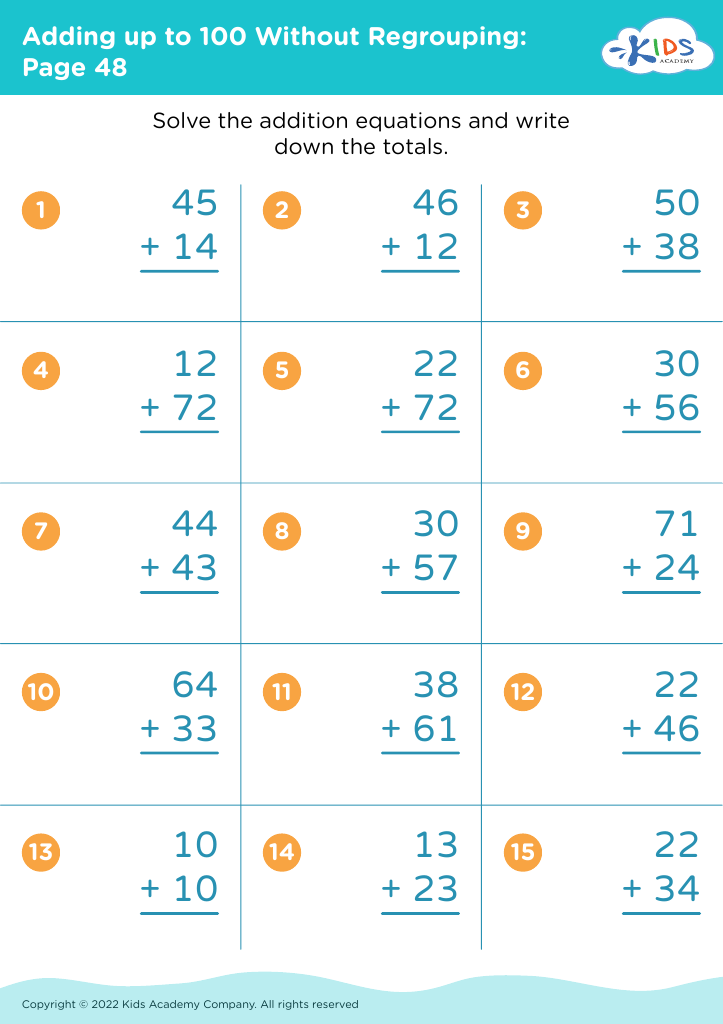
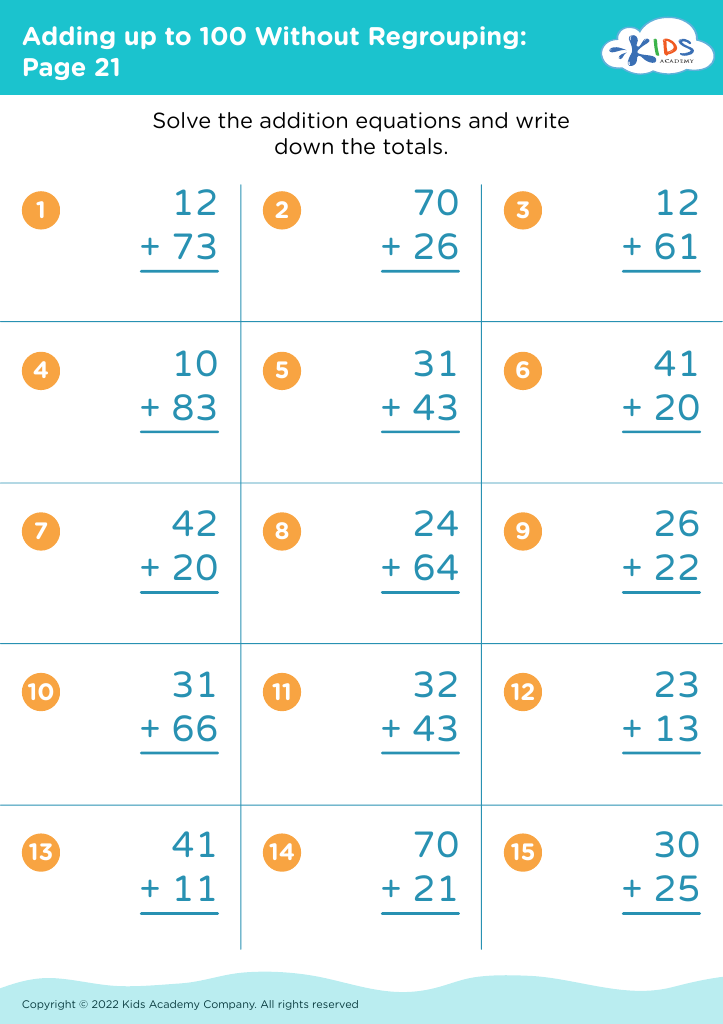
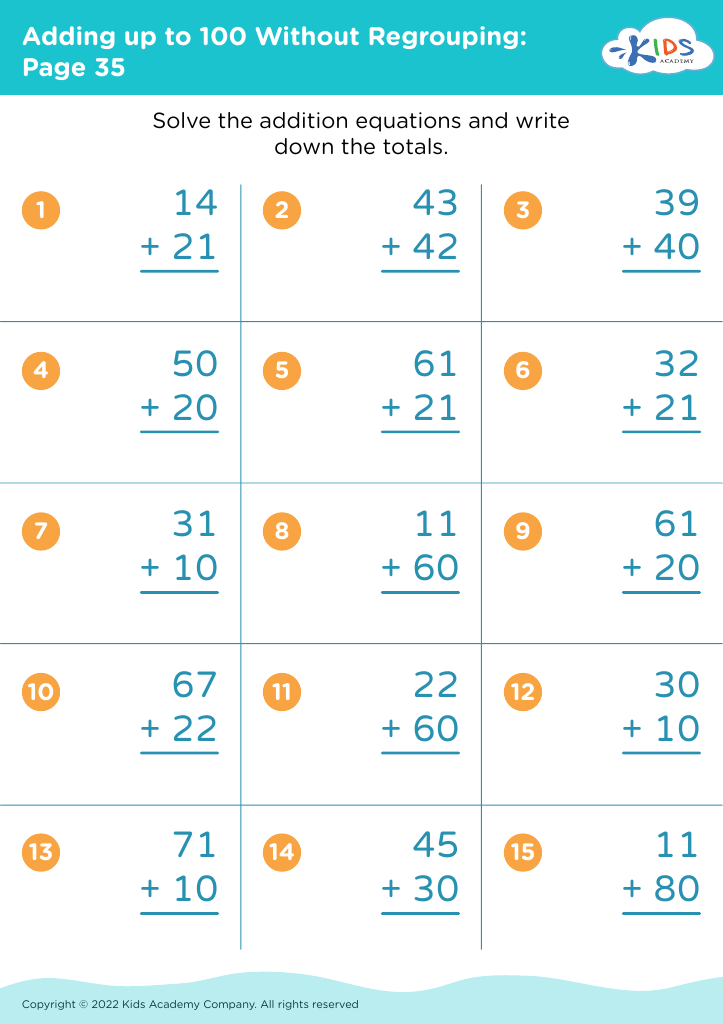




Improving reading comprehension and mastering addition up to 100 without regrouping are fundamental skills critical for the development of young children ages 3-8. Reading comprehension enables children to understand and process the information they read, which is essential not only for academic success but also for everyday life skills such as following instructions, solving problems, and engaging in effective communication. It also fosters a lifelong love for reading and enhances cognitive development, including critical thinking and empathy.
Simultaneously, mastering basic arithmetic such as addition up to 100 without regrouping lays the groundwork for more complex mathematical concepts. It helps children develop strong number sense, supports logical thinking, and promotes confidence in handling math tasks. These skills are vital for their academic journey, as math is a cumulative subject where foundational gaps can impede future learning.
Parents and teachers have a crucial role in nurturing these skills. By doing so, they equip children with the tools to excel academically and socially. Early intervention and support can prevent future learning difficulties, fostering a stable and enriching educational environment. Therefore, a strong emphasis on reading comprehension and basic arithmetic within early childhood education can set the stage for long-term academic and personal success.