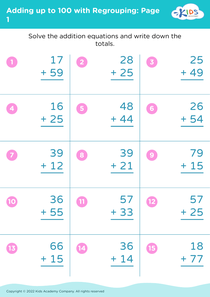
Practicing multiplication Adding up to 100 Without Regrouping Worksheets for Ages 3-8
3 filtered results
-
From - To
Discover our engaging and educational worksheets tailored for young learners ages 3-8, designed to practice multiplication and adding up to 100 without regrouping. Our printable activities aim to strengthen basic math skills, enhancing numerical proficiency and confidence. Perfect for reinforcing classroom learning or for fun at-home practice, these resources provide a solid foundation in mathematics. Each worksheet is crafted to be both challenging and enjoyable, encouraging children to develop a love for learning math. Visit Kids Academy to access our expertly-designed materials and support your child's journey to mastering multiplication and addition concepts effortlessly!
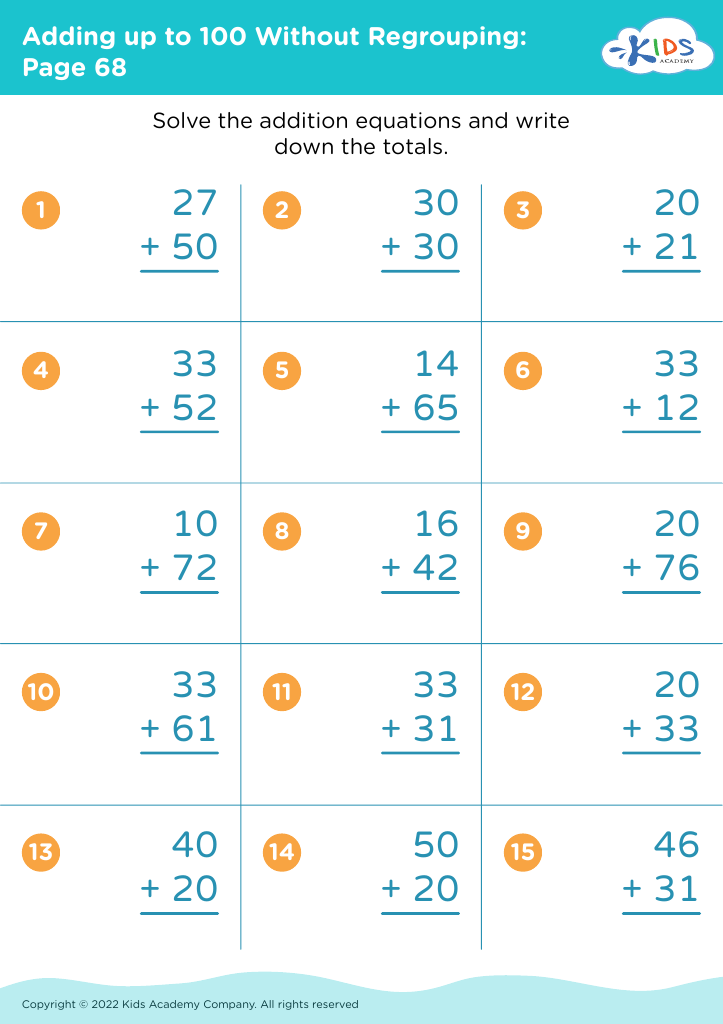
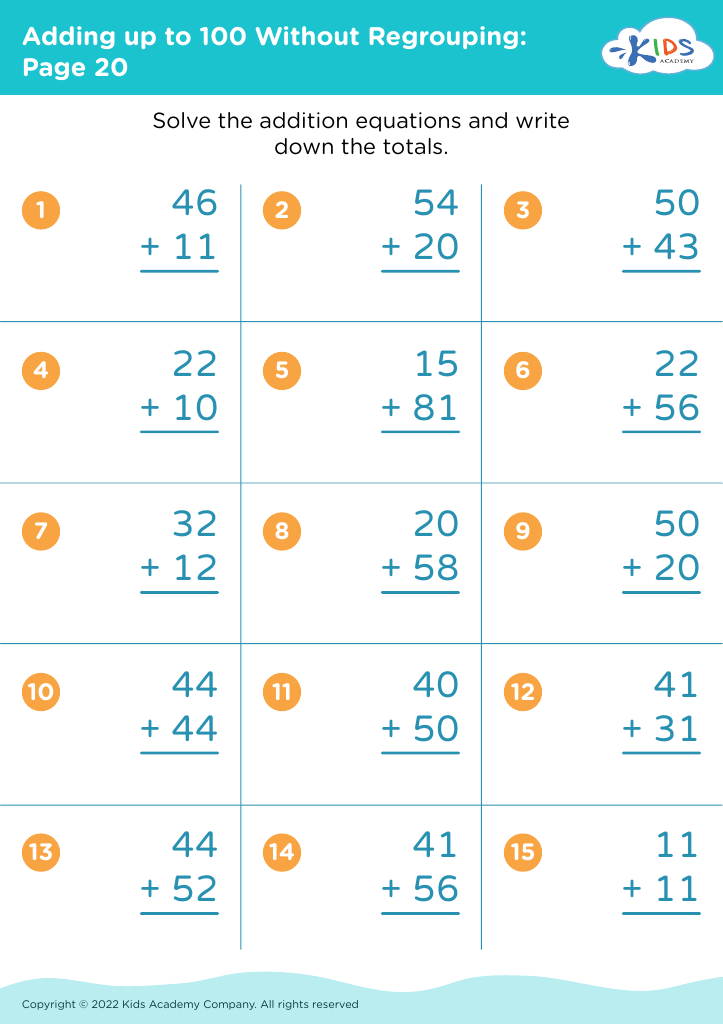
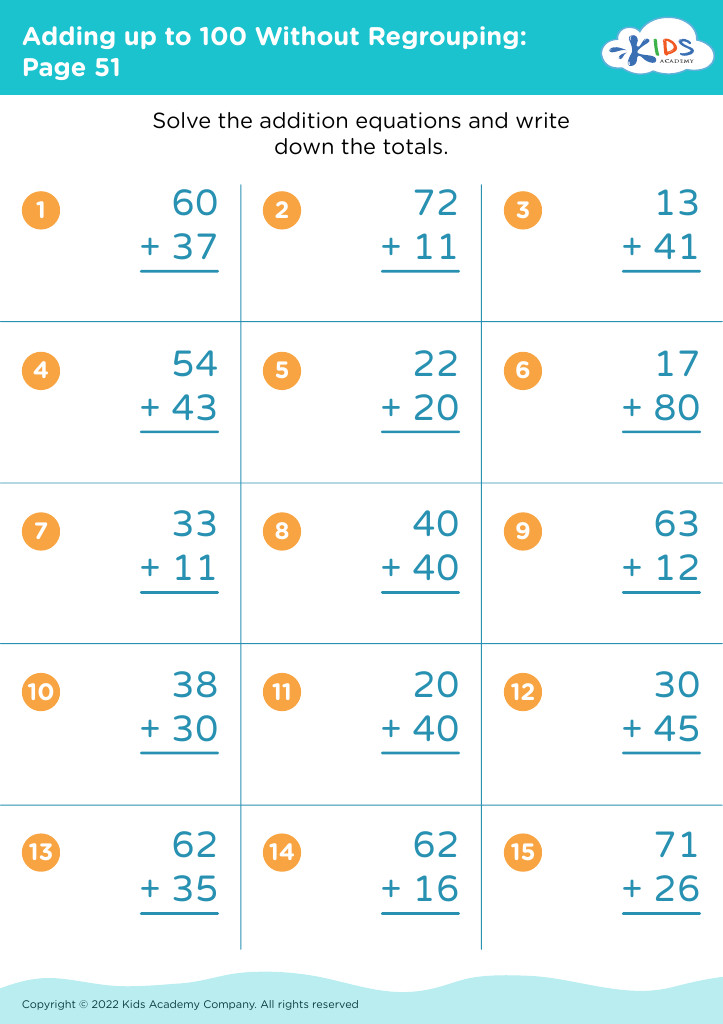




Practicing basic arithmetic, specifically addition up to 100 without regrouping and introductory multiplication, is fundamental for children ages 3-8. These skills form the bedrock for more advanced mathematical concepts they will encounter in later stages of education. Early mastery instills confidence and builds a strong foundation.
Students develop critical thinking and problem-solving skills by practicing addition and multiplication. Teachers and parents play an essential role in reinforcing these skills through engaging activities, games, and real-life scenarios. By making math enjoyable and consistent in their daily exercises, adults can foster a positive attitude toward learning.
Repetition and regular practice help solidify understanding, ensuring that students are comfortable with numbers and operations. Understanding multiples and addition improves a child's number sense and prepares them for lessons involving more complex operations like fractions, division, and later algebra.
Furthermore, math skills translate into better performance in other academic areas and daily life. Cognitive skills such as focus, memory, and analytical thinking are all enhanced by regular math practice. Investing time and attention in these early years sets the stage for lifelong academic success. Care from parents and teachers during this critical period helps secure the mathematical competence and confidence children need for the future.