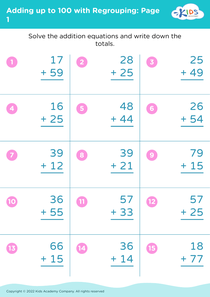
Problem-Solving Skills Adding up to 100 Without Regrouping Worksheets for Ages 3-8
10 filtered results
-
From - To
Discover our engaging "Problem-Solving Skills Adding up to 100 Without Regrouping" worksheets designed for children aged 3-8. These fun, developmental resources focus on enhancing early math skills, particularly addition problems without the need for regrouping. Tailored for young learners, the worksheets boost confidence in solving equations involving numbers up to 100. They encourage critical thinking, improve problem-solving techniques, and lay a strong foundation for future math success. Parents and educators can seamlessly integrate these activities into daily learning routines, ensuring a stimulating and effective educational experience for every young mathematician. Visit to explore and download today!
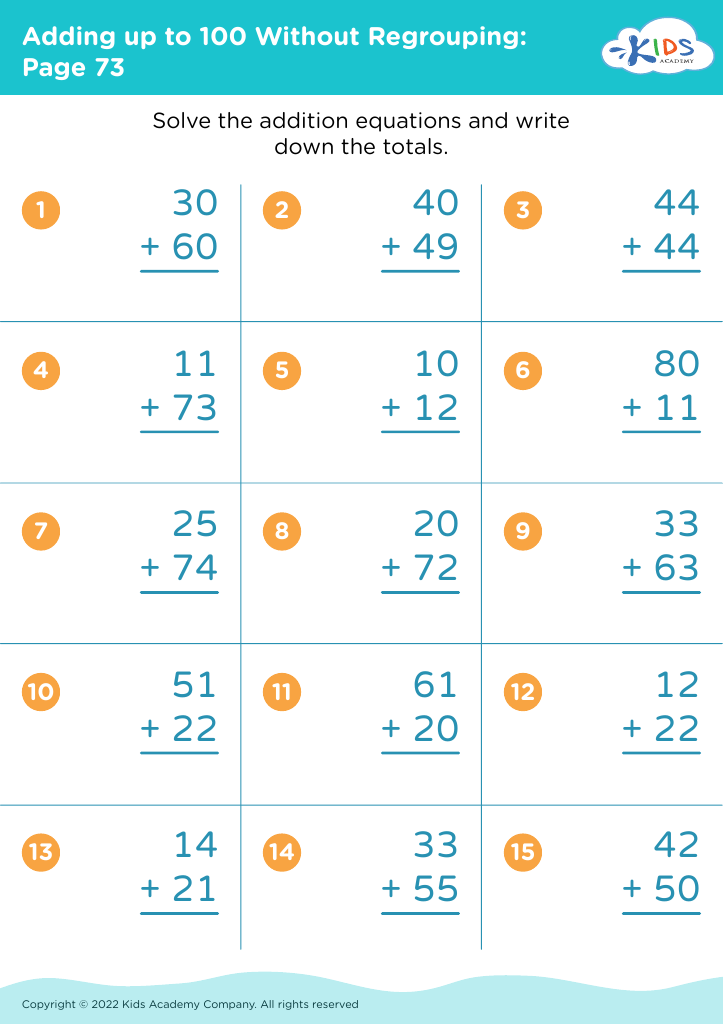
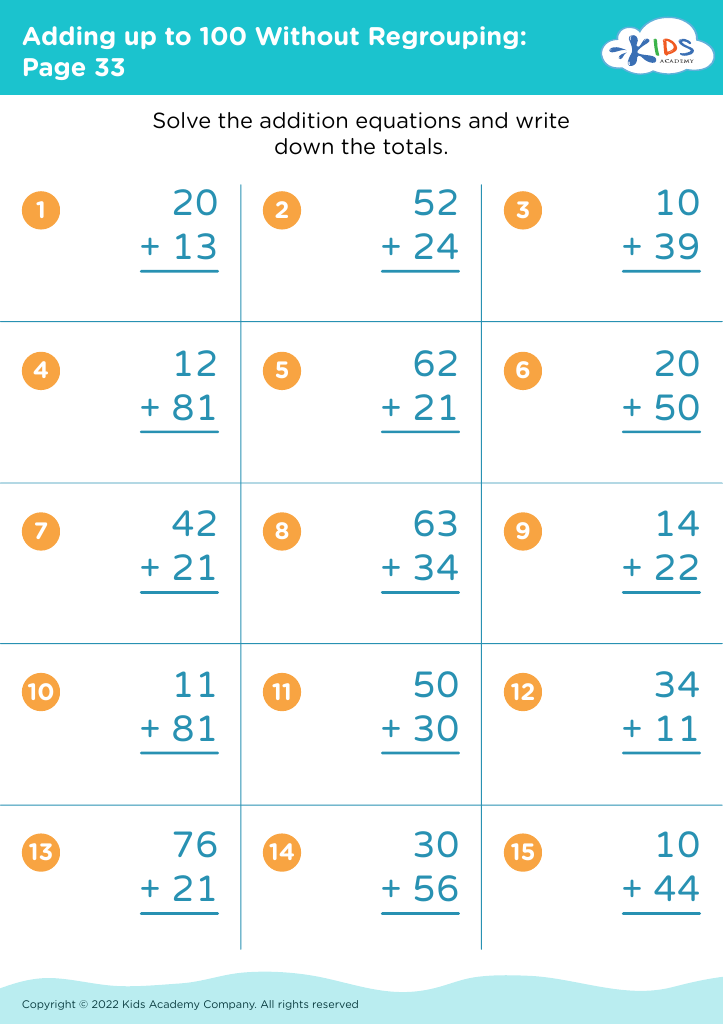
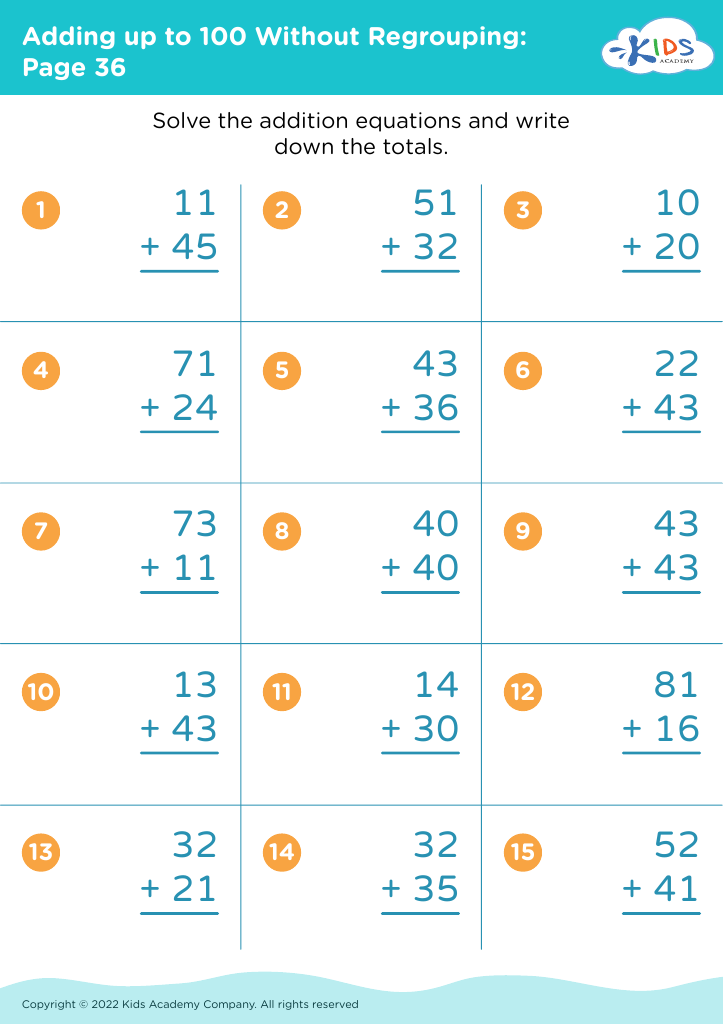
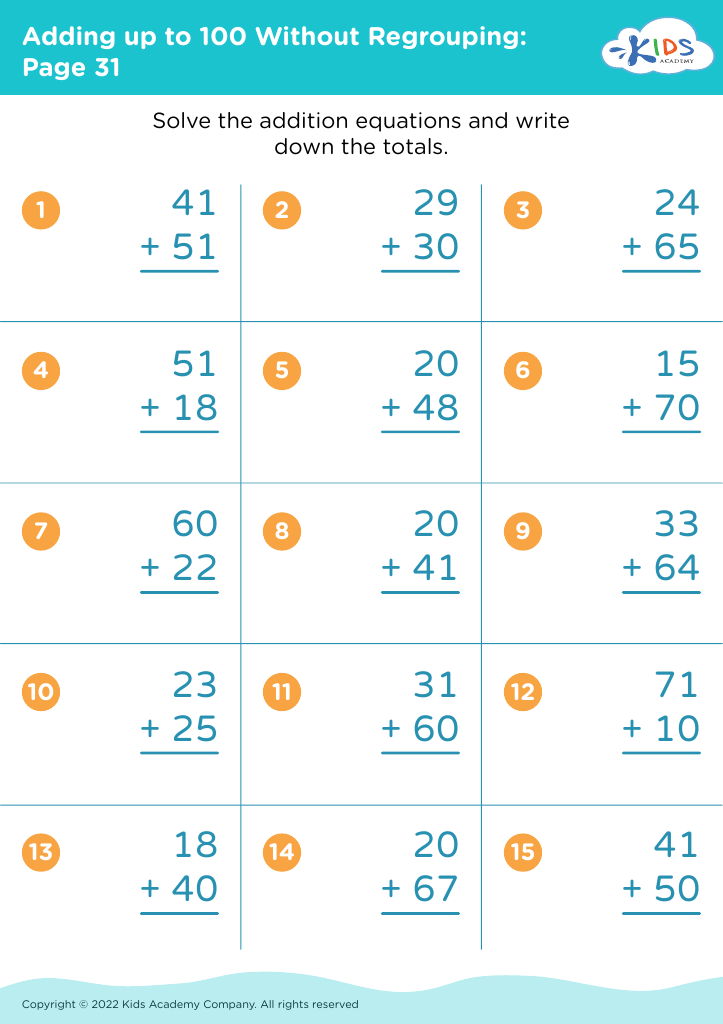
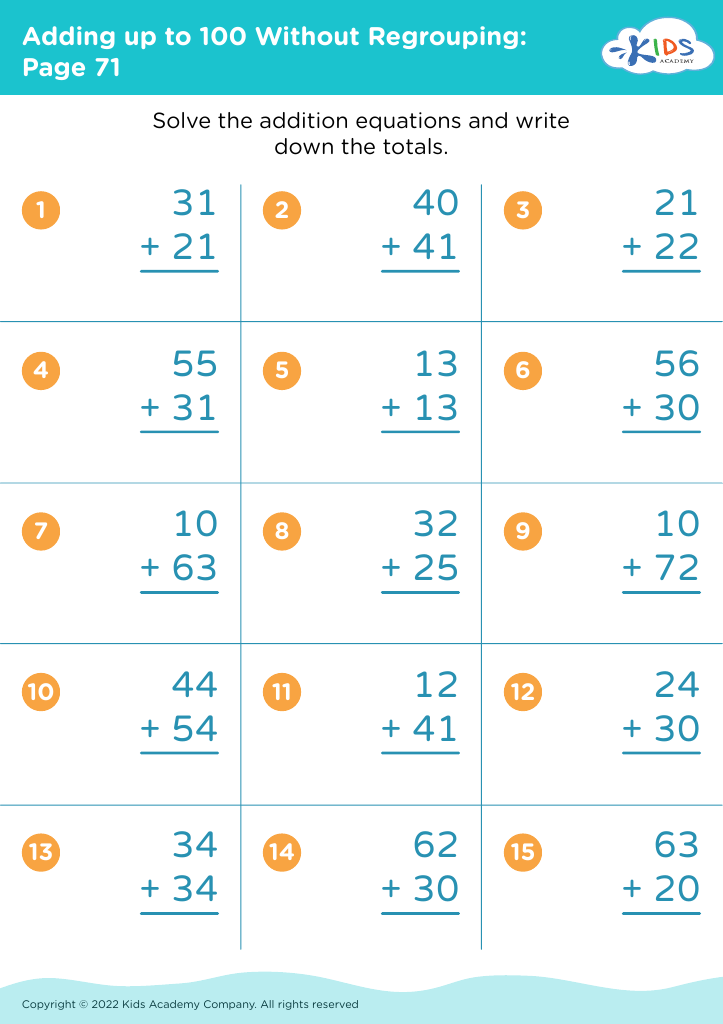
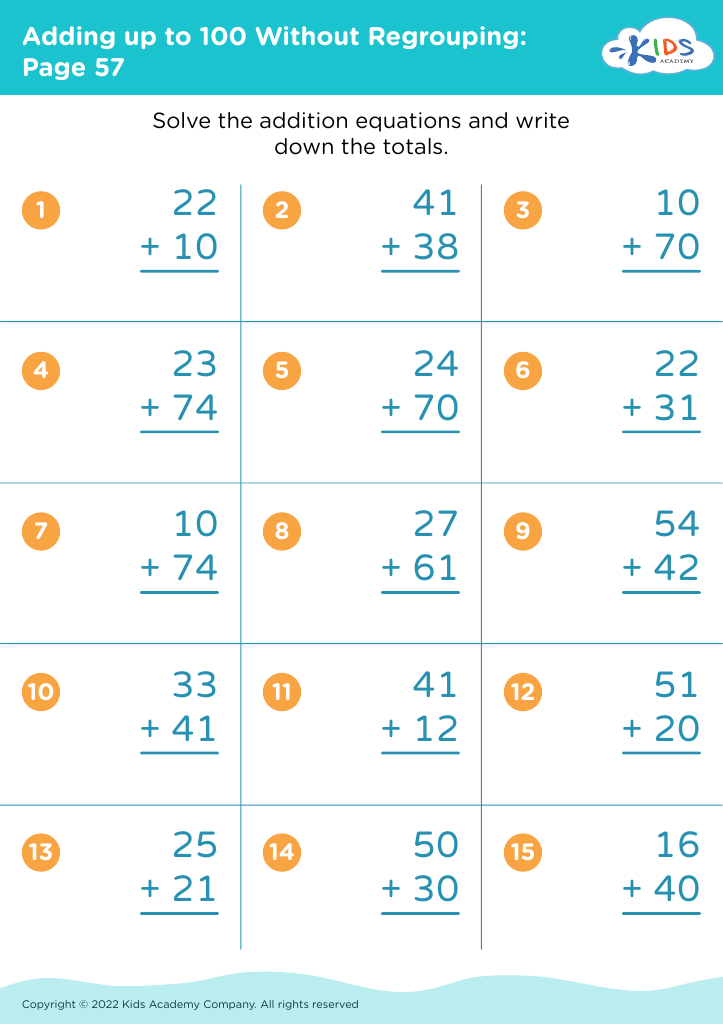
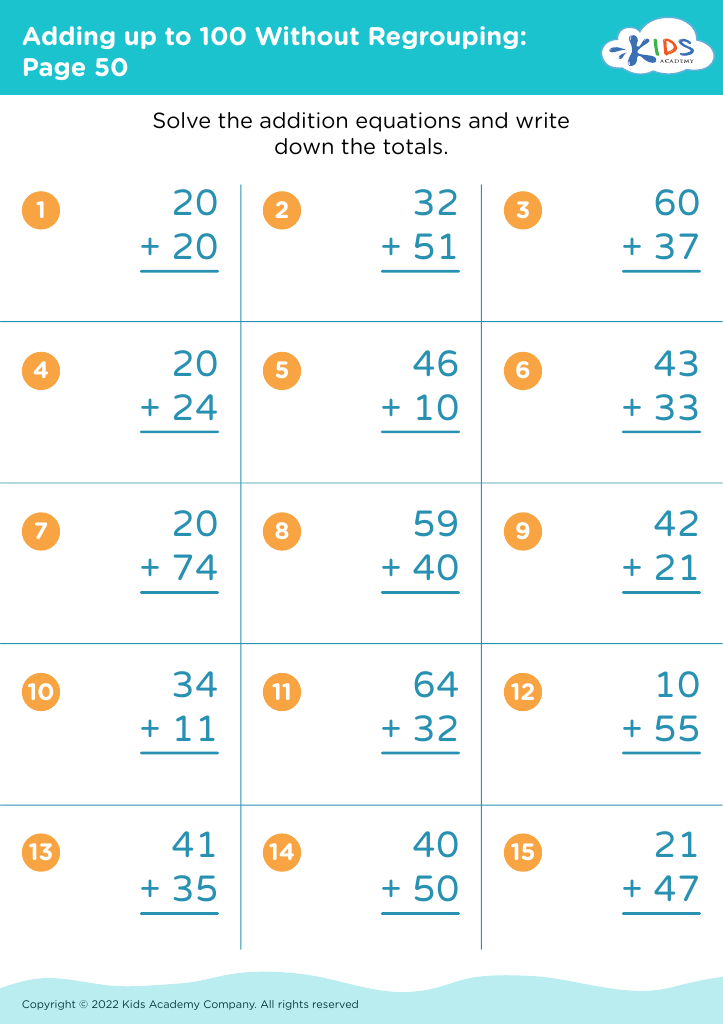
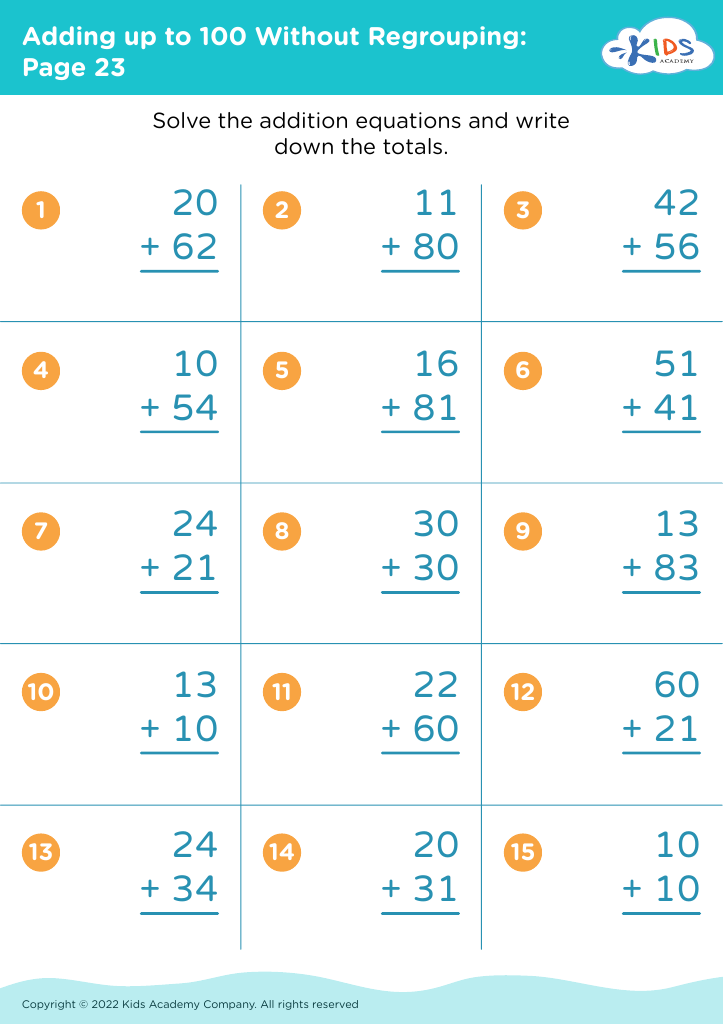
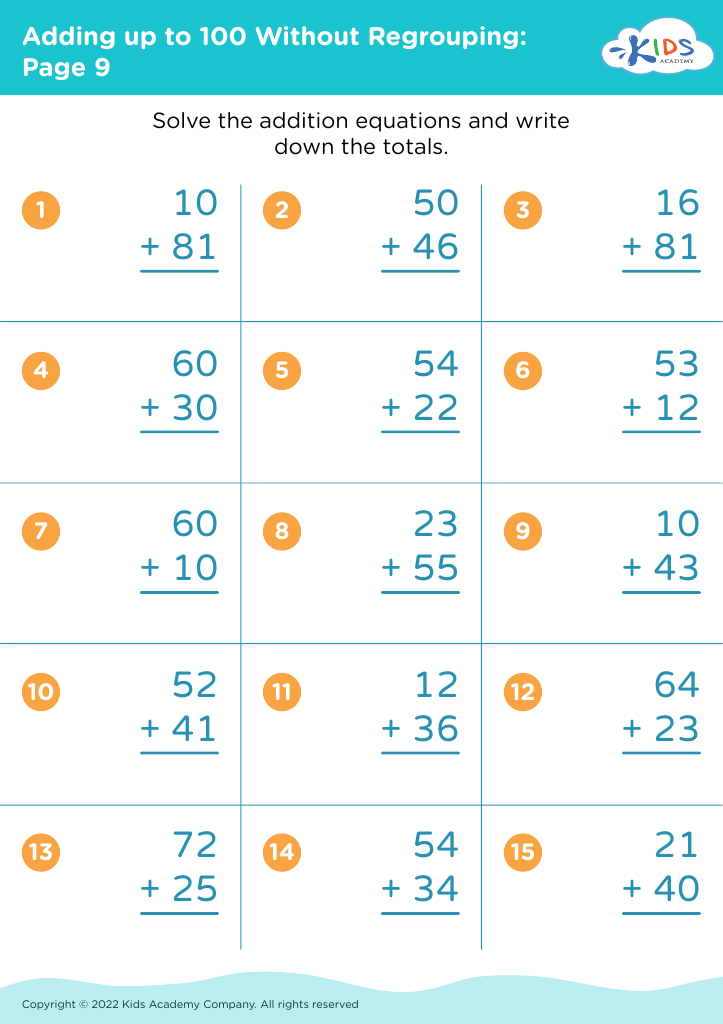
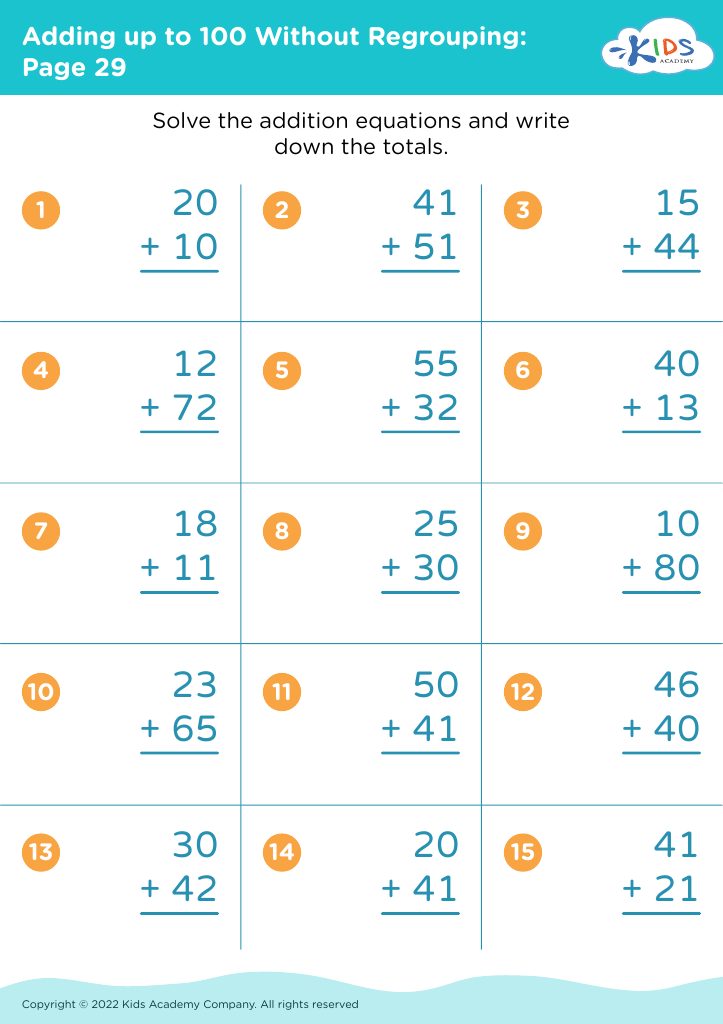




Parents and teachers should care about problem-solving skills such as adding up to 100 without regrouping for ages 3-8 because these foundational skills are crucial for a child’s cognitive and academic development. This age is a formative period for acquiring basic numeracy skills, which are essential for more complex mathematical concepts later. Mastering addition without regrouping builds confidence and ease with numbers, setting a strong precedent for future learning.
Fostering these skills also enhances critical thinking, logical reasoning, and the ability to approach problems systematically. When children learn to add without regrouping, they practice basic arithmetic, improve their mental math capabilities, and strengthen their working memory. These competencies contribute to academic success not only in math but across various subjects requiring analytical skills.
Moreover, achieving these milestones early instills a sense of accomplishment and encourages a positive attitude toward learning and problem-solving. Parents and teachers support the development of persistence, patience, and attention to detail when guiding children through these tasks. By focusing on these skills, adults help create a strong foundation for lifelong learning and equip children with the tools they need to navigate diverse problem-solving scenarios, both in academics and everyday life.