Understanding multiplication Adding up to 100 Without Regrouping Worksheets for Ages 3-8
5 filtered results
-
From - To
Discover our engaging "Understanding Multiplication: Adding Up to 100 Without Regrouping" worksheets designed for children ages 3-8. These fun and interactive resources help young learners grasp the concept of multiplication through practical exercises that encourage mental math skills. Each worksheet is crafted to introduce the fundamentals of multiplication in a straightforward manner, progressively building confidence and analytical thinking. Perfect for home or classroom use, these worksheets enable children to practice adding numbers seamlessly without the complexities of regrouping. Enhance your child's mathematical journey with our colorful, user-friendly sheets that foster a love for learning while developing essential math skills.
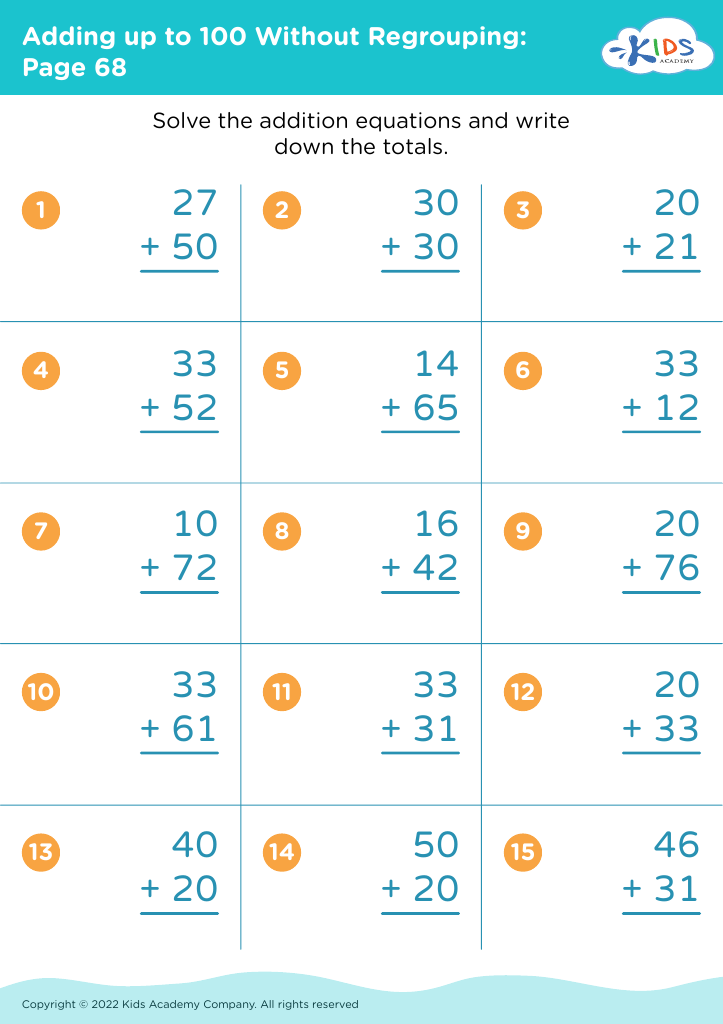
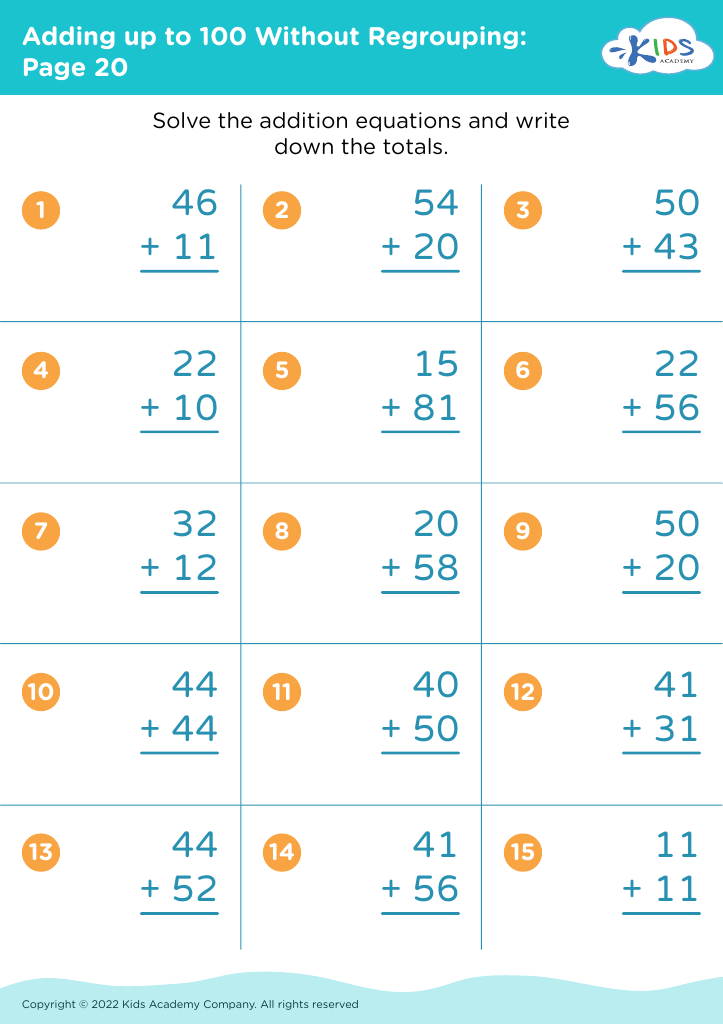
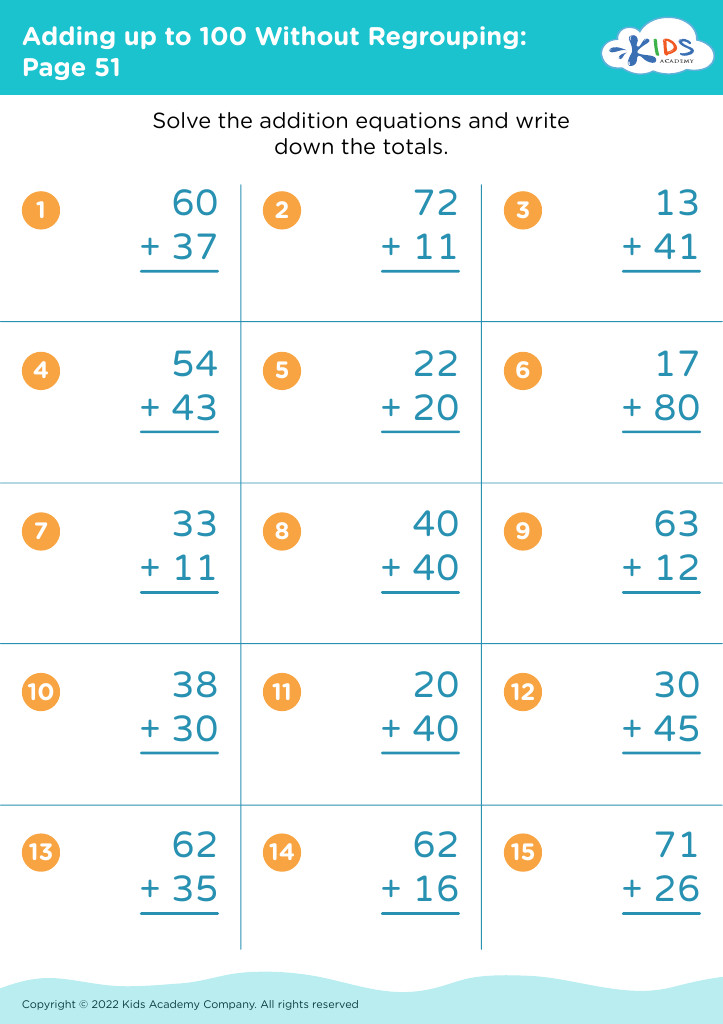
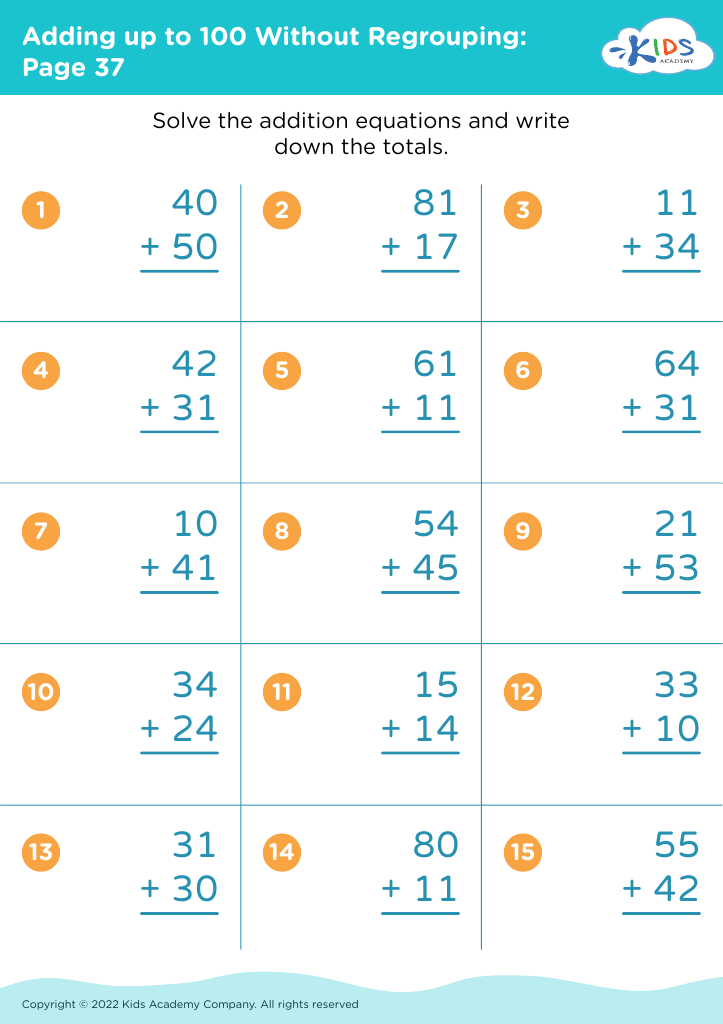
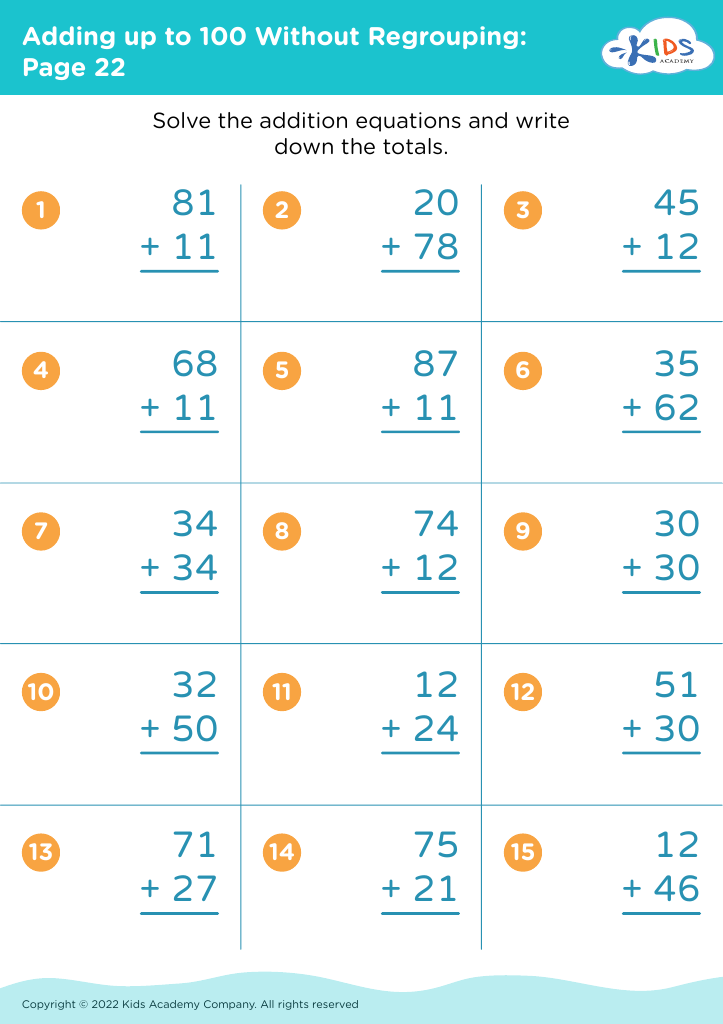




Understanding multiplication and the concept of adding up to 100 without regrouping are crucial skills for children aged 3-8. For parents and teachers, fostering these skills early lays a strong mathematical foundation that supports future learning. Multiplication is often seen as a significant progression in mathematics; grasping it at an early age helps children understand patterns, relationships, and the concept of groups. This not only enhances their problem-solving abilities but also builds their confidence in handling numbers.
Additionally, learning to add numbers up to 100 without regrouping aids in developing mental math skills, which are essential in everyday situations. It teaches children to think efficiently and accurately, making calculations more manageable as they encounter larger numbers and advanced math concepts later on.
Moreover, these skills encourage logical thinking and recognized patterns, fostering a sense of achievement in young learners. Both parents and teachers play a vital role in engaging children with fun and interactive activities that stimulate curiosity. By caring about these early mathematical concepts, they promote a positive attitude toward learning, setting their children up for academic success in mathematics and beyond. Engaging young minds with these foundational skills paves the way for long-term educational growth and confidence in applying math to real-life scenarios.