Fine Motor Skills Adding up to 1000 Misc Worksheets for Ages 3-8
5 filtered results
-
From - To
Enhance your child's fine motor skills with our engaging collection of worksheets designed for ages 3-8! Our "Fine Motor Skills Adding up to 1000" worksheets offer a fun and educational way to strengthen tiny hands while learning essential math concepts. Each worksheet is thoughtfully crafted to combine tracing, counting, and adding activities that reinforce good pencil grip and hand-eye coordination. Perfect for home or classroom use, these worksheets help young learners develop precision and control, laying a strong foundation for writing and other tasks. Explore our diverse assortment and watch your child's confidence and skills soar!
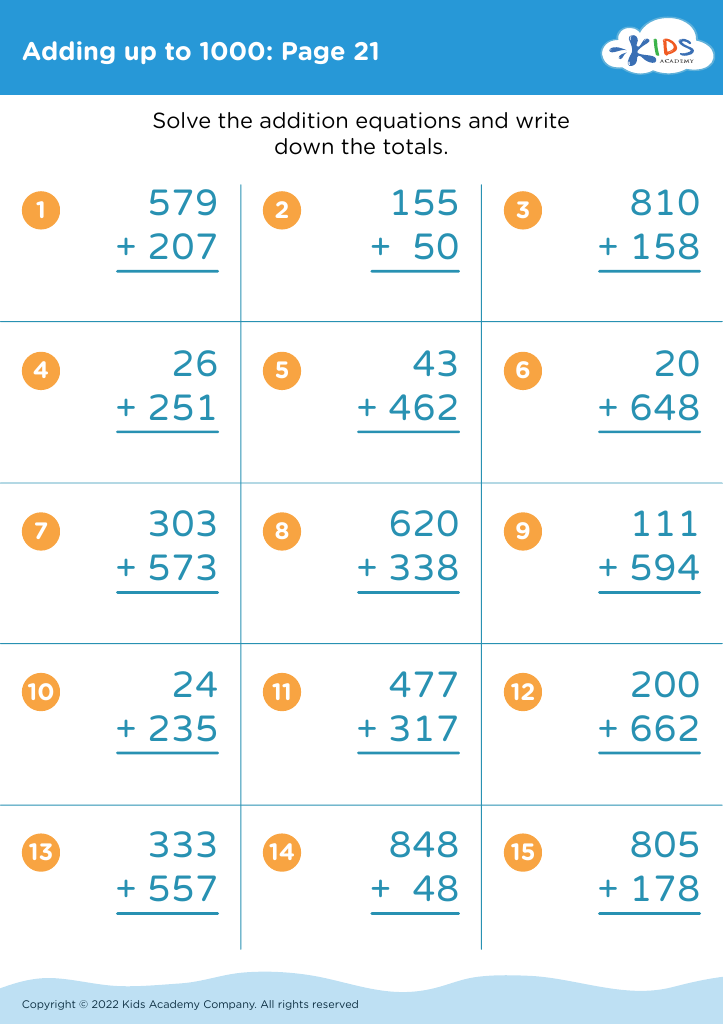
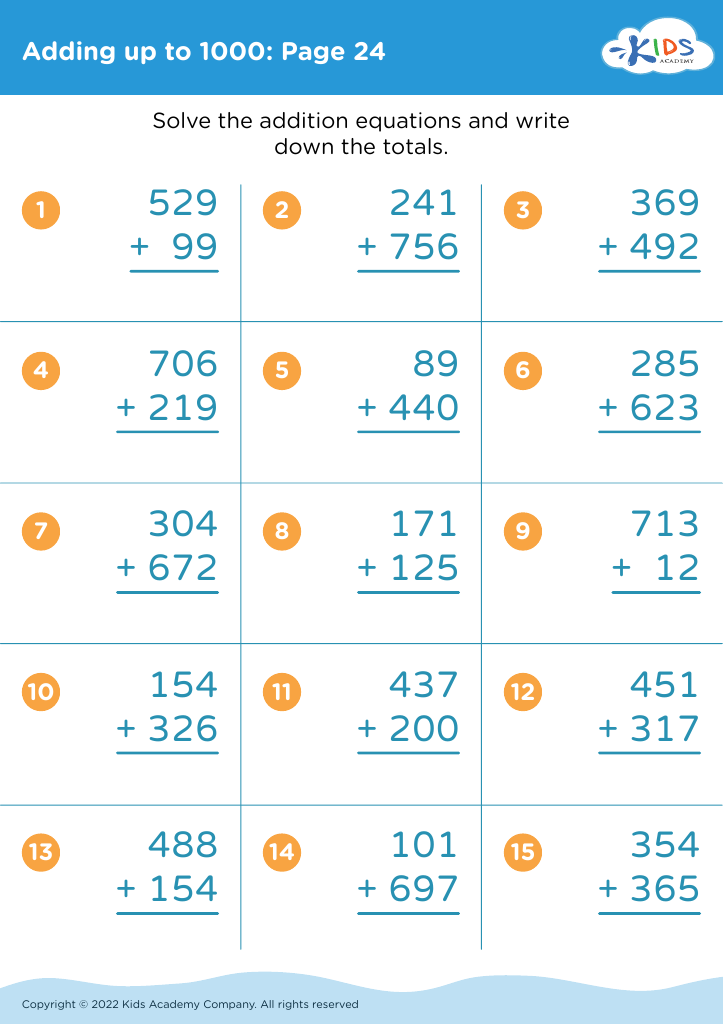
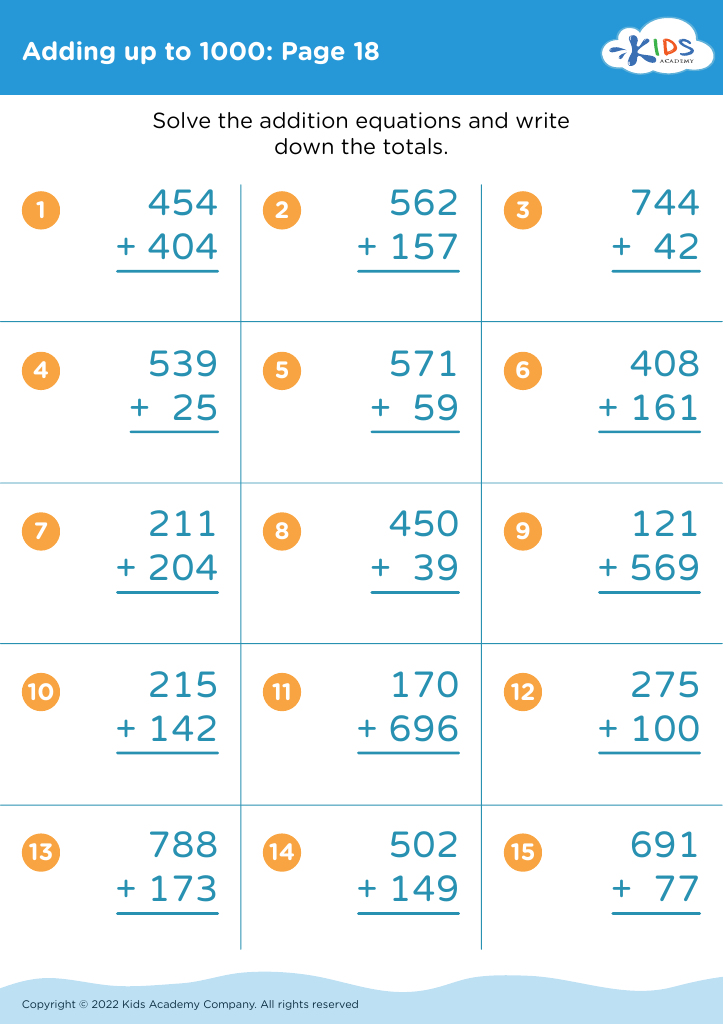
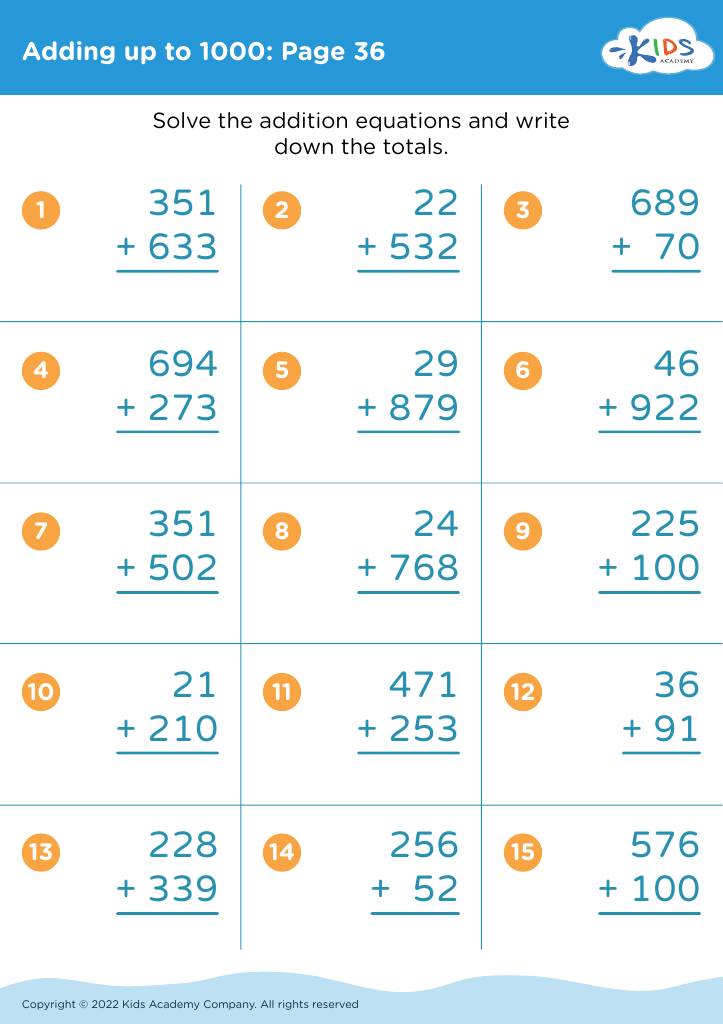
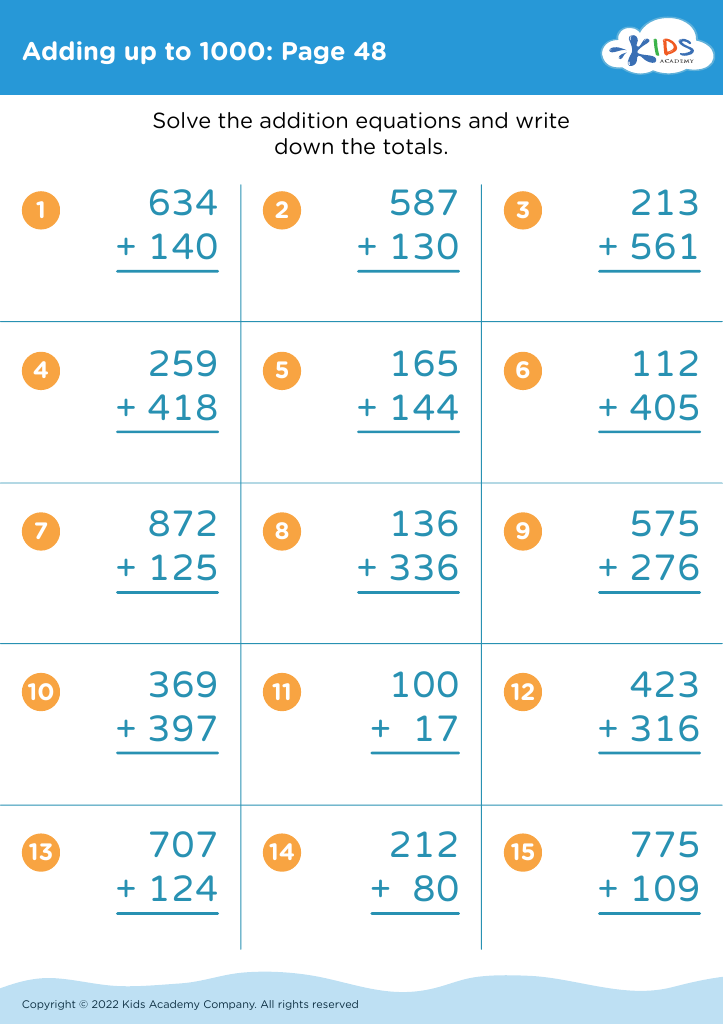


Fine motor skills refer to the small muscle movements in the hands and fingers required to perform precise tasks. These skills are crucial for young children, particularly those aged 3-8, as they lay the groundwork for many essential activities. Parents and teachers should care because well-developed fine motor skills are vital for success in academic and daily living tasks, such as writing, cutting with scissors, tying shoelaces, and buttoning clothes.
In the context of mathematical tasks, like adding up to 1000, fine motor skills are essential for properly holding and maneuvering pencils, erasers, and manipulatives like counting bears or blocks. As children engage in these activities, they not only learn numerical concepts but also enhance their fine motor coordination, which in turn boosts their confidence and independence.
Moreover, strong fine motor skills are linked to better hand-eye coordination and spatial awareness, both crucial for reading and other cognitive tasks. As children progress through school, the ability to perform fine motor tasks efficiently can reduce frustration and improve their overall educational experience. Therefore, integrating fine motor skill development into early childhood education ensures a more holistic approach to learning, laying a robust foundation for future academic and personal success.