Fraction comparison Adding up to 1000 Misc Worksheets for Ages 3-8
6 filtered results
-
From - To
Welcome to our engaging collection of "Fraction Comparison Worksheets" designed specifically for children aged 3-8! These fun and interactive worksheets are perfect for introducing young learners to the concept of fractions while keeping math enjoyable. Your little ones will explore fraction comparison by using visuals, relatable scenarios, and hands-on activities. Each worksheet seamlessly aligns with the essential math skills needed to enhance their problem-solving abilities. Best of all, they facilitate learning through play, making math less intimidating and more accessible. Discover the joy of learning together as your child masters fraction comparisons and prepares for more advanced mathematical concepts!
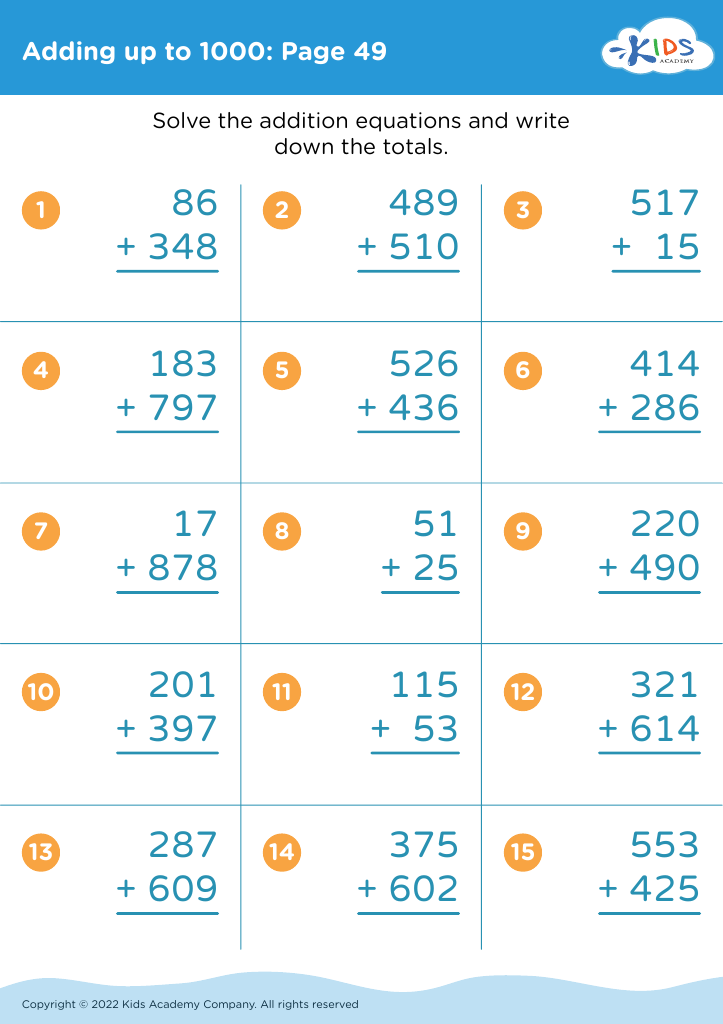
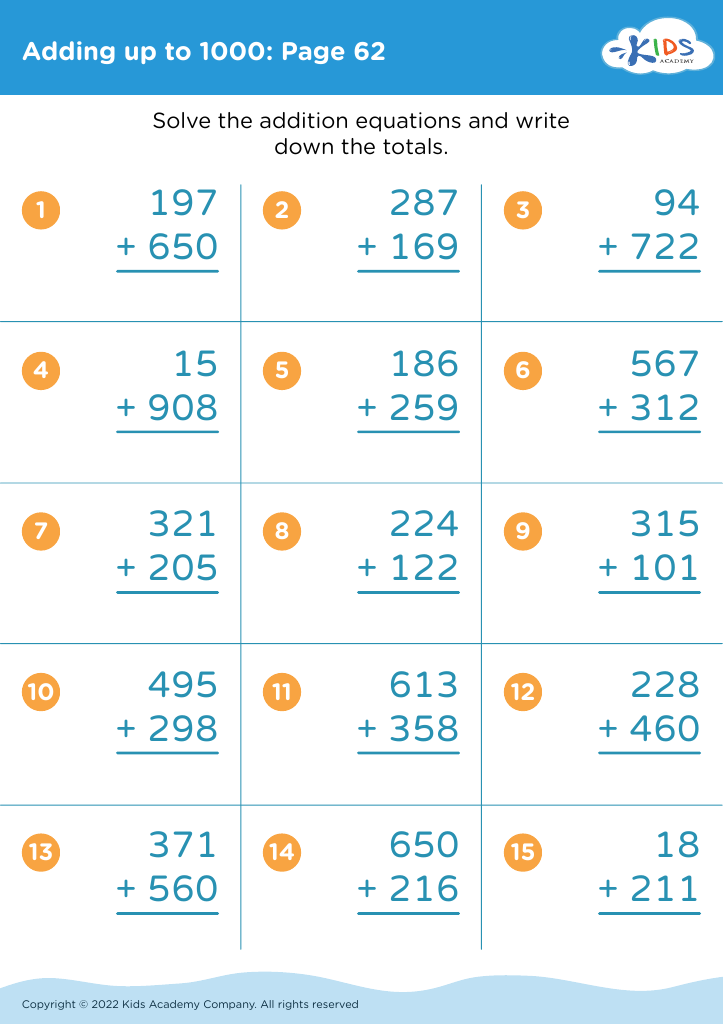
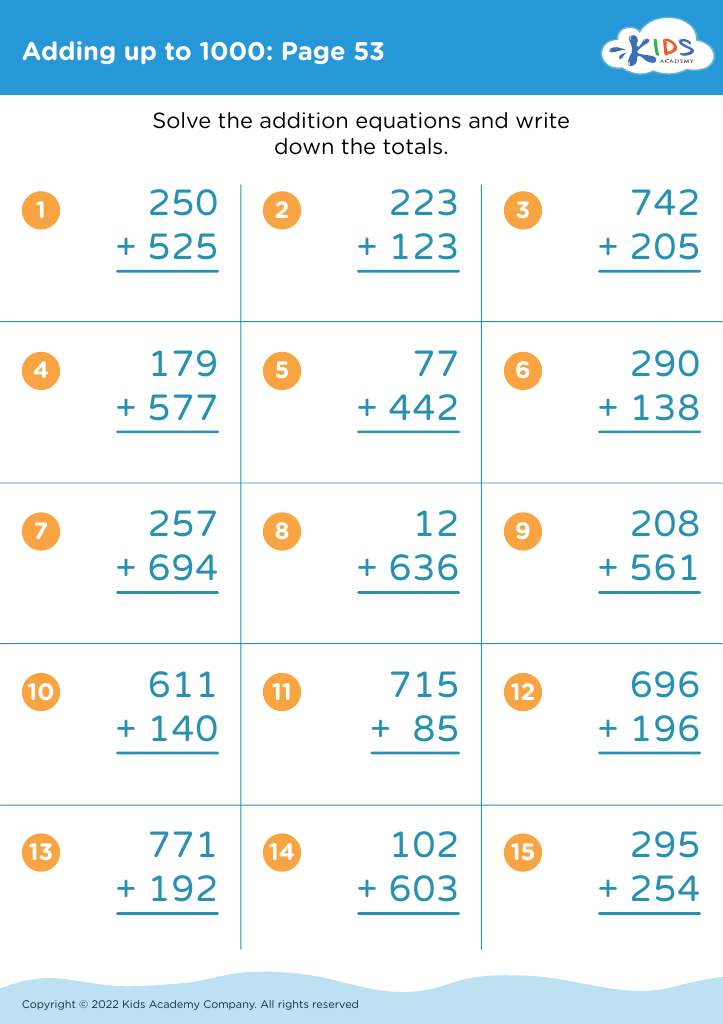
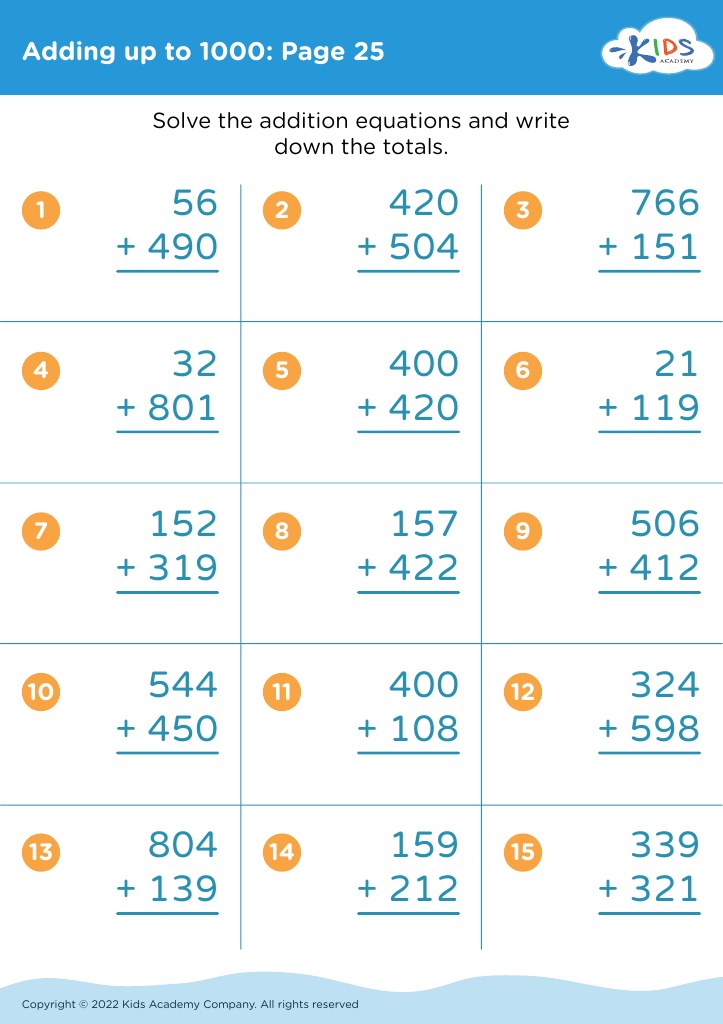


Understanding fraction comparison is crucial for children aged 3-8 as it lays the foundation for more advanced mathematical concepts. When parents and teachers prioritize this skill, they help children develop logical reasoning and critical thinking. Fraction comparison involves recognizing and understanding the relationships between different quantities, helping kids grasp these concepts visually and practically.
At an early age, learning fractions helps children comprehend everyday situations, from sharing food to dividing time. For instance, an understanding of how halves and quarters relate to a whole can be applied during meal times or game settings, making learning relevant and engaging. This early familiarity fosters a positive attitude towards math as children recognize its application in real life.
Moreover, mastering fraction comparison is essential for future mathematics, including addition, subtraction, multiplication, and more complex problem-solving. It builds problem-solving skills and reinforces their ability to analyze and compute. Engaging with fractions through fun activities or games also enhances cooperative social skills among peers, encouraging teamwork.
Overall, focusing on fraction comparison for young children not only supports academic success but also nurtures critical life skills, ensuring they are well-equipped for future learning and daily challenges.