Number Recognition Adding up to 1000 Misc Worksheets for Ages 3-8
13 filtered results
-
From - To
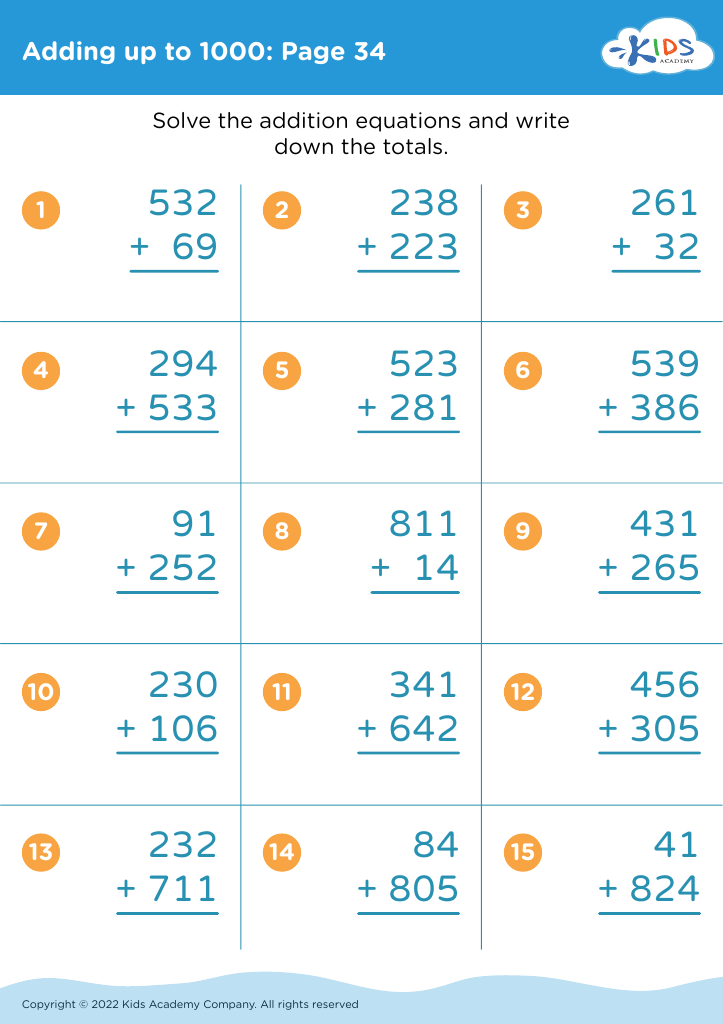
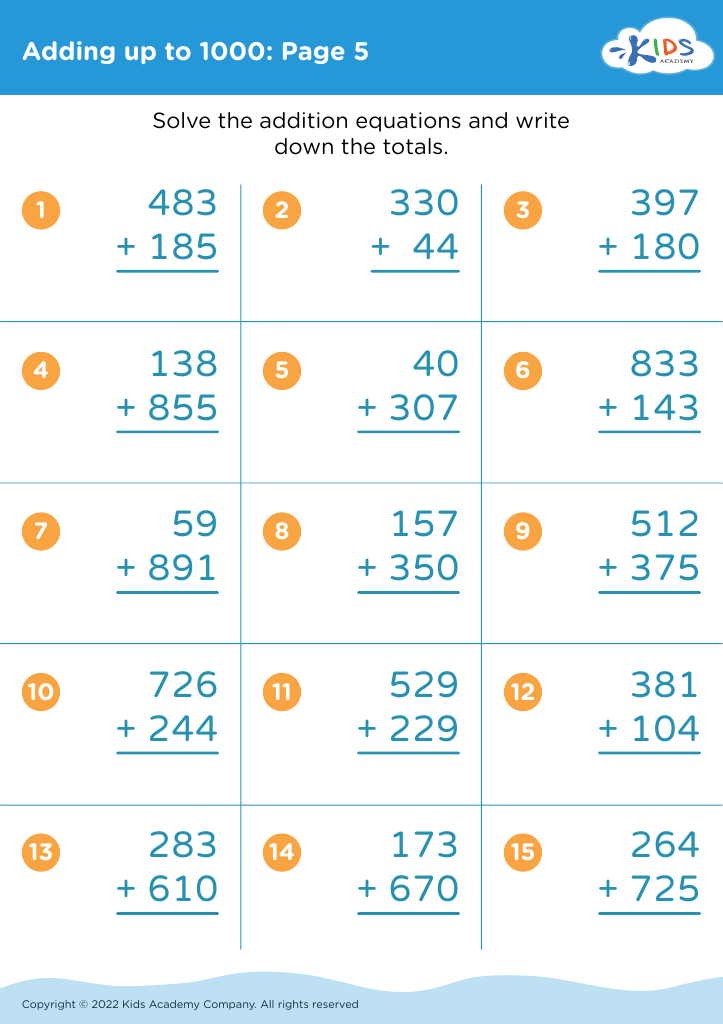
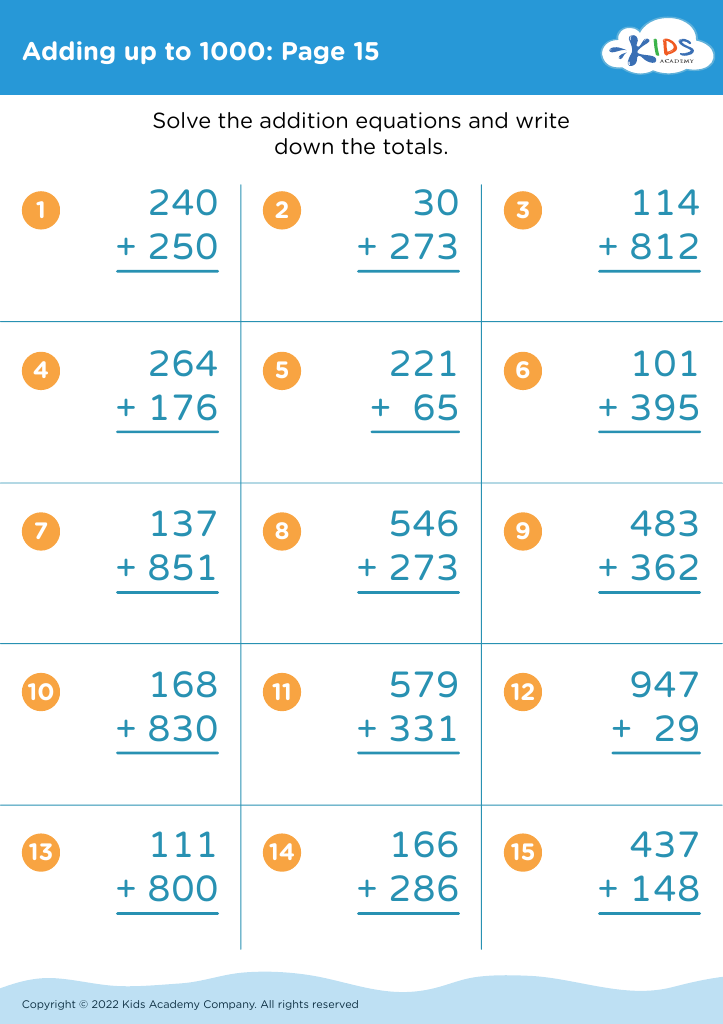
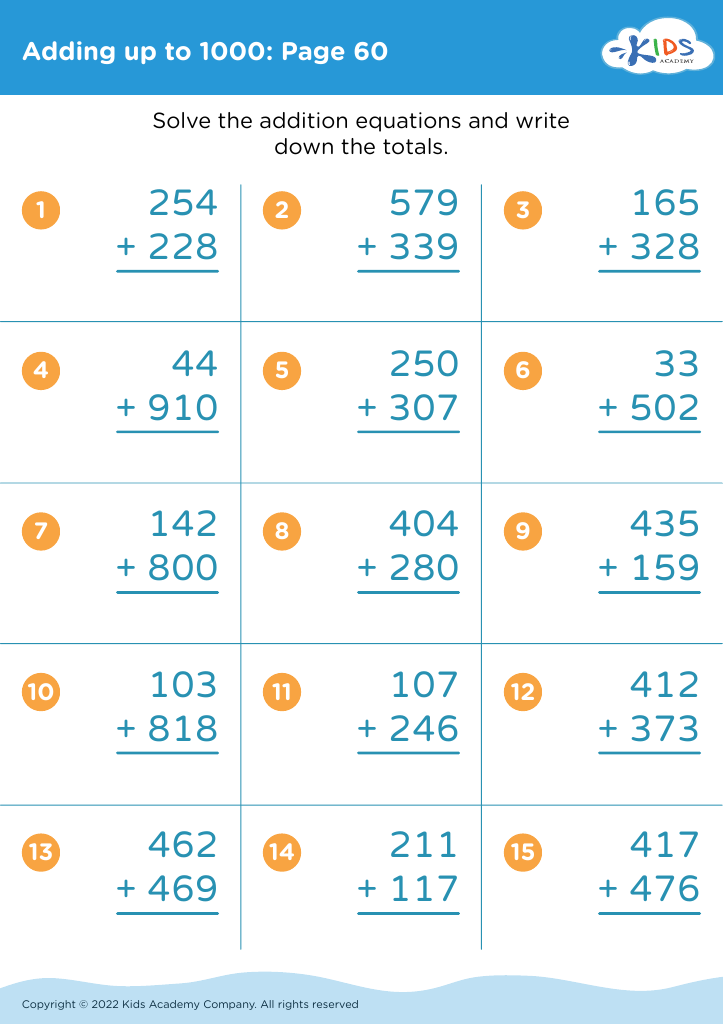
Discover a vibrant collection of Number Recognition worksheets designed for children ages 3-8 that focus on adding up to 1000! These engaging and interactive activities provide a fun way to help young learners develop their number recognition skills while mastering addition concepts. Each worksheet is tailored to cater to diverse learning styles, ensuring every child can grasp important math skills at their own pace. With colorful illustrations and easy-to-follow instructions, your little ones will enjoy practicing their math abilities in a playful manner. Download these printable worksheets today and watch their confidence in numbers soar! Perfect for home or classroom use!
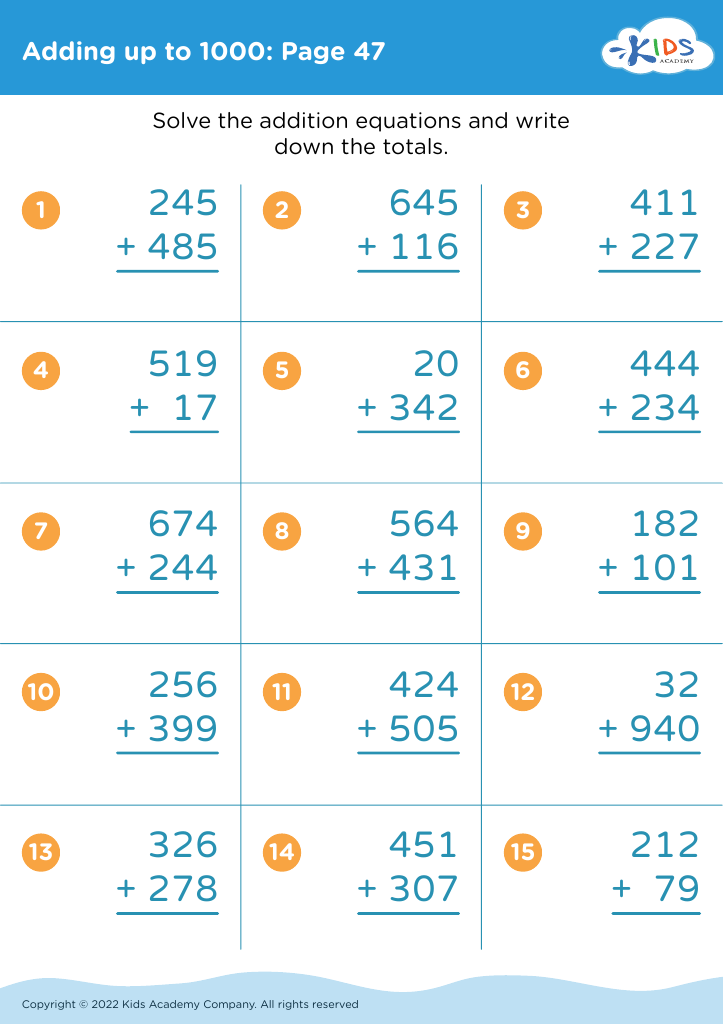
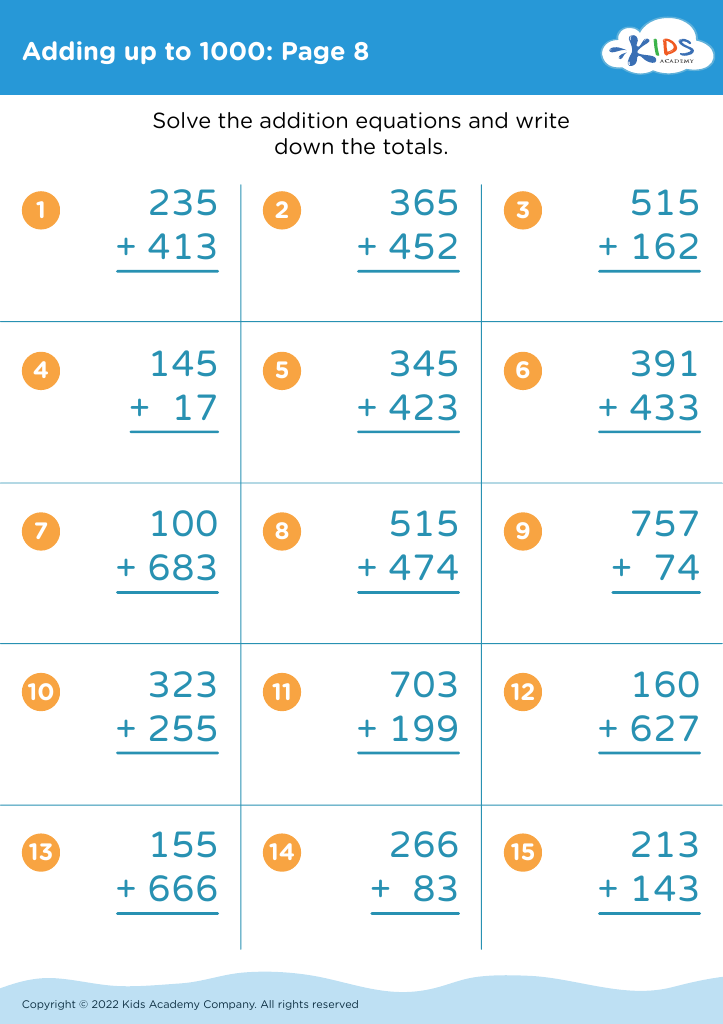
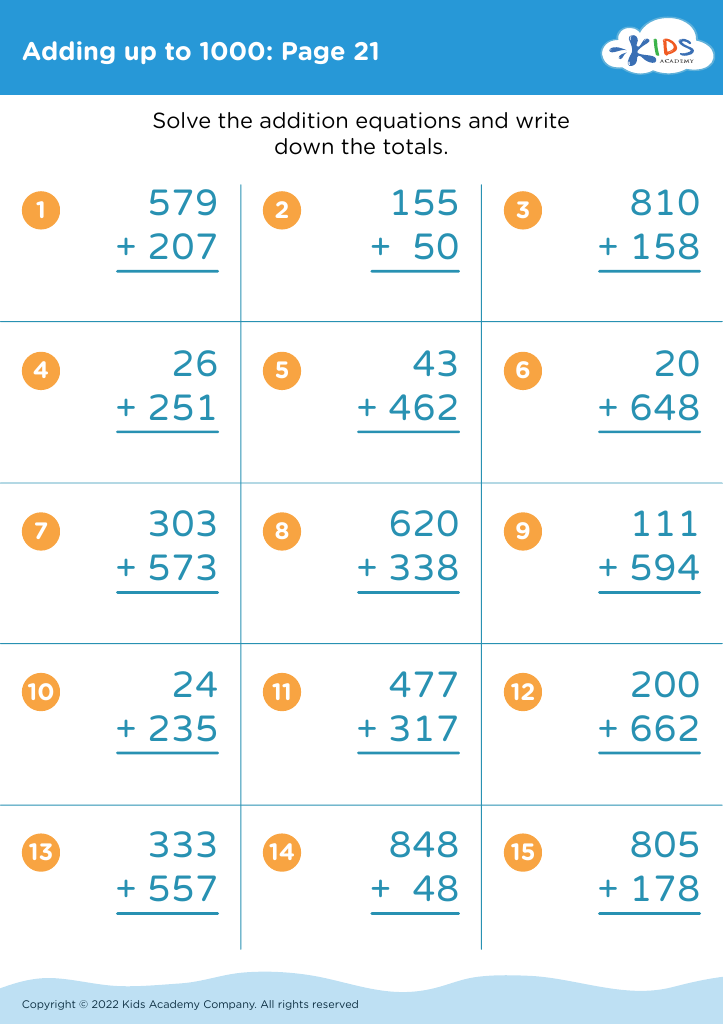
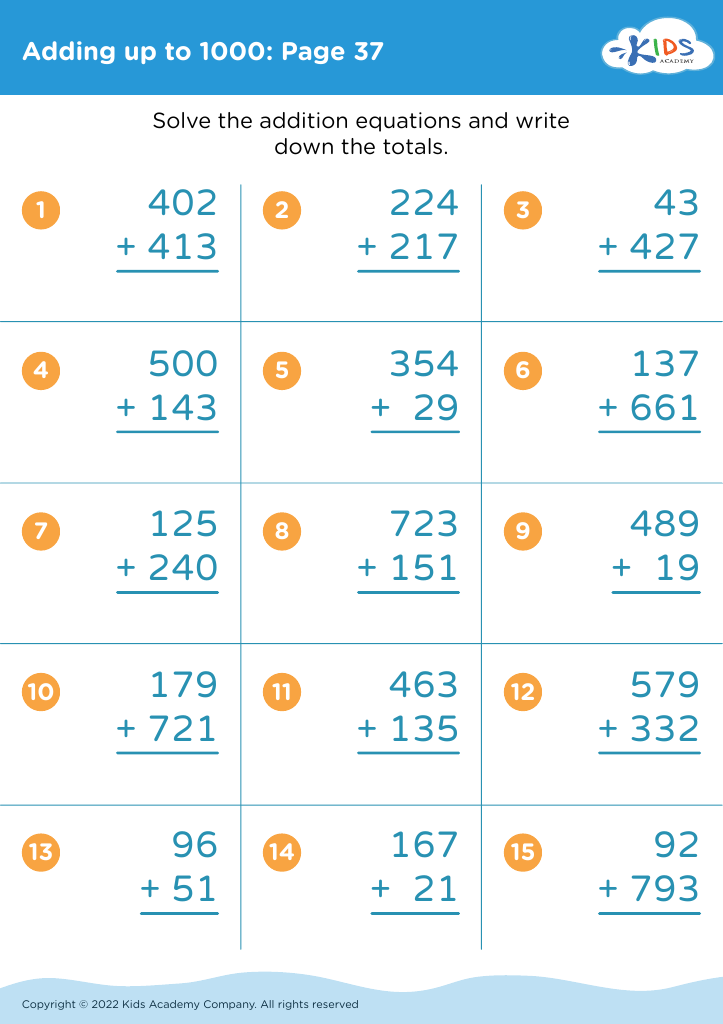
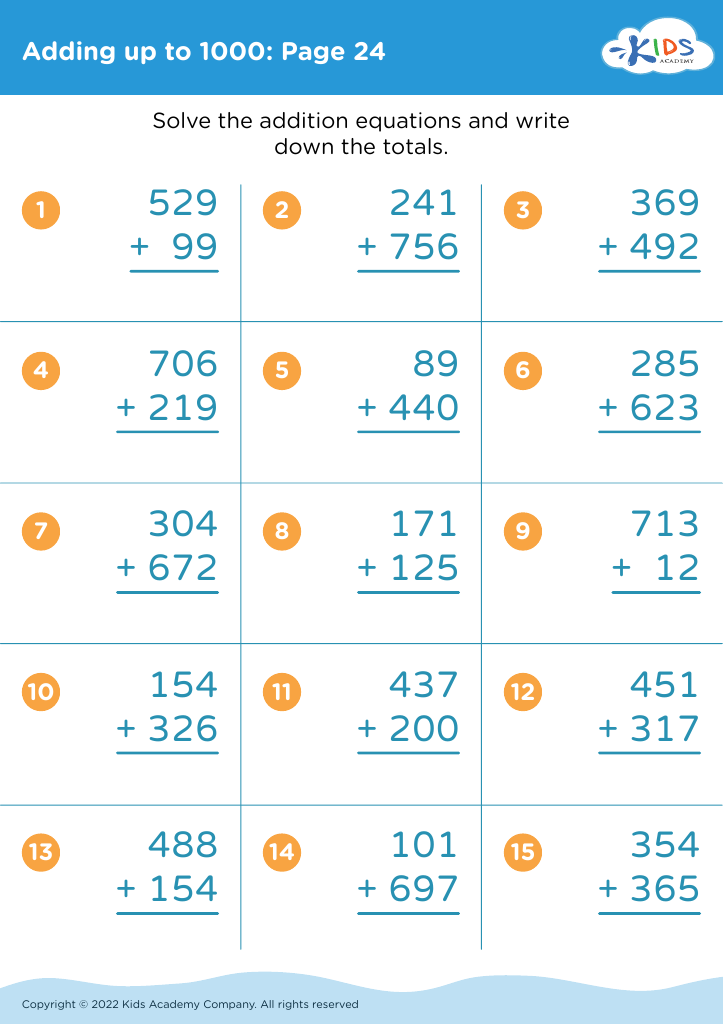
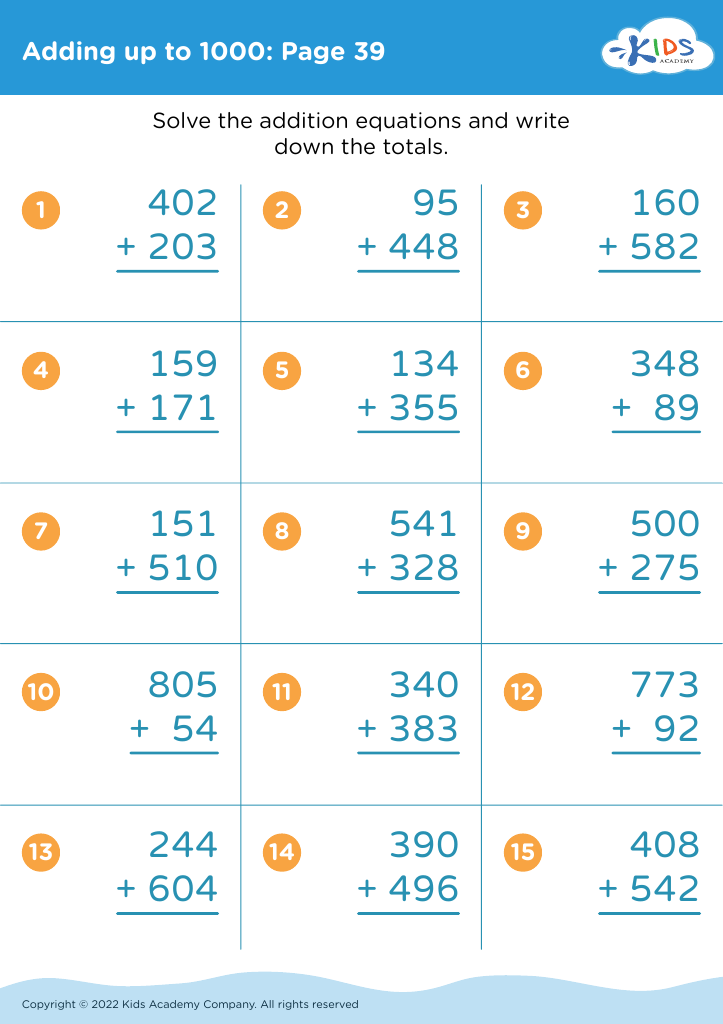
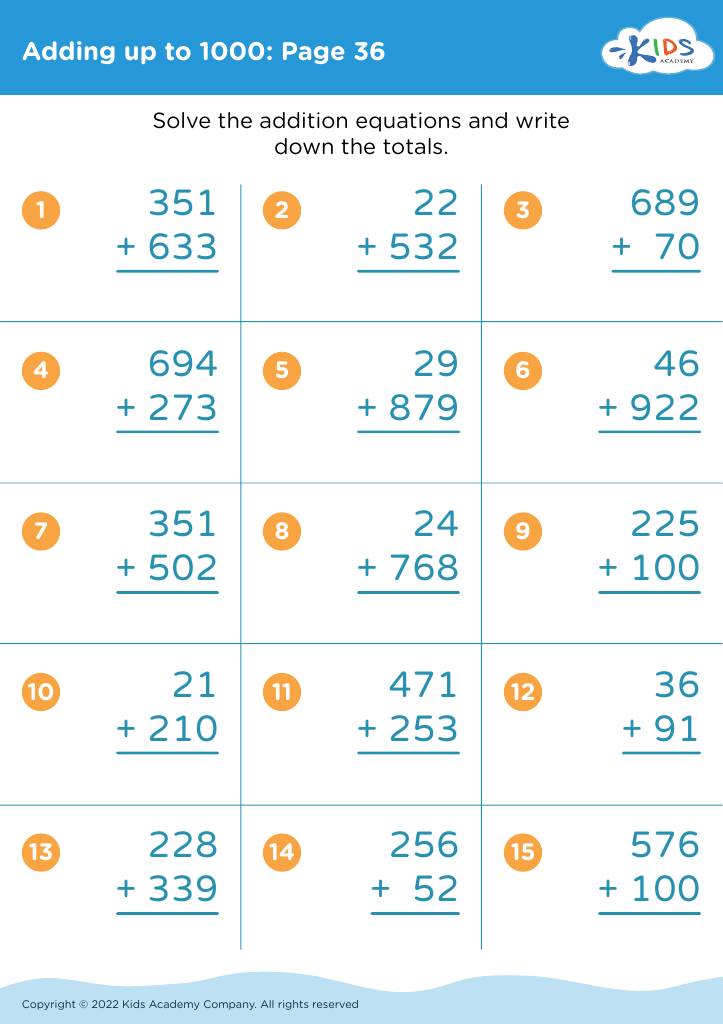
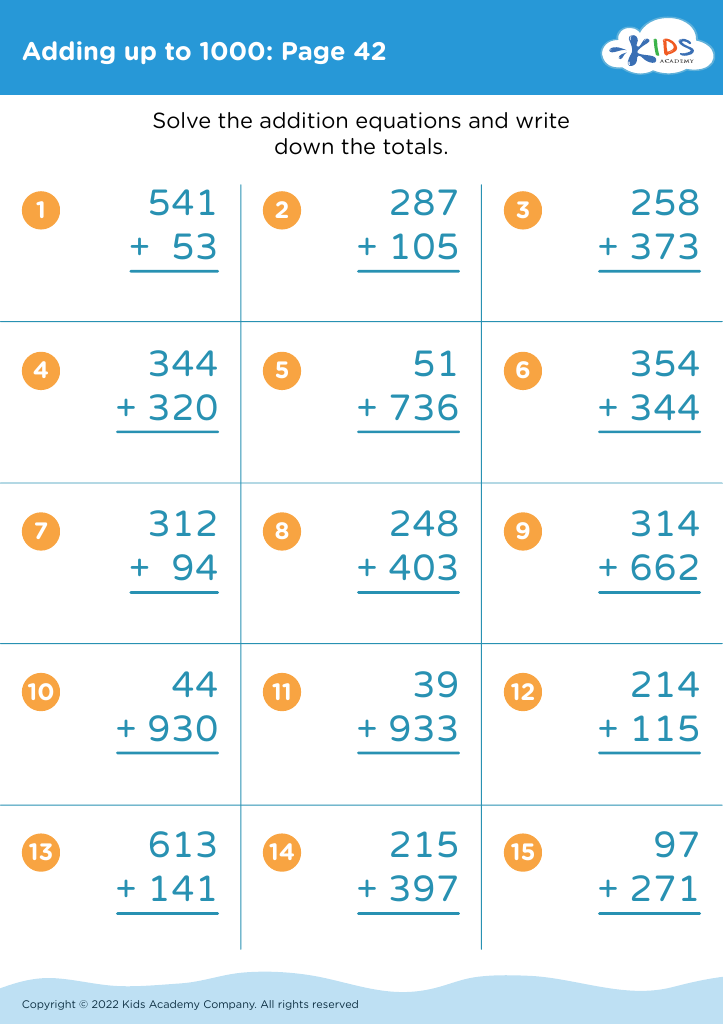
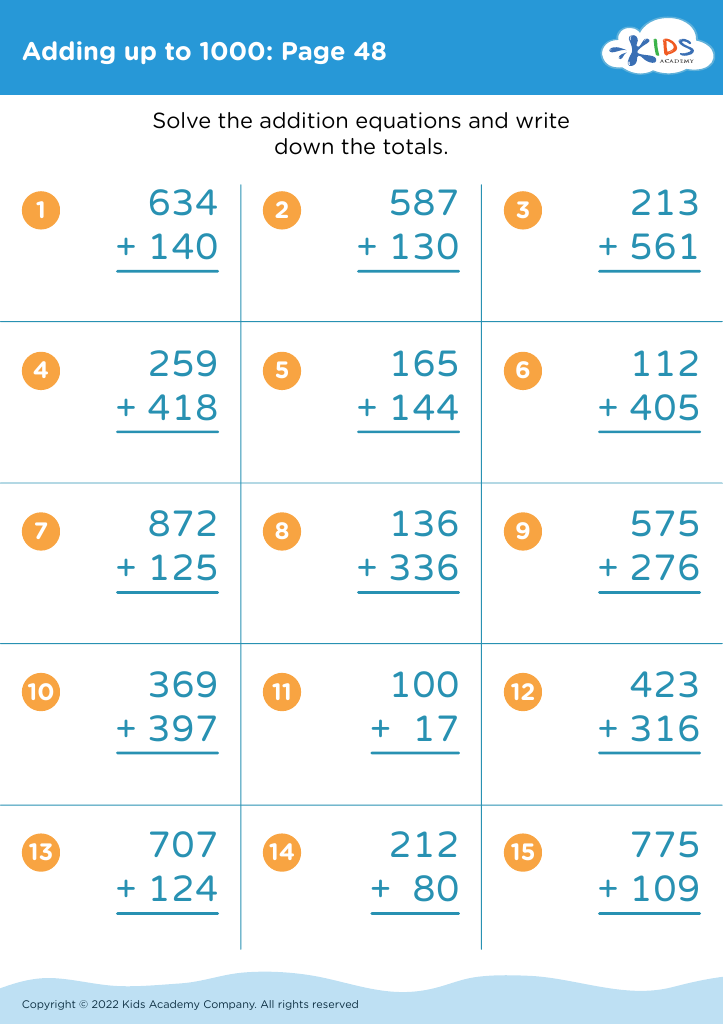


Number recognition is a fundamental skill that serves as the foundation for mathematical understanding, particularly for children aged 3-8. Recognizing numbers and their values up to 1000 equips young learners with essential tools for countless daily tasks, from counting objects to managing money. For parents and teachers, fostering strong number recognition can significantly enhance children's confidence and interest in math, setting the stage for future academic success.
At this age, children experience rapid cognitive development, making it a pivotal time to introduce and reinforce number concepts. Engaging activities that focus on number recognition not only make learning enjoyable but also encourage critical thinking, problem-solving, and fine motor skills. Moreover, as numbers are intertwined with everyday experiences, recognizing them can help children navigate the world around them, from reading street signs to understanding time.
Furthermore, early math skills are crucial predictors of later academic achievement, and strong number recognition can help prevent math anxiety, fostering a positive attitude towards learning. Overall, investing time into helping children develop number recognition skills enhances their educational experience and increases their readiness for more complex mathematical concepts as they progress in school. Thus, parents and teachers should prioritize this foundational learning during early childhood.