Understand fractions Adding up to 1000 Misc Worksheets for Ages 3-8
3 filtered results
-
From - To
Welcome to our "Understand Fractions" section for ages 3-8! Designed to broaden young learners' mathematical horizons, these engaging worksheets focus on fractions in relatable, fun ways. Kids will explore basic fraction concepts through colorful visuals and hands-on activities, making learning enjoyable and effective. Our materials cater to different skill levels, ensuring that each child builds confidence in understanding how fractions fit within the bigger number landscape, including adding up to 1000. Perfect for classroom settings or at-home learning, these worksheets provide the foundational skills necessary for future math success. Join us in fostering a love for learning fractions today!


Understanding fractions is a foundational skill in math that significantly impacts a child's overall mathematical development. For children aged 3-8, grasping the concept of fractions lays the groundwork for more advanced mathematical operations later on, including addition and subtraction involving whole numbers and fractions. This foundational understanding promotes critical thinking and problem-solving abilities, essential skills in all areas of learning.
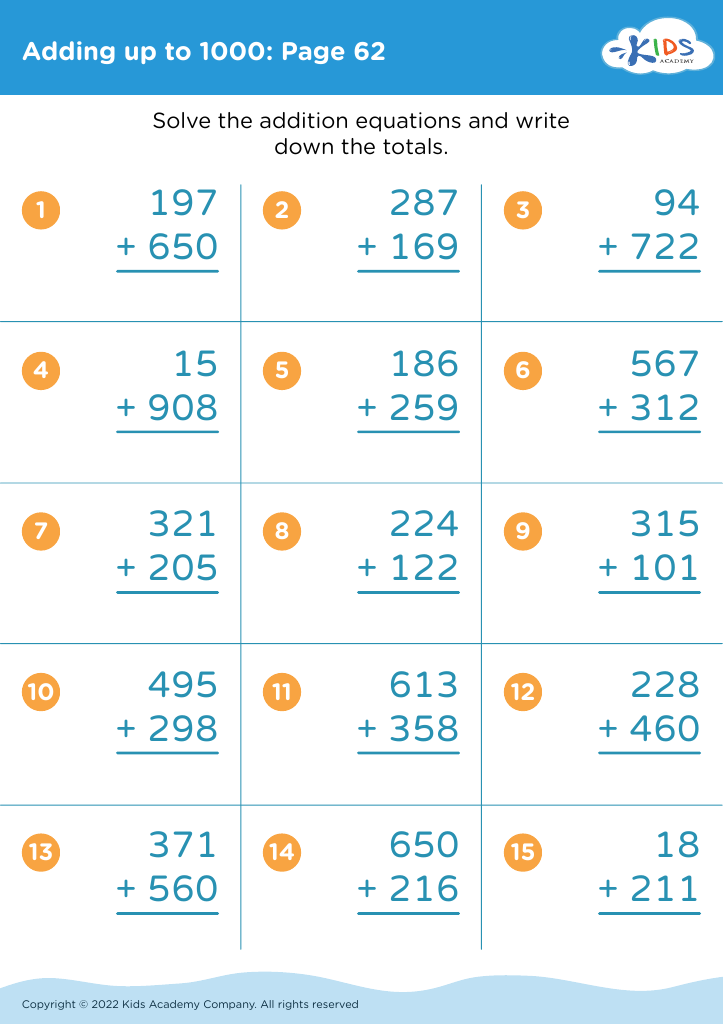
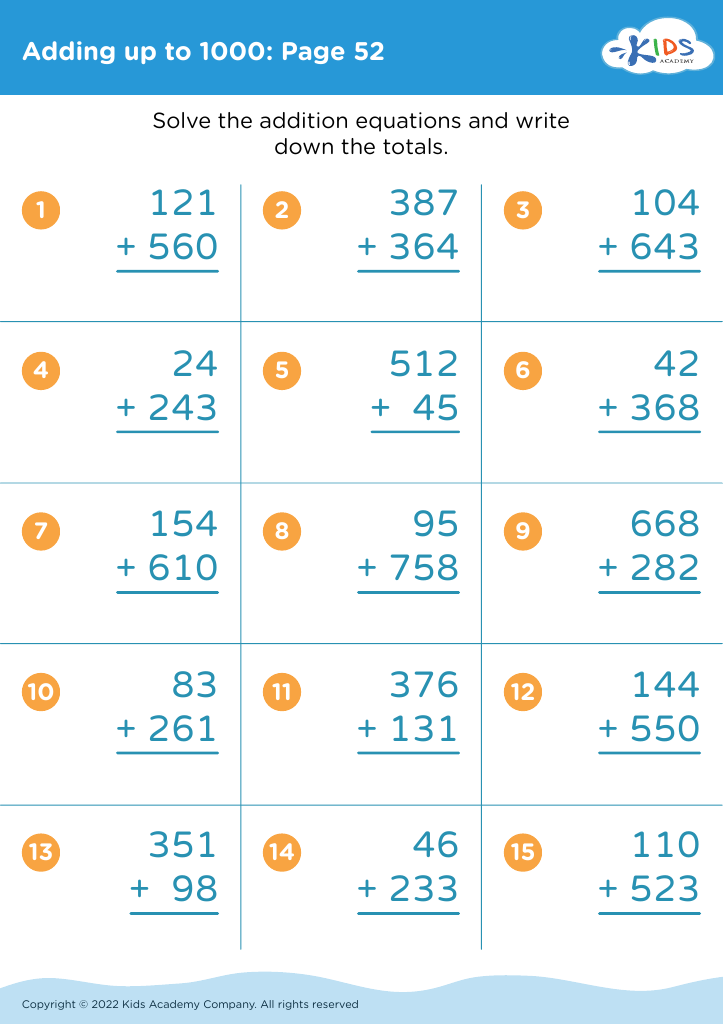
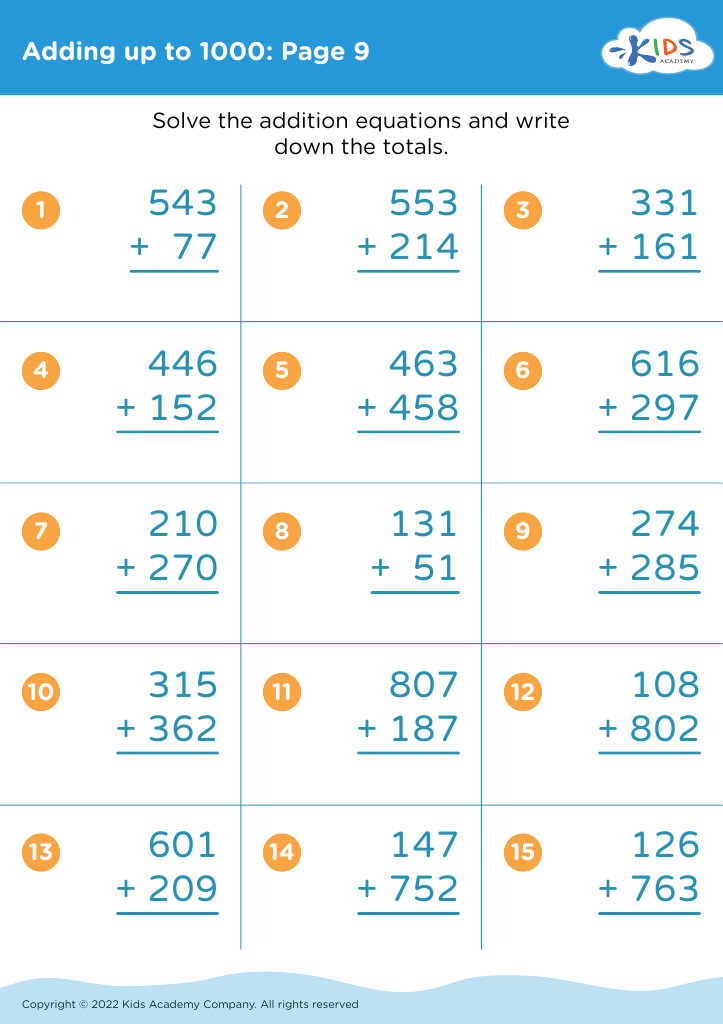
Adding up to 1000 introduces children to larger number concepts, enhancing their numeracy skills and confidence in handling numbers. This builds a solid base for more complex mathematical operations, such as multiplication and division, which they will encounter in higher education. Moreover, by introducing these concepts through engaging, age-appropriate activities, teachers and parents can foster a love for mathematics.
Furthermore, an understanding of fractions helps children relate mathematical concepts to real-world experiences, such as cooking or sharing, making math feel relevant and practical. By focusing on these concepts early, educators and parents can ensure children develop a positive attitude toward math, reducing anxiety and improving performance later on. Nurturing these skills at a young age is vital—equipping children with the tools they need for future academic success.