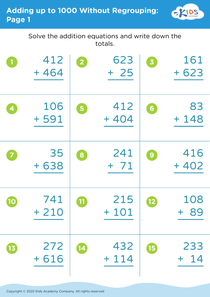
Recognizing Patterns Adding up to 1000 with Regrouping Worksheets for Ages 3-8
4 filtered results
-
From - To
Explore our "Recognizing Patterns Adding up to 1000 with Regrouping Worksheets," specifically designed for children ages 3-8. These engaging worksheets introduce young learners to key mathematical concepts while enhancing their pattern recognition skills. By combining visual elements and hands-on activities, students will develop a deeper understanding of numbers and regrouping. Our thoughtfully crafted exercises not only motivate but also build confidence in early math skills, setting a strong foundation for future learning. Perfect for classroom or home use, these worksheets make math both fun and accessible. Start your child's journey to mastering addition and discover the joy of learning today!
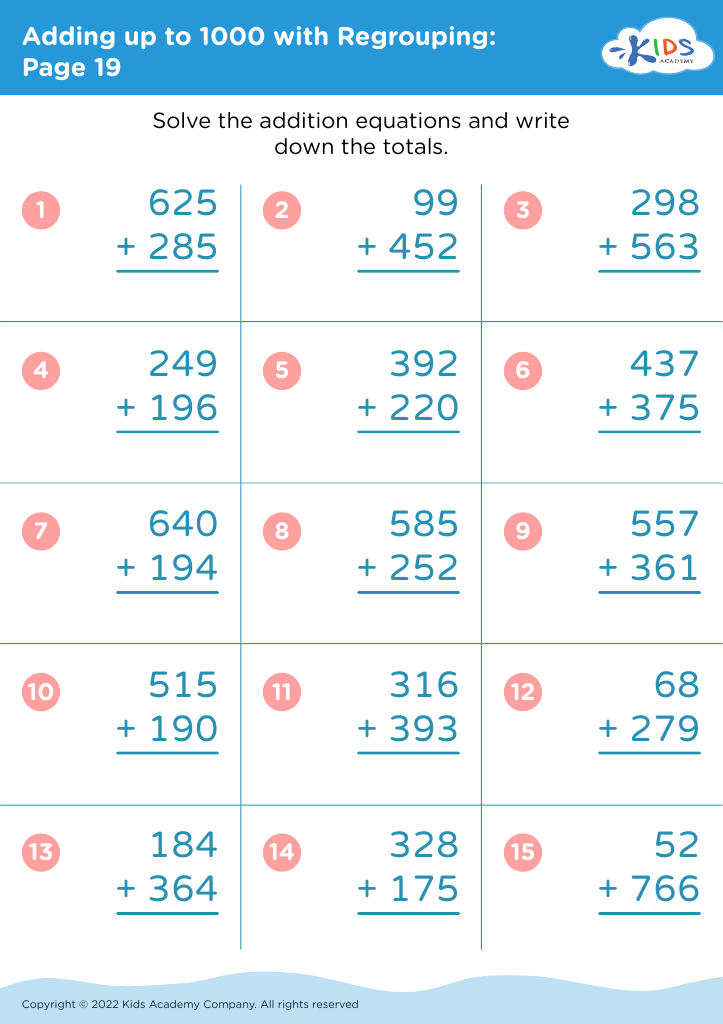
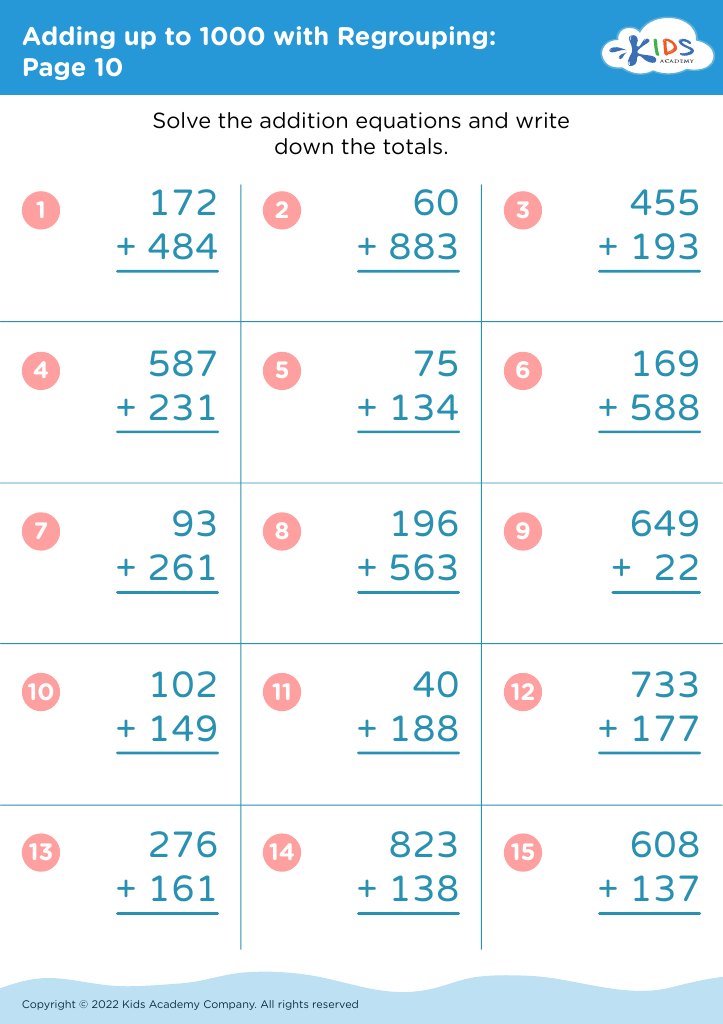
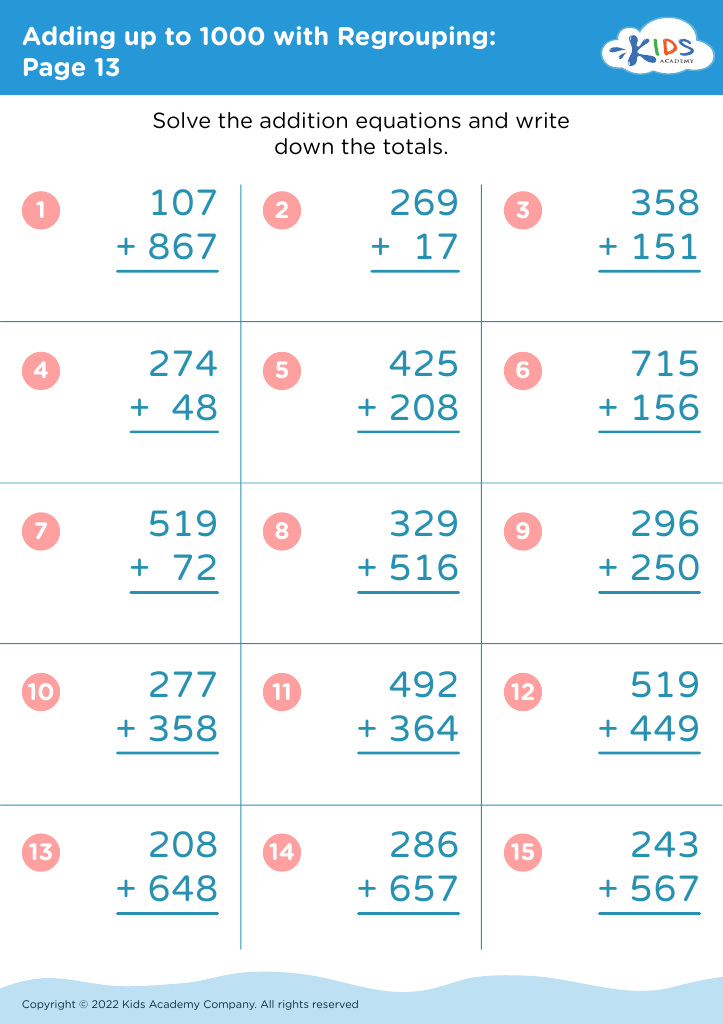
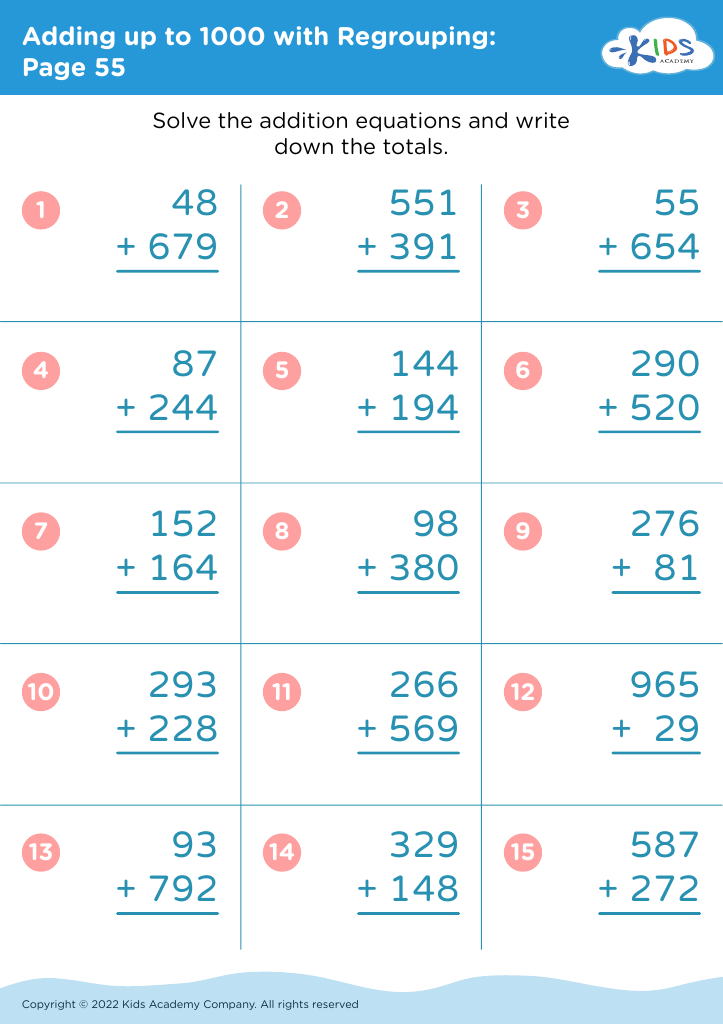


Recognizing patterns and mastering the concept of adding up to 1,000 with regrouping is foundational for young learners aged 3-8. This skill not only lays the groundwork for higher-level math concepts but also enhances critical thinking and problem-solving abilities.
Understanding patterns helps children make connections between numbers, which is essential for grasping the concept of place value, vital for addition and subtraction. Learning to regroup teaches them how to handle larger numbers and provides a strategy for simplifying complex problems. This not only boosts their confidence but also fosters a positive attitude towards math.
Furthermore, these skills support literacy in mathematics, where recognition of patterns leads to improved organization and reasoning within their thought processes. As children move forward in their education, the ability to quickly identify patterns and accurately perform regrouping will serve them in various subjects, encouraging a lifelong appreciation for mathematics.
For parents and teachers, focusing on these skills can lead to improved academic performance and a more profound understanding of math as a language. By nurturing these abilities early on, we equip children with tools not just for math tests, but for real-world problem-solving as well.