Recognizing shapes Adding up to 1000 with Regrouping Worksheets for Ages 3-8
4 filtered results
-
From - To
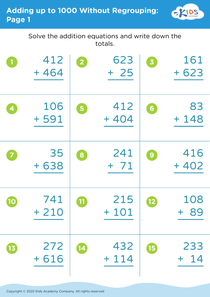
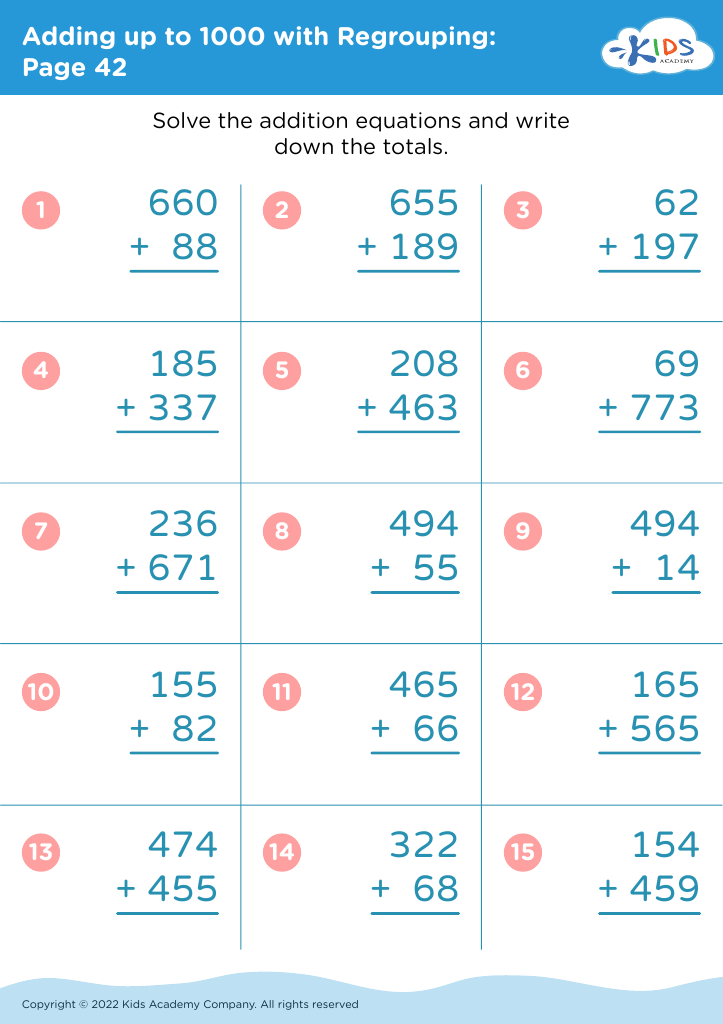
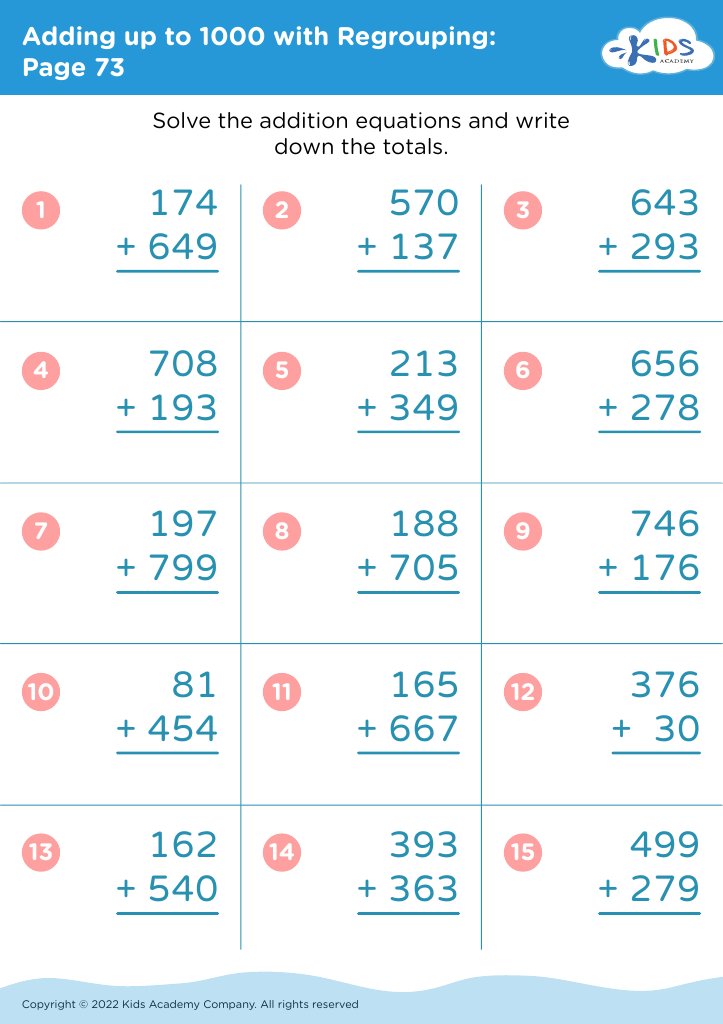
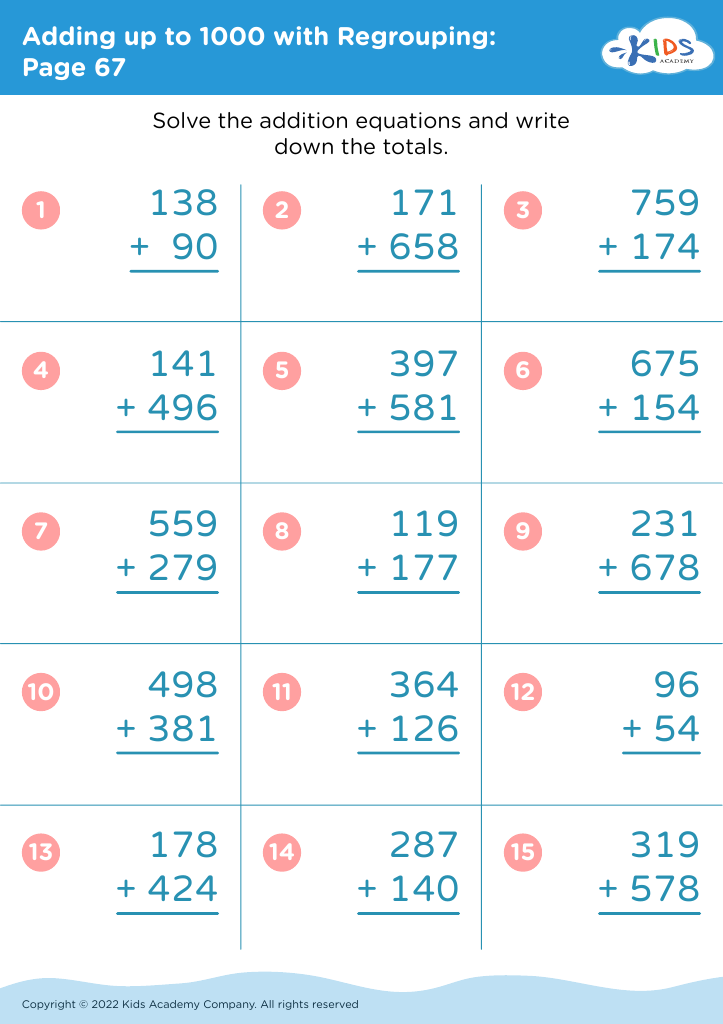
Prepare your kids for successful math experiences with our "Recognizing Shapes Adding up to 1000 with Regrouping Worksheets for Ages 3-8." Perfectly designed for young learners, these engaging worksheets teach basic geometry by recognizing shapes, then swiftly guide them through the more challenging task of adding up to 1000 with regrouping. By integrating visual and numerical skills, our worksheets promote critical thinking and problem-solving abilities. Ideal for building foundational math skills, our printables are fun, educational, and tailored to match the learning pace of children aged 3-8. Download now and start your child’s journey towards math brilliance!
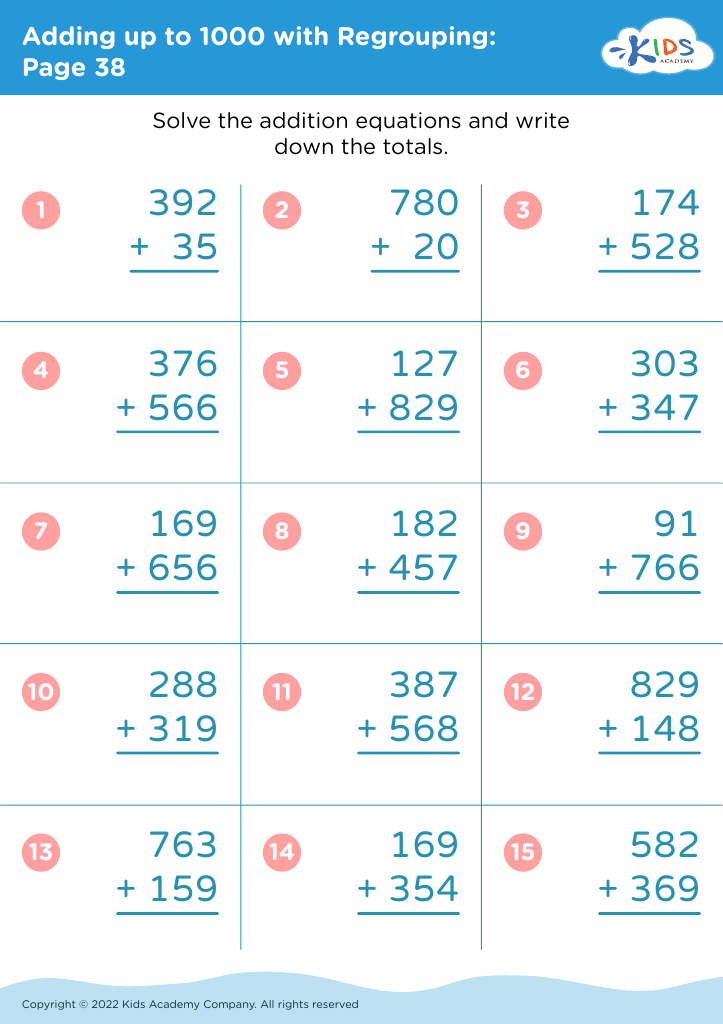


Recognizing shapes and adding up to 1000 with regrouping are foundational skills for young learners between the ages of 3-8. These skills play a crucial role in cognitive and academic development.
Shape recognition helps children understand world around them. By identifying shapes like circles, squares, and triangles, kids develop spatial awareness. This awareness is critical for tasks ranging from reading and writing to navigating spaces and recognizing patterns in math and science. Shape recognition also enhances visual perception and fine motor skills, which are essential for handwriting.
Adding up to 1000 with regrouping goes beyond basic arithmetic; it introduces children to more complex mathematical concepts. Proficiency in addition and regrouping is fundamental for accurate calculation and problem-solving. These skills foster logical thinking, memory enhancement, and the ability to handle multi-step problems. Moreover, understanding large numbers and how to manipulate them builds a strong number sense, essential for future math success.
Tailoring these learning activities to early education sets the stage for advanced concepts. As children master shape recognition and basic arithmetic, they gain confidence, curiosity, and a love for learning. Parents and teachers should prioritize these skills to ensure robust academic foundations, setting kids on a course toward lifelong learning and achievement.