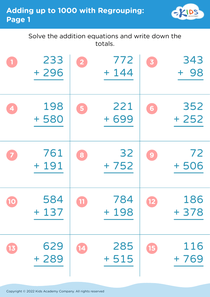
Enhance comprehension Adding up to 1000 Without Regrouping Worksheets for Ages 3-8
4 filtered results
-
From - To
Unlock the potential of young learners with our "Enhance Comprehension Adding Up to 1000 Without Regrouping Worksheets" designed for ages 3 to 8. These engaging worksheets build foundational math skills while fostering comprehension and confidence in addition without regrouping. Children will explore simple, clear problems that encourage logical thinking and problem-solving. Each worksheet is crafted to be age-appropriate, supporting your child’s growth in a fun and interactive way. Ideal for classrooms or at-home learning, these resources make mastering addition enjoyable and exciting, setting a strong groundwork for future mathematical concepts. Start enhancing your child’s math skills today!
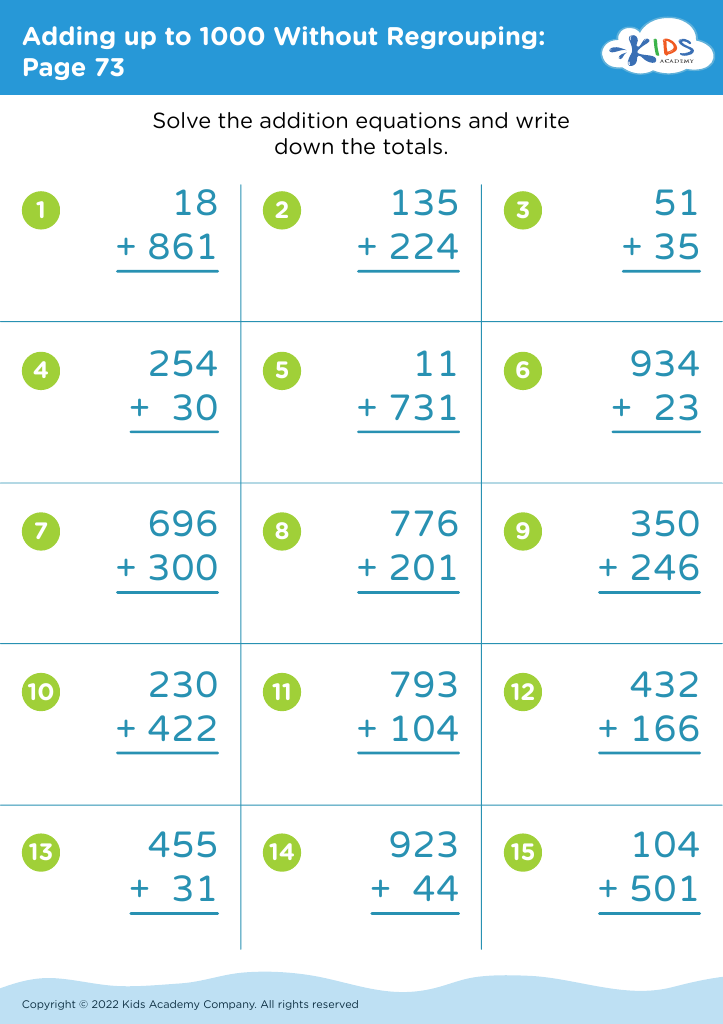
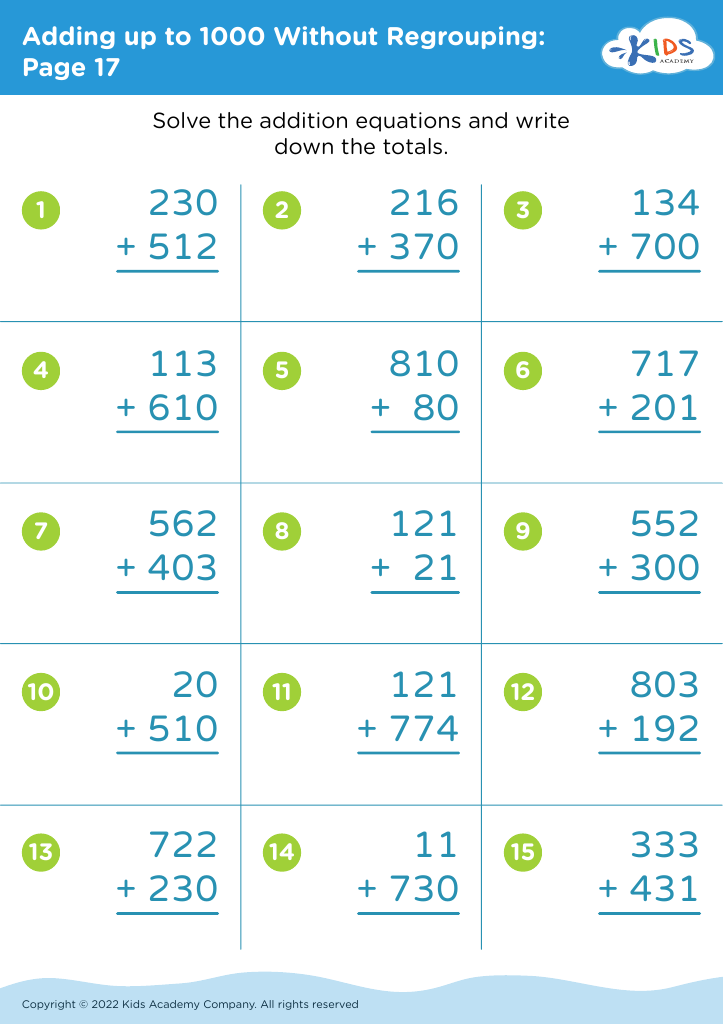
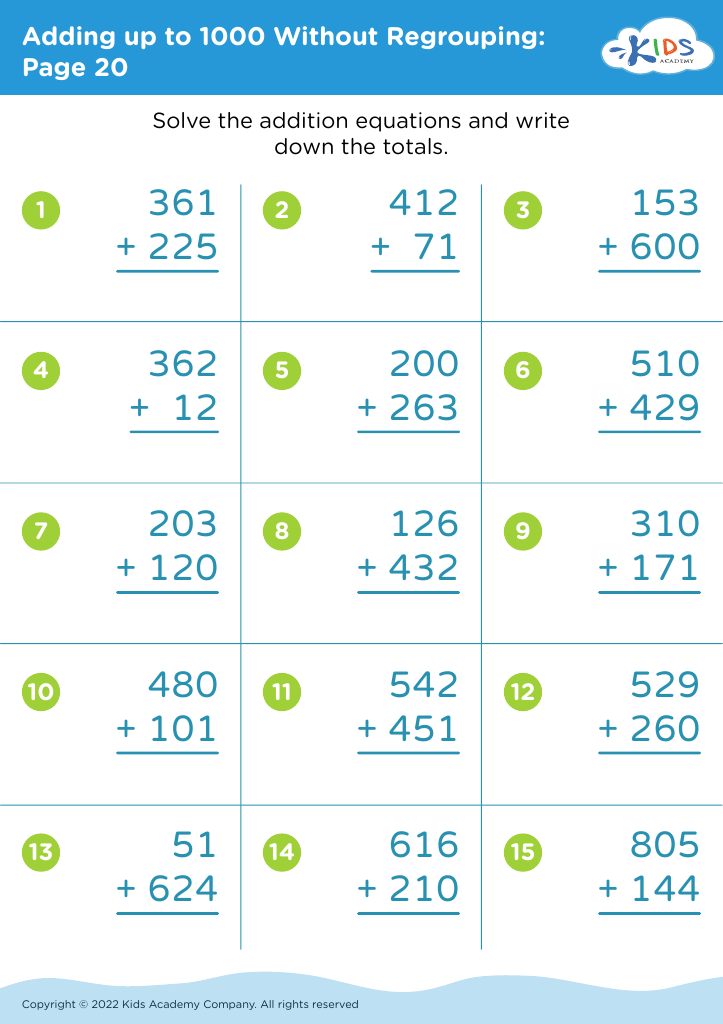
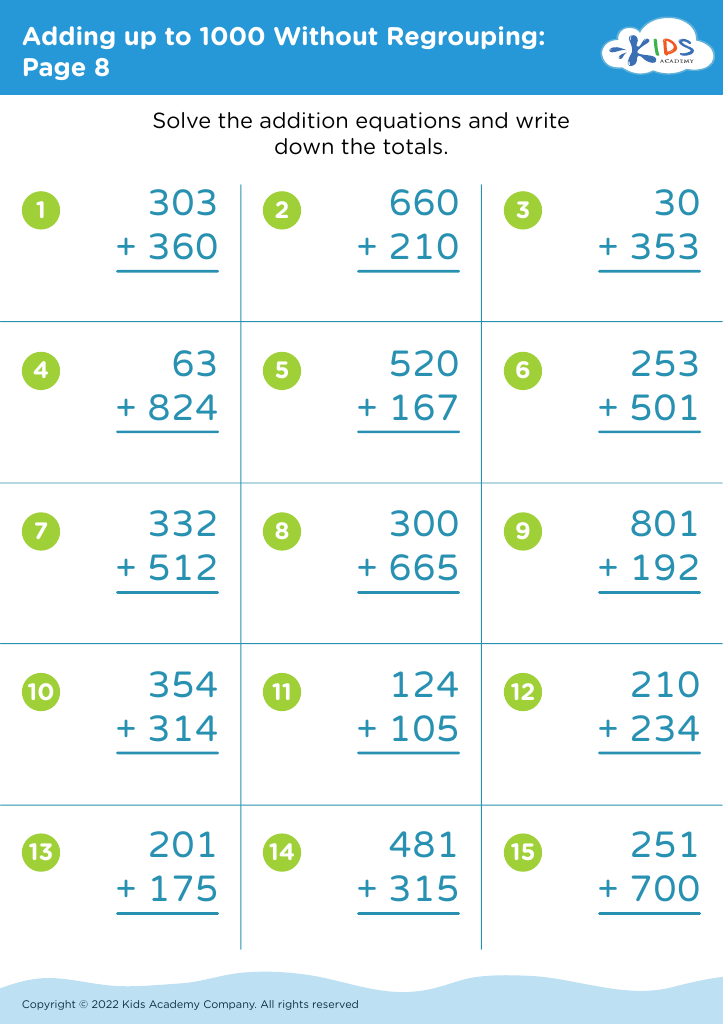


Enhancing comprehension in early math skills, particularly adding numbers up to 1000 without regrouping, is crucial for children aged 3-8. This foundational understanding fosters not only numerical fluency but also analytical thinking, problem-solving skills, and confidence in their mathematical abilities. As children explore addition concepts through engaging activities and real-life examples, they develop cognitive skills critical for future learning.
For parents and teachers, focusing on comprehension means creating a rich learning environment that stimulates curiosity and a love for learning. By emphasizing understanding over mere rote memorization, children grasp why addition works the way it does, enabling them to apply these concepts in varied contexts. This strong foundation supports more complex math concepts they'll encounter later, reducing anxiety and resistance toward math as they progress in their education.
Moreover, early experiences shape attitudes towards schooling and learning. When children feel successful in their mathematical journey, they are more likely to embrace challenges in other subjects, fostering a well-rounded educational experience. Overall, investing in comprehension improves not only math skills but also helps cultivate a positive mindset towards learning, empowering children to become independent thinkers and enthusiastic learners throughout their academic journey.