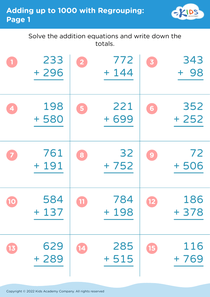
Improve counting skills Adding up to 1000 Without Regrouping Worksheets for Ages 3-8
4 filtered results
-
From - To
Keen to boost your child's counting skills? Our "Improve Counting Skills: Adding up to 1000 Without Regrouping Worksheets" provide engaging resources designed for children ages 3-8. These worksheets focus on building essential math capabilities by guiding young learners through addition problems without the complexity of regrouping. Fun and easy-to-follow exercises encourage mastery and confidence in counting and basic addition, making math enjoyable for your child. Perfect for home-schooling, classroom activities, or extra practice, these worksheets support foundational math skills with fun visuals and varied difficulty levels. Equip your child with the tools they need to succeed in math and beyond!
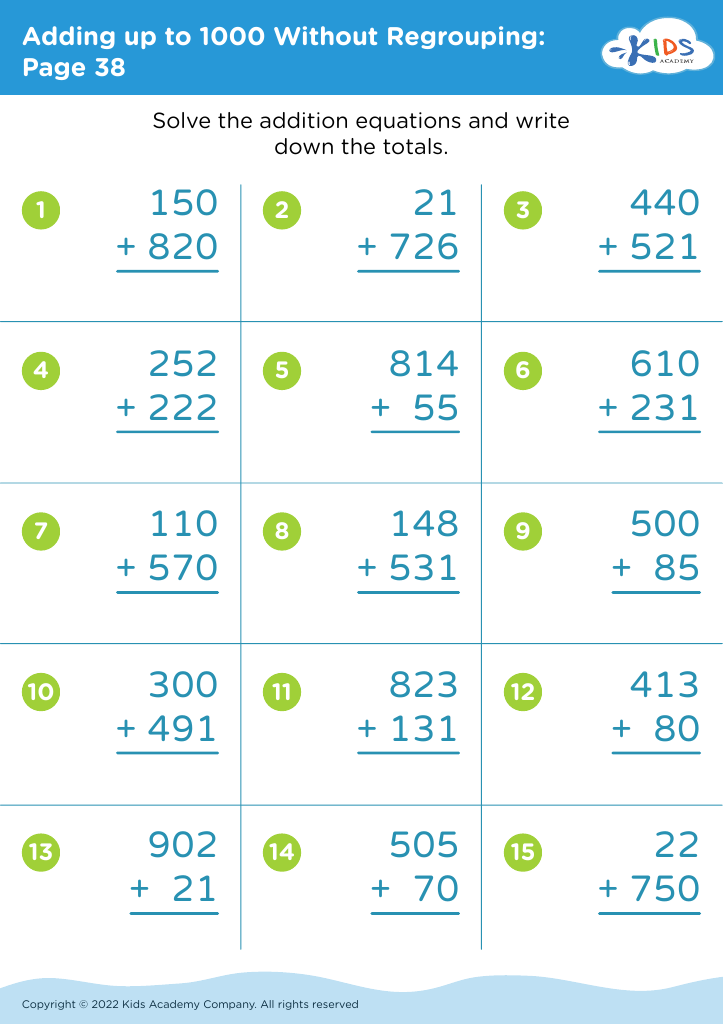
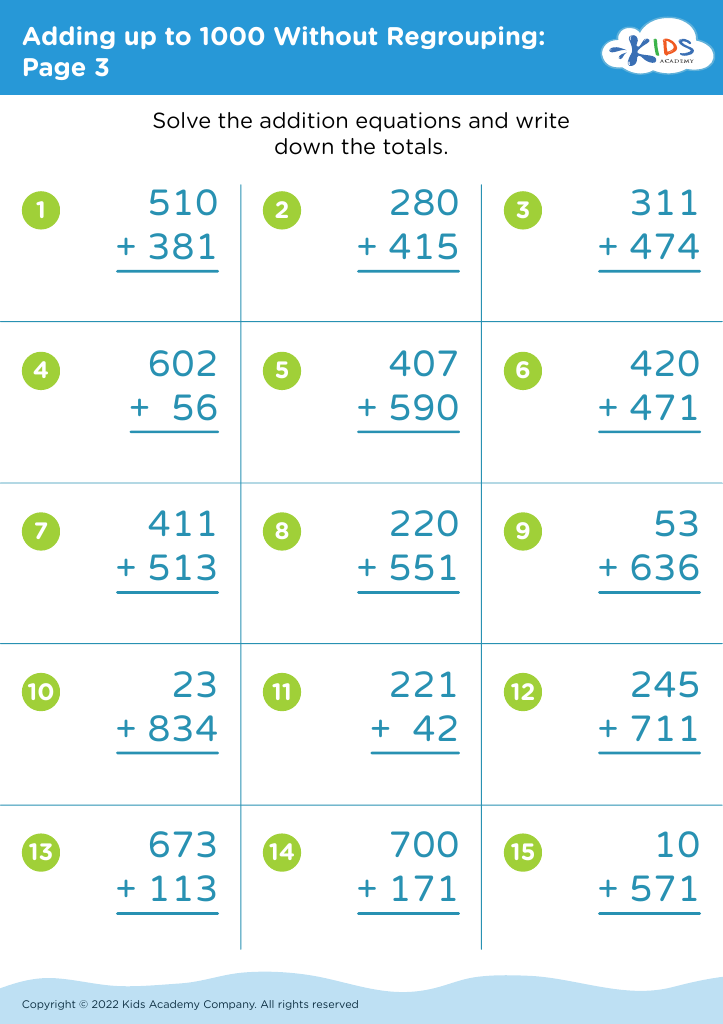
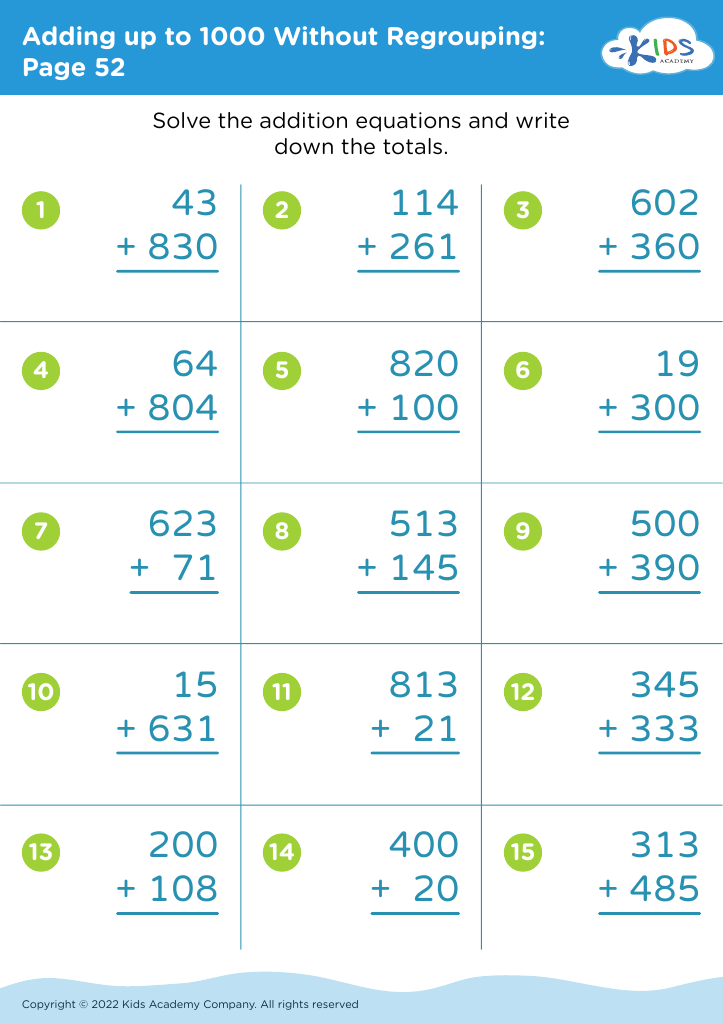
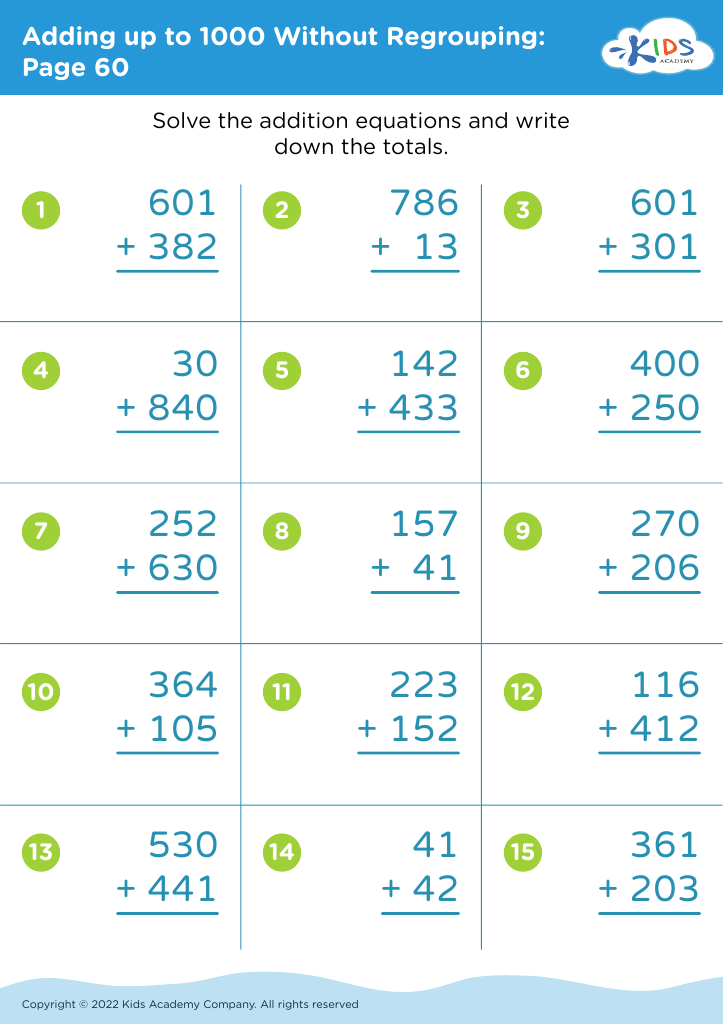


Developing counting skills, particularly in adding up to 1000 without regrouping, is crucial for children aged 3-8. During these formative years, children build foundational mathematical abilities that impact their later academic success. Mastery of basic counting helps foster confidence and enhances problem-solving skills.
Understanding how to add numbers without regrouping allows children to grasp the concept of place value better, which is the basis for future arithmetic operations, including addition, subtraction, multiplication, and division. This skill unpacks more complex math principles they will encounter in higher grades, ensuring they are well-equipped in their educational journey.
Moreover, counting skills extend beyond academics; they are vital in everyday life, teaching children about sequences, patterns, and organization. These competencies allow children to navigate real-world situations, such as managing time, finances, and even sharing resources.
For parents and teachers, focusing on improving counting skills means nurturing a child's overall cognitive development. Engaging children in fun, interactive activities that encourage counting builds a solid mathematical foundation and enhances their critical thinking and analytical skills, ultimately preparing them for a successful life as confident learners and problem solvers.