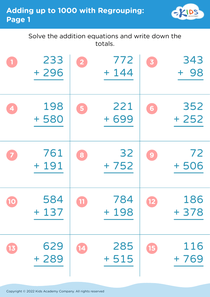
Understanding fractions Adding up to 1000 Without Regrouping Worksheets for Ages 3-8
13 filtered results
-
From - To
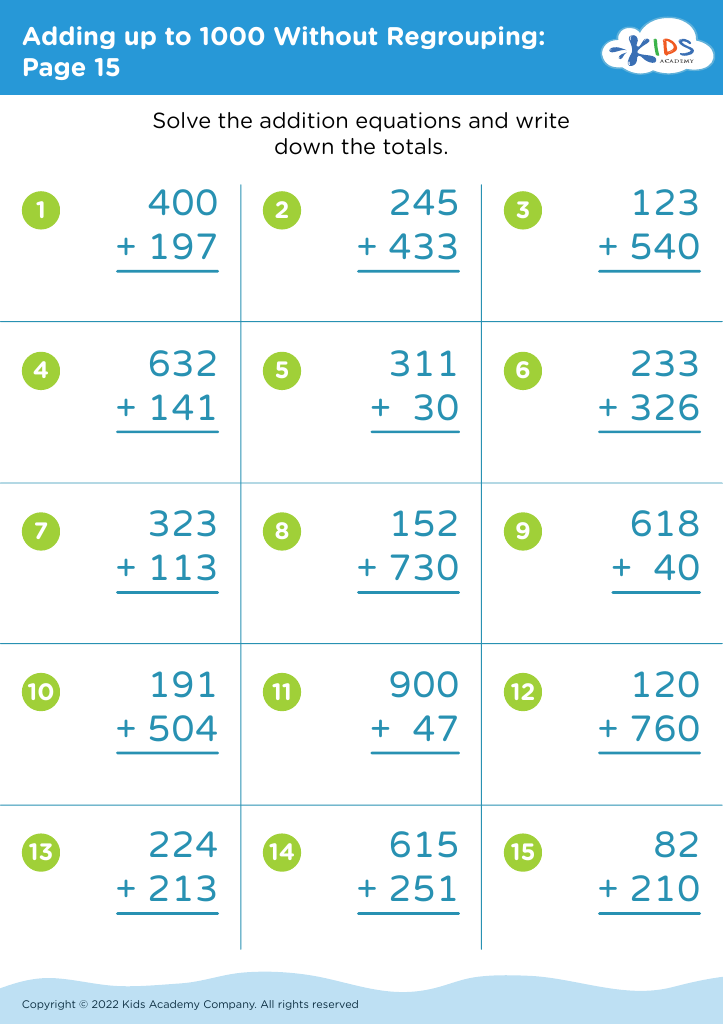
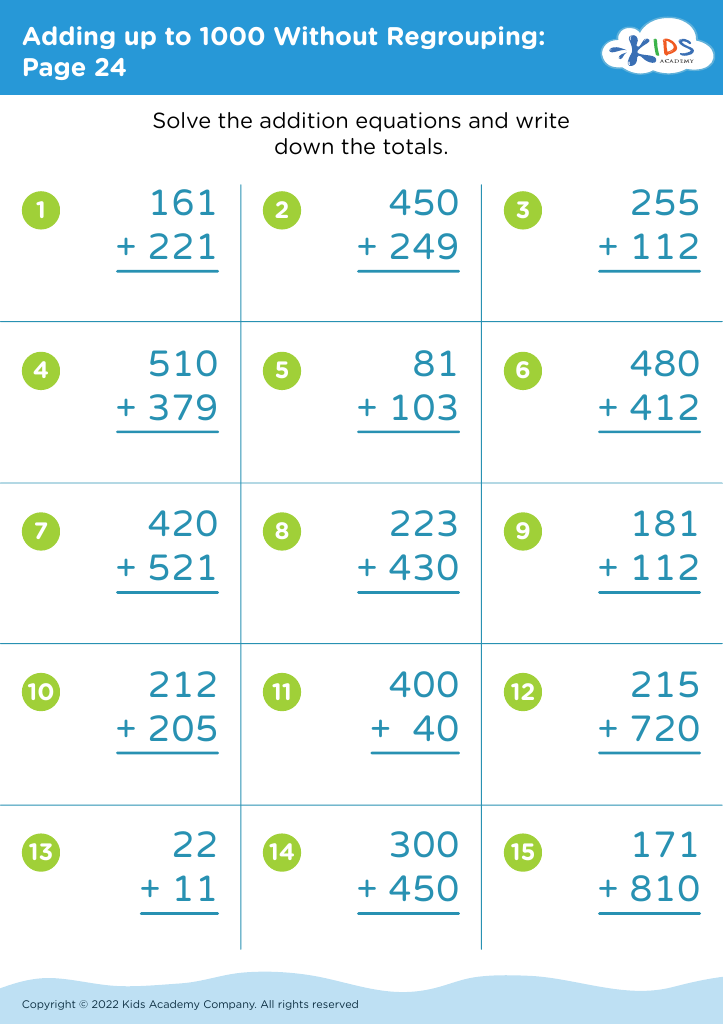
Discover our "Understanding Fractions: Adding Up to 1000 Without Regrouping Worksheets" designed for children aged 3-8! These engaging, interactive worksheets help young learners grasp fundamental fraction concepts while enhancing their addition skills. Ideal for classroom use or homework, each worksheet features colorful visuals and simple exercises that make learning fractions fun and approachable. Kids will practice adding fractions that total up to 1000, fostering confidence in their math abilities without the complexity of regrouping. Support your child's mathematical journey with resources that promote understanding, critical thinking, and creativity. Explore our printable worksheets today and watch your child's learning flourish!
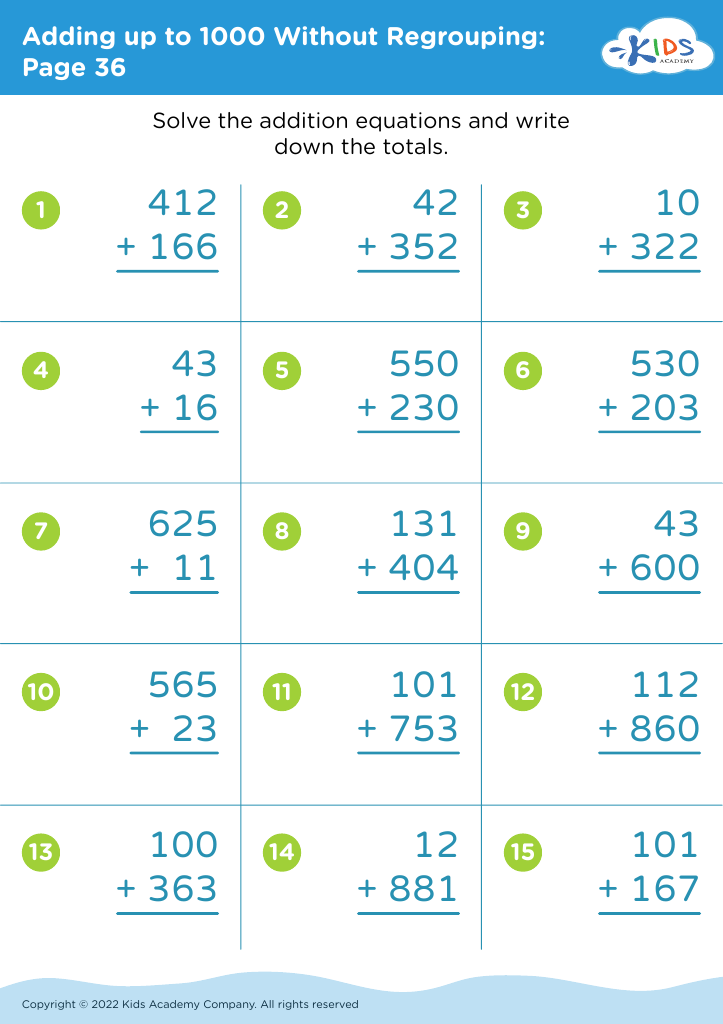
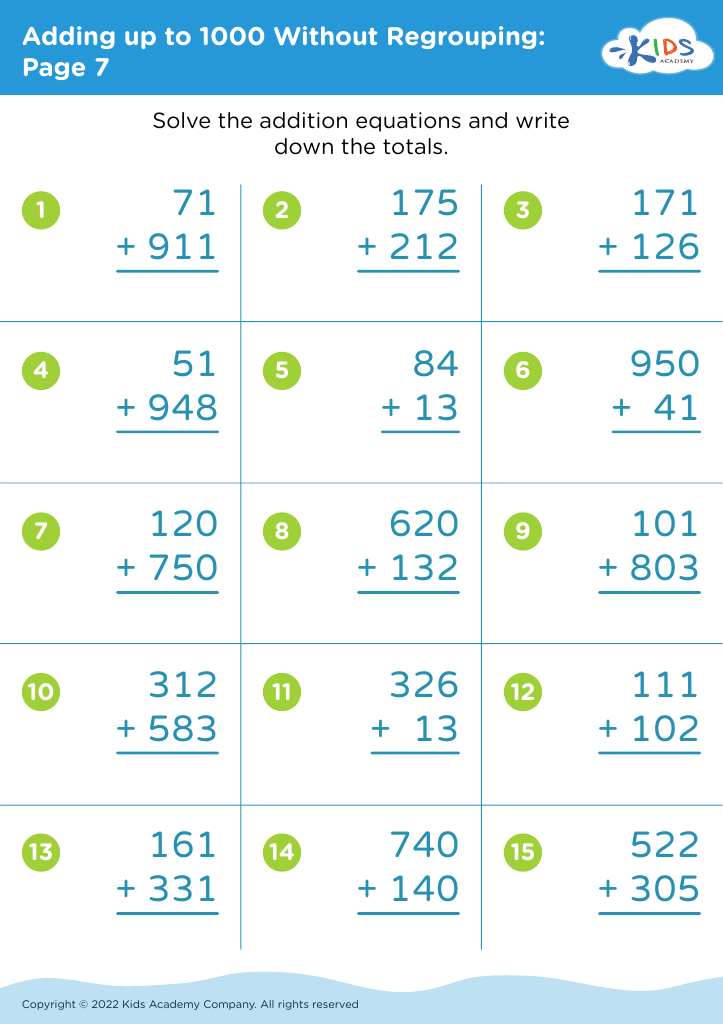
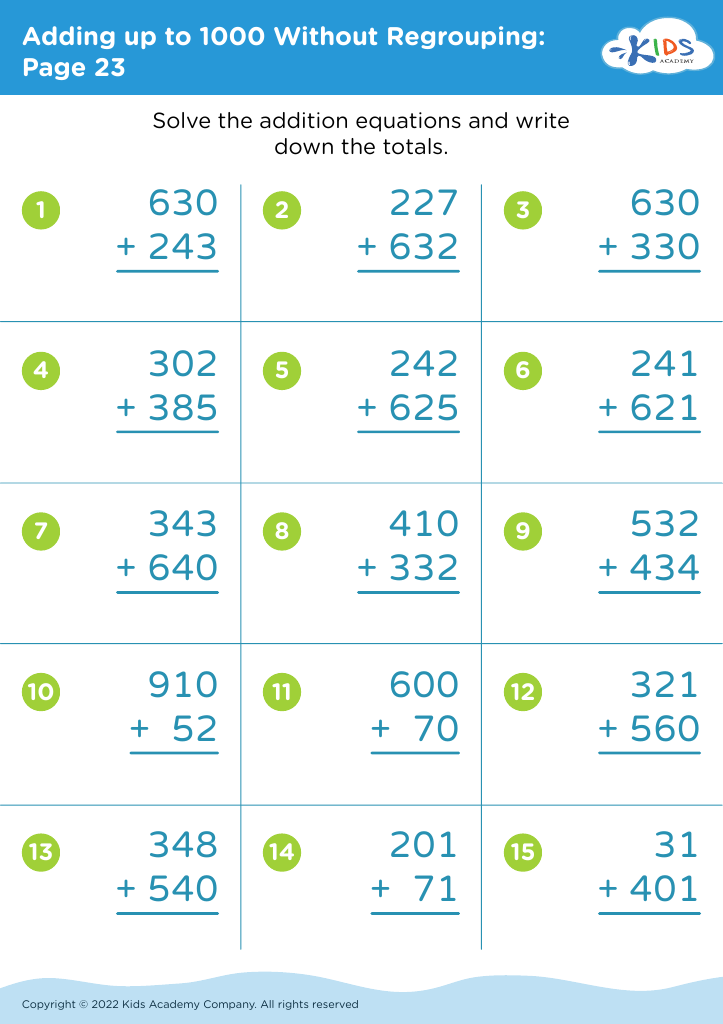
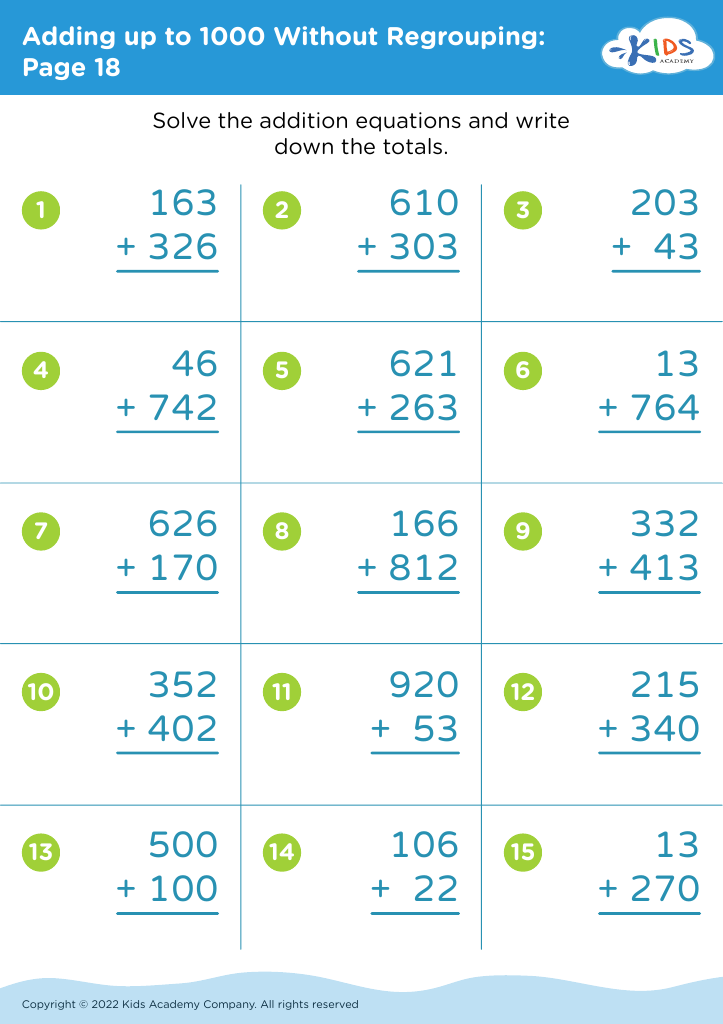
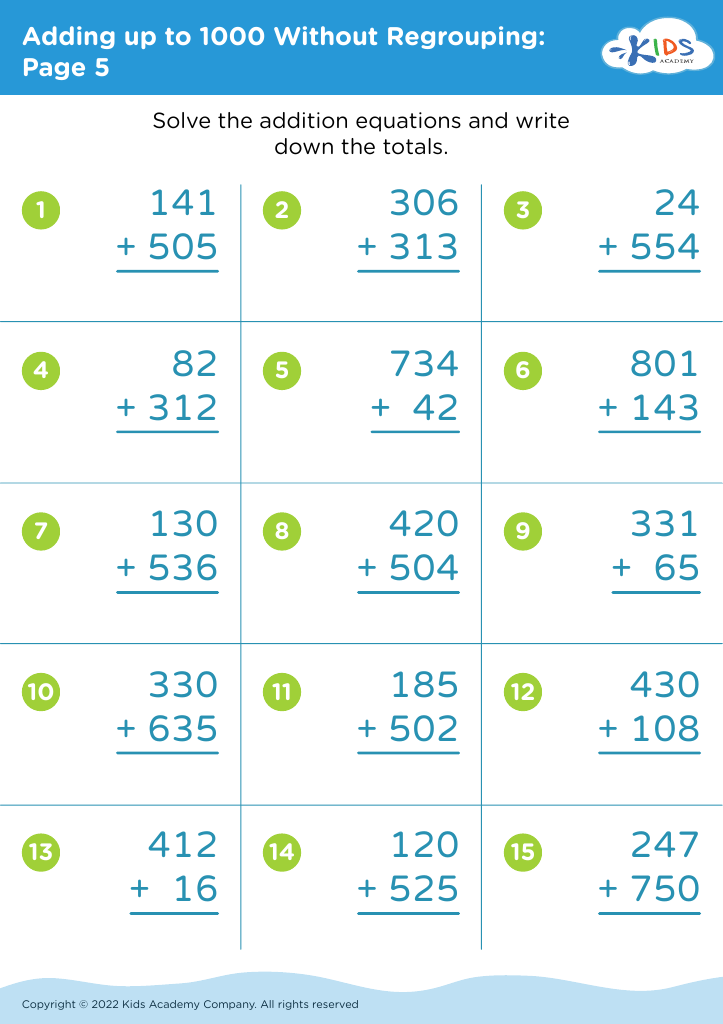
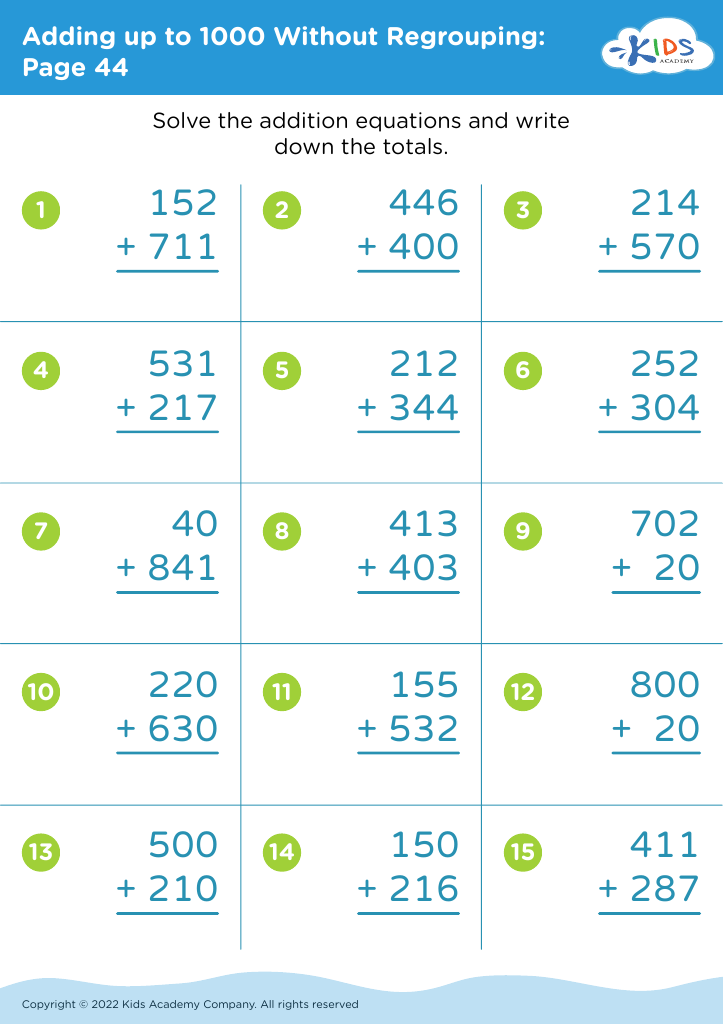
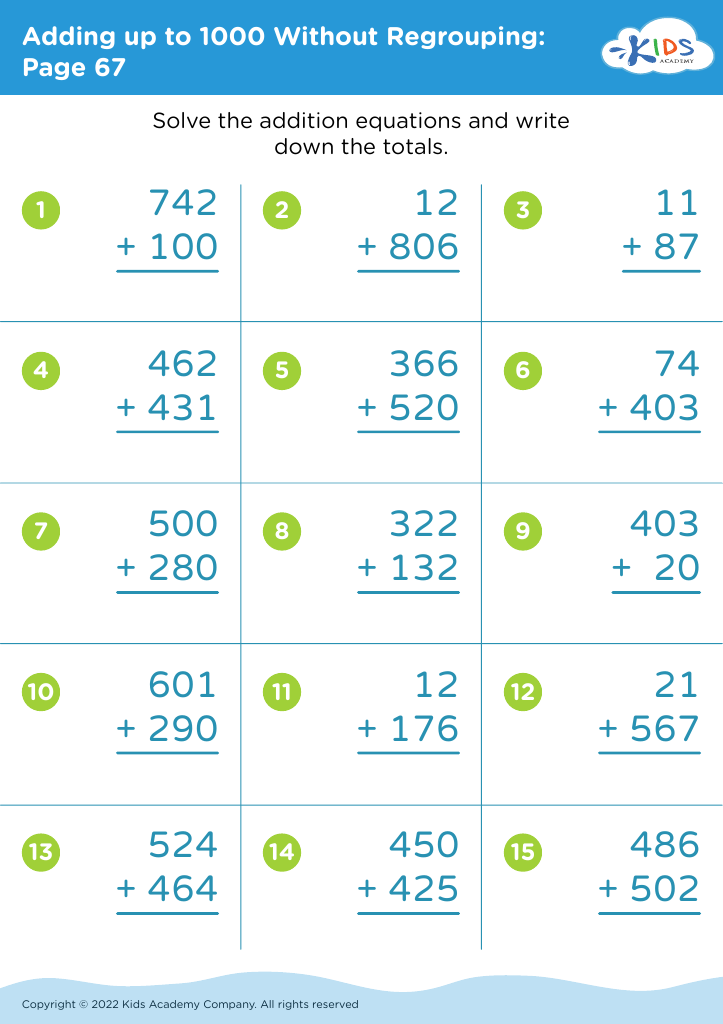
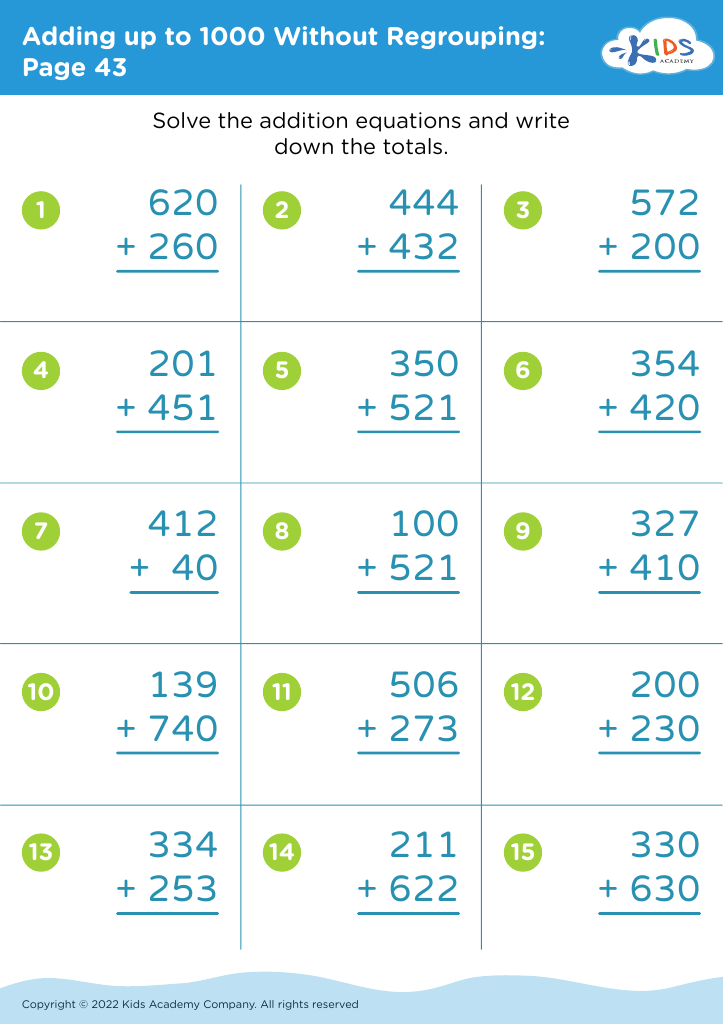
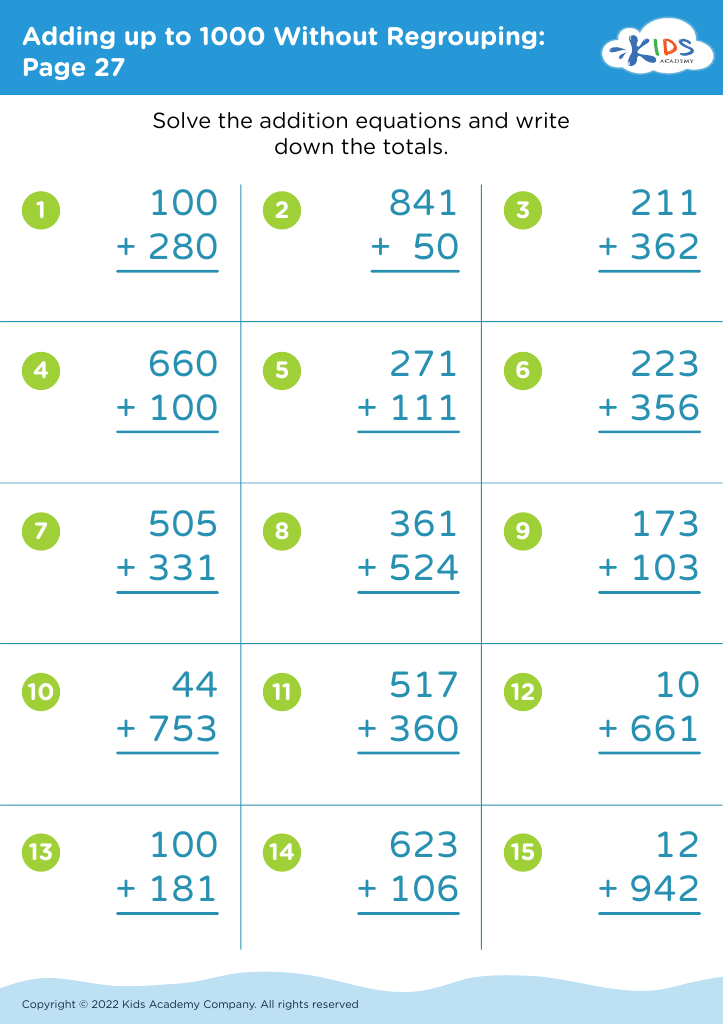
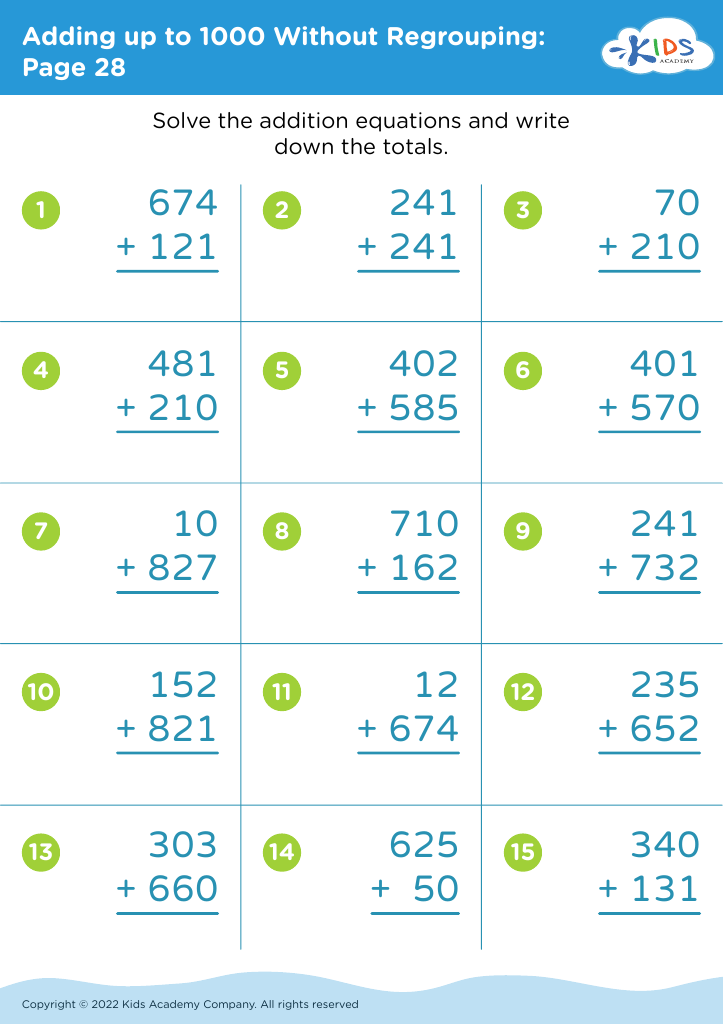
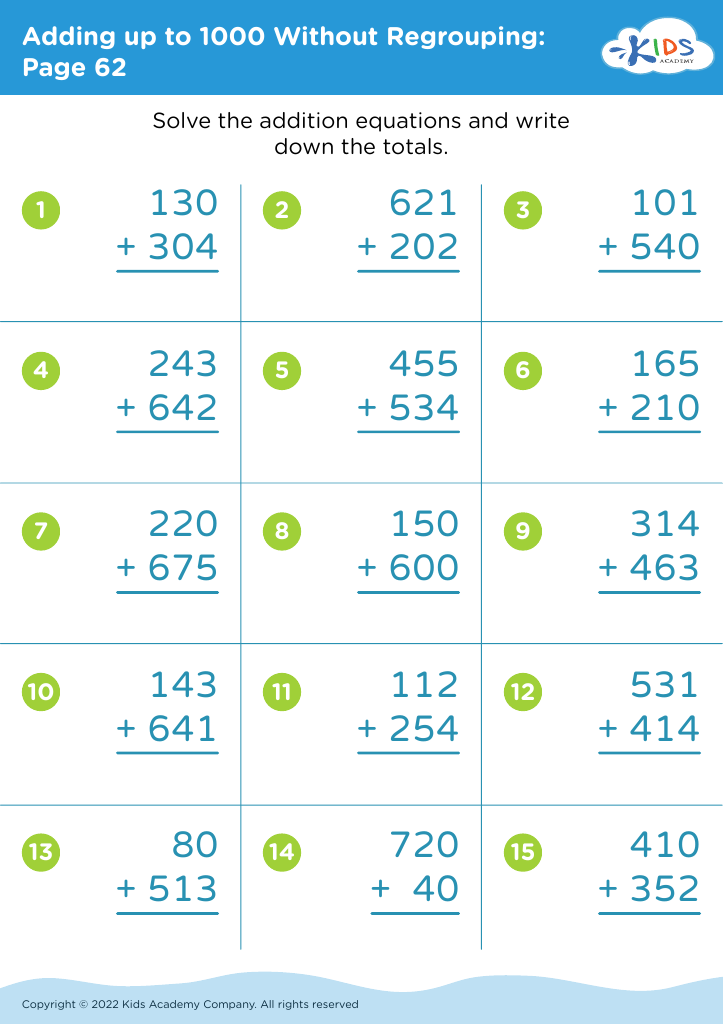


Understanding fractions and the concept of adding up to 1000 without regrouping is crucial for children ages 3-8 because it lays a foundation for their mathematical journey. At this developmental stage, children are highly receptive to new ideas and concepts, and mastering fractions helps them understand part-whole relationships, which are prevalent in everyday life.
For teachers and parents, fostering this understanding promotes critical thinking and problem-solving skills. It allows children to grasp foundational math concepts needed for more advanced arithmetic, ultimately contributing to their confidence in mathematics. Moreover, addressing these topics early encourages positive associations with math, making children more likely to enjoy the subject as they progress.
By introducing these concepts in engaging and age-appropriate ways, teachers and parents can make learning fun and worthwhile. It is not just about memorization; it's about helping children see the relevance of math in the real world. Additionally, early mastery of such concepts minimizes confusion in later years when children's mathematical acuity increases, ensuring they can tackle more complex operations with ease. Overall, prioritizing the understanding of fractions if crucial for instilling a strong mathematical foundation and long-term success in academic pursuits.