Basic Addition Adding up to 1000 Worksheets for Ages 3-8
6 filtered results
-
From - To
Welcome to our Basic Addition Worksheets, designed for children aged 3-8! These engaging and interactive worksheets help young learners build a solid foundation in addition, focusing on sums up to 1000. Each worksheet features captivating graphics and age-appropriate problems that keep kids motivated while practicing their math skills. Our materials enhance critical thinking, problem-solving, and number recognition, making learning fun and effective. Perfect for classroom use or at-home practice, these worksheets can easily cater to various learning styles. Encourage your child's mathematical journey today with our comprehensive selection of addition exercises and watch their confidence soar!
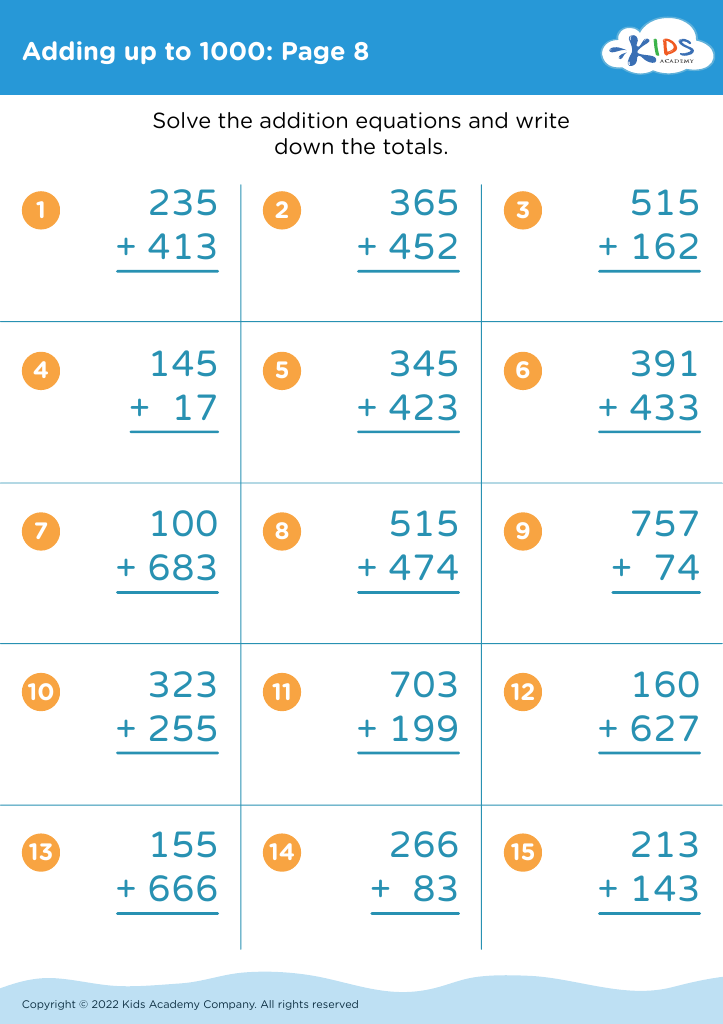
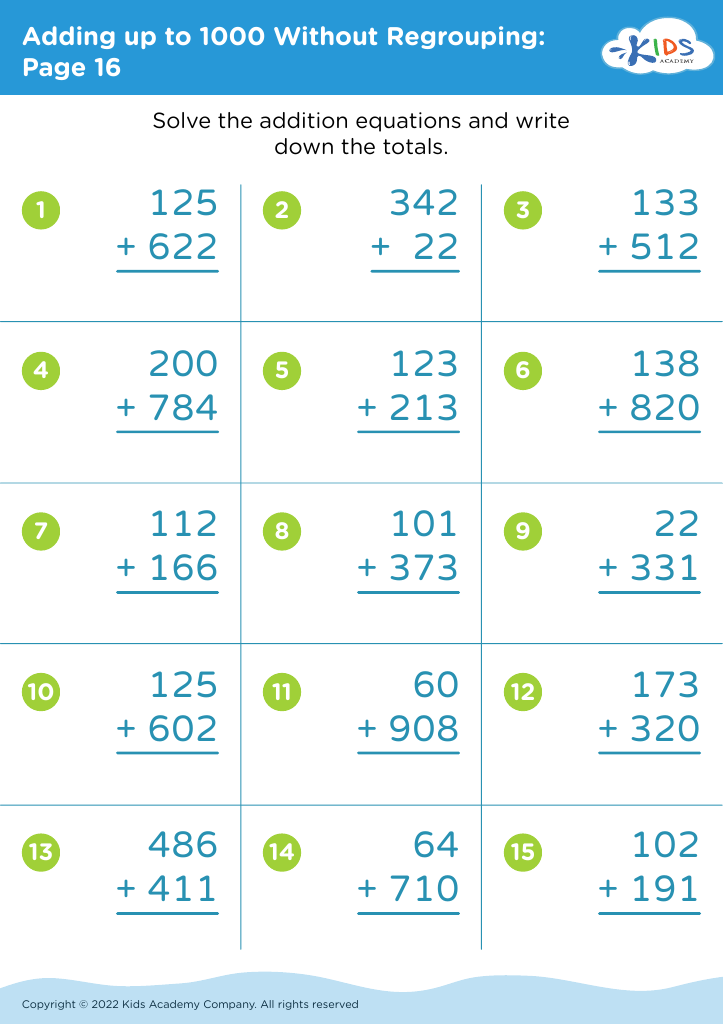
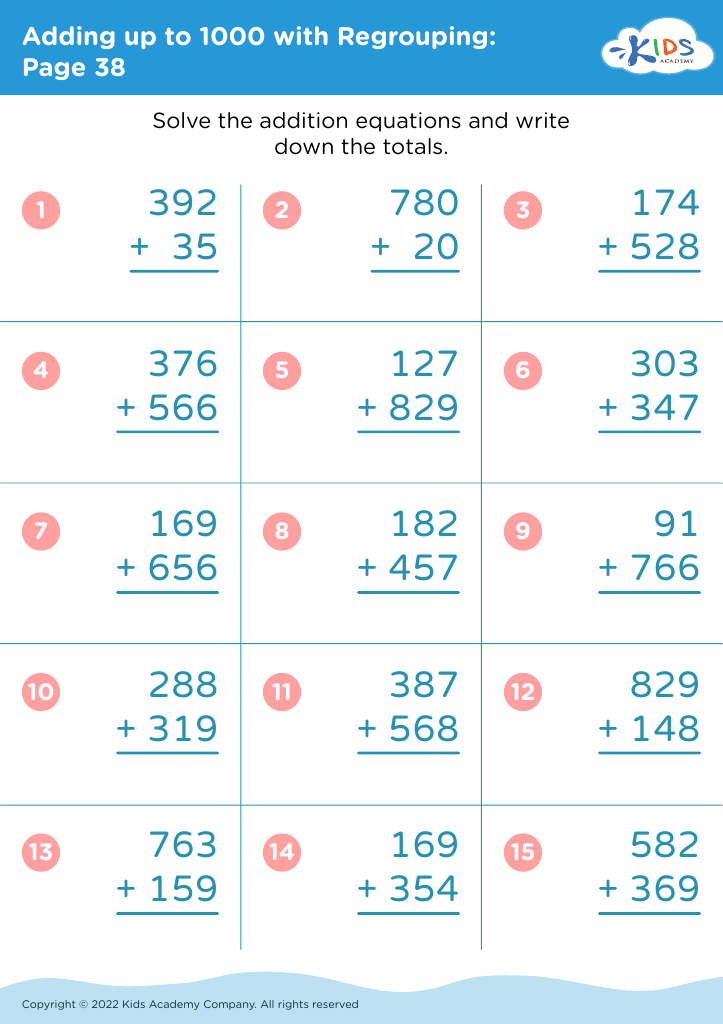
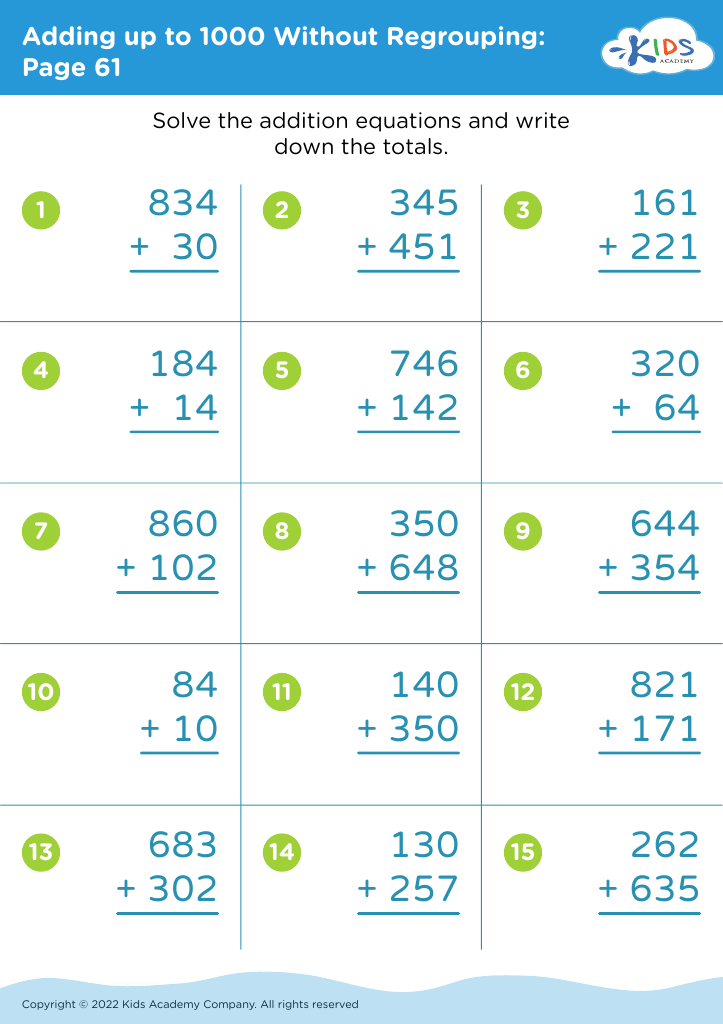
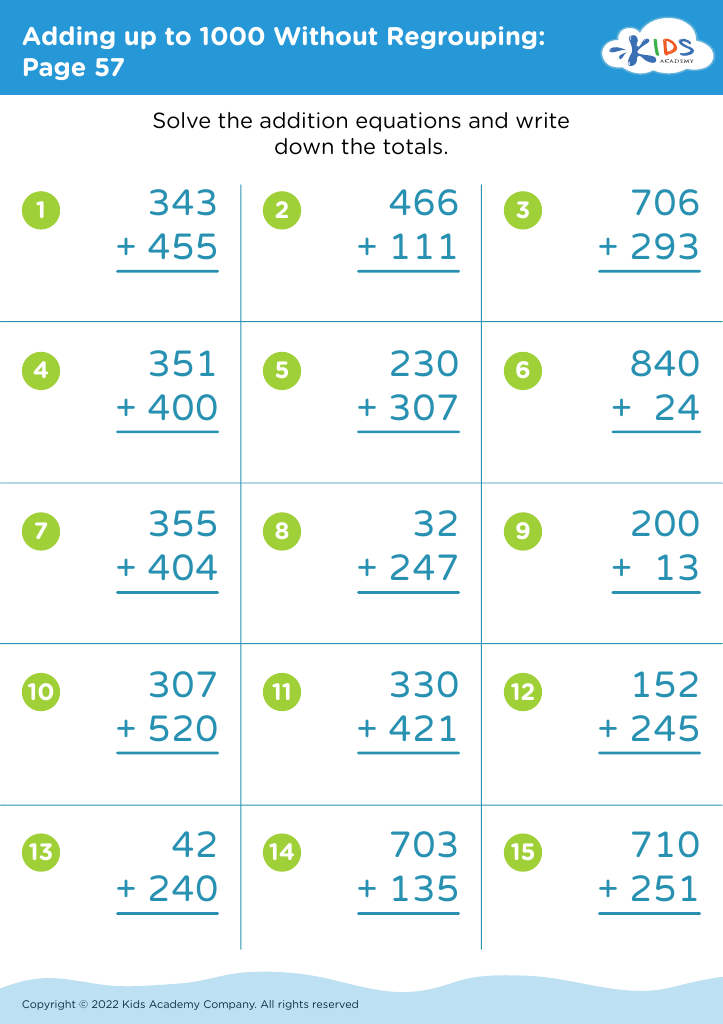
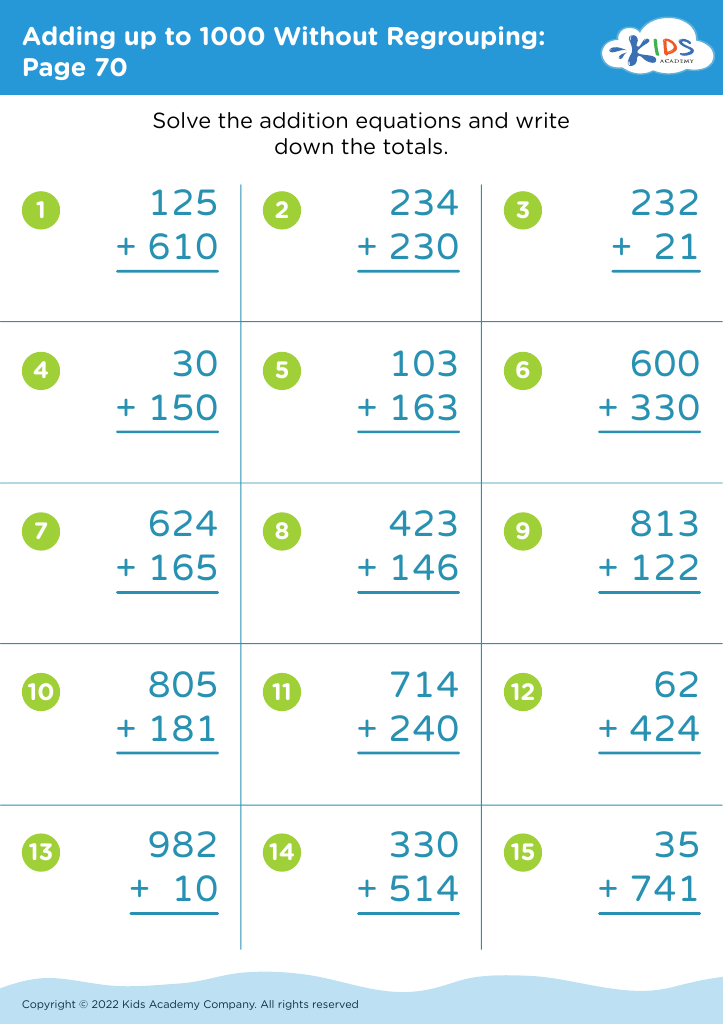



Understanding basic addition up to 1000 is crucial for children aged 3-8, serving as a foundation for their mathematical development. At this age, cognitive abilities are rapidly developing, and introducing addition helps to enhance critical thinking and problem-solving skills. Mastering these early math concepts fosters a sense of achievement and builds confidence, encouraging a positive attitude towards learning.
Moreover, basic addition promotes essential life skills. Helping children recognize numbers and their relationships enables them to navigate everyday situations like shopping, counting objects, or telling time. It lays the groundwork for future learning in more complex math topics, ensuring they are well-prepared for advanced studies in elementary school and beyond.
For parents and teachers, engaging children in adding up to 1000 provides insightful opportunities for discussions about numbers and patterns. Using fun, interactive activities makes learning enjoyable and impactful. It creates a supportive environment where children feel comfortable exploring mathematical concepts.
In conclusion, promoting basic addition in young children is vital not only for mathematical understanding but also for fostering a lifelong love of learning. This foundational skill sets the stage for academic success and enhances overall cognitive and social development.








