Fraction comparison Adding up to 1000 Worksheets for Ages 3-8
13 filtered results
-
From - To
Discover our engaging "Fraction Comparison and Adding up to 1000 Worksheets" tailored for children ages 3-8. These worksheets help young learners build foundational math skills in a fun and interactive way. With vibrant illustrations and clear instructions, kids will enjoy comparing fractions and adding numbers up to 1000. Our expertly designed activities make complex concepts accessible, enabling children to master important math skills at an early age. Ideal for both classroom settings and home practice, these worksheets offer a comprehensive approach to developing strong arithmetic and fraction comparison abilities. Explore our collection to give your child a head start in math!
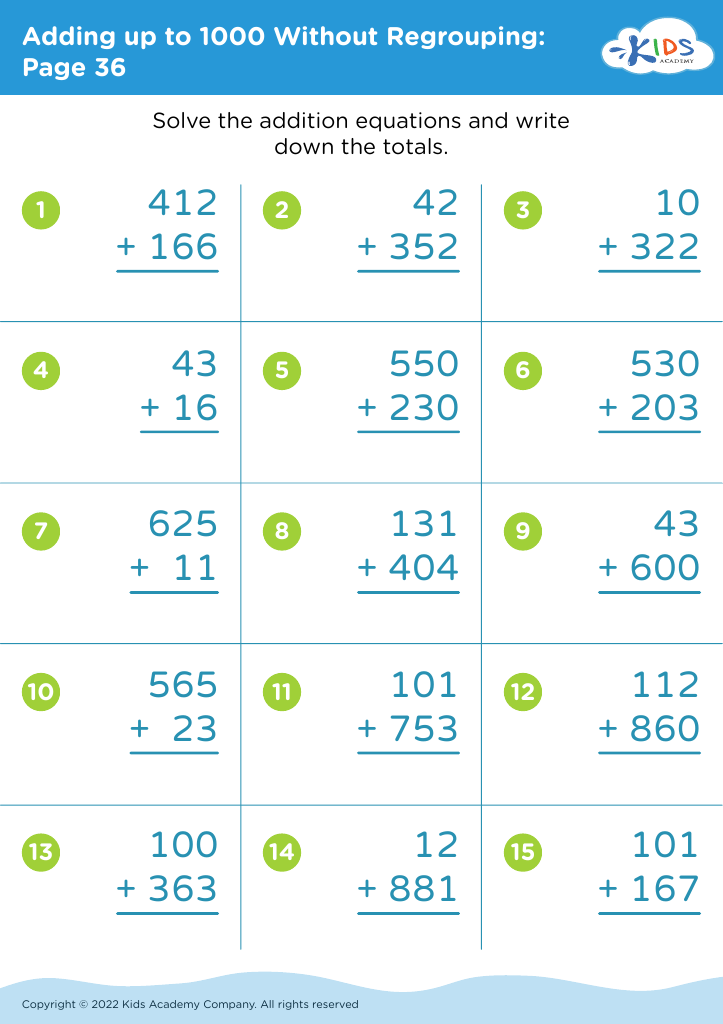
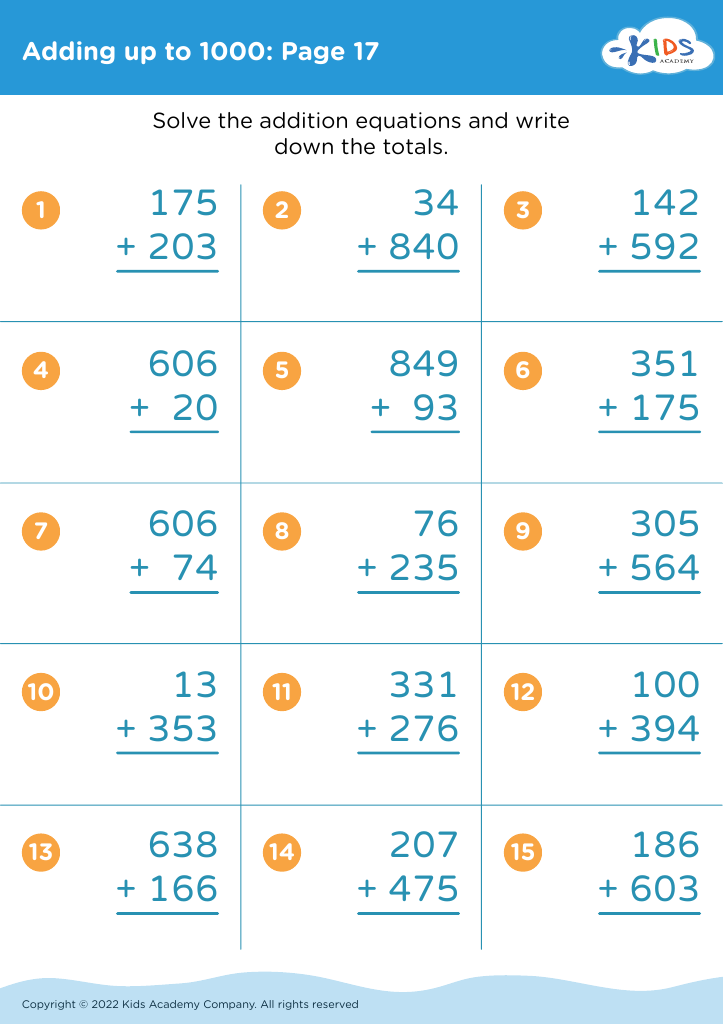
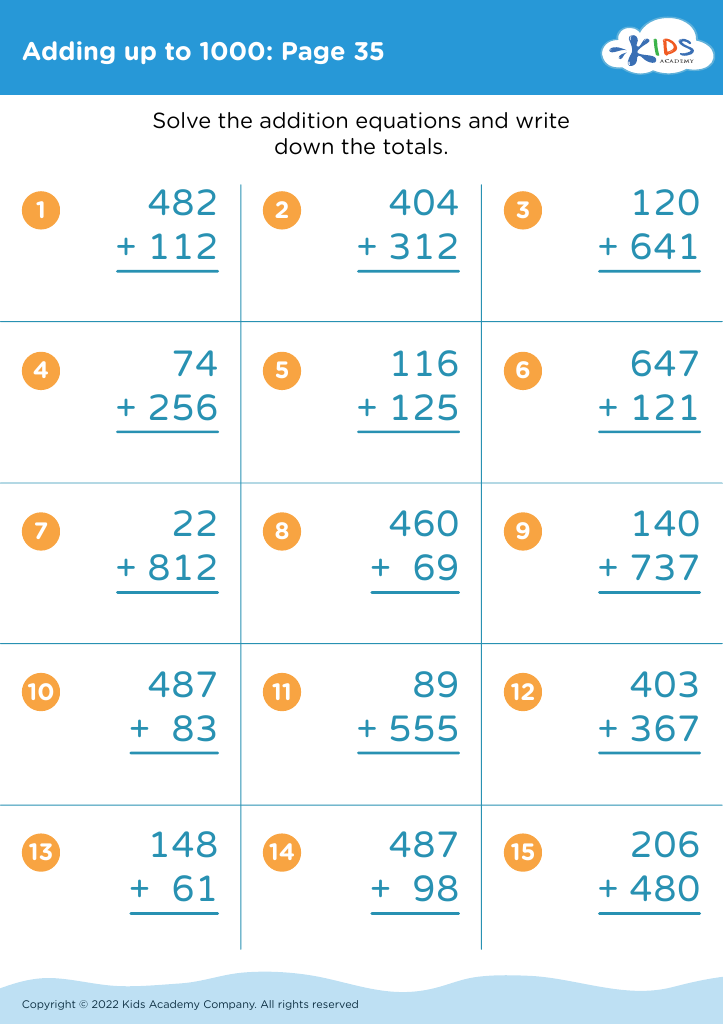
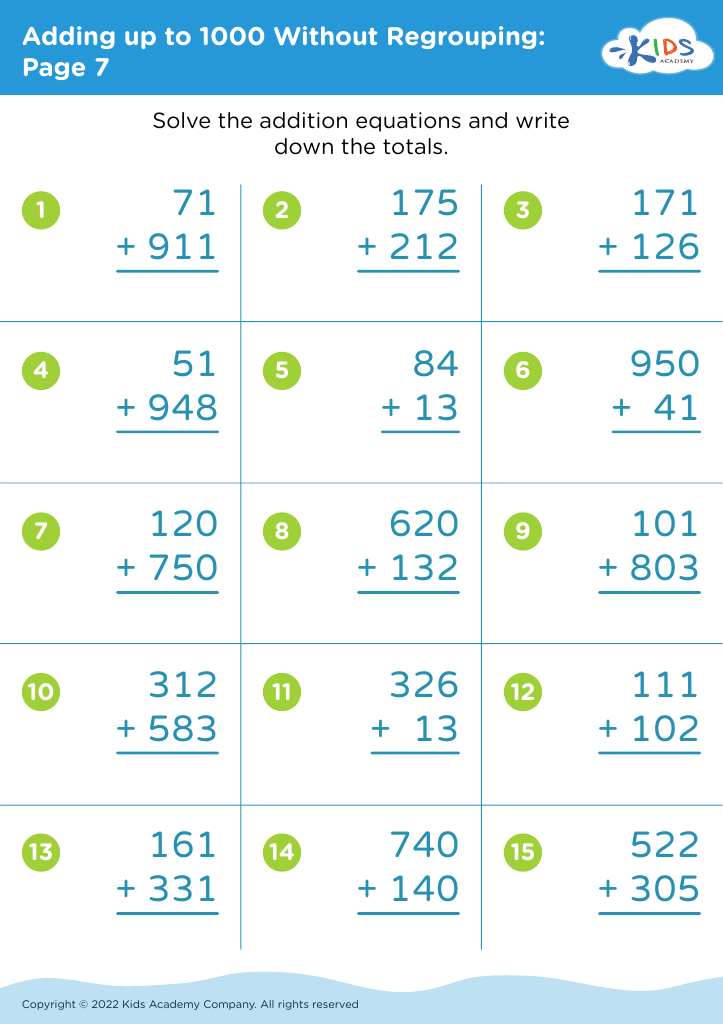
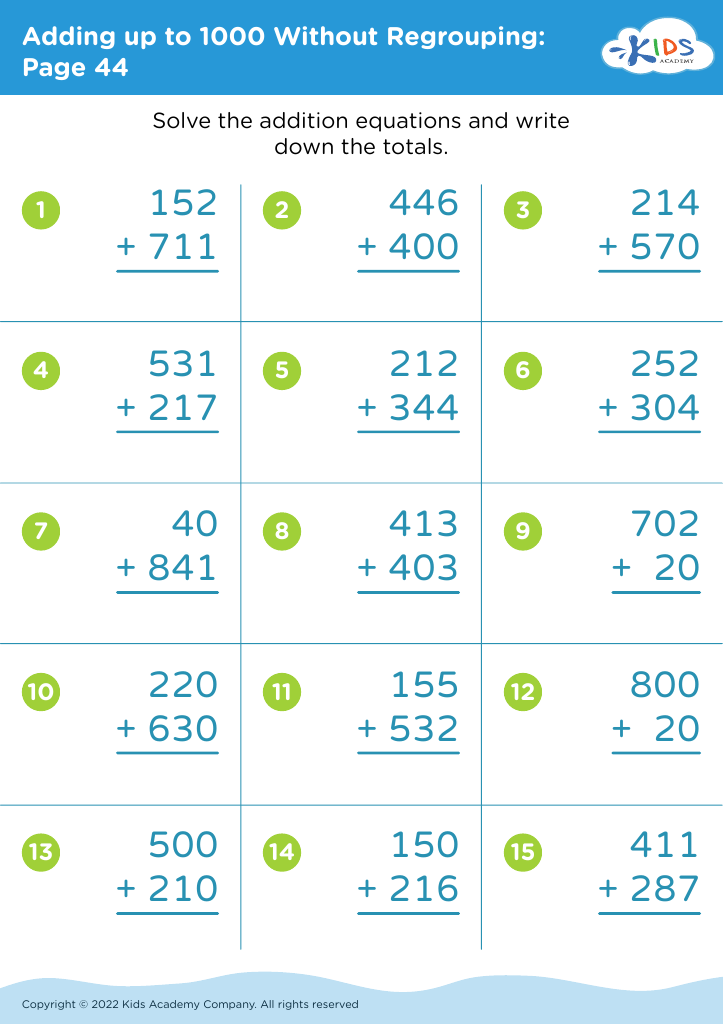
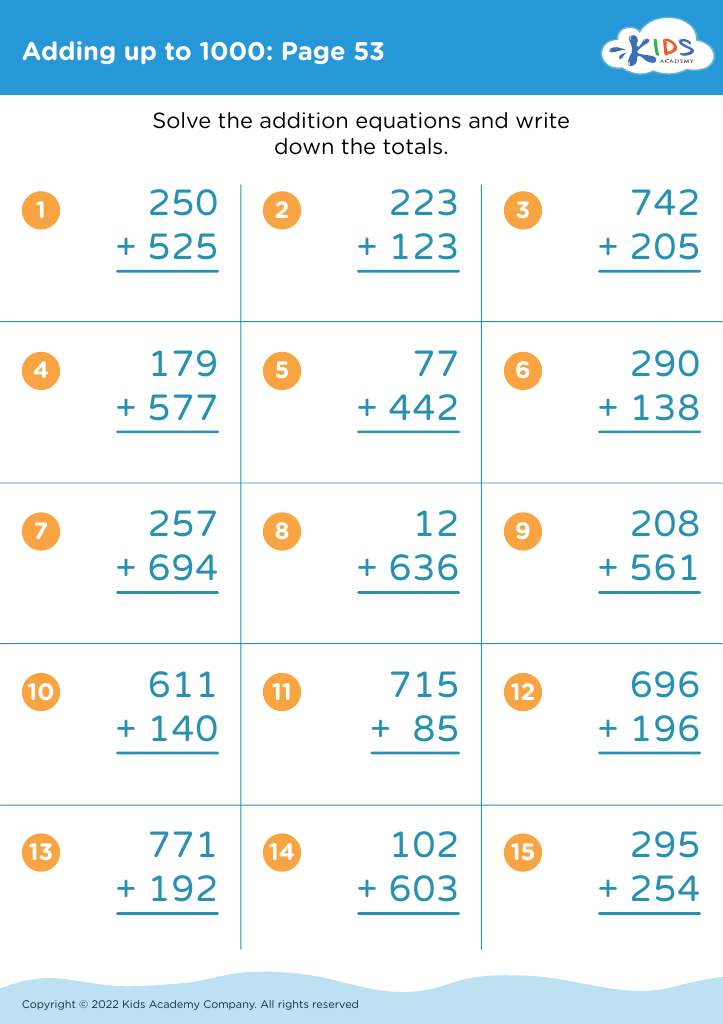
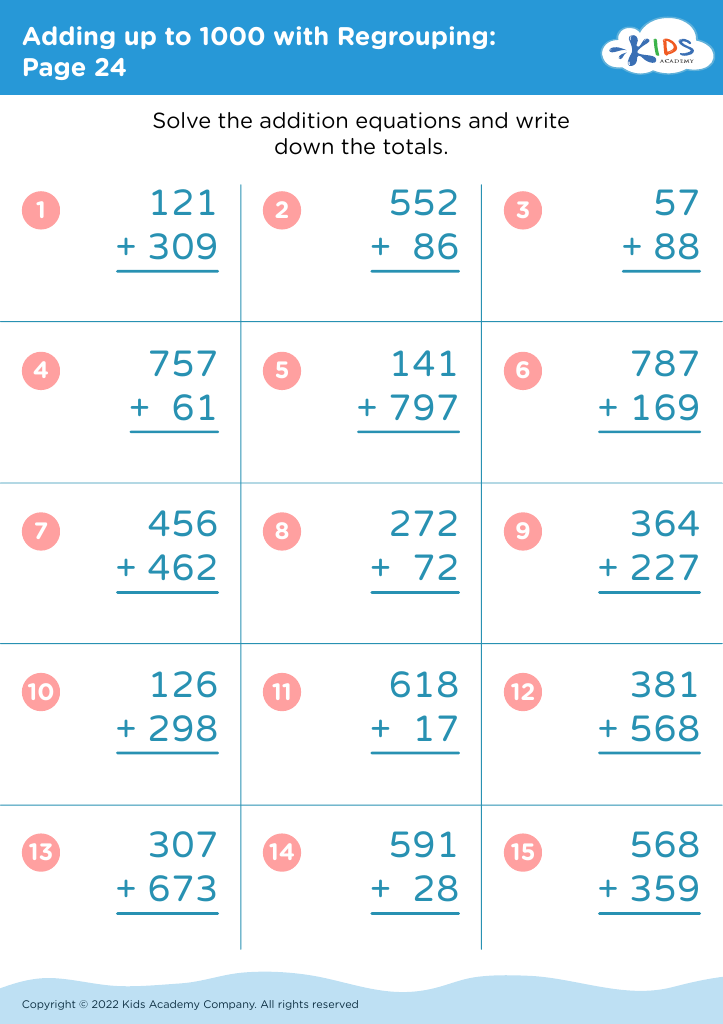
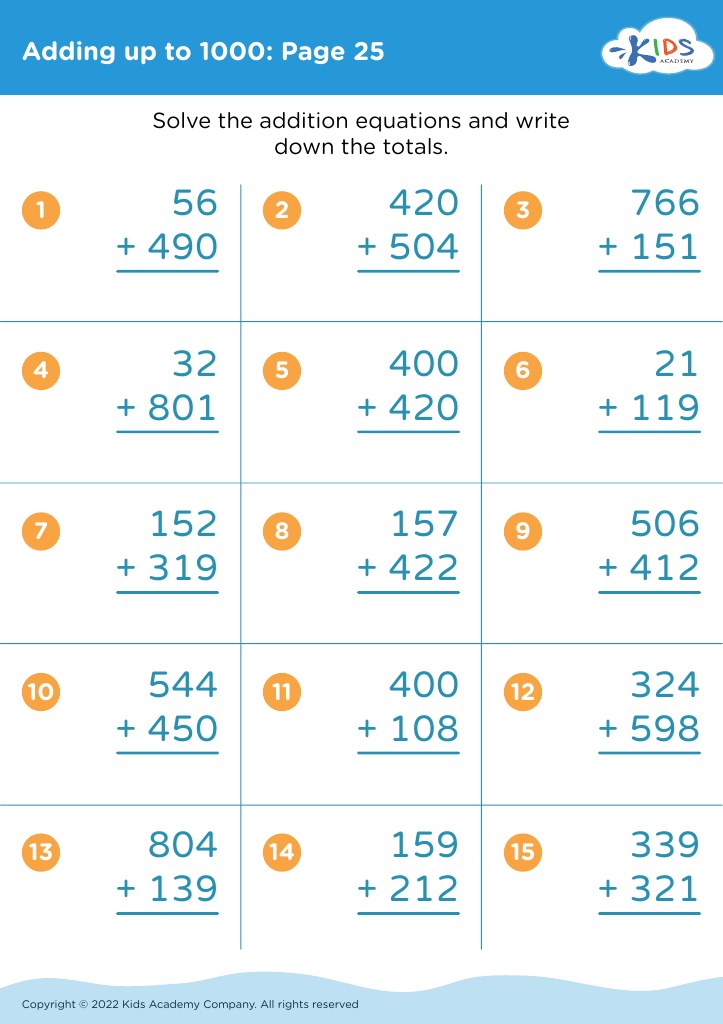



Understanding fractions and achieving proficiency in basic addition can significantly benefit young children aged 3-8, setting a strong foundation for future mathematical learning. Parents and teachers should care about these concepts because they are integral to everyday problem solving and advanced math skills.
Firstly, fraction comparison teaches children about proportionality and equivalence, fostering a sense of quantity and measurement that is critical for not just math, but also science and practical daily activities like cooking. It helps build analytical thinking and precision, requiring focus on both numerators and denominators.
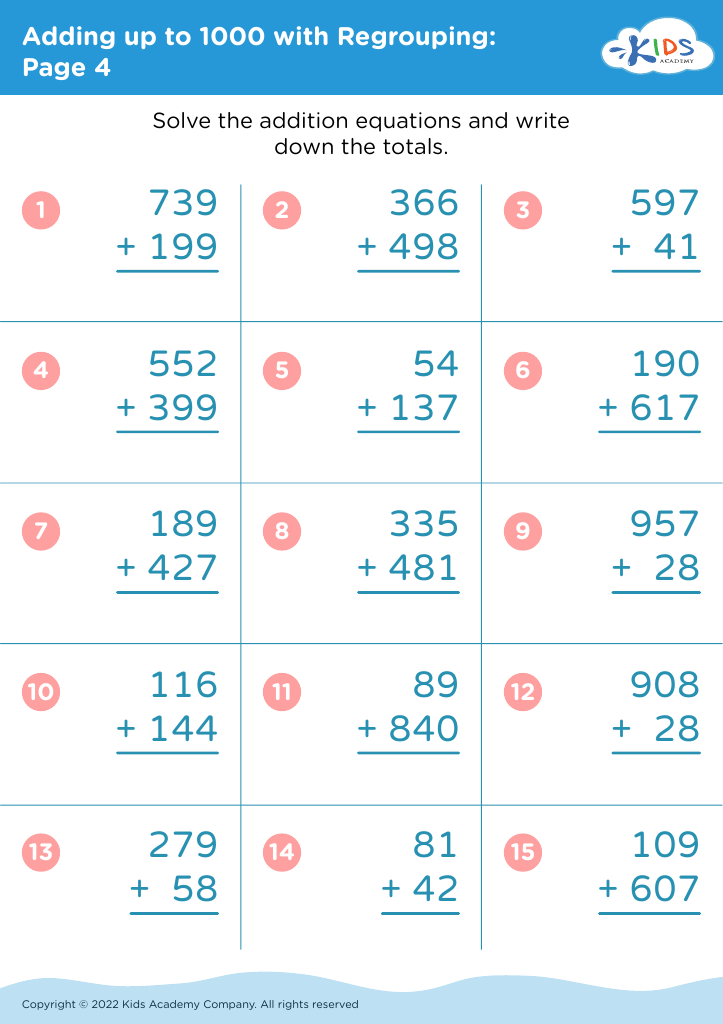
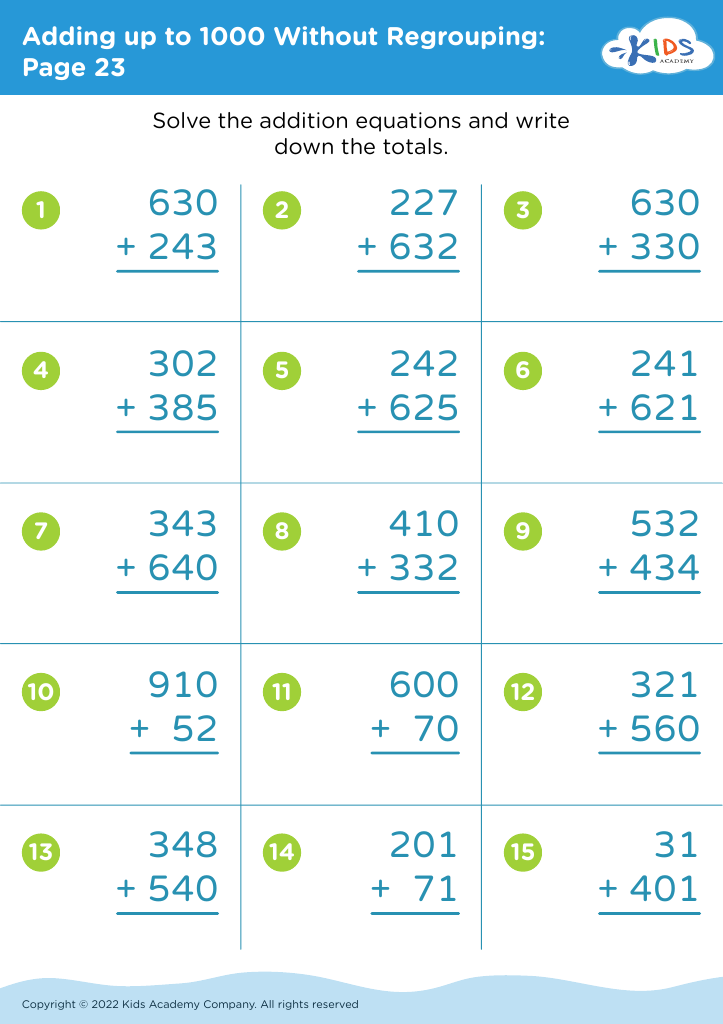
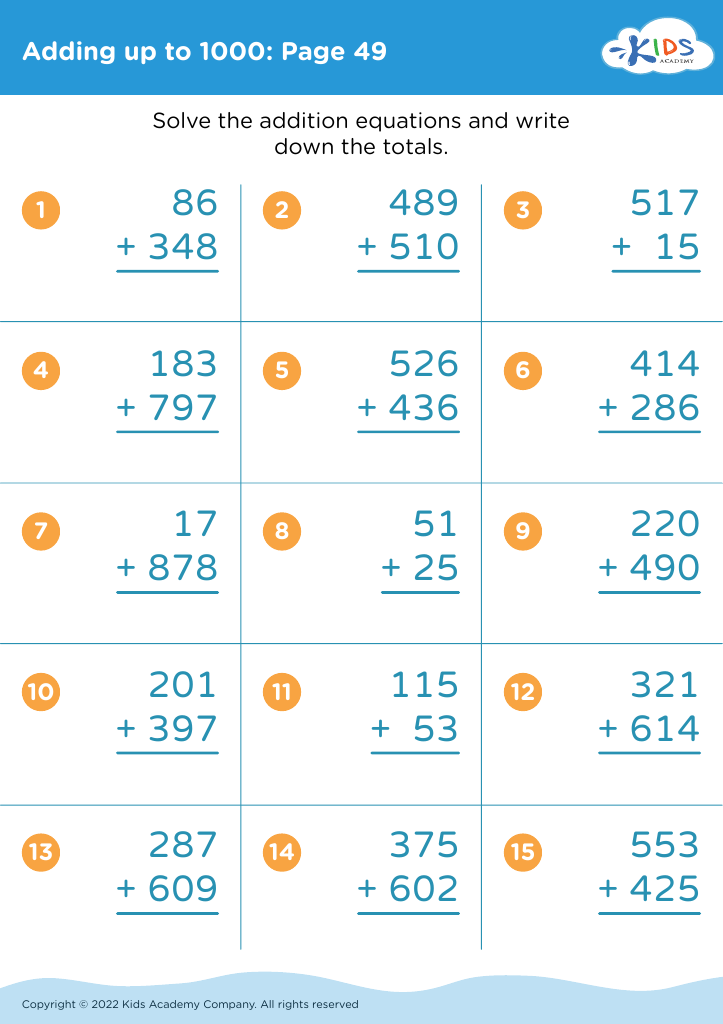
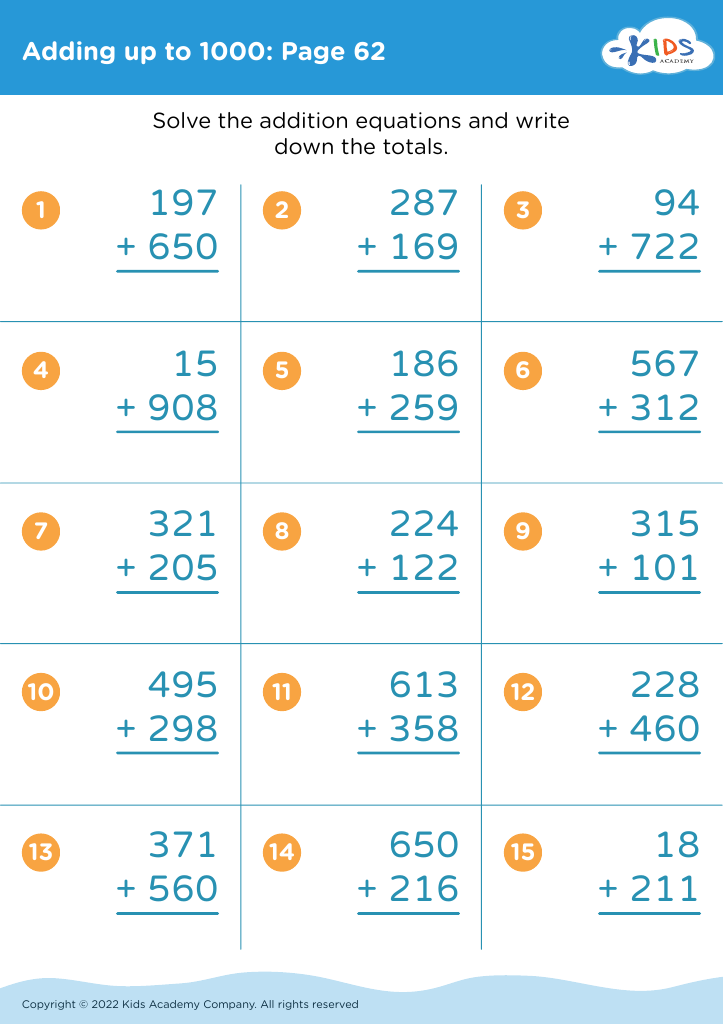
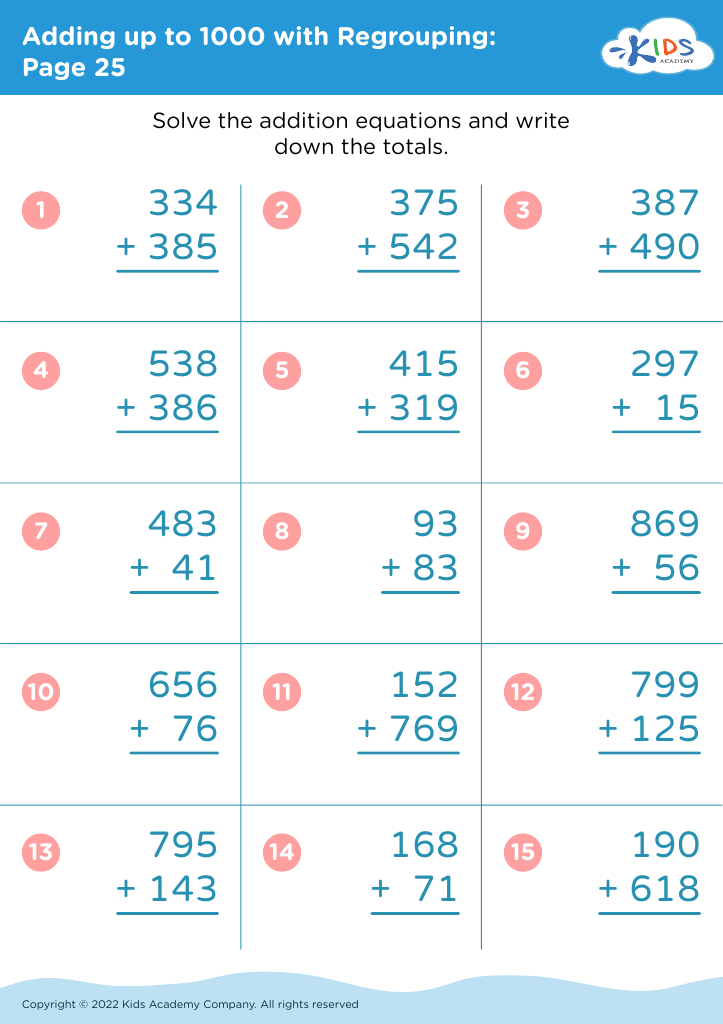
Moreover, the ability to add quantities up to 1000 aligns with early competency in place value and arithmetic. These skills are essential for transitioning from basic counting to more complex mathematical operations. Additionally, large number addition improves cognitive abilities, such as memory and attention to detail, as children learn to manage larger sums and potentially carry digits over across place values.
Supporting children in these areas during early learning stages can enhance their confidence in mathematical tasks, encouraging a positive attitude towards the subject. Providing robust math skills early on can pave the way for academic achievements and help children in performing various real-world tasks effectively.








