Identifying shapes Adding up to 1000 Worksheets for Ages 3-8
3 filtered results
-
From - To
Explore our engaging "Identifying Shapes Adding up to 1000 Worksheets" designed for children ages 3-8. These interactive resources combine geometry and arithmetic, helping young learners sharpen their shape recognition skills while practicing addition up to 1000. Our worksheets offer various fun activities that encourage creativity and critical thinking. Kids will enjoy coloring, matching, and identifying different shapes, all while mastering essential math concepts. Ideal for both at-home learning and classroom use, these worksheets provide an effective way to build foundational skills in a playful manner. Dive into a world of shapes and numbers, and watch young minds flourish!
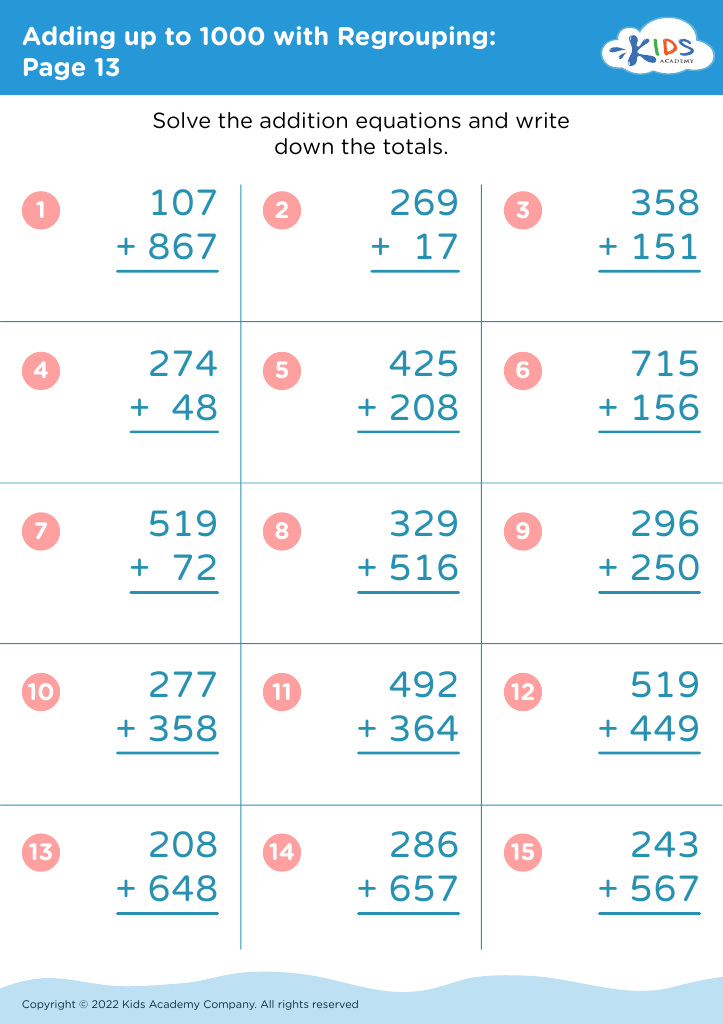
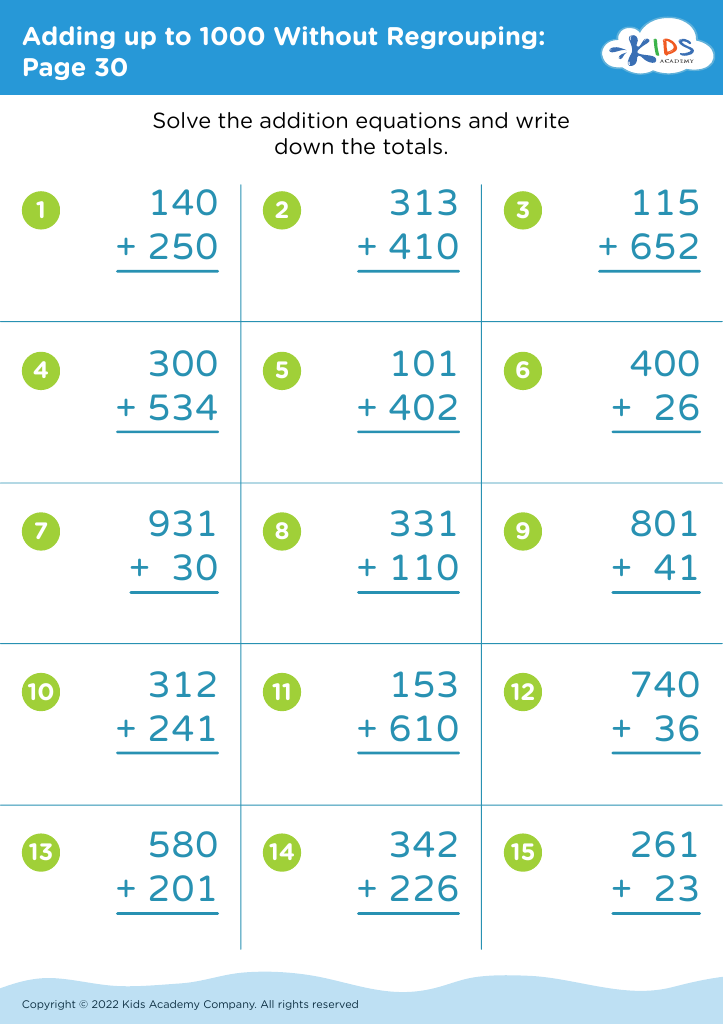
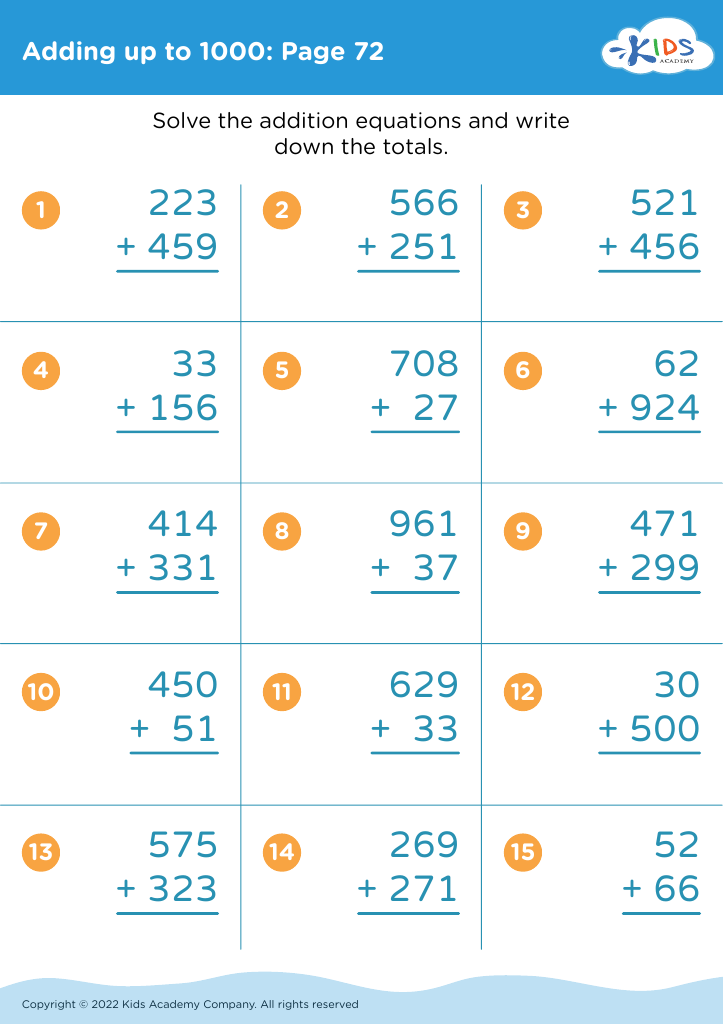



Identifying shapes and learning to add up to 1000 are crucial developmental milestones for children aged 3-8. Understanding shapes lays the foundation for spatial awareness, important in art, science, and daily life. When children identify different shapes, they enhance their ability to categorize and make sense of the world around them, fostering problem-solving skills and promoting creativity. This foundational knowledge is essential as it contributes to their cognitive development and sets the stage for more complex geometric concepts in the future.
On the other hand, the ability to add numbers up to 1000 promotes early mathematical skills, essential in today's increasingly math-driven world. Mastering addition enhances children's numerical fluency, improving their confidence in tackling more advanced math concepts later on. This skill contributes to their overall academic success and provides them with essential tools for everyday life, such as budgeting and time management.
For parents and teachers, nurturing these skills is vitally important; supporting children in shape recognition and arithmetic sets the groundwork for confidence, perseverance, and a love of learning, ensuring they are prepared for future challenges in more advanced subjects. Engaging children in fun and creative activities surrounding these concepts fosters a positive attitude towards learning and helps instill lifelong skills.








