Understand fractions Adding up to 1000 Worksheets for Ages 3-8
4 filtered results
-
From - To
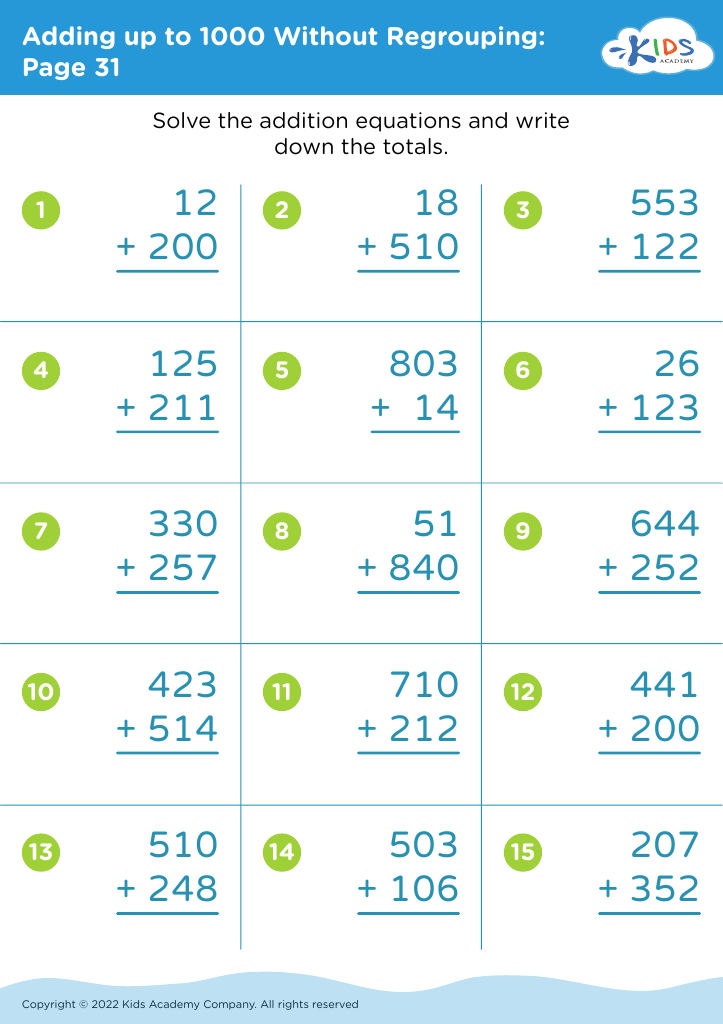
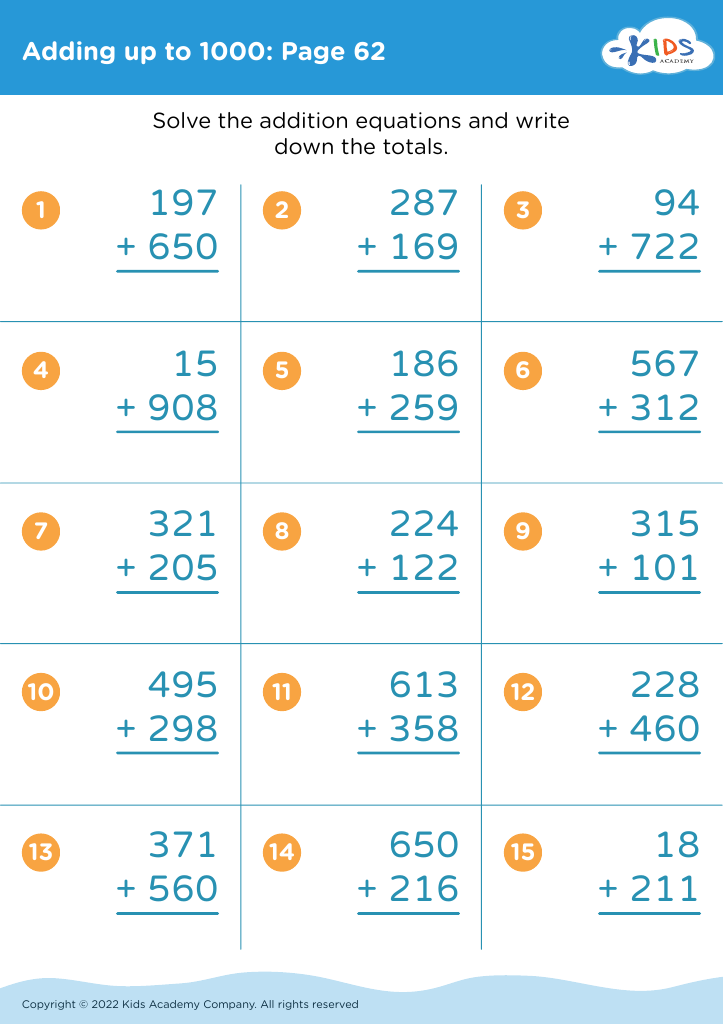
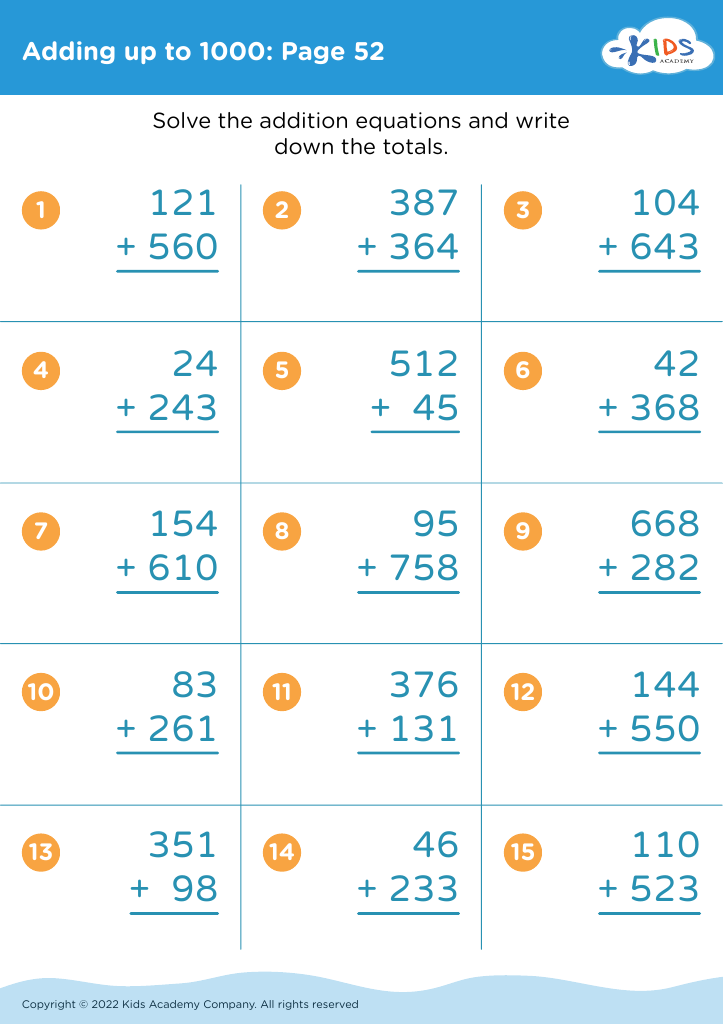
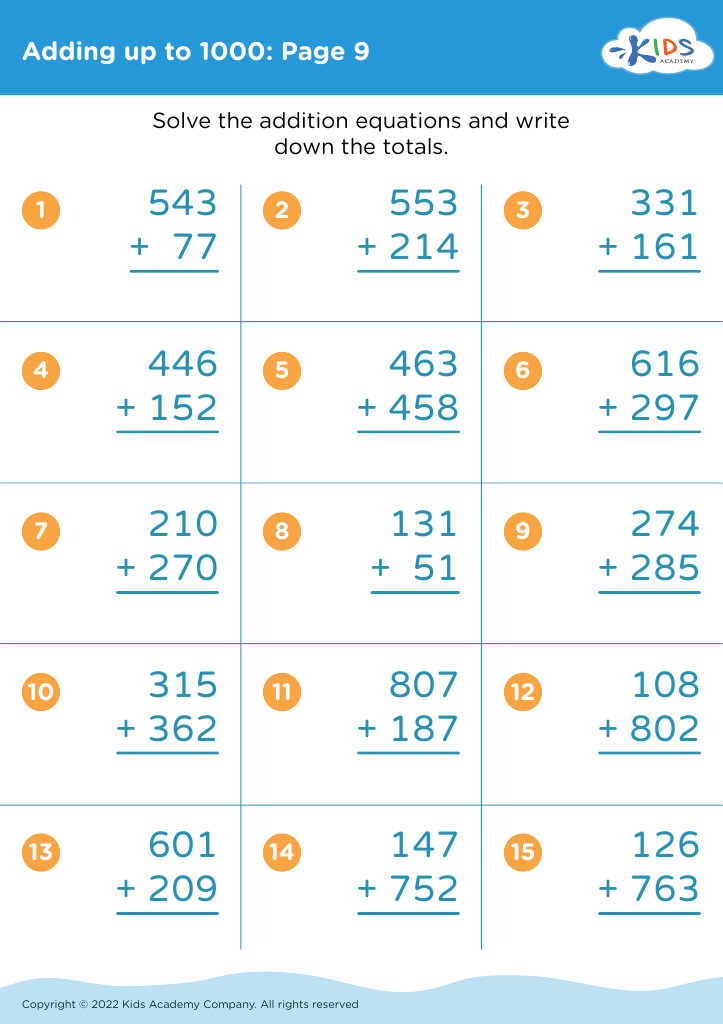
Welcome to our "Understand Fractions Adding Up to 1000 Worksheets" specifically designed for kids aged 3-8! These engaging and interactive worksheets help young learners grasp the concept of fractions through fun exercises and visual aids. Each worksheet focuses on breaking down fractions, allowing children to see how parts make up a whole. With a variety of activities, including cutting, coloring, and matching, kids will develop a solid foundation in fraction understanding while honing their addition skills up to 1000. Our resources foster critical thinking and build confidence in math, making it perfect for parents and educators looking to enhance their teaching!



Understanding fractions is a fundamental skill that carries significant importance for children aged 3-8. At this age, children are laying the foundation for their mathematical abilities, and grasping fractions enhances their overall cognitive development. Fractions form the core of various everyday activities, from sharing pizza to measuring ingredients in cooking, making them highly relevant to real-life situations.
By comprehending fractions, children improve their problem-solving skills and develop critical thinking abilities, fostering a deeper understanding of numbers and relationships. Additionally, introducing the concept of "adding up to 1000" provides a framework where children can visualize how parts combine to form wholes, promoting their understanding of addition and number sense.
Parents and teachers should care about this subject because it encourages collaboration in learning. Engaging in fraction-related activities together not only strengthens bonds but also allows adults to be active participants in their child’s education. A solid knowledge of fractions prepares children for advanced math concepts later in schooling, equipping them with the necessary tools for academic success. Overall, nurturing an early comprehension of fractions ensures that young learners develop confidence and a positive attitude towards math, which will influence their future academic journeys.








