Filters

44 filtered results

Clear all filters
Favorites
With answer key
Interactive

44 filtered results

Difficulty Level

Grade


Check out this FREE Trial Lesson on Adding up to 1000 for age 3-8!

Sorting Objects into 3 Categories

Favorites
With answer key
Interactive
  • 3-8
  • Understanding fractions
  • Adding up to 1000
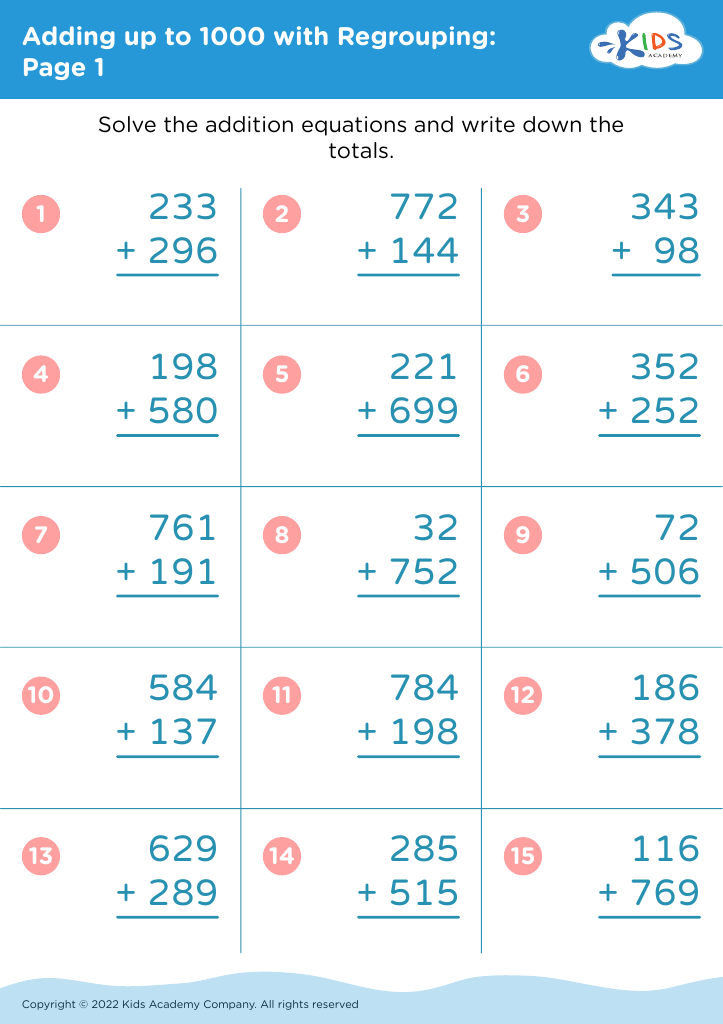
Adding up to 1000 with Regrouping: Page 1
Worksheet
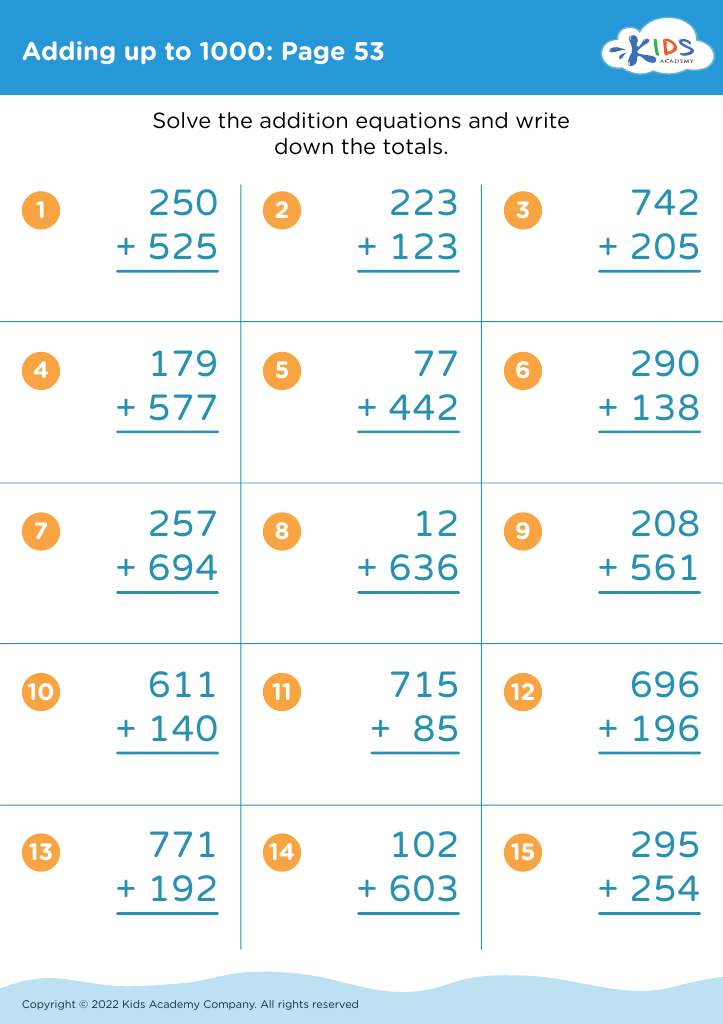
Adding up to 1000: Page 53

Adding up to 1000: Page 53

Adding up to 1000: Page 53
Worksheet
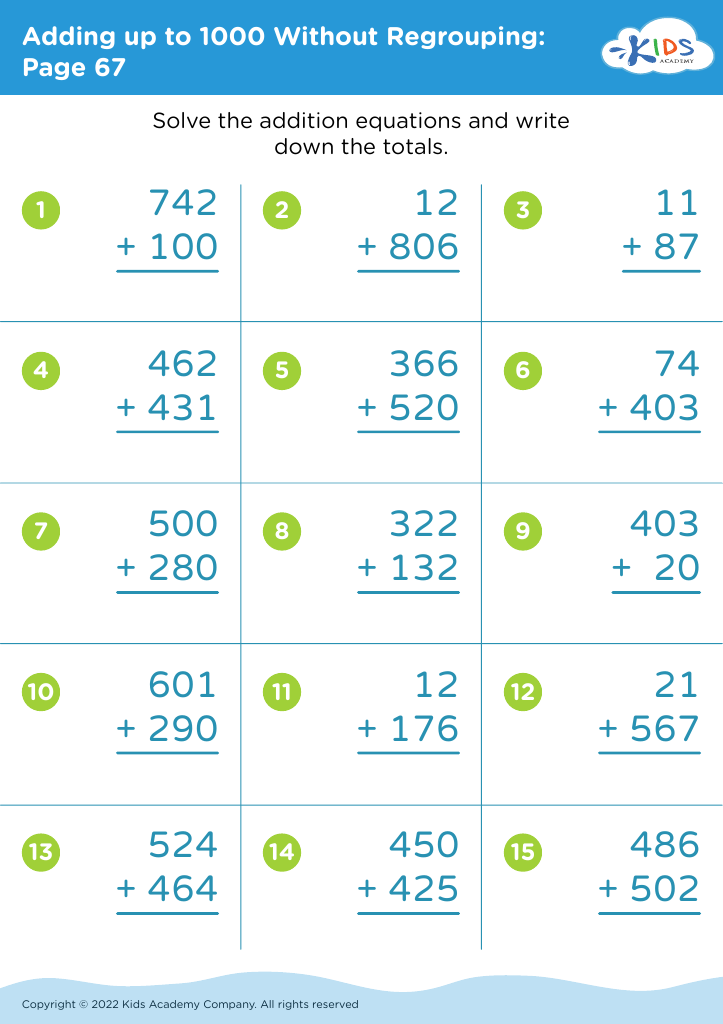
Adding up to 1000 Without Regrouping: Page 67
Worksheet
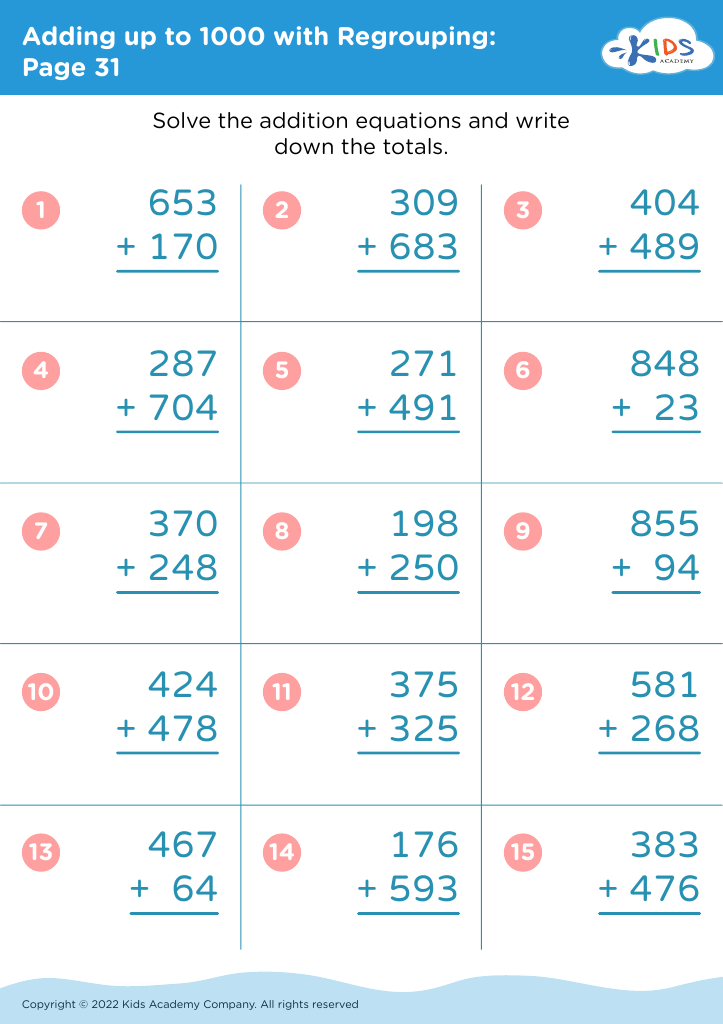
Adding up to 1000 with Regrouping: Page 31
Worksheet
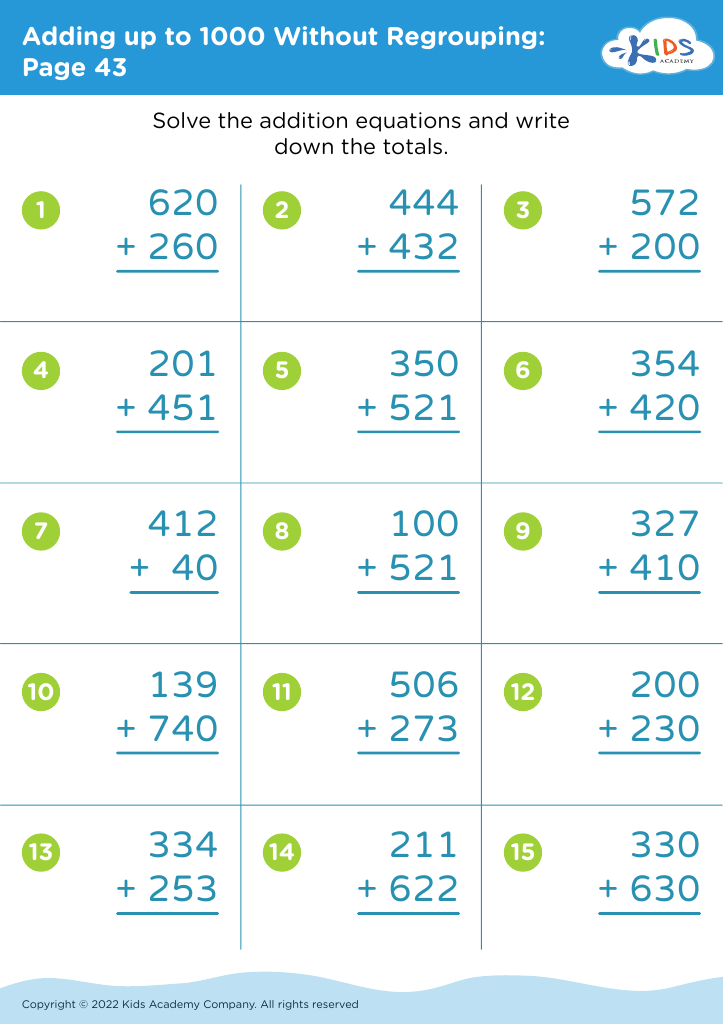
Adding up to 1000 Without Regrouping: Page 43
Worksheet
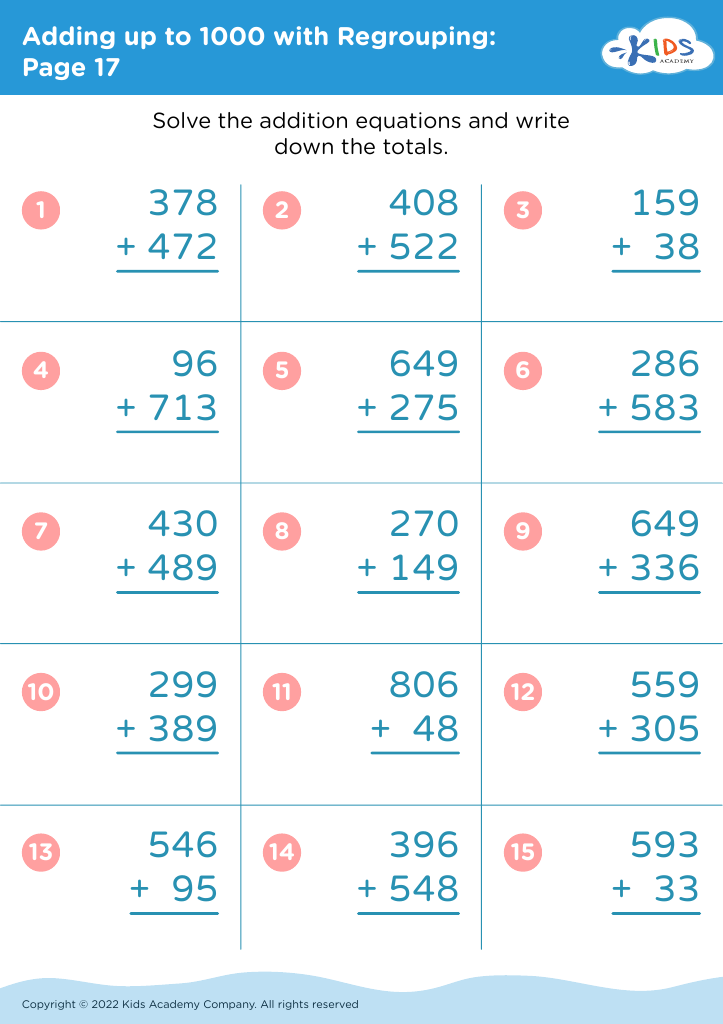
Adding up to 1000 with Regrouping: Page 17
Worksheet
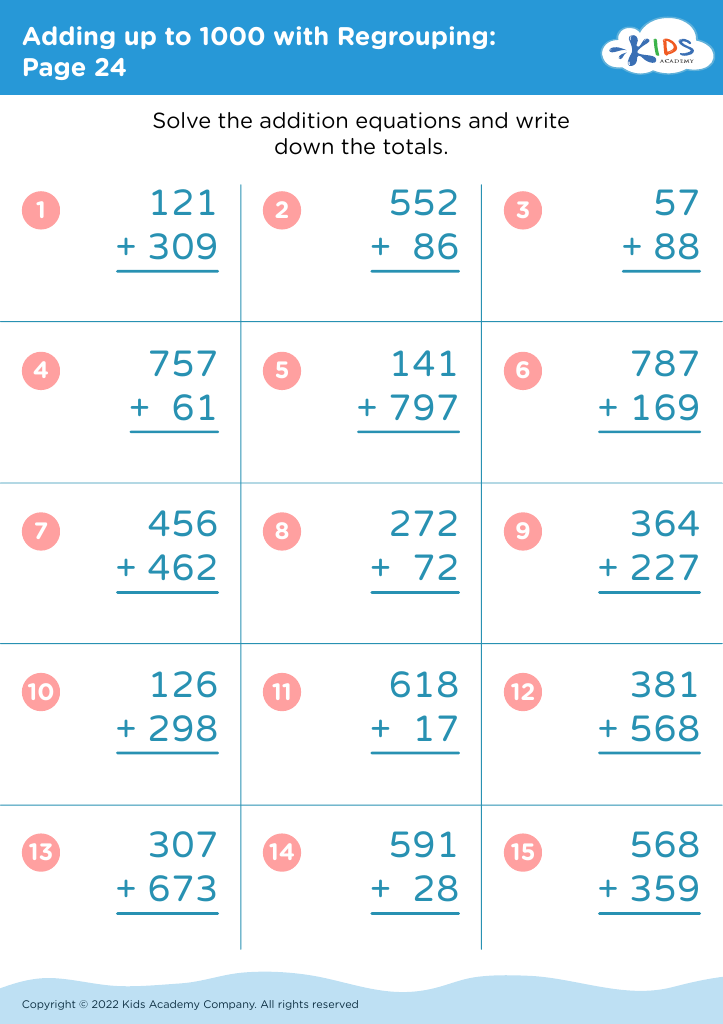
Adding up to 1000 with Regrouping: Page 24
Worksheet
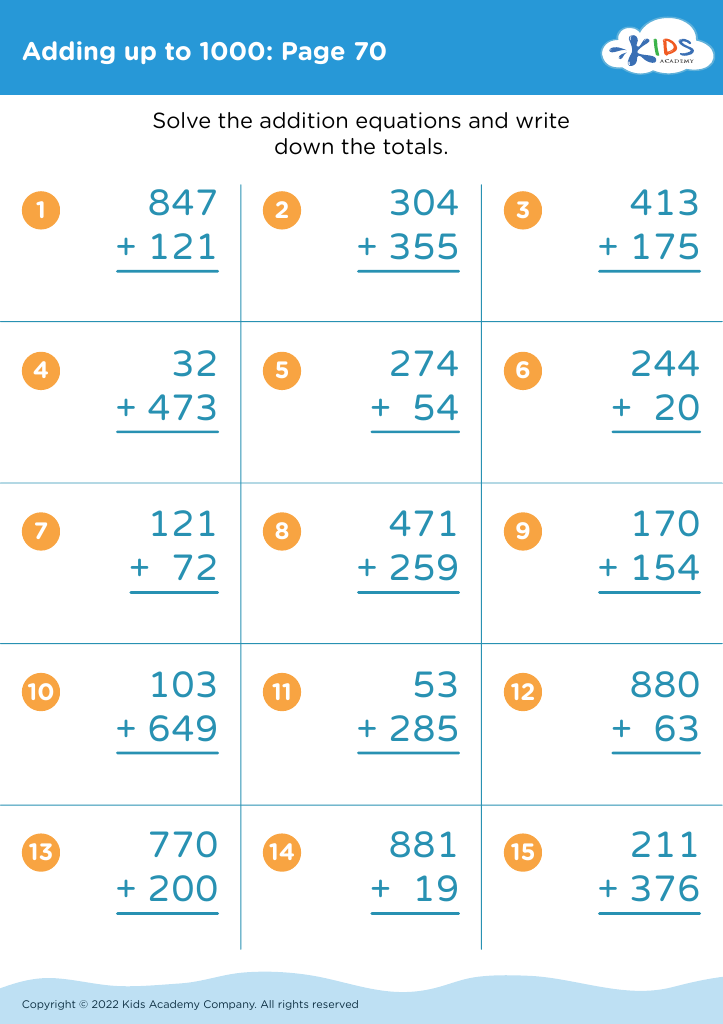
Adding up to 1000: Page 70

Adding up to 1000: Page 70

Adding up to 1000: Page 70
Worksheet
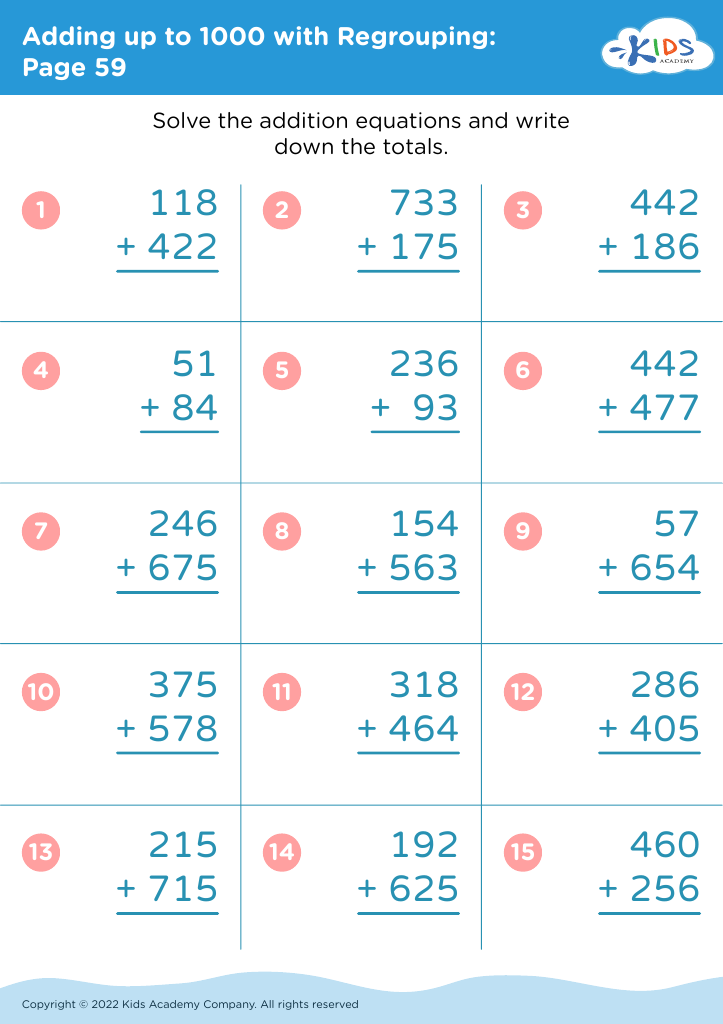
Adding up to 1000 with Regrouping: Page 59
Worksheet
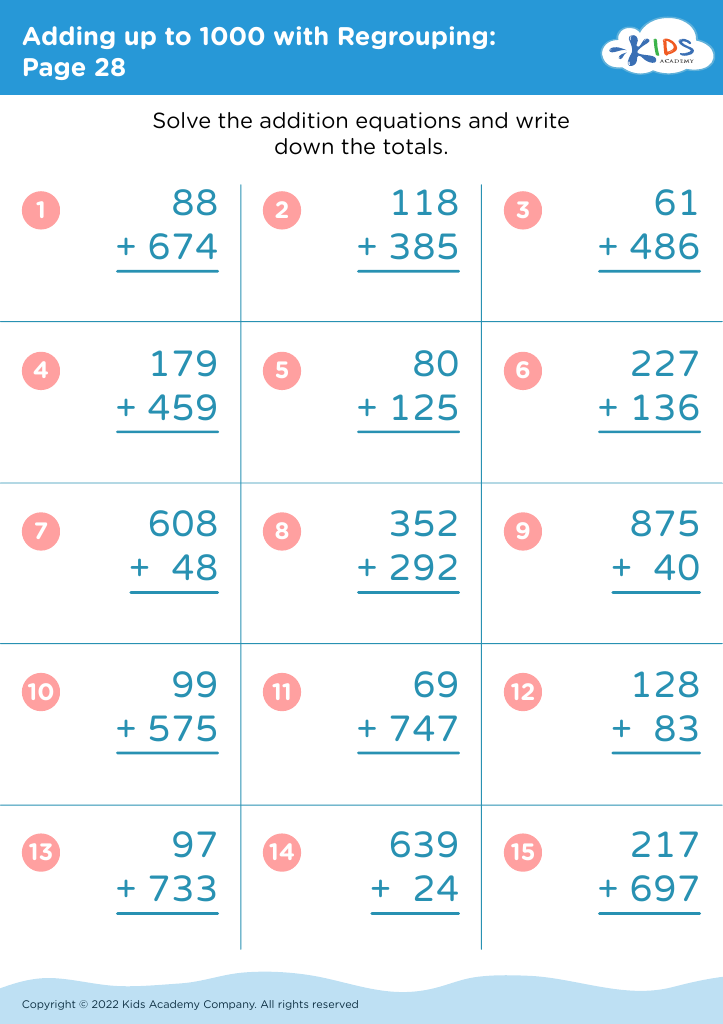
Adding up to 1000 with Regrouping: Page 28
Worksheet
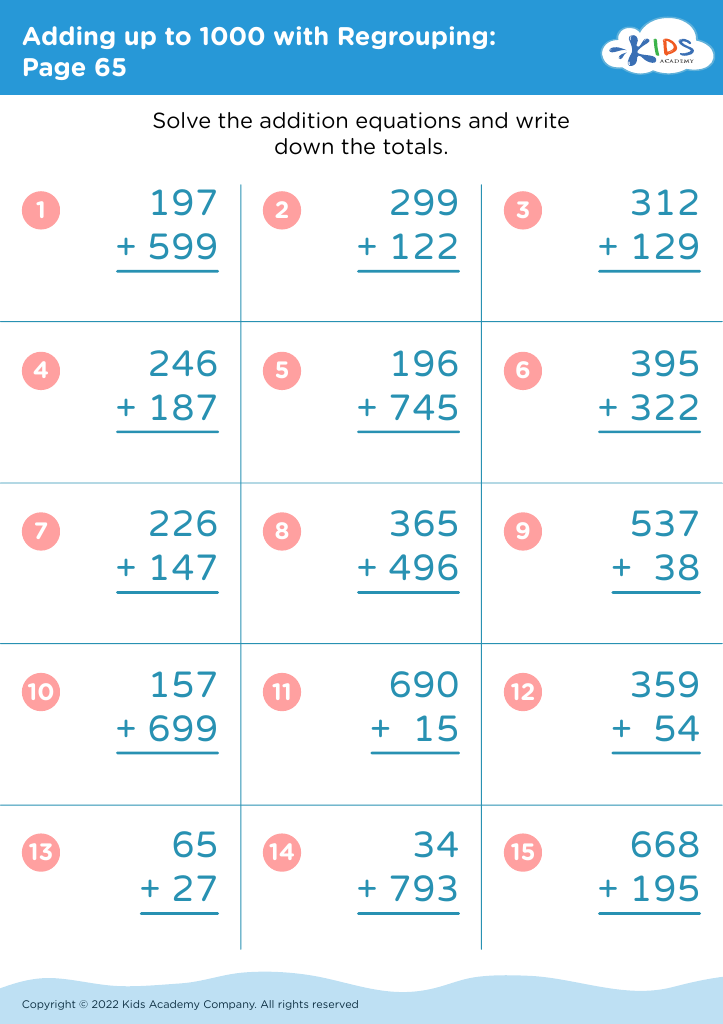
Adding up to 1000 with Regrouping: Page 65
Worksheet
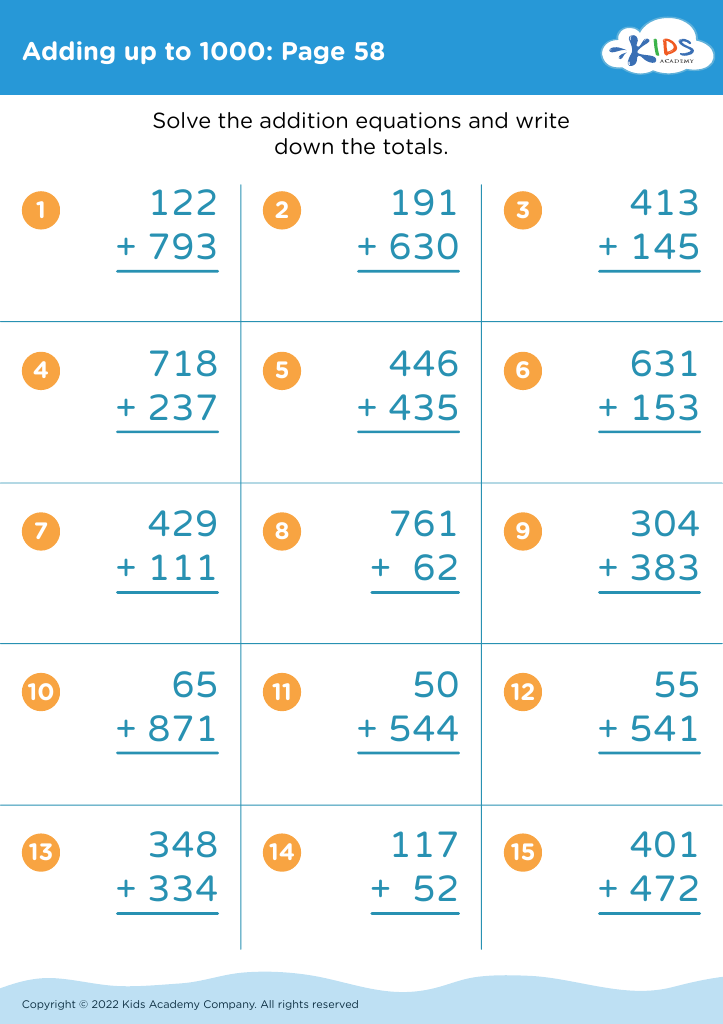
Adding up to 1000: Page 58

Adding up to 1000: Page 58

Adding up to 1000: Page 58
Worksheet
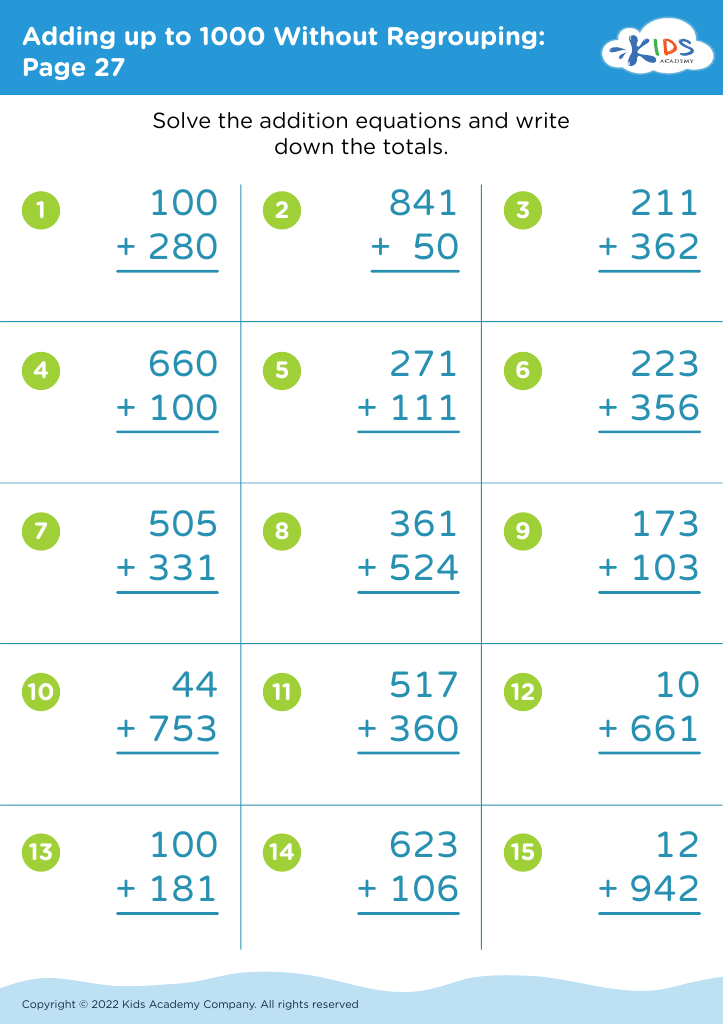
Adding up to 1000 Without Regrouping: Page 27
Worksheet
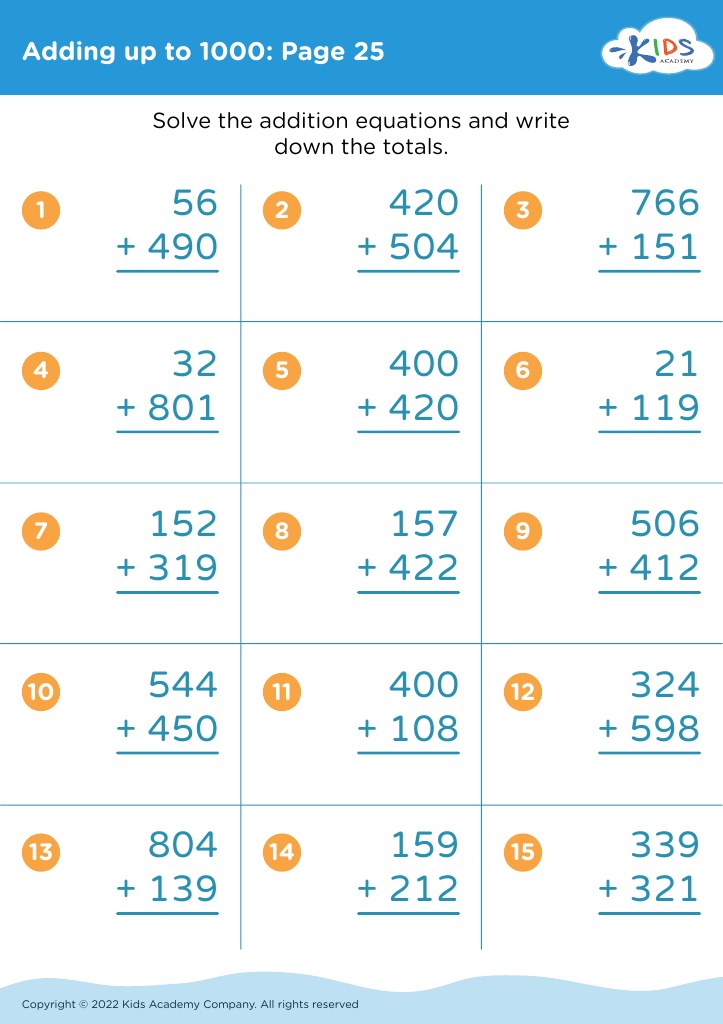
Adding up to 1000: Page 25

Adding up to 1000: Page 25

Adding up to 1000: Page 25
Worksheet
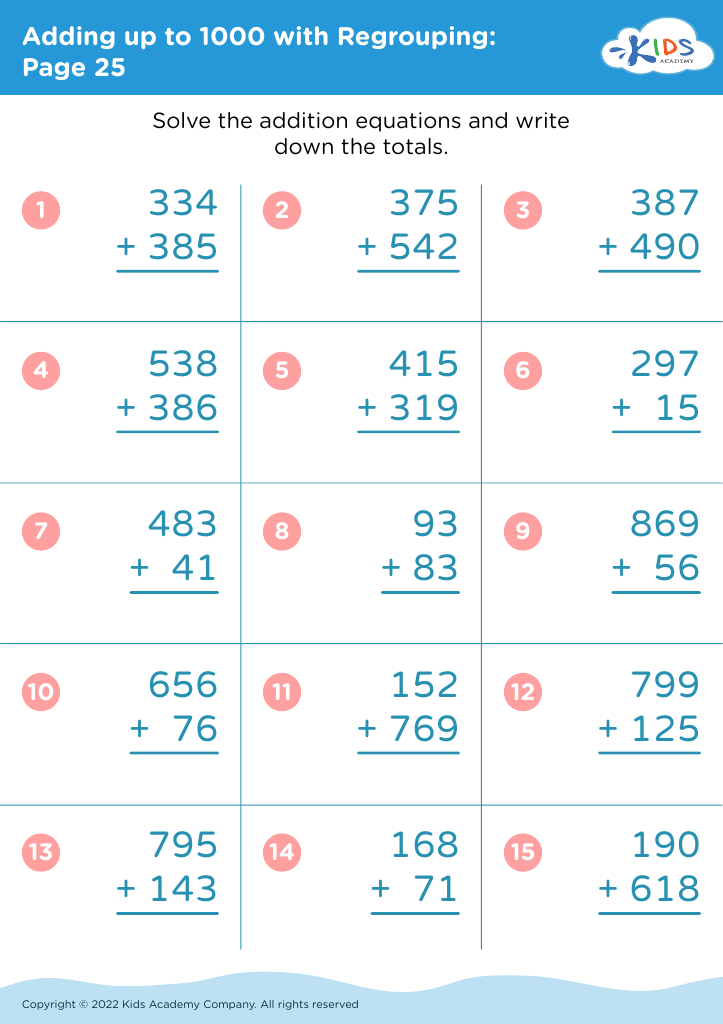
Adding up to 1000 with Regrouping: Page 25
Worksheet
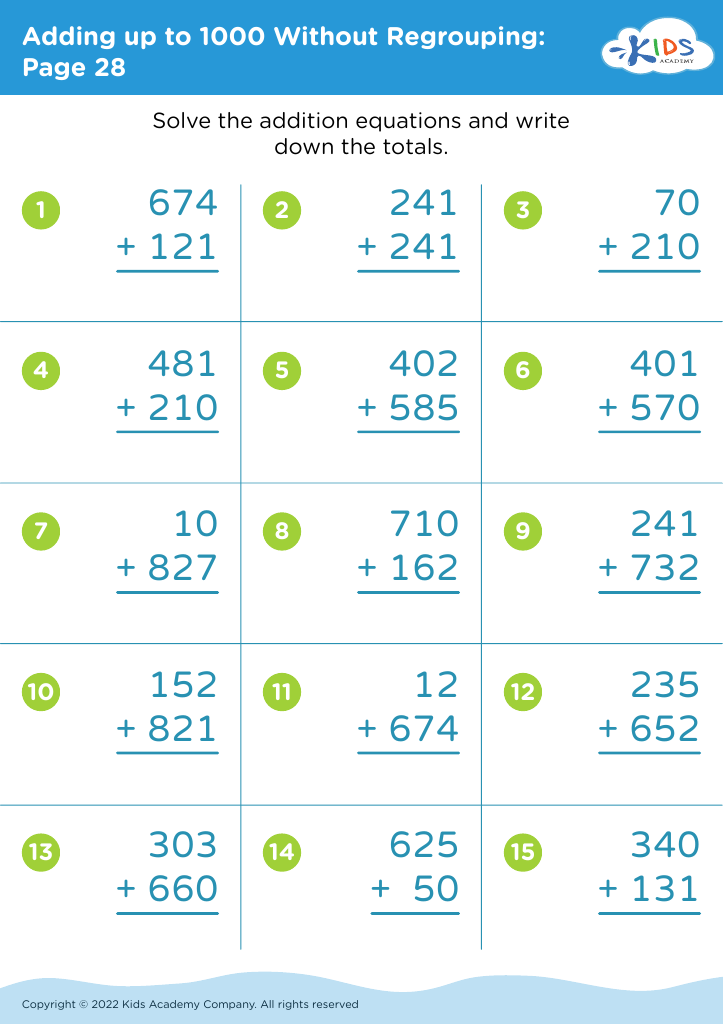
Adding up to 1000 Without Regrouping: Page 28
Worksheet
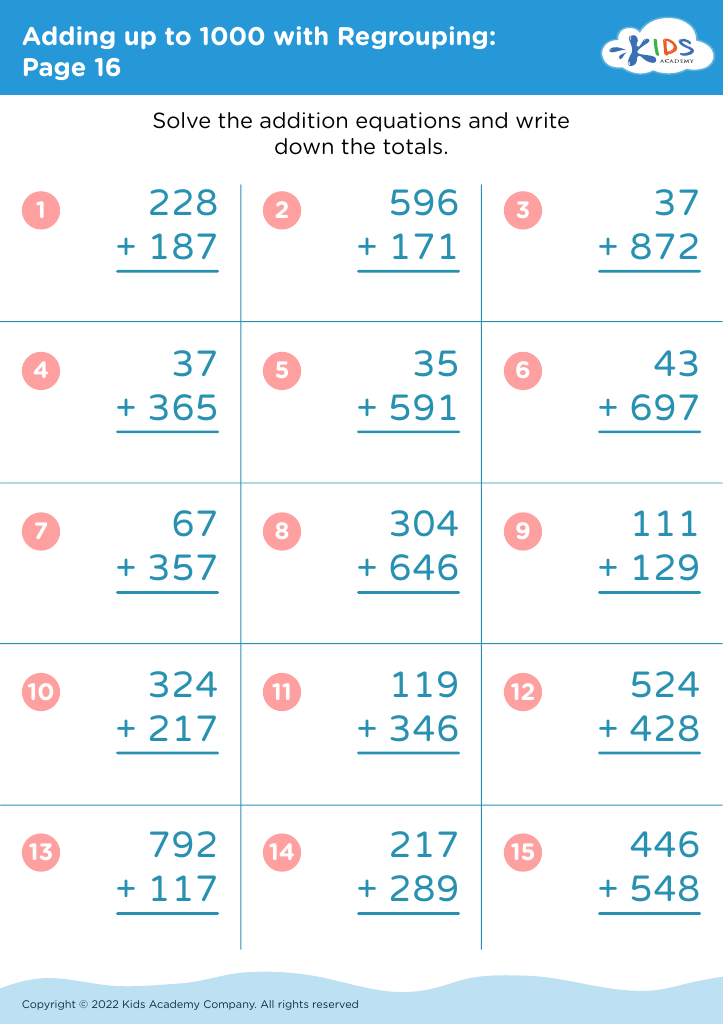
Adding up to 1000 with Regrouping: Page 16
Worksheet
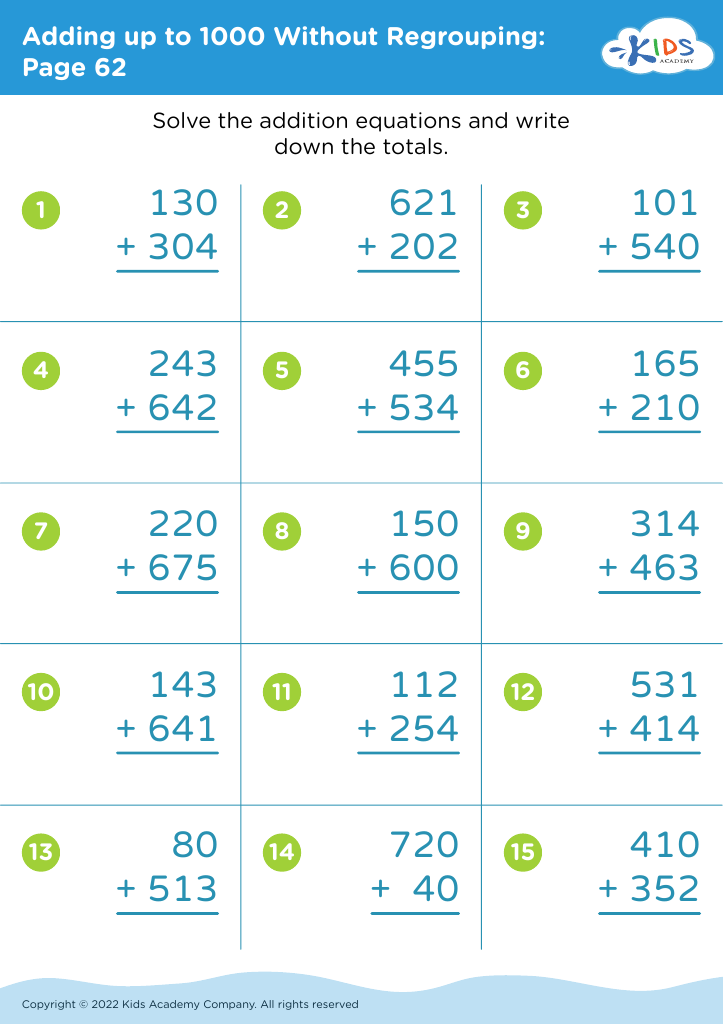
Adding up to 1000 Without Regrouping: Page 62
Worksheet
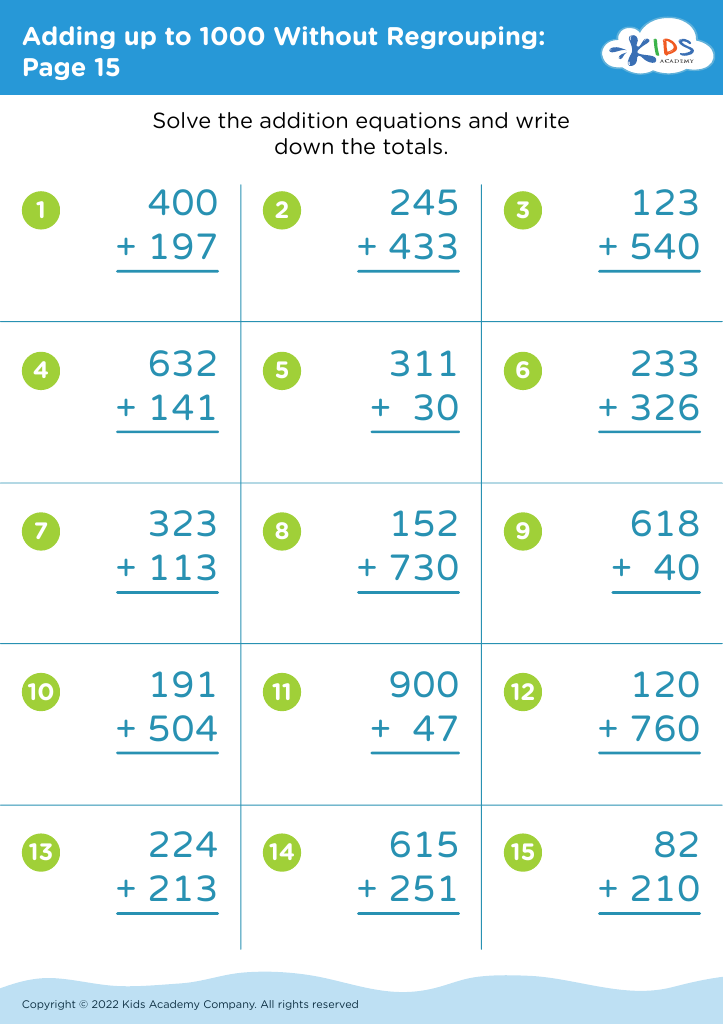
Adding up to 1000 Without Regrouping: Page 15
Worksheet
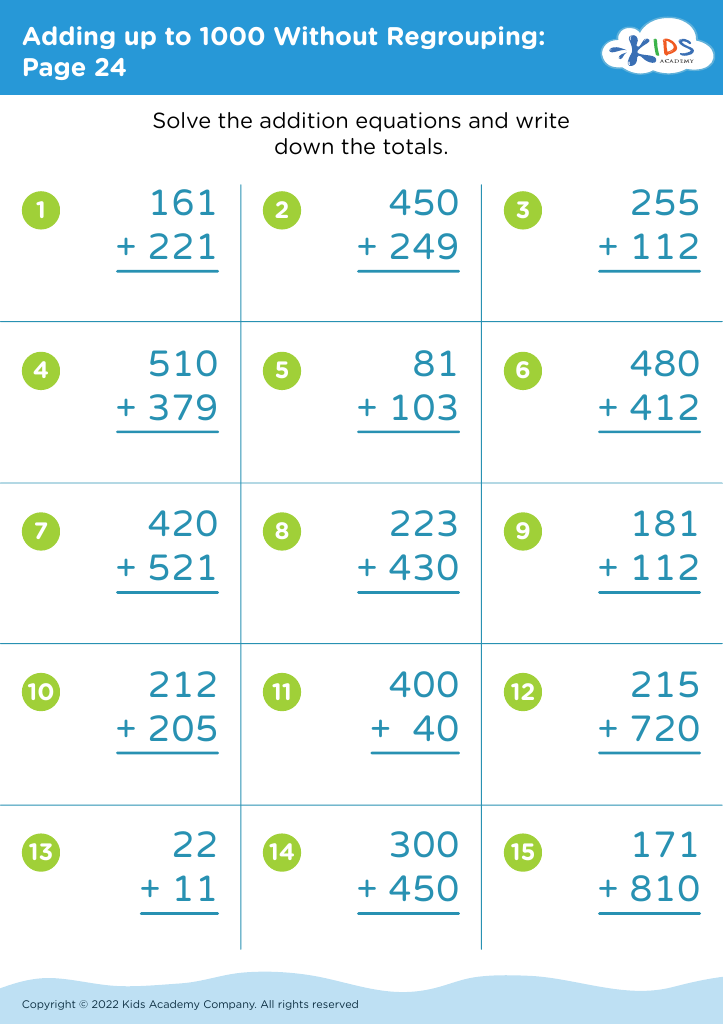
Adding up to 1000 Without Regrouping: Page 24
Worksheet


Understanding fractions and their relationships to whole numbers, especially in the context of adding up to 1000, is crucial for young learners aged 3-8 for several reasons. First, early experiences with numbers and basic mathematical concepts lay the foundation for future academic success. Grasping fractions fosters essential skills like critical thinking, problem-solving, and logical reasoning.

In this developmental stage, children are also building their number sense. Recognizing how parts can comprise a whole (or multiple wholes) helps them relate fractions to various real-life contexts, from cooking to sharing. This understanding enhances their ability to approach larger numbers, such as 1000, and comprehend the interconnectedness of different mathematical concepts, a building block for more advanced arithmetic in later years.

Moreover, when teachers and parents emphasize fractions, they help cultivate enthusiasm and confidence in math. Making fractions a fun and engaging topic can reduce math anxiety and encourage children to explore mathematics further. With foundational skills in fractions, children are more prepared for more complex mathematical challenges in their academic journey. In essence, promoting an understanding of fractions aids not only immediate learning but instills long-lasting numerical literacy, essential for navigating everyday life.