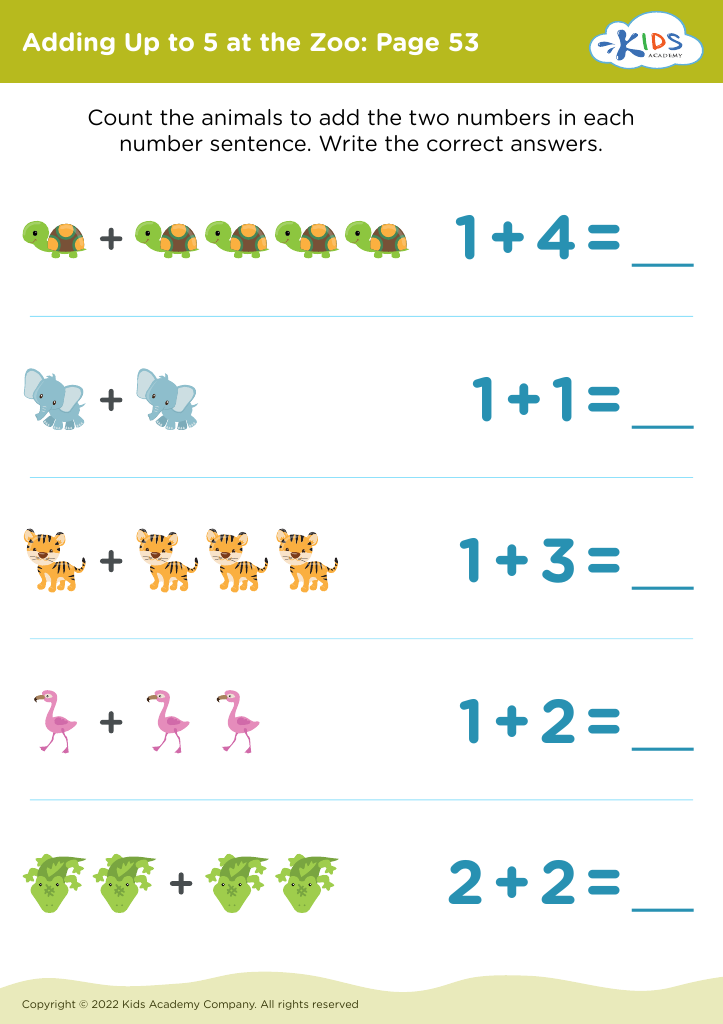
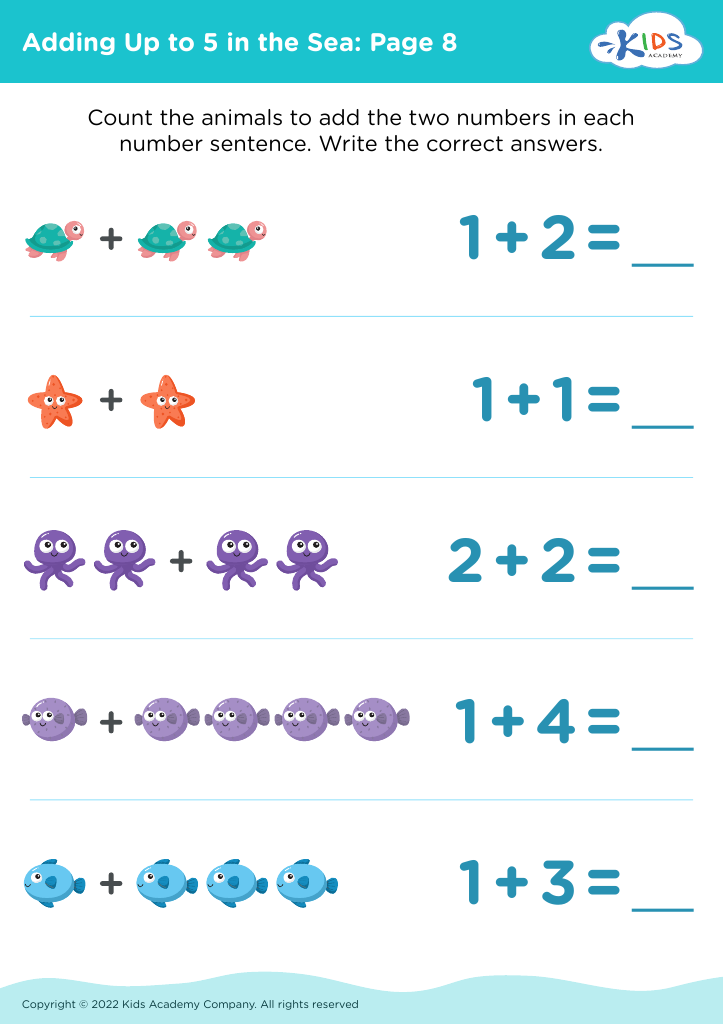
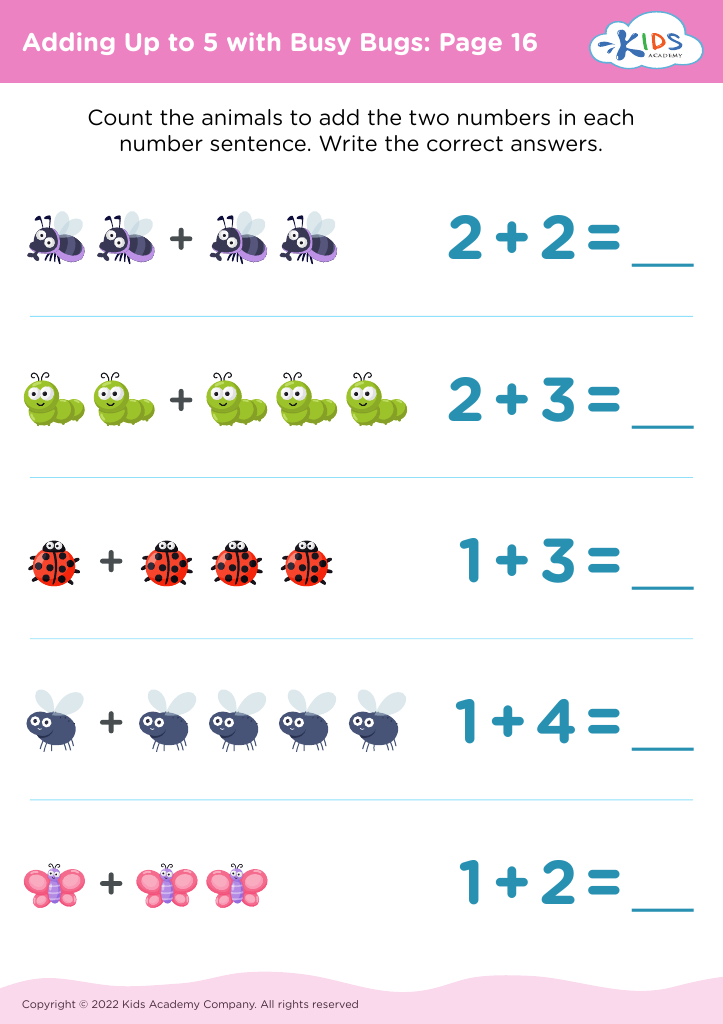
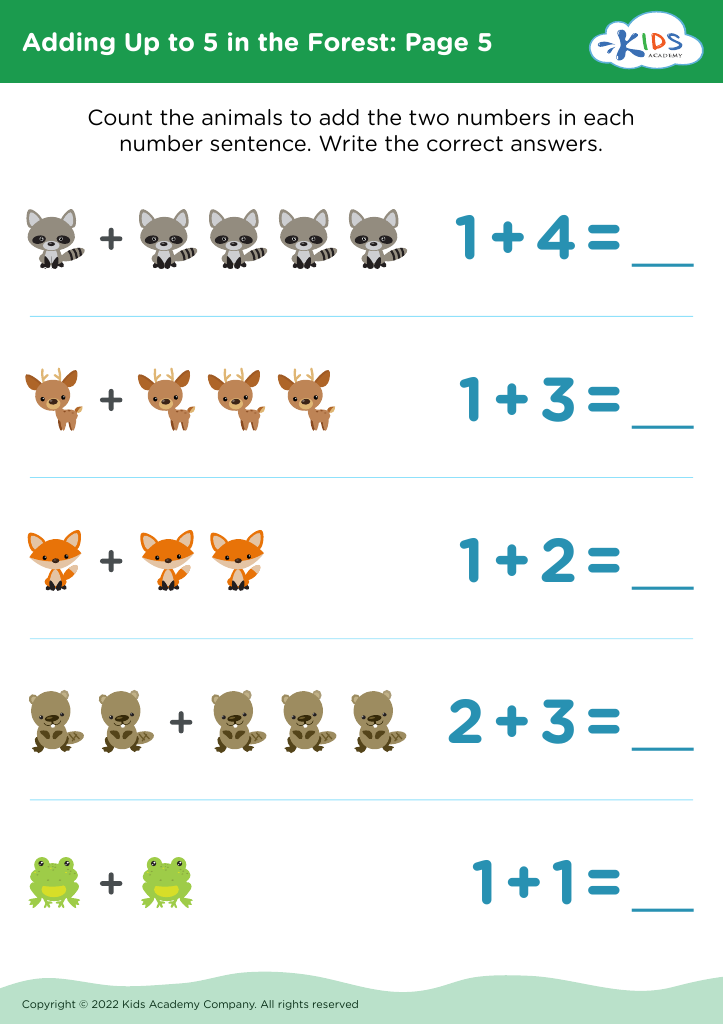
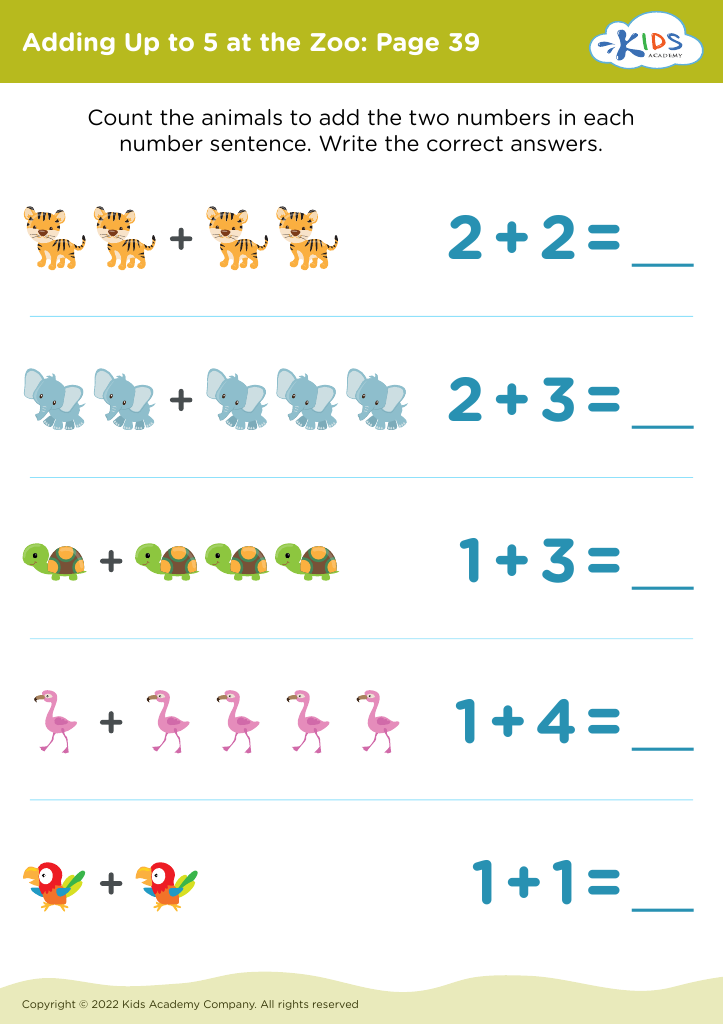
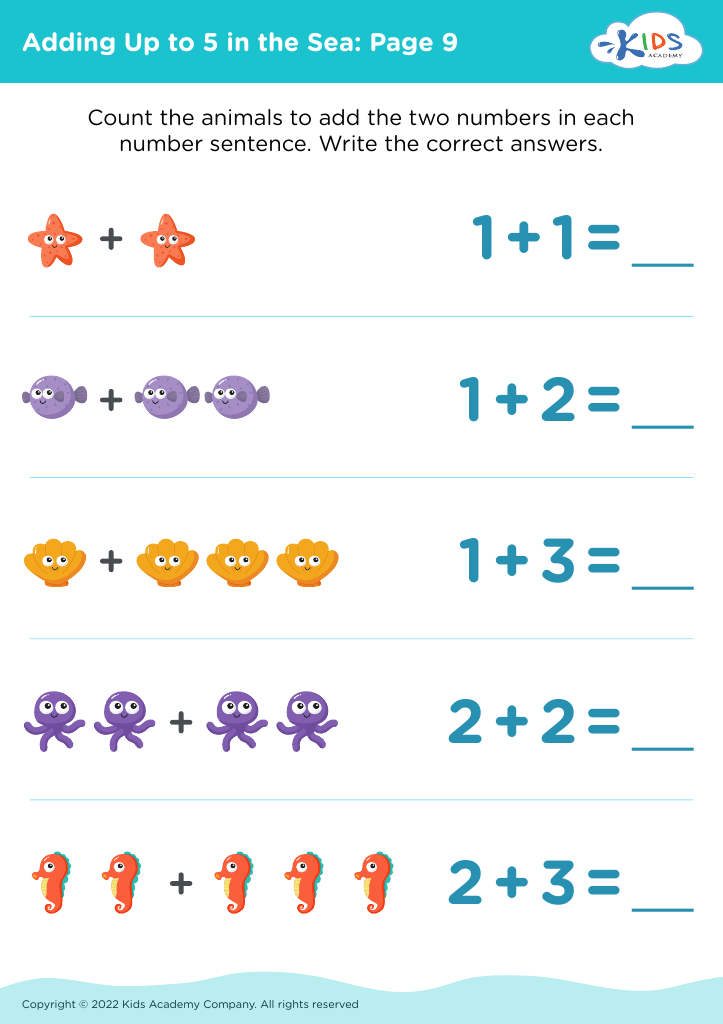








Addition skills, specifically adding up to 5, are foundational for children aged 3-8, and both parents and teachers should prioritize this learning objective. Mastering these skills fosters early math comprehension, establishing a strong numerical base that serves as a precursor for more complex mathematical concepts. Understanding how to add up to 5 enhances children's problem-solving abilities, supports logical thinking, and cultivates a sense of confidence in handling numbers.
At such a young age, children learn best through play and hands-on experiences. Teaching them addition through engaging activities—like using physical objects, games, or visuals—also enhances their fine motor skills and cognitive development. Furthermore, early addition skills are closely connected to everyday life, improving a child's ability to make sense of the world around them, from counting toys to sharing snacks.
Moreover, a strong grasp of basic addition encourages a positive rapport with mathematics, helping to dispel any fear or anxiety about the subject. When parents and teachers reinforce these skills collectively, they create a supportive learning environment that highlights the importance of math in daily activities, ultimately laying the groundwork for future academic success and lifelong problem-solving skills.








