Filters

90 filtered results

Clear all filters
Favorites
With answer key
Interactive

90 filtered results

Difficulty Level

Grade


Check out this FREE Trial Lesson on Adding Up to 5 for age 3-8!

Z

Favorites
With answer key
Interactive
  • 3-8
  • Animal recognition
  • Adding Up to 5
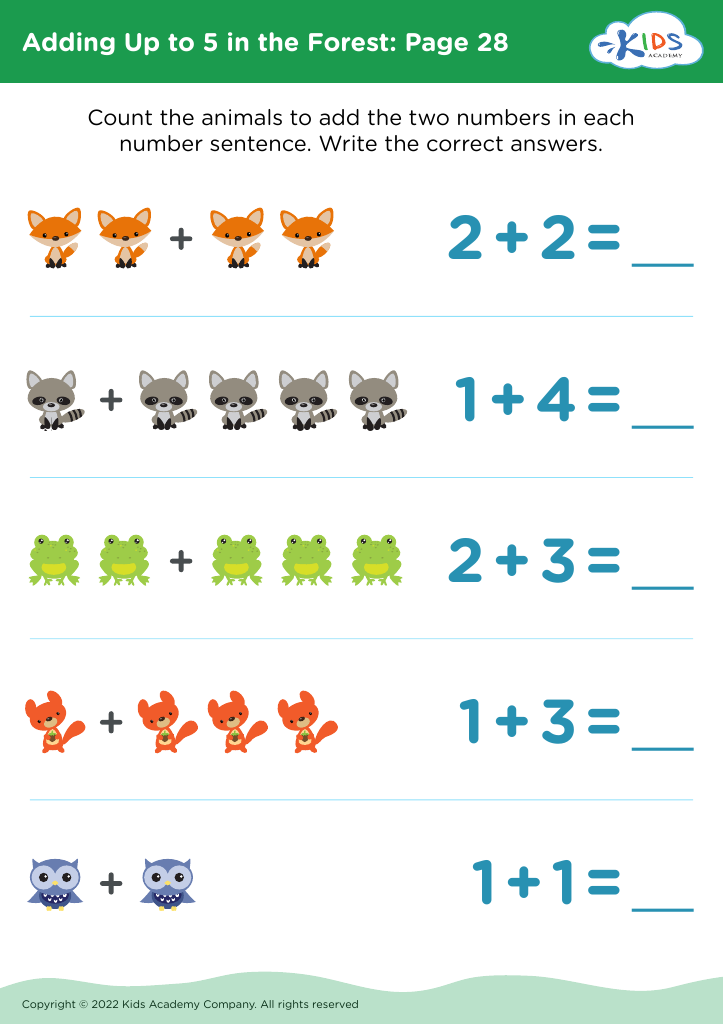
Adding Up to 5 in the Forest: Page 28
Worksheet
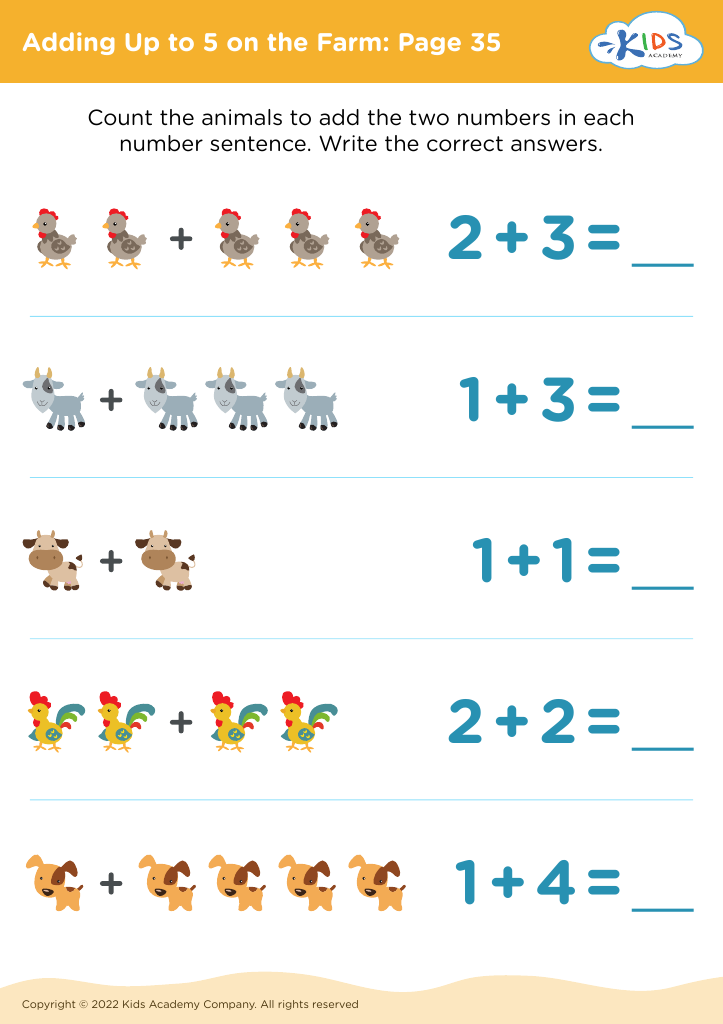
Adding Up to 5 on the Farm: Page 35
Worksheet
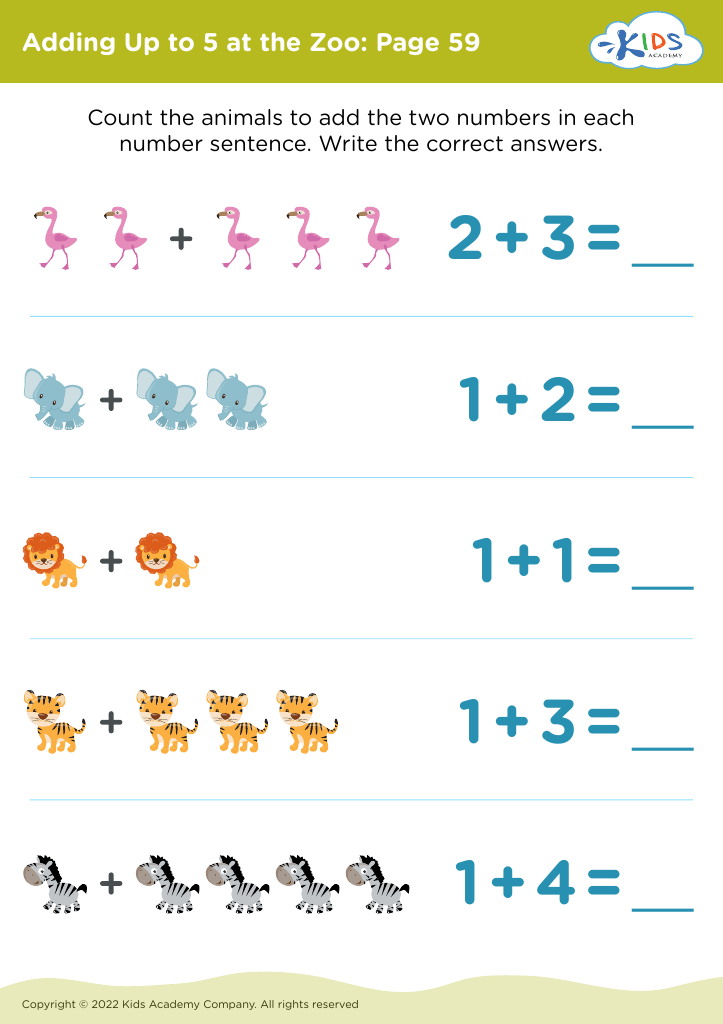
Adding Up to 5 at the Zoo: Page 59
Worksheet
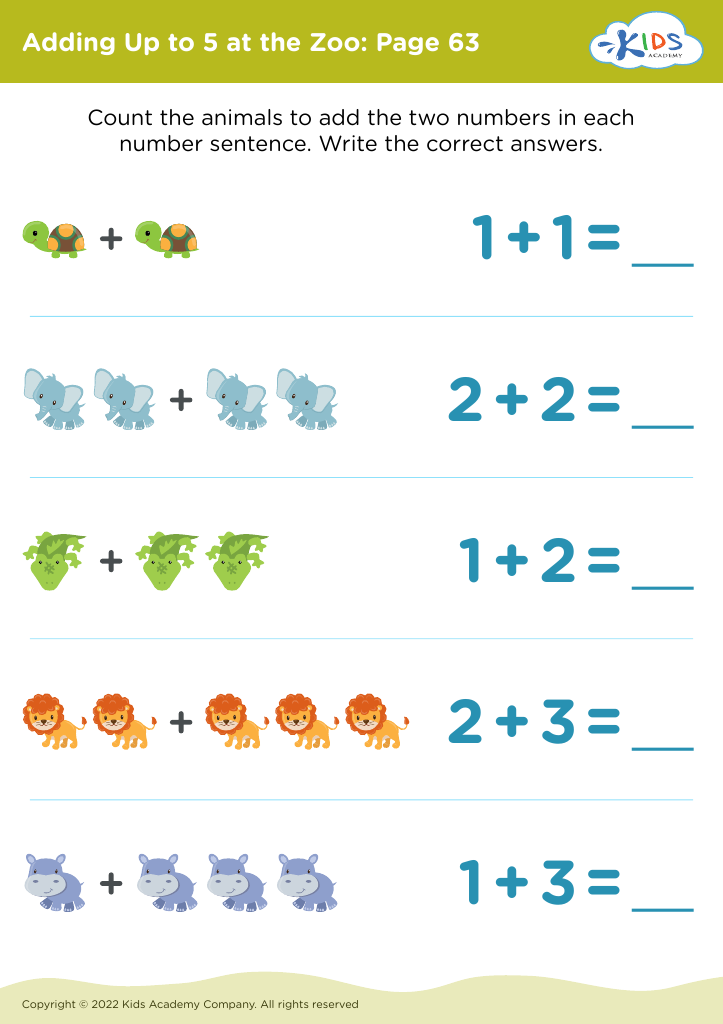
Adding Up to 5 at the Zoo: Page 63
Worksheet
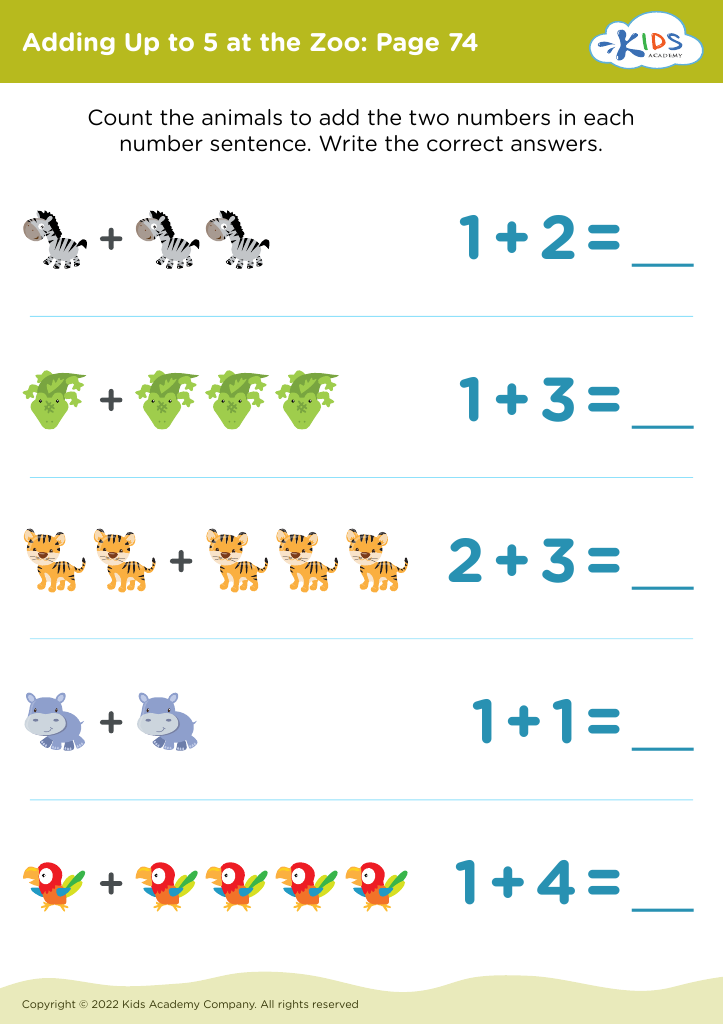
Adding Up to 5 at the Zoo: Page 74
Worksheet
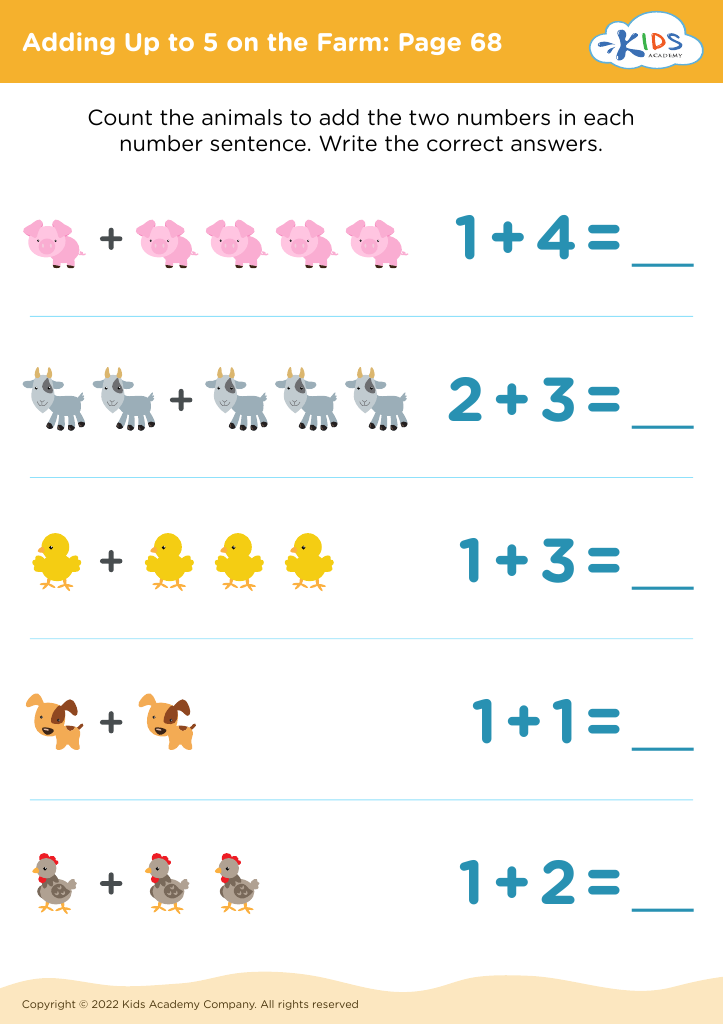
Adding Up to 5 on the Farm: Page 68
Worksheet
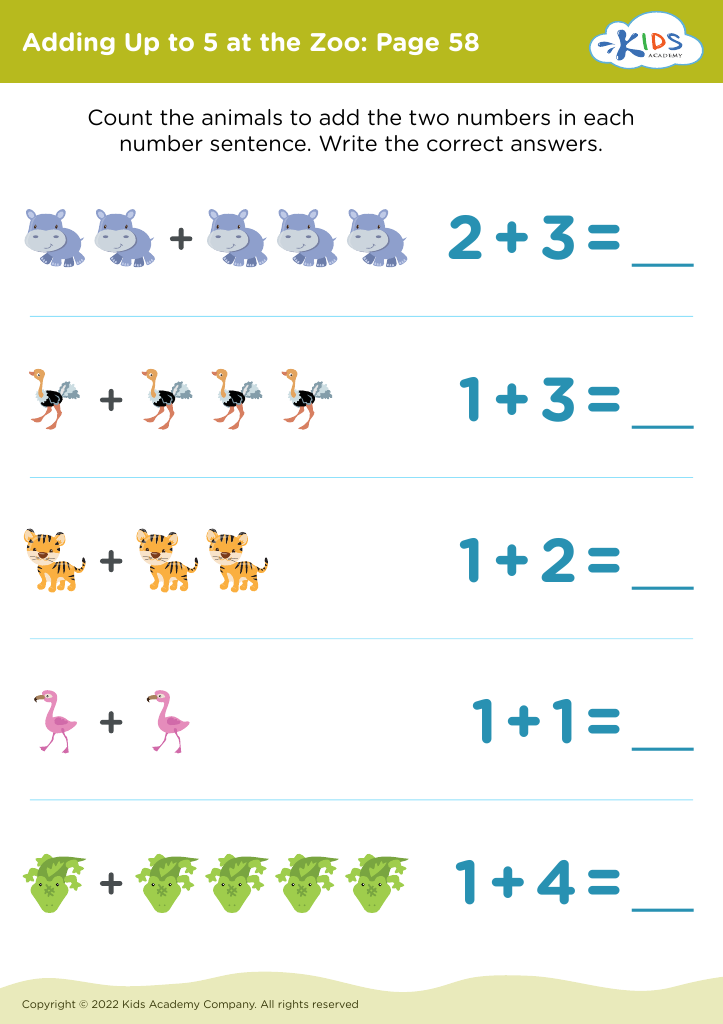
Adding Up to 5 at the Zoo: Page 58
Worksheet
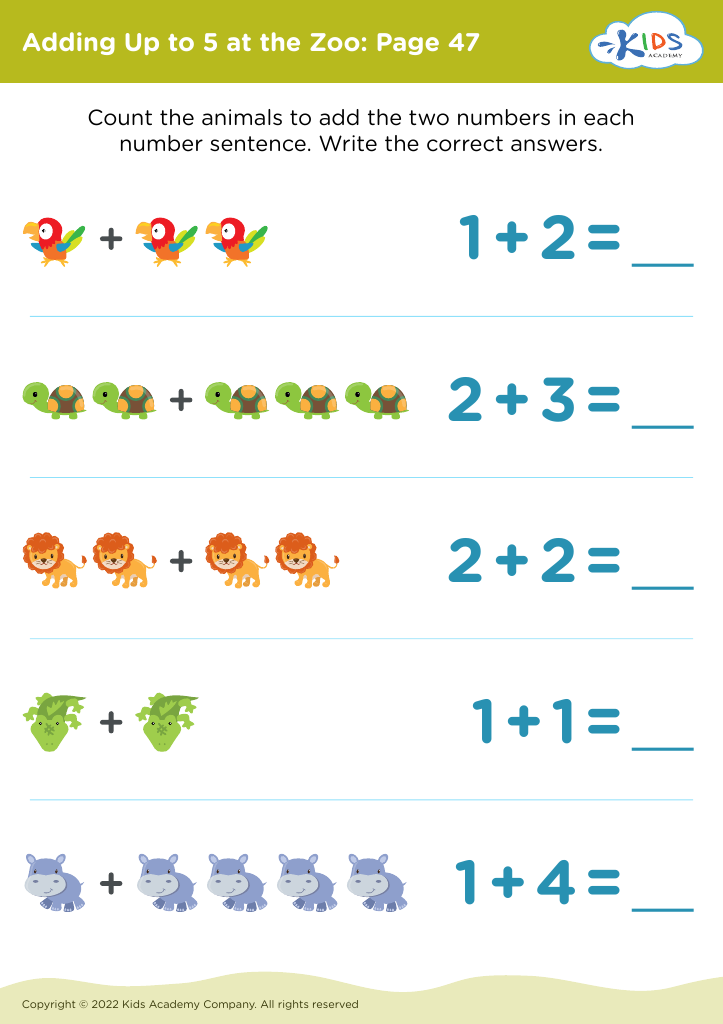
Adding Up to 5 at the Zoo: Page 47
Worksheet
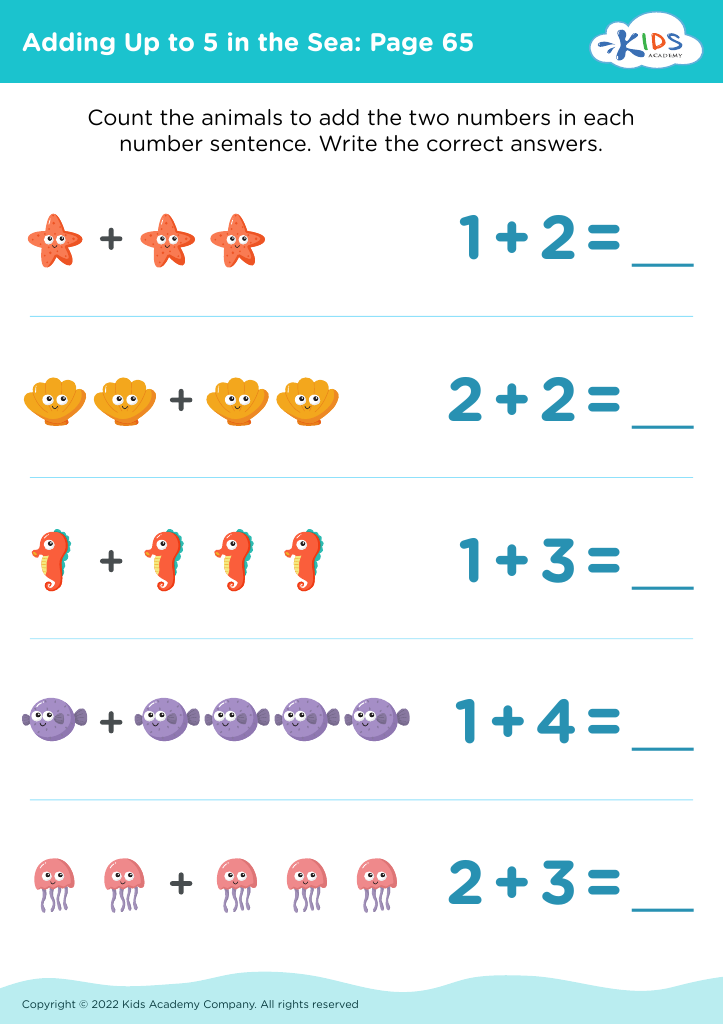
Adding Up to 5 in the Sea: Page 65
Worksheet
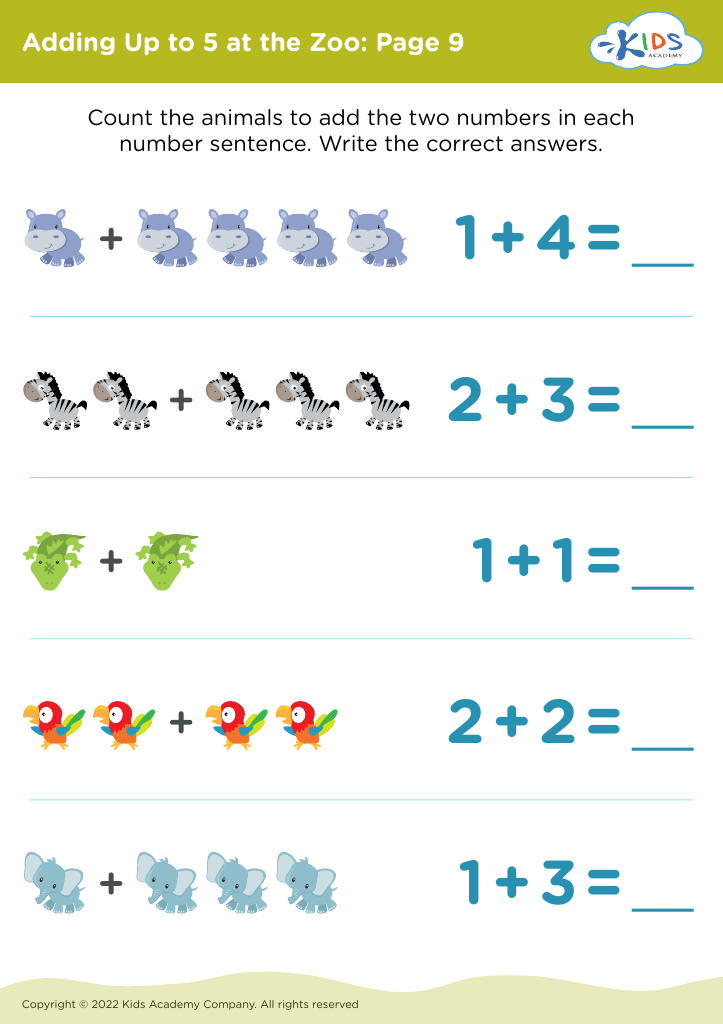
Adding Up to 5 at the Zoo: Page 9

Adding Up to 5 at the Zoo: Page 9

Adding Up to 5 at the Zoo: Page 9
Worksheet
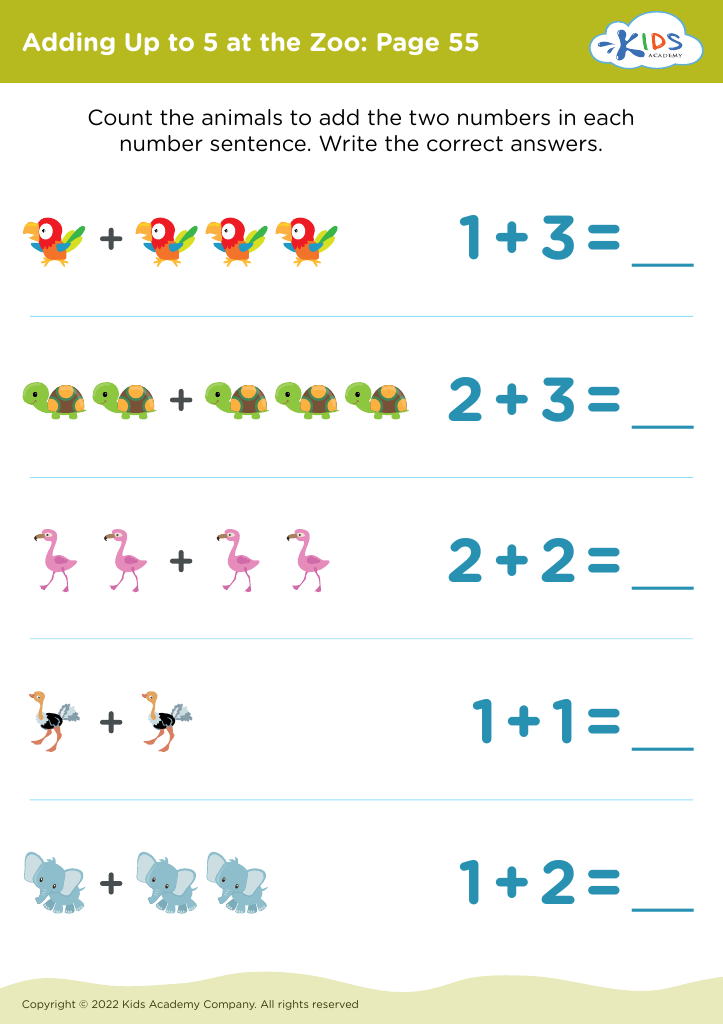
Adding Up to 5 at the Zoo: Page 55
Worksheet
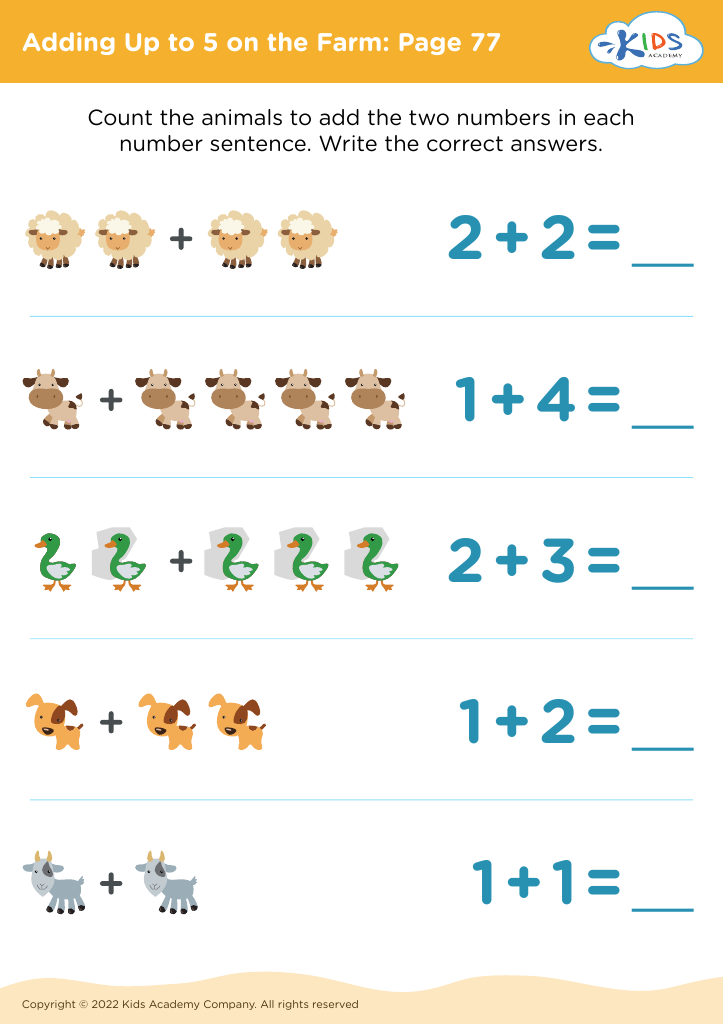
Adding Up to 5 on the Farm: Page 77
Worksheet
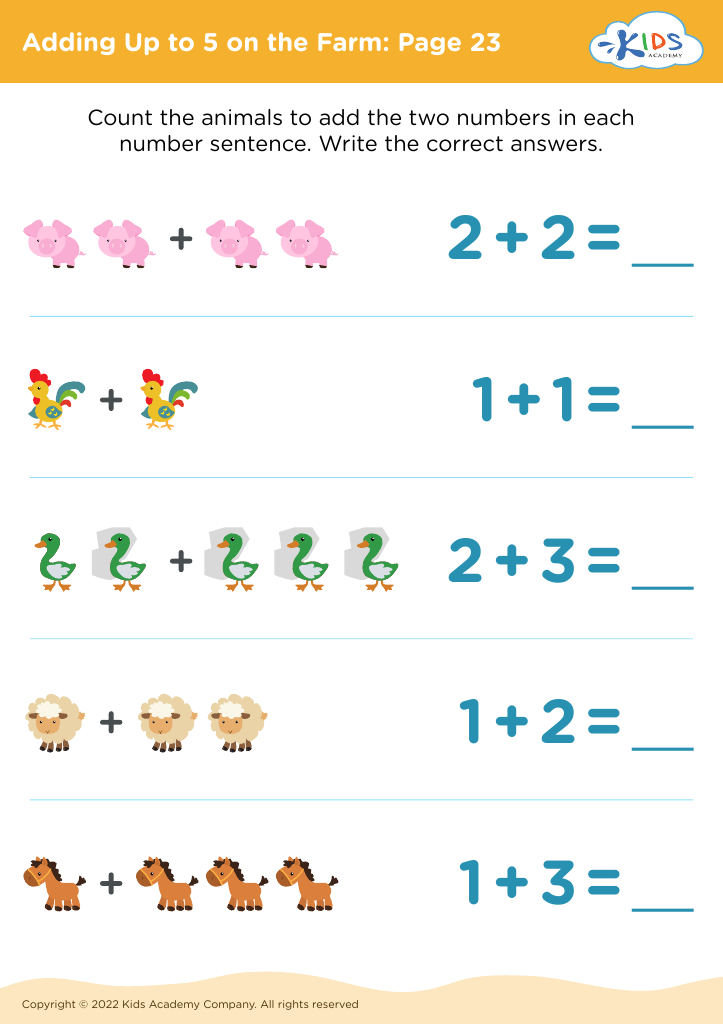
Adding Up to 5 on the Farm: Page 23
Worksheet
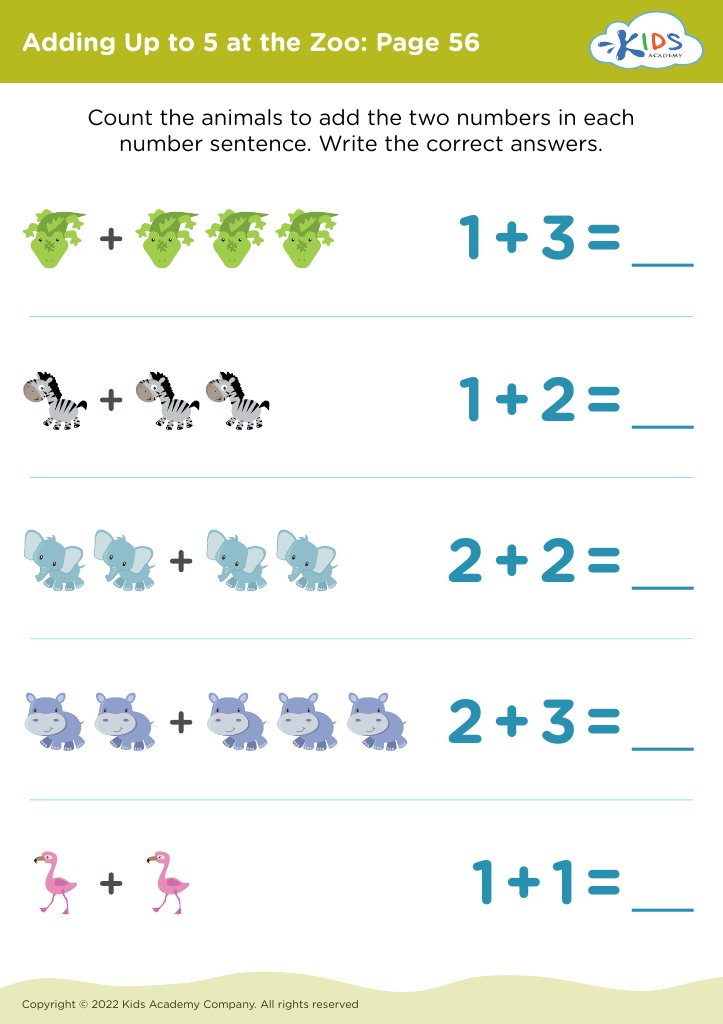
Adding Up to 5 at the Zoo: Page 56
Worksheet
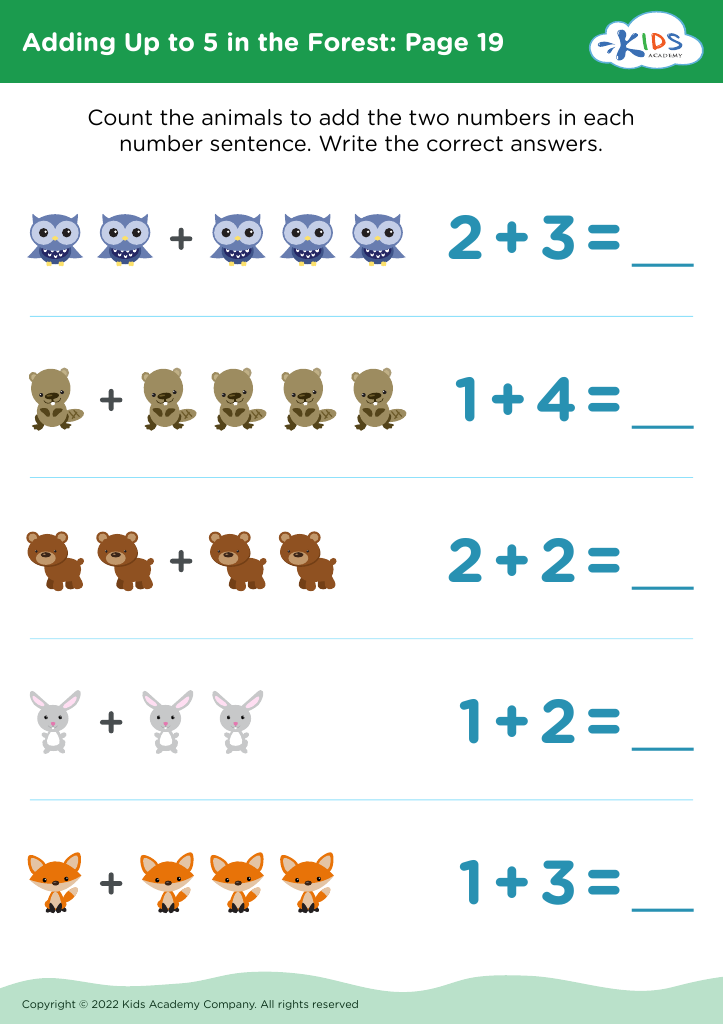
Adding Up to 5 in the Forest: Page 19
Worksheet
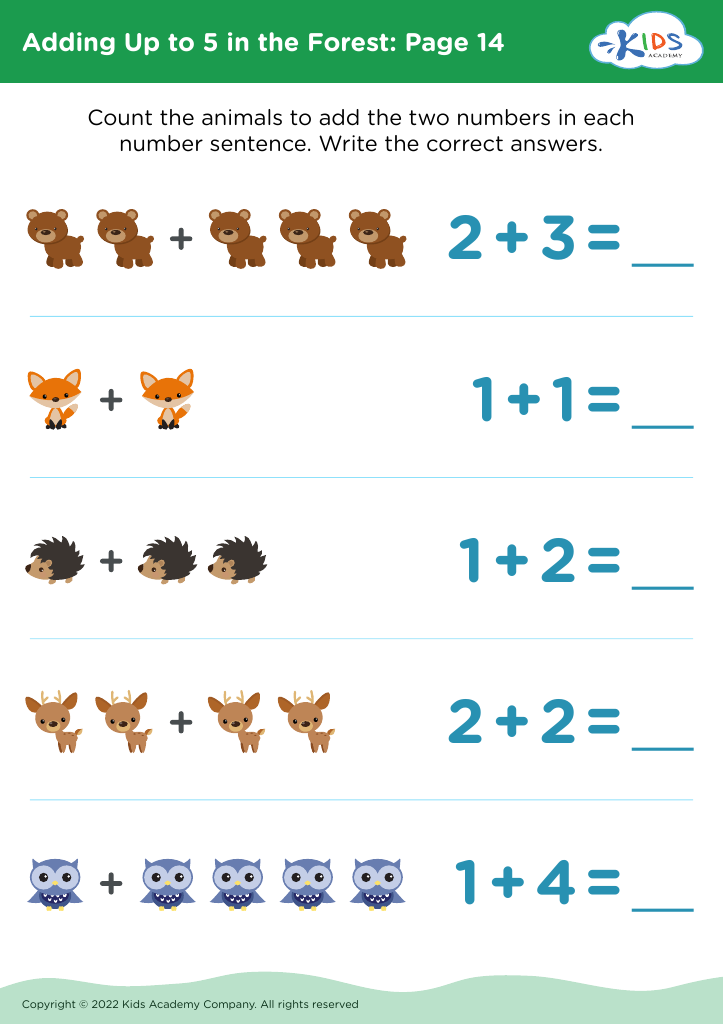
Adding Up to 5 in the Forest: Page 14
Worksheet
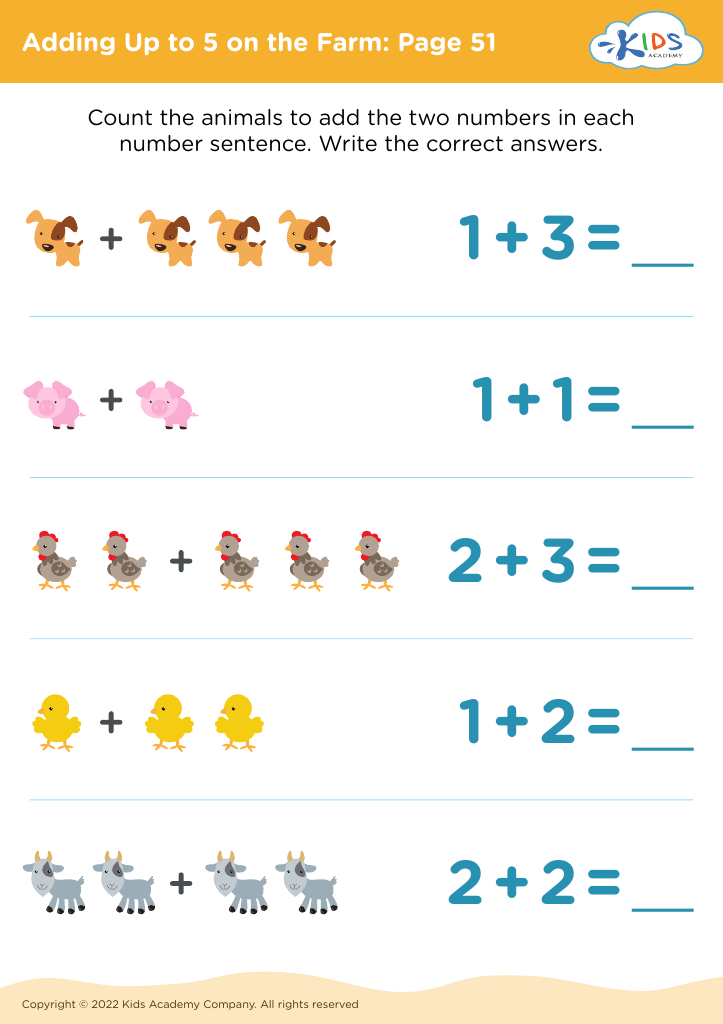
Adding Up to 5 on the Farm: Page 51
Worksheet
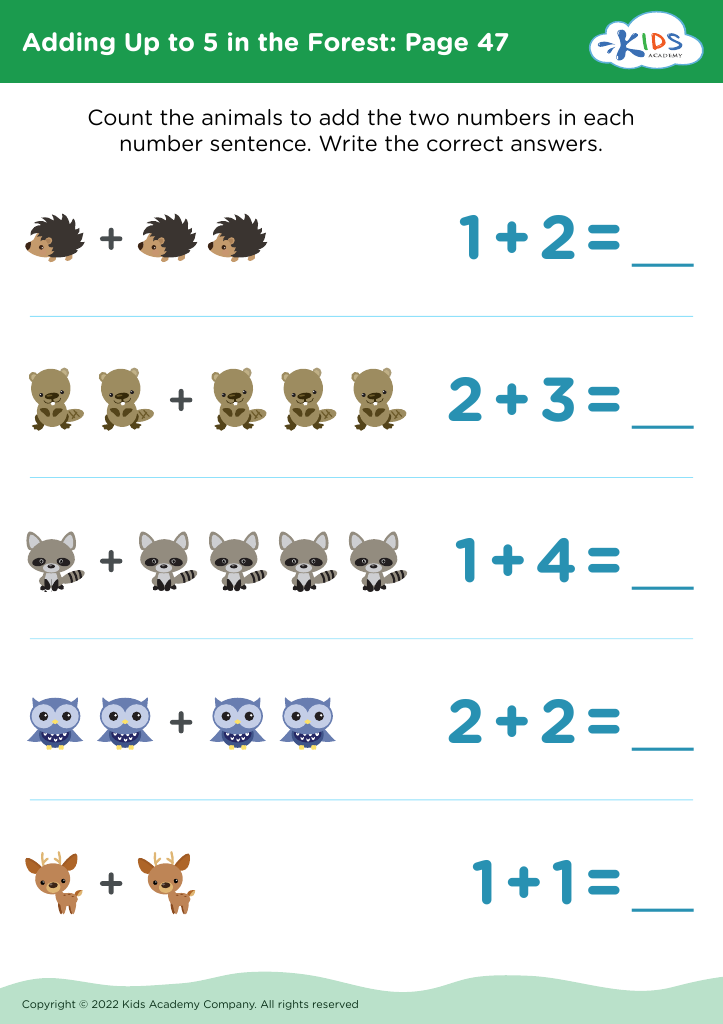
Adding Up to 5 in the Forest: Page 47
Worksheet
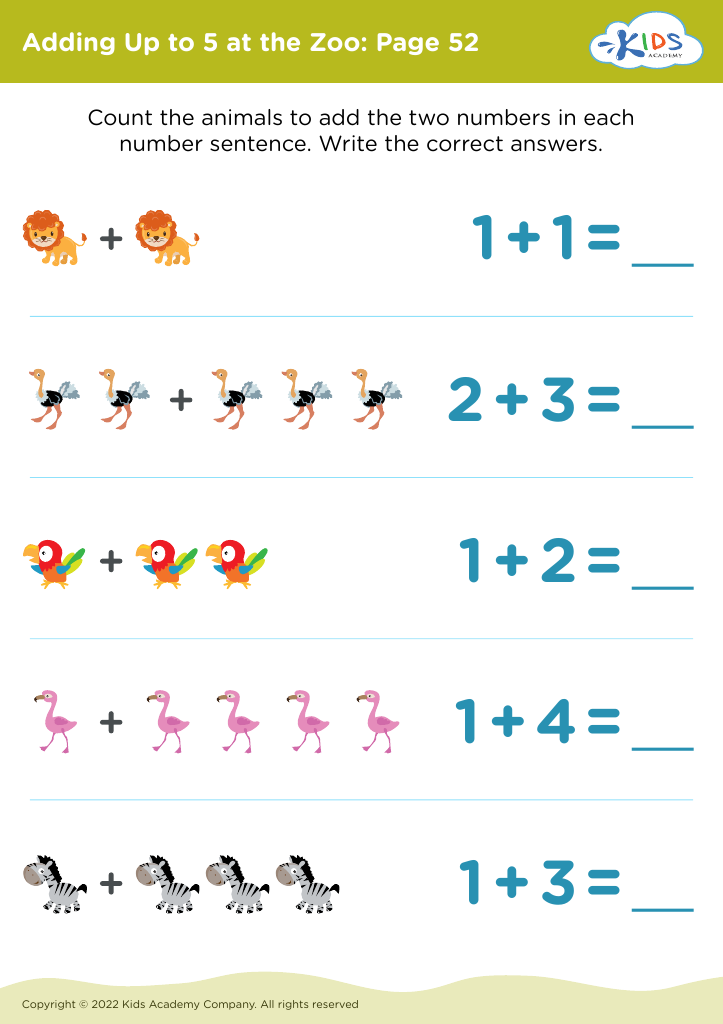
Adding Up to 5 at the Zoo: Page 52
Worksheet
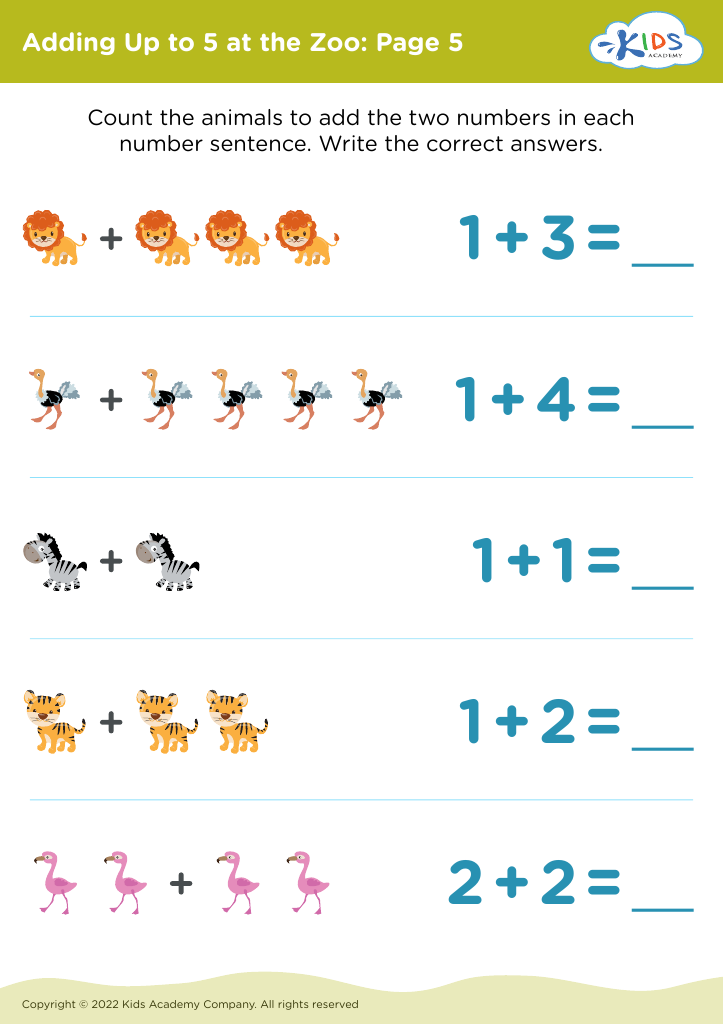
Adding Up to 5 at the Zoo: Page 5

Adding Up to 5 at the Zoo: Page 5

Adding Up to 5 at the Zoo: Page 5
Worksheet
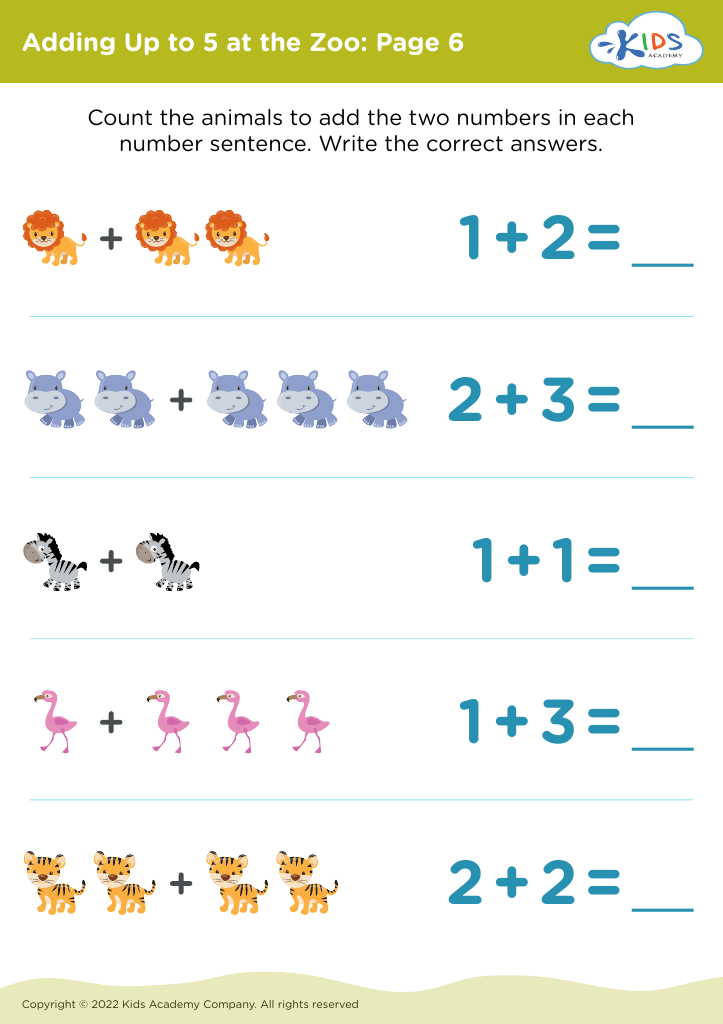
Adding Up to 5 at the Zoo: Page 6

Adding Up to 5 at the Zoo: Page 6

Adding Up to 5 at the Zoo: Page 6
Worksheet
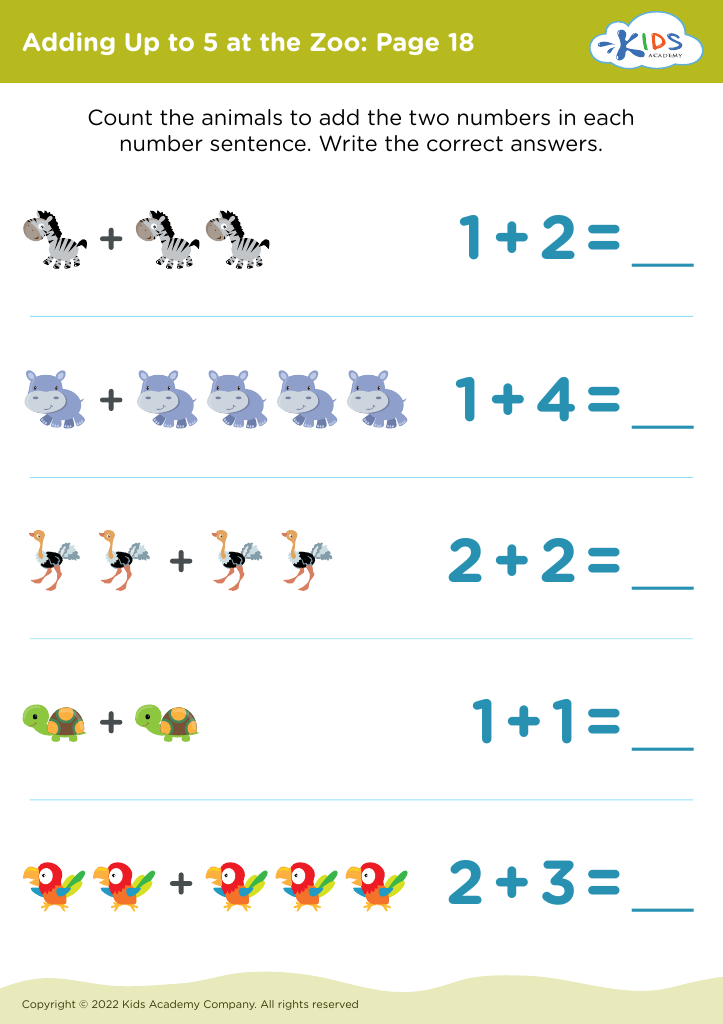
Adding Up to 5 at the Zoo: Page 18
Worksheet
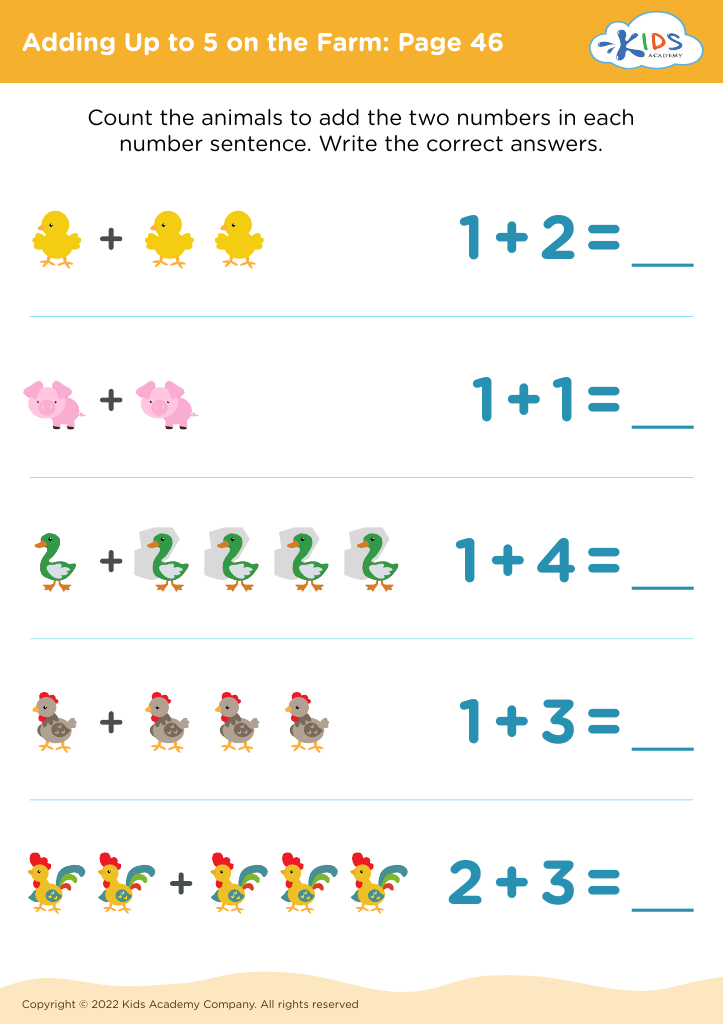
Adding Up to 5 on the Farm: Page 46
Worksheet
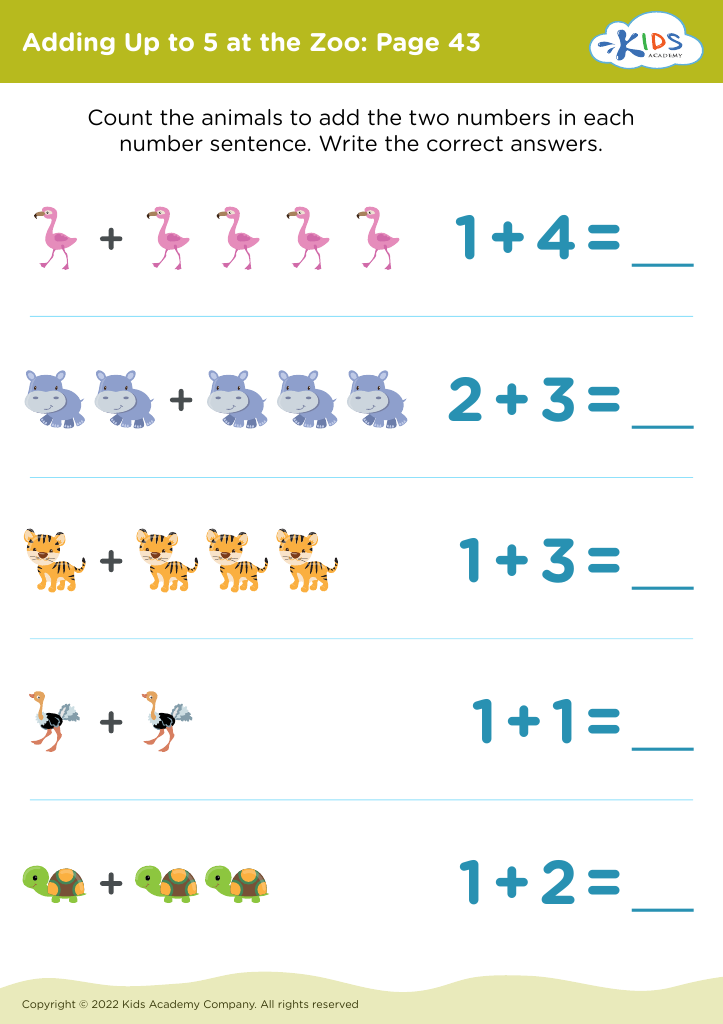
Adding Up to 5 at the Zoo: Page 43
Worksheet


Parents and teachers should prioritize animal recognition and basic math skills, such as adding up to 5, for children aged 3-8 because these activities are foundational for cognitive development and early learning success. Firstly, animal recognition helps children engage with the natural world and develops categorization and memory skills. Understanding different animals fosters curiosity and a love of learning while enriching vocabulary and language abilities, enhancing a child's capacity to describe and understand their environment.

Simultaneously, learning to add up to 5 introduces foundational numeracy concepts. These early math skills are crucial for developing logical thinking and problem-solving abilities. Addition within this range is tangible and manageable, allowing children to grasp mathematical concepts with immediate and comprehensible feedback.

Combining these subjects – recognizing animals and basic mathematics – creates a multidisciplinary learning experience that is both educational and enjoyable. For example, counting animals in picture books or toys can seamlessly integrate literacy, numeracy, and science. These engaging activities make learning more enjoyable and meaningful, increasing the likelihood of fostering a lifelong passion for learning.

Moreover, achieving competency in these areas boosts a child's self-confidence and provides a strong skill foundation, boosting their readiness for more advanced education. Thus, caring about these topics promotes holistic educational development, setting kids up for future academic and personal success.