Filters

244 filtered results

Clear all filters
Favorites
With answer key
Interactive

244 filtered results

Difficulty Level

Grade


Check out this FREE Trial Lesson on Adding Up to 5 for age 3-8!

Short and Long Vowel Sort

Favorites
With answer key
Interactive
  • 3-8
  • Basic Addition Skills
  • Adding Up to 5
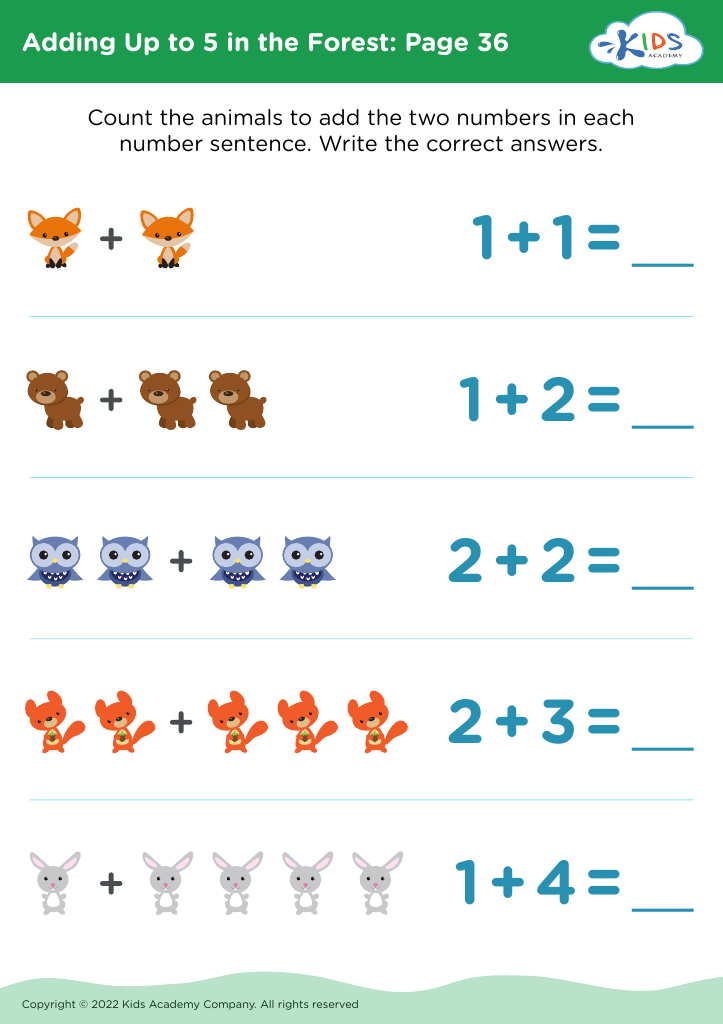
Adding Up to 5 in the Forest: Page 36
Worksheet
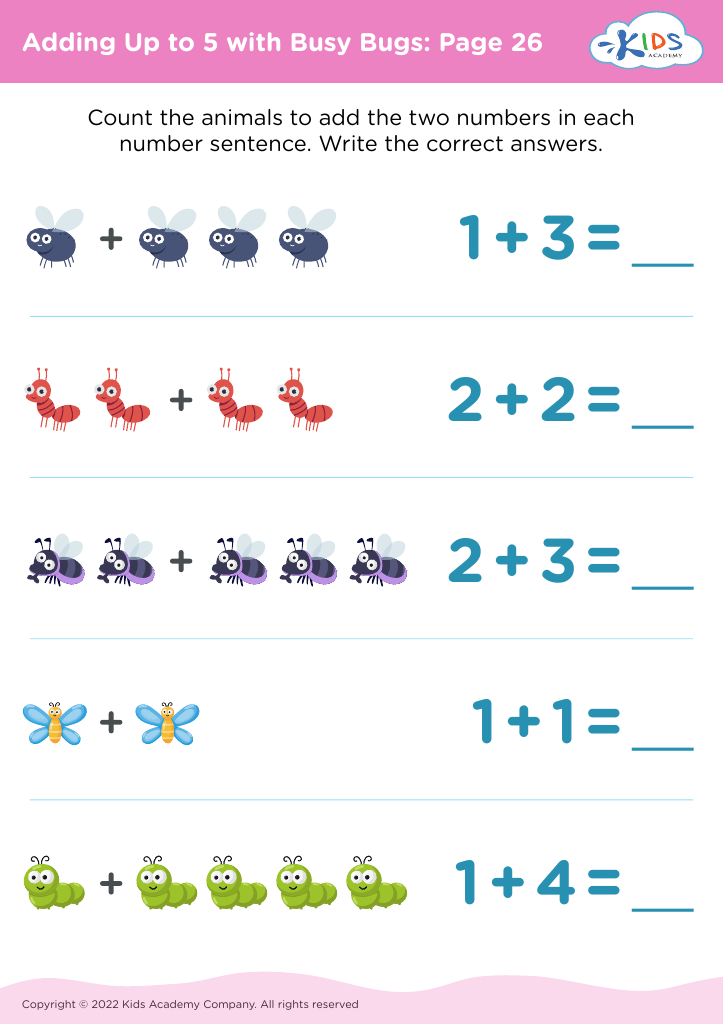
Adding Up to 5 with Busy Bugs: Page 26
Worksheet
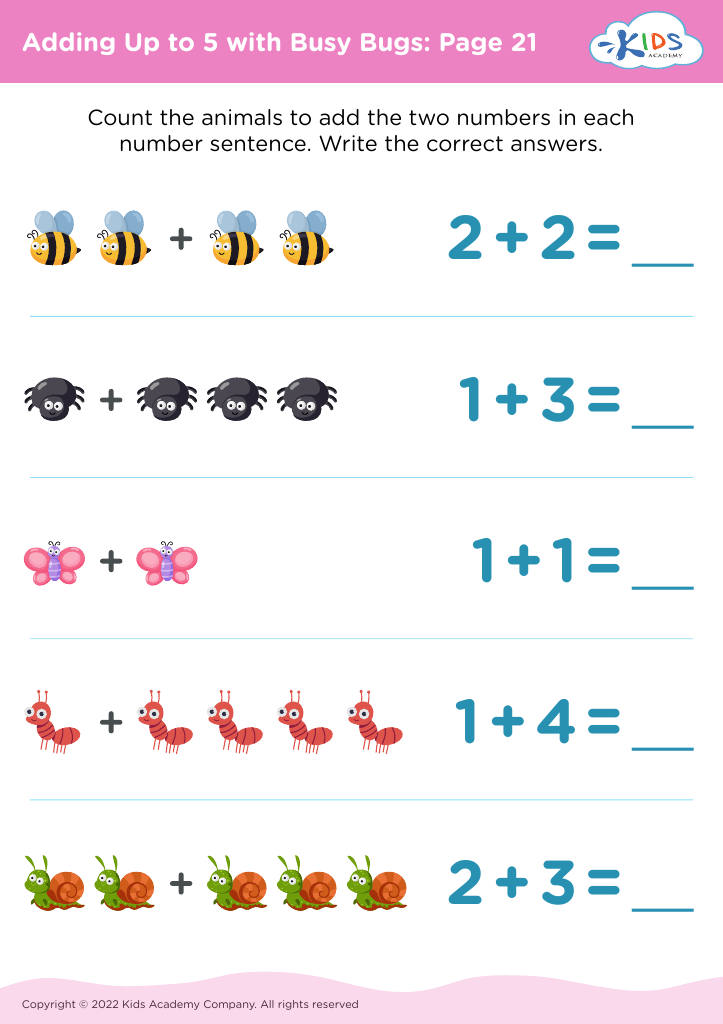
Adding Up to 5 with Busy Bugs: Page 21
Worksheet
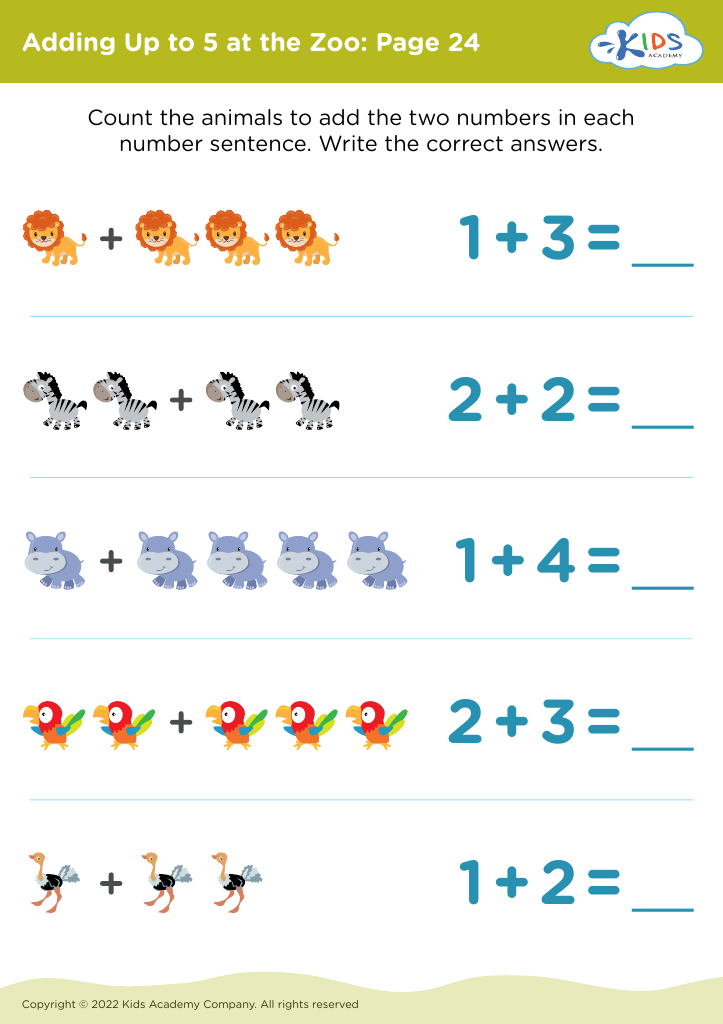
Adding Up to 5 at the Zoo: Page 24
Worksheet
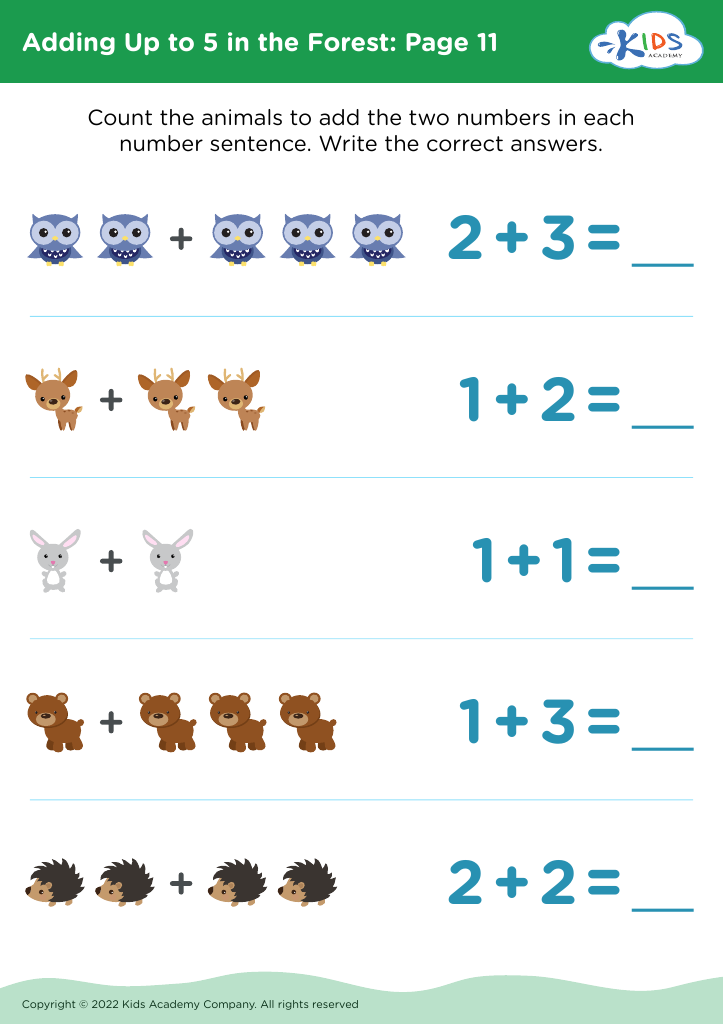
Adding Up to 5 in the Forest: Page 11
Worksheet
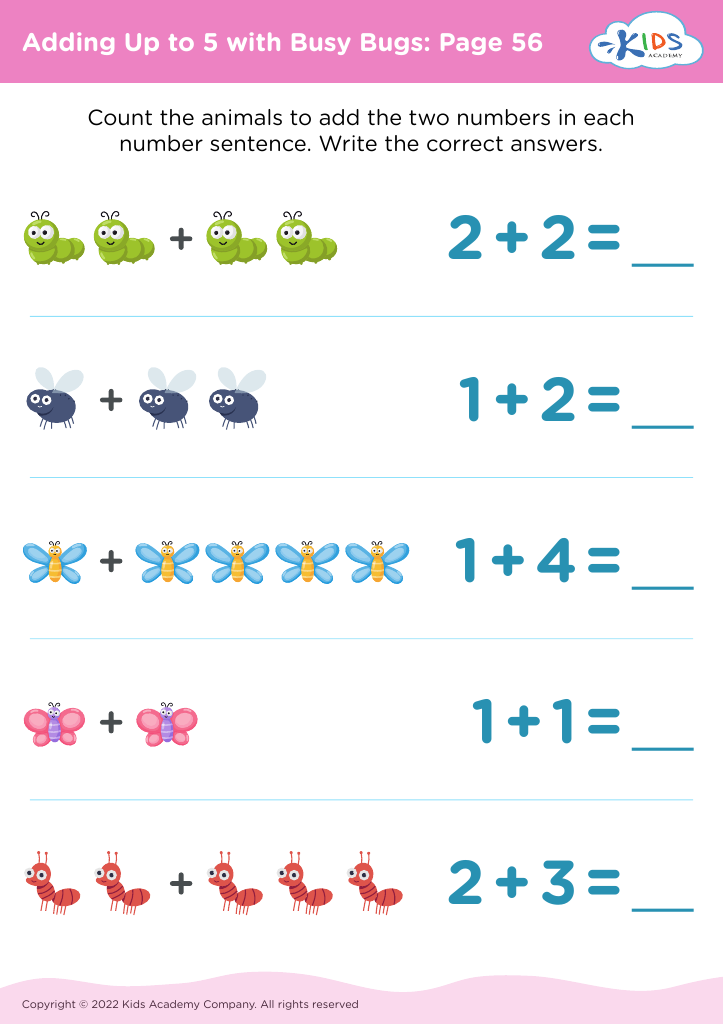
Adding Up to 5 with Busy Bugs: Page 56
Worksheet
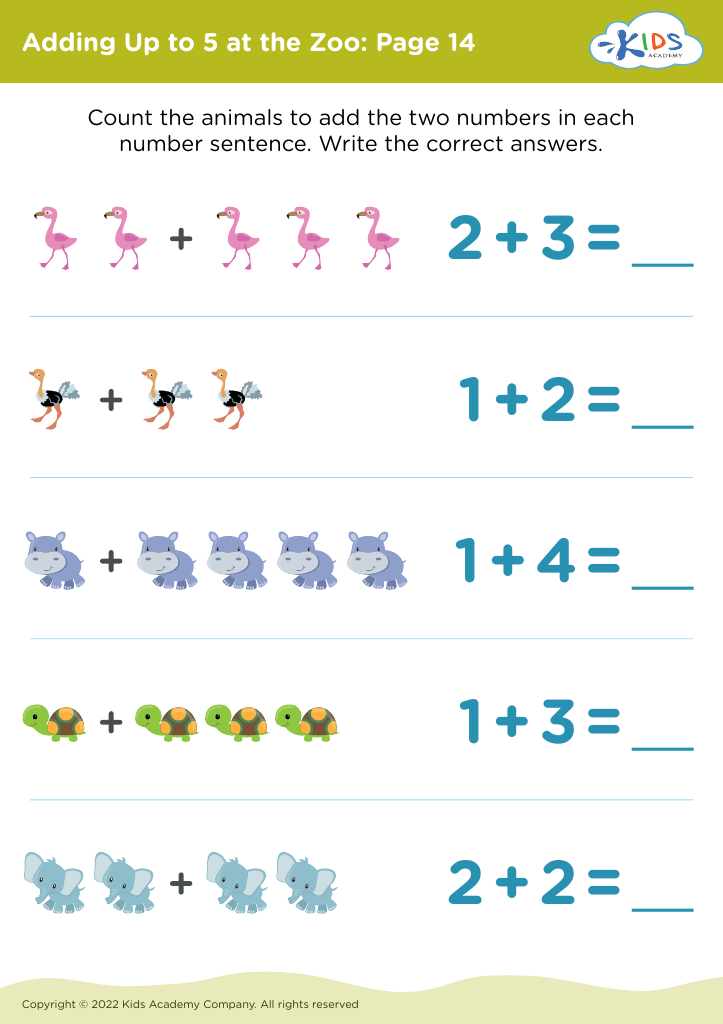
Adding Up to 5 at the Zoo: Page 14
Worksheet
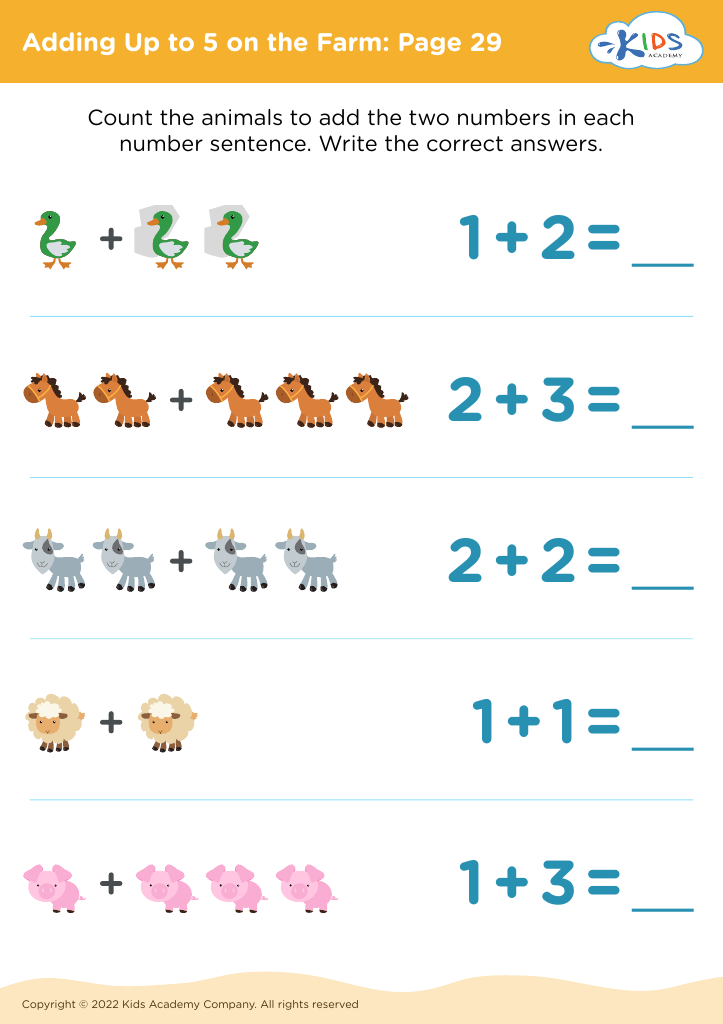
Adding Up to 5 on the Farm: Page 29
Worksheet
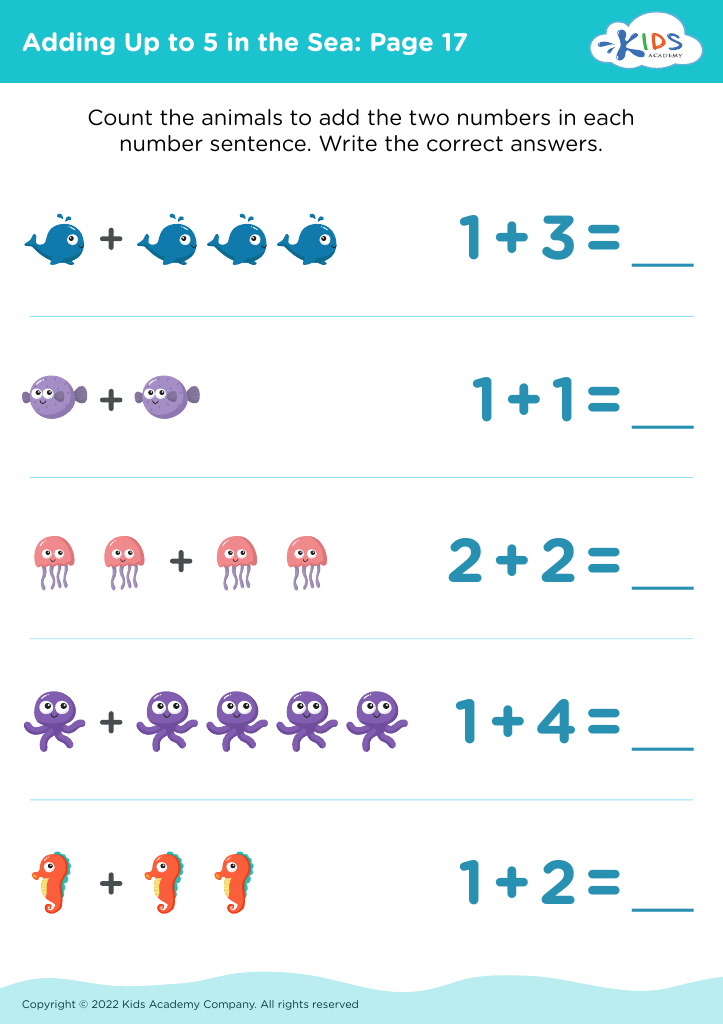
Adding Up to 5 in the Sea: Page 17
Worksheet
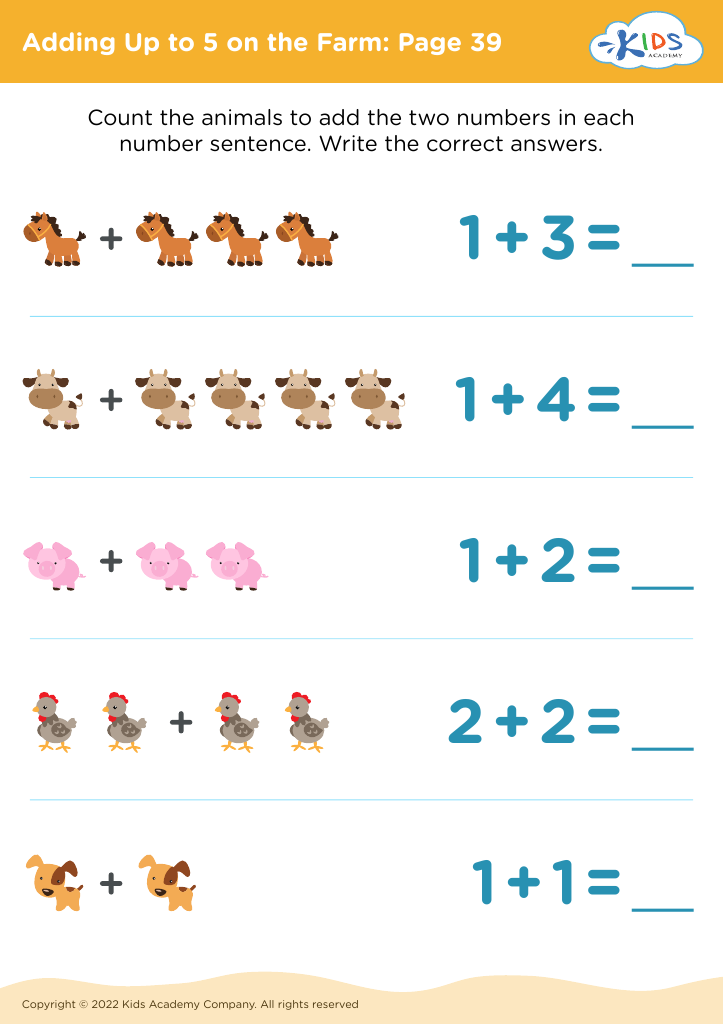
Adding Up to 5 on the Farm: Page 39
Worksheet
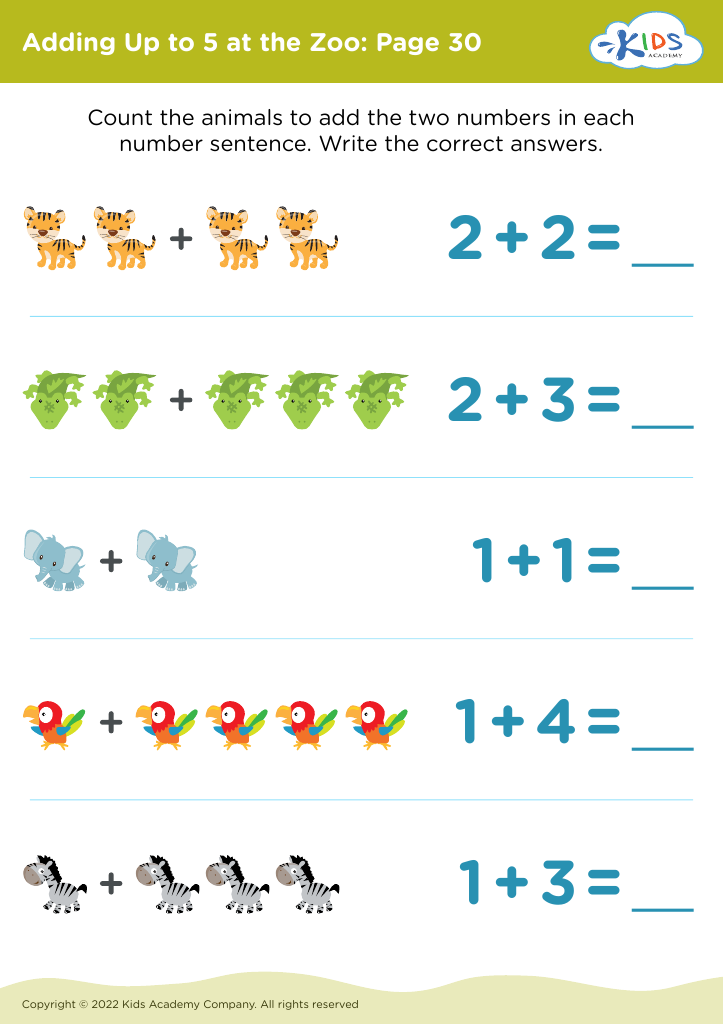
Adding Up to 5 at the Zoo: Page 30
Worksheet
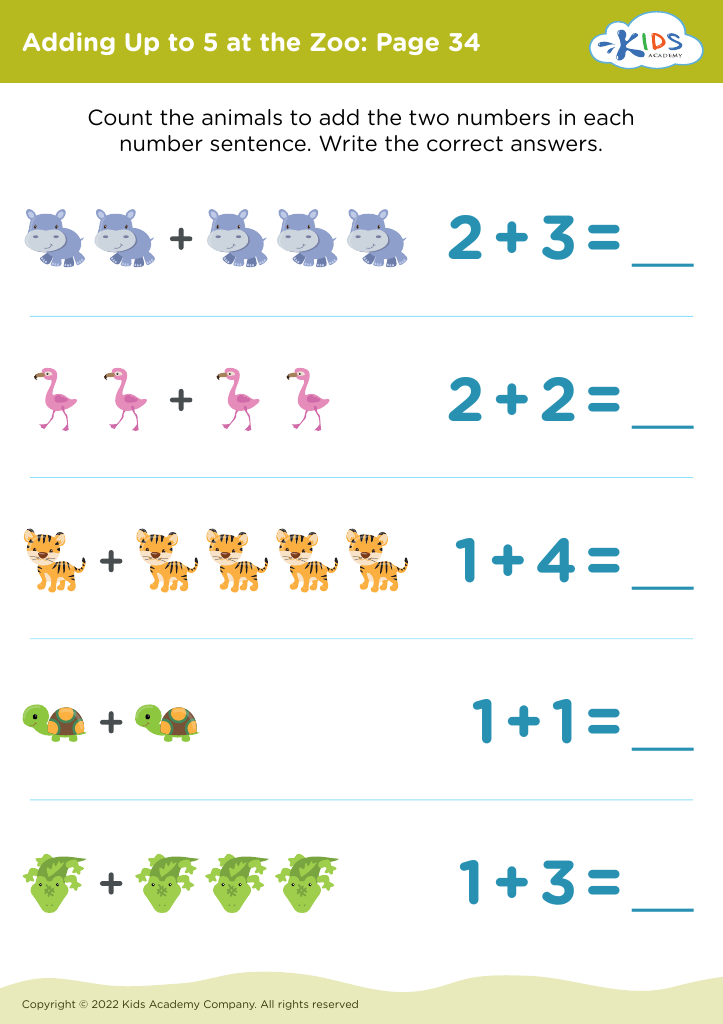
Adding Up to 5 at the Zoo: Page 34
Worksheet
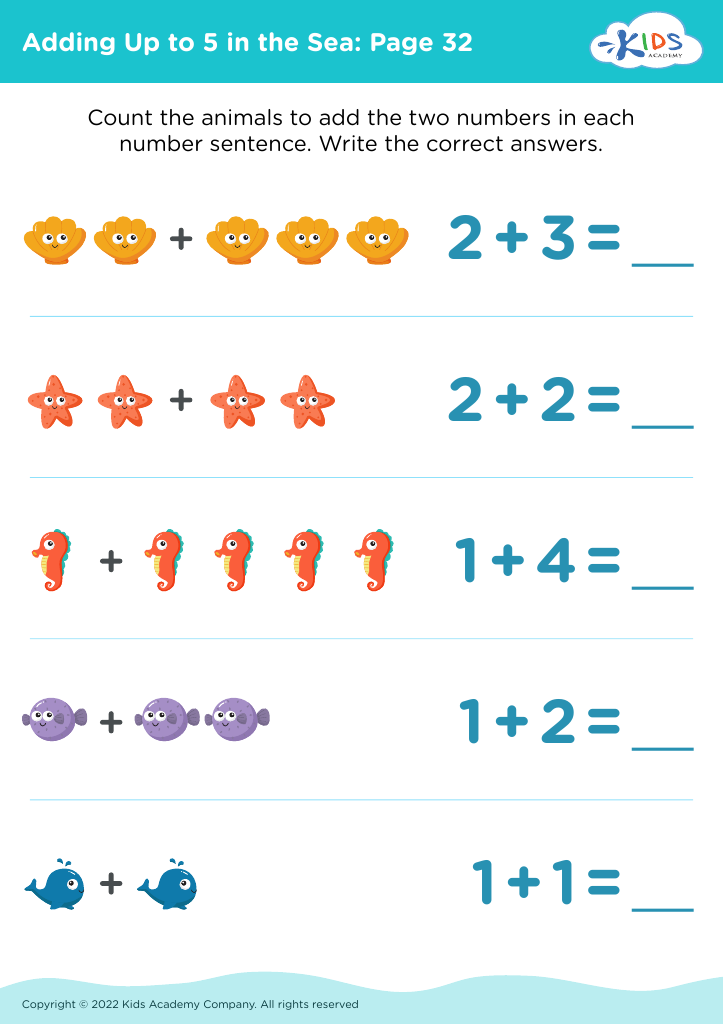
Adding Up to 5 in the Sea: Page 32
Worksheet
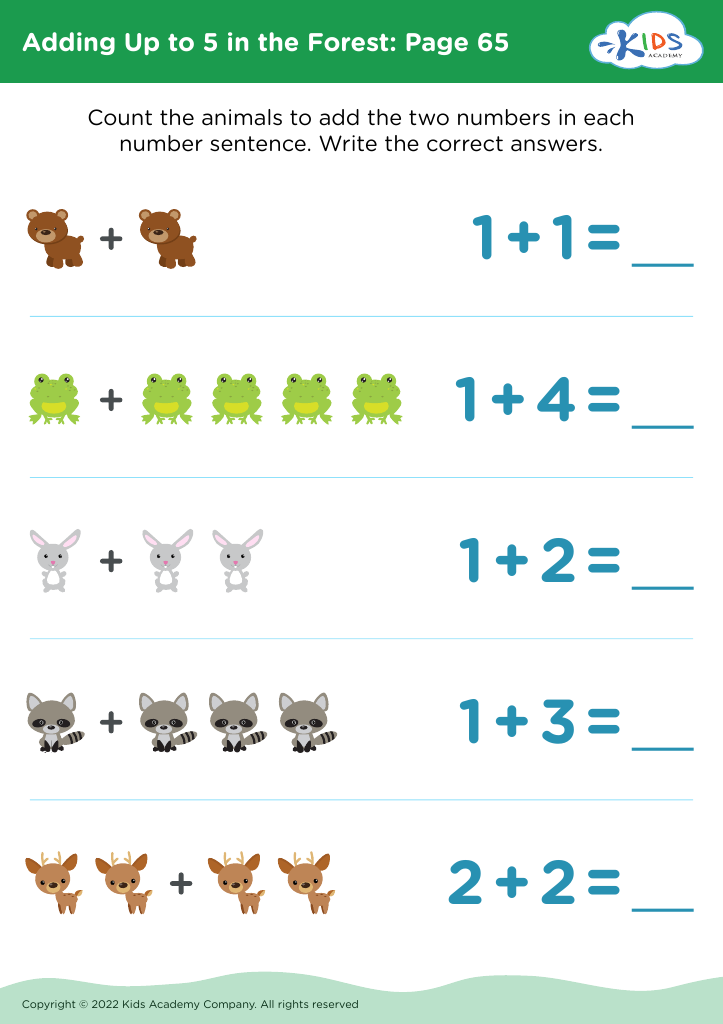
Adding Up to 5 in the Forest: Page 65
Worksheet
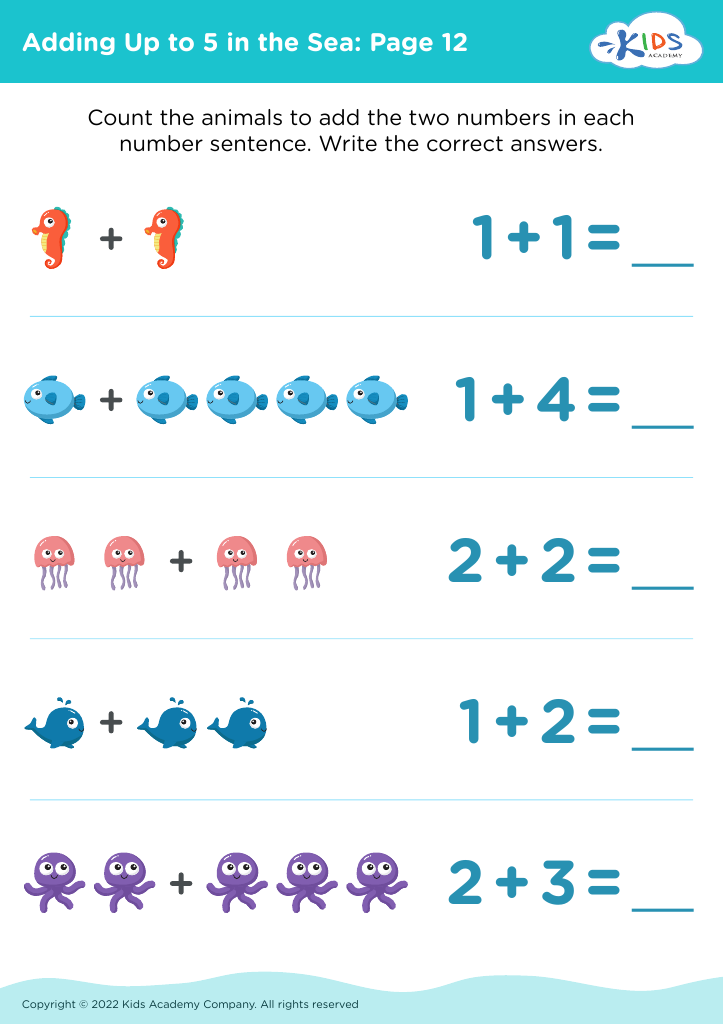
Adding Up to 5 in the Sea: Page 12
Worksheet
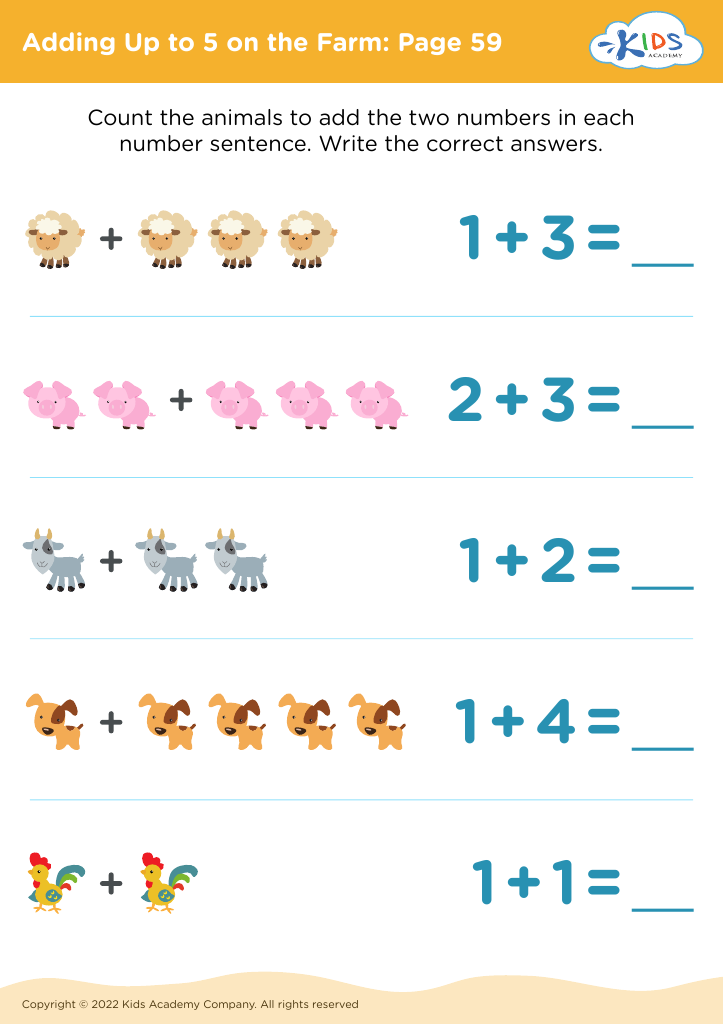
Adding Up to 5 on the Farm: Page 59
Worksheet
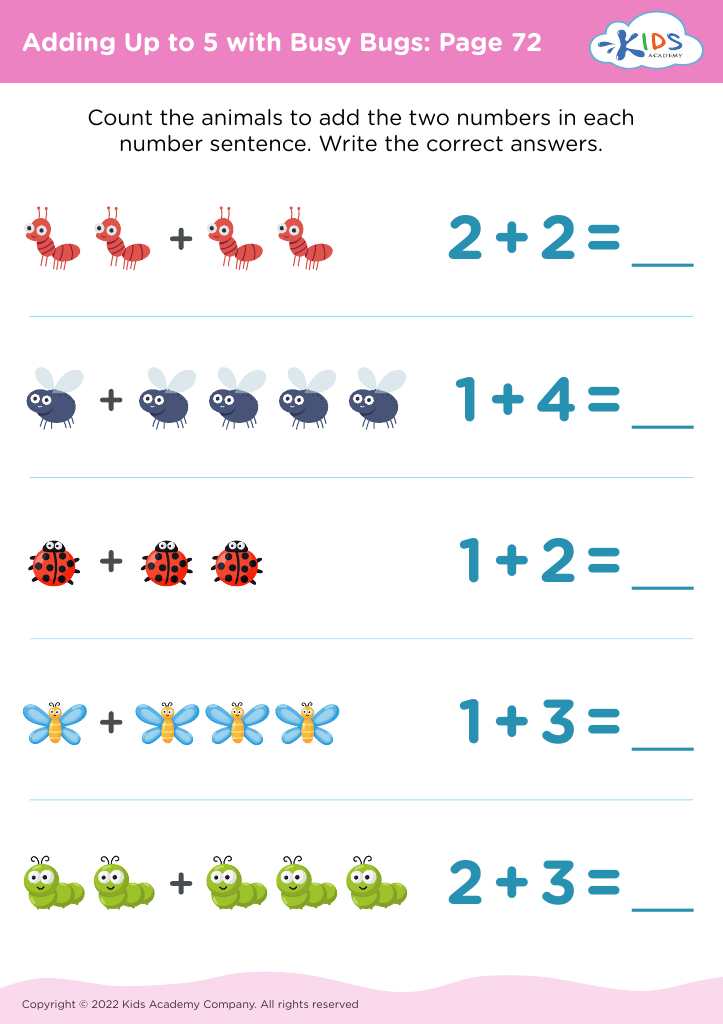
Adding Up to 5 with Busy Bugs: Page 72
Worksheet
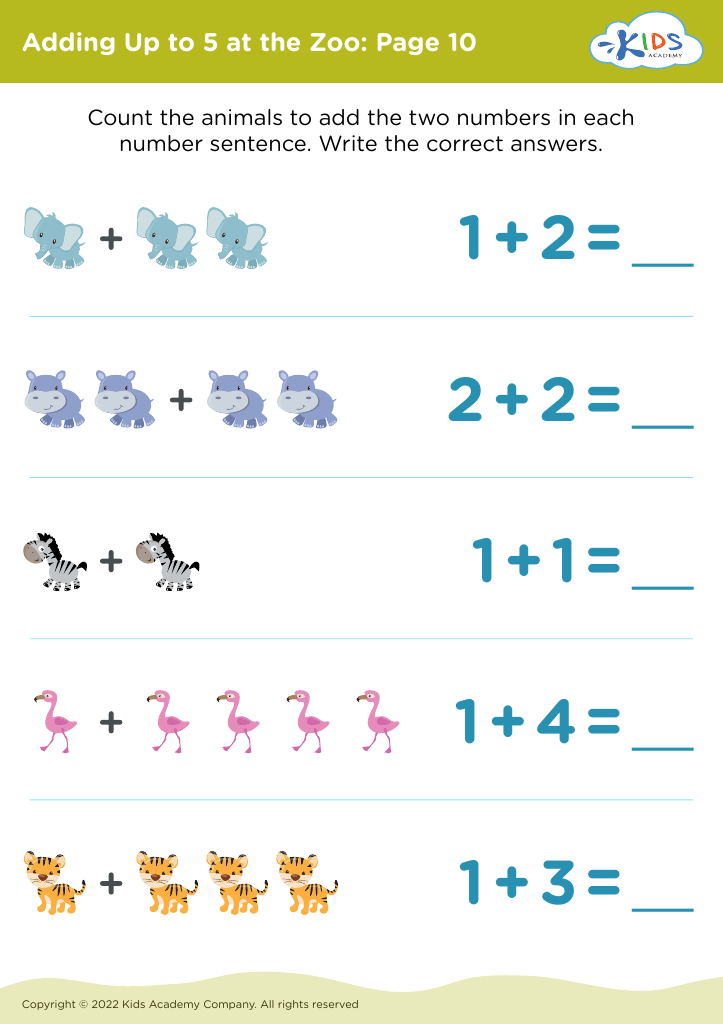
Adding Up to 5 at the Zoo: Page 10
Worksheet
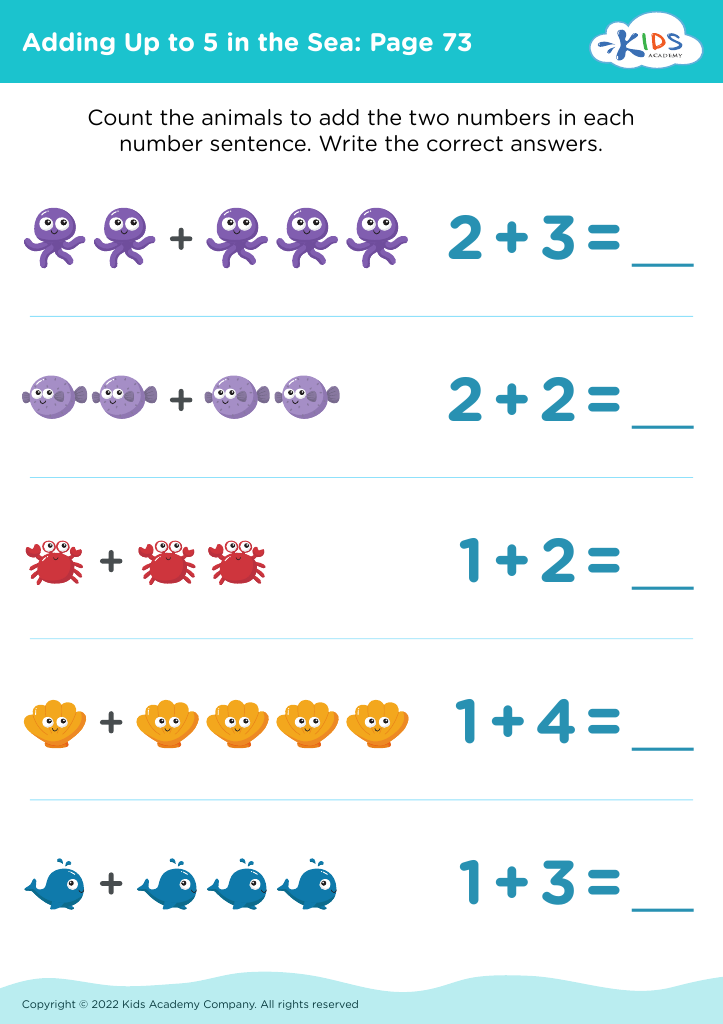
Adding Up to 5 in the Sea: Page 73
Worksheet
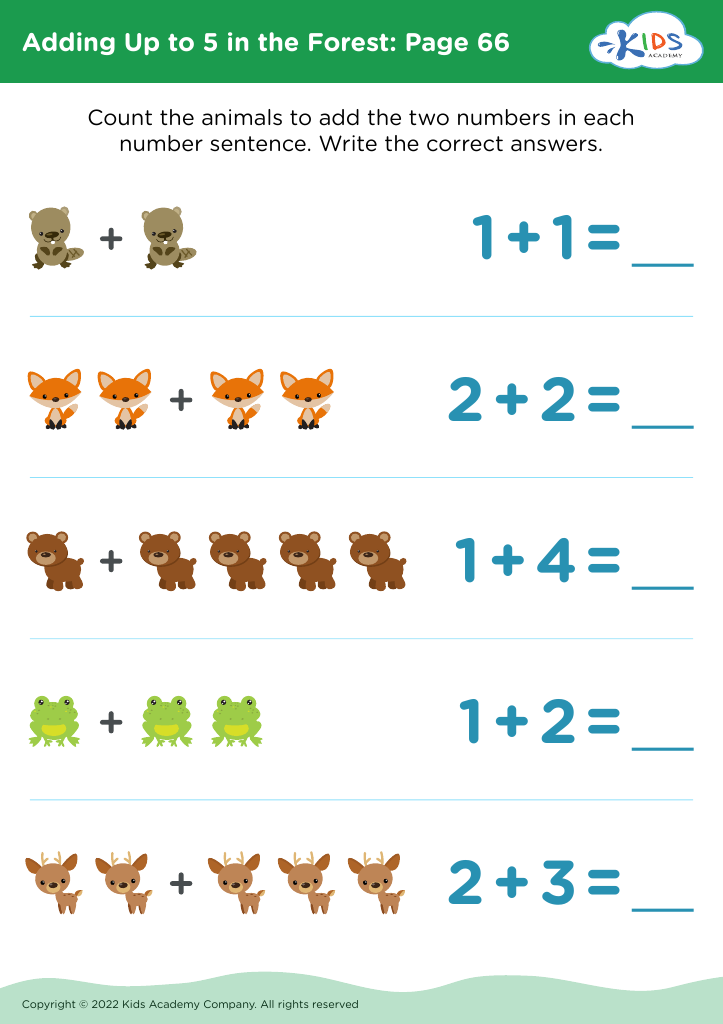
Adding Up to 5 in the Forest: Page 66
Worksheet
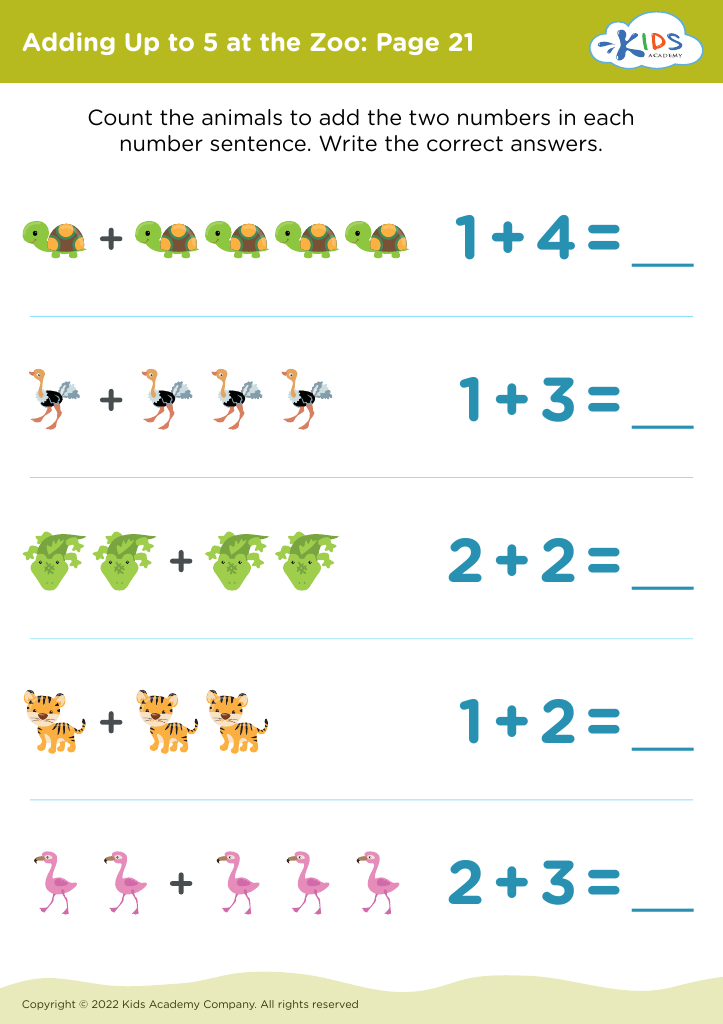
Adding Up to 5 at the Zoo: Page 21
Worksheet
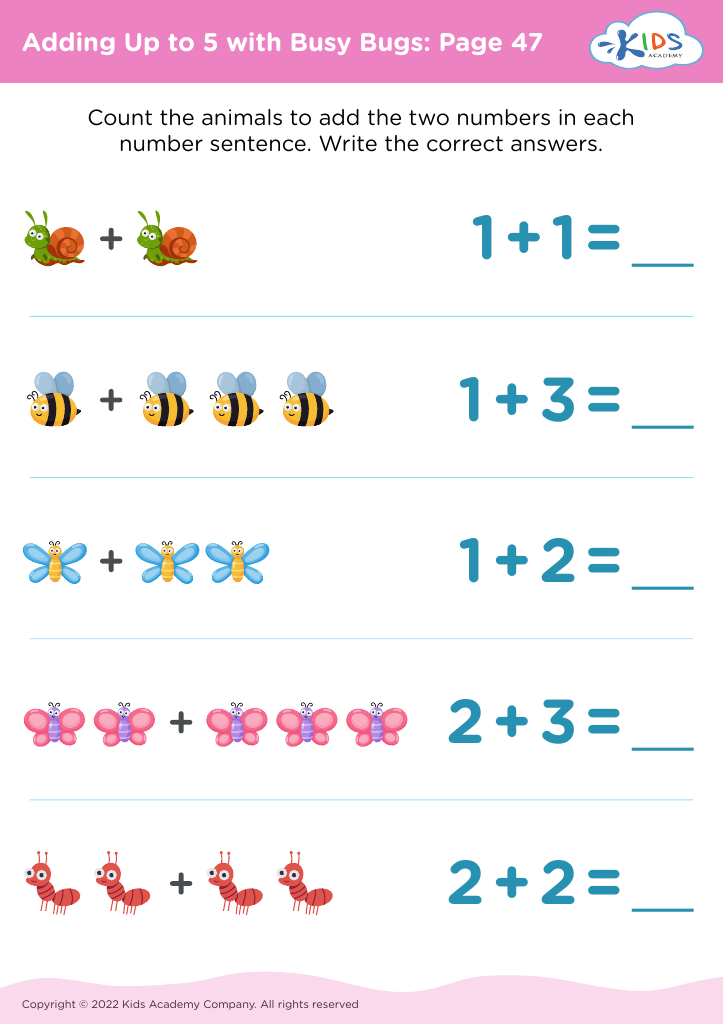
Adding Up to 5 with Busy Bugs: Page 47
Worksheet
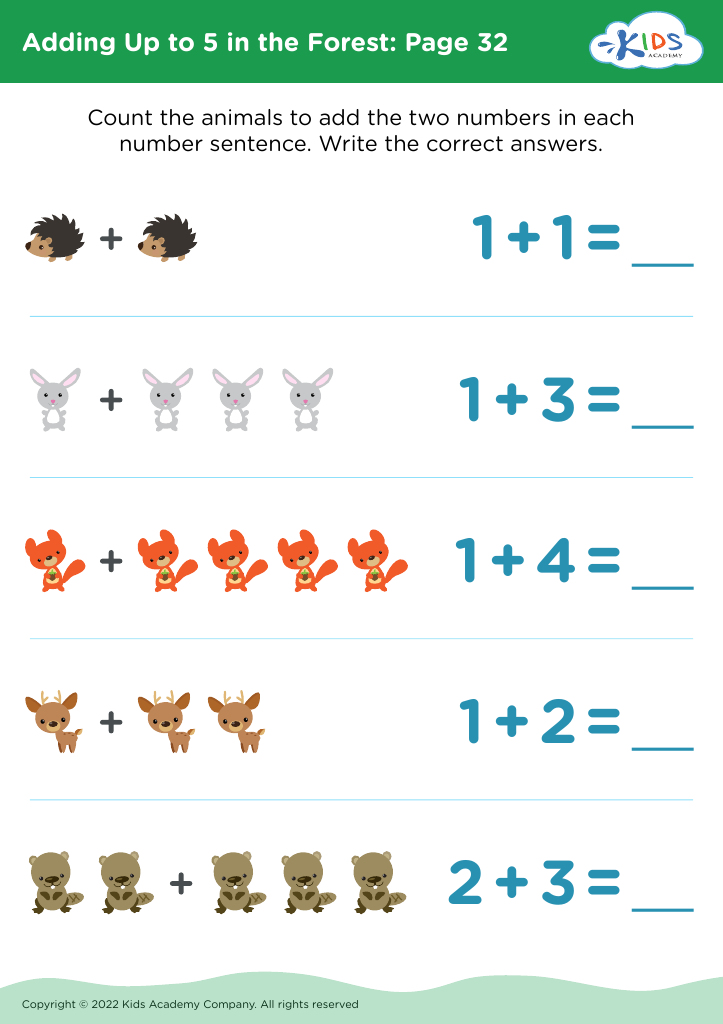
Adding Up to 5 in the Forest: Page 32
Worksheet
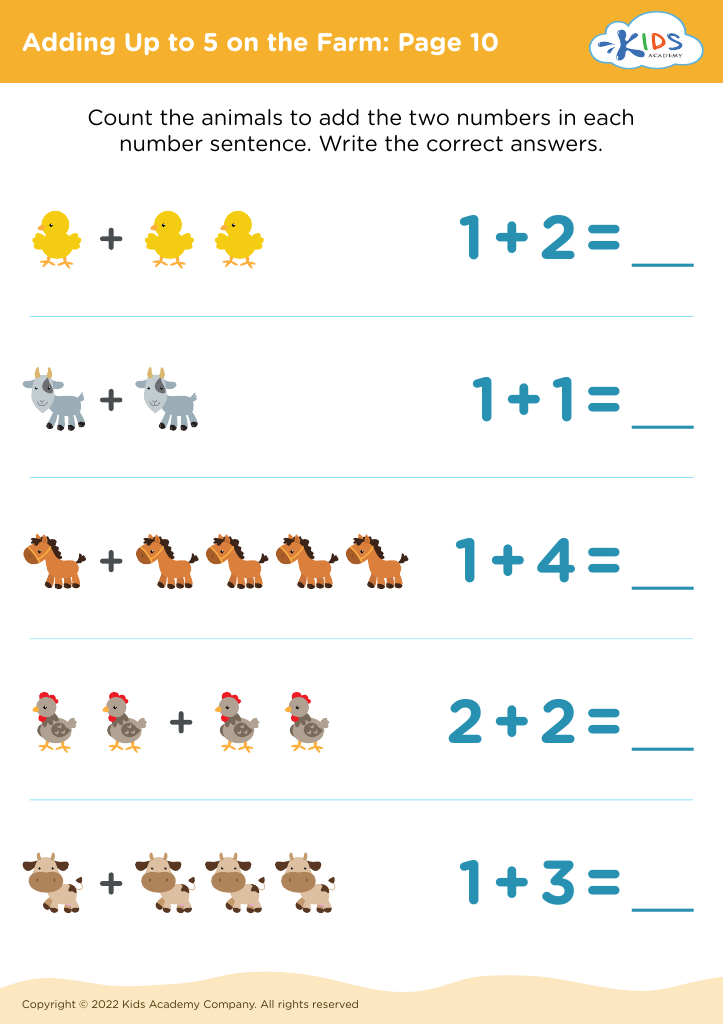
Adding Up to 5 on the Farm: Page 10
Worksheet


Basic addition skills, particularly adding up to 5, are foundational for children aged 3-8, and parents and teachers should prioritize this learning for several reasons. First, mastering simple addition builds confidence and a positive attitude toward math. When children grasp fundamental concepts, they feel empowered to tackle more complex problems in the future.

Additionally, basic addition lays the groundwork for critical thinking and problem-solving skills that are essential in everyday life. Activities that involve counting and adding help children develop their number sense and promote cognitive development in areas such as memory and attention span.

Engaging with addition through interactive play, storytelling, or everyday situations makes learning enjoyable and contextually relevant. Furthermore, these skills foster communication in mathematics, enabling children to discuss strategies and solutions with peers and adults.

Early experiences with addition also influence attitudes towards educational readiness and success in later grades. Ultimately, by focusing on basic addition skills, parents and teachers contribute to a solid mathematical foundation that will serve children throughout their educational journey, equipping them with the skills they need to thrive academically and in daily life. Working together in this learning process enhances the child's overall development and instills a lifelong love of learning.